UMBJMUMBJM
Tefla Journal (Teaching English as Foreign Language and Applied Linguistics Journal)Tefla Journal (Teaching English as Foreign Language and Applied Linguistics Journal)This research is conducted due to the limited discussion on the Sapir-Whorf hypothesis in Indonesia. The Sapir-Whorf hypothesis encompasses the notions of relativity and determinism in language and has had a profound impact on language, culture, and education. It assumes that the structure of ones mother tongue may strongly influence or entirely determine the worldview of the learner. Because it focuses on issues of language competence and language acquisition, it can also have heavy implications for EFL, especially language teaching methods and strategies. It can emerge from the lexicon and structure of students English speech that contains cultural affiliation idiosyncrasies, language variations, and untranslatable terms. This paper attempts to investigate the implications of the Sapir-Whorf Hypothesis that is applied or reflected in the EFL classroom. It adopts a qualitative study methodology, using students coursework as the data source. After scouring through 23 written works, it reveals the signs of a stronger version of the Sapir-Whorf hypothesis, in which students Indonesian and local language influence how they communicate in English. The language is treated in an oral way, where it is stylized as a written transcript and sometimes not having a proper, written structure. Although students often showed struggling in delivering their ideas, it does not imply that students have lower language proficiency. Instead, it shows their limited language perceptions perceive their view of using English.
The findings support the presence of a stronger version of the Sapir-Whorf Hypothesis, where students native languages significantly influence their perception of English.This influence manifests in unique expressions, oral language styles in writing, grammatical errors rooted in their native language, and the incorporation of cultural references.While students face challenges expressing their ideas, this does not necessarily indicate lower language proficiency but rather limited language perceptions.Therefore, teachers need to recognize and address these influences to facilitate effective language learning.
Further research should investigate how the Sapir-Whorf hypothesis manifests in various EFL classroom interactions, including student-to-student and teacher-to-student communication. Additionally, studies could explore the effectiveness of specific pedagogical strategies designed to mitigate the influence of students native languages on their English language acquisition, such as explicit instruction on grammatical differences and cultural nuances. Finally, research could examine the long-term impact of these linguistic and cultural influences on students overall communicative competence and their ability to navigate cross-cultural interactions, considering the increasing globalization and interconnectedness of the world. These investigations should aim to provide practical insights for EFL teachers and curriculum developers to create more effective and culturally sensitive learning environments, ultimately fostering students ability to communicate effectively and confidently in English while preserving their cultural identities.
| File size | 241.53 KB |
| Pages | 8 |
| DMCA | Report |
Related /

LAKASPIALAKASPIA Namun, pengelolaan kinerja guru di beberapa sekolah masih bersifat administratif, kurang terstruktur, dan minim tindak lanjut. Di SMA Negeri 1 Baitussalam,Namun, pengelolaan kinerja guru di beberapa sekolah masih bersifat administratif, kurang terstruktur, dan minim tindak lanjut. Di SMA Negeri 1 Baitussalam,

LAKASPIALAKASPIA Temuan ini menunjukkan bahwa teologi rasional Muhammad Abduh tidak hanya berfungsi sebagai pembaruan teologis, tetapi juga membentuk fondasi filosofisTemuan ini menunjukkan bahwa teologi rasional Muhammad Abduh tidak hanya berfungsi sebagai pembaruan teologis, tetapi juga membentuk fondasi filosofis

LAKASPIALAKASPIA Namun, dalam konteks masyarakat rural, pemanfaatan AI justru berpotensi memperlebar kesenjangan pendidikan apabila tidak didukung oleh kesiapan strukturalNamun, dalam konteks masyarakat rural, pemanfaatan AI justru berpotensi memperlebar kesenjangan pendidikan apabila tidak didukung oleh kesiapan struktural

LAKASPIALAKASPIA Penggunaan gadget oleh anak-anak telah menjadi fenomena yang tidak terpisahkan dari kehidupan sehari-hari di era digital. Studi ini bertujuan untuk menganalisisPenggunaan gadget oleh anak-anak telah menjadi fenomena yang tidak terpisahkan dari kehidupan sehari-hari di era digital. Studi ini bertujuan untuk menganalisis

UADUAD Menggunakan desain kualitatif, penelitian ini melibatkan dua dosen yang diamati oleh anggota fakultas senior selama empat sesi daring. Data dikumpulkanMenggunakan desain kualitatif, penelitian ini melibatkan dua dosen yang diamati oleh anggota fakultas senior selama empat sesi daring. Data dikumpulkan

UADUAD Analisis statistik mengonfirmasi perbedaan yang signifikan, dengan penggunaan bahasa Inggris dan kesesuaian kurikulum menjadi prediktor kuat kemampuanAnalisis statistik mengonfirmasi perbedaan yang signifikan, dengan penggunaan bahasa Inggris dan kesesuaian kurikulum menjadi prediktor kuat kemampuan

UNISMUHUNISMUH Data diperoleh dari observasi yang kemudian dianalisis untuk mengungkapkan kompetensi pedagogik guru. Data dari wawancara dianalisis untuk mengetahui faktor-faktorData diperoleh dari observasi yang kemudian dianalisis untuk mengungkapkan kompetensi pedagogik guru. Data dari wawancara dianalisis untuk mengetahui faktor-faktor

IAIN GORONTALOIAIN GORONTALO Data bibliometrik dikumpulkan melalui Google Scholar dengan menyaring publikasi yang menyebutkan TPACK dalam konteks ELT, menghasilkan sebanyak 770 makalahData bibliometrik dikumpulkan melalui Google Scholar dengan menyaring publikasi yang menyebutkan TPACK dalam konteks ELT, menghasilkan sebanyak 770 makalah
Useful /

UMBJMUMBJM Instrumen penelitian berupa tes kosakata pilihan ganda sebanyak 25 butir soal. Hasil penelitian menunjukkan bahwa kelompok eksperimen memperoleh skor rata-rataInstrumen penelitian berupa tes kosakata pilihan ganda sebanyak 25 butir soal. Hasil penelitian menunjukkan bahwa kelompok eksperimen memperoleh skor rata-rata

APTIKOMAPTIKOM Hasil pengujian terhadap 25 siswa menunjukkan tingkat kesesuaian diagnosis sistem dengan asesmen guru sebesar 88%. Sistem dinilai mudah digunakan, efisien,Hasil pengujian terhadap 25 siswa menunjukkan tingkat kesesuaian diagnosis sistem dengan asesmen guru sebesar 88%. Sistem dinilai mudah digunakan, efisien,
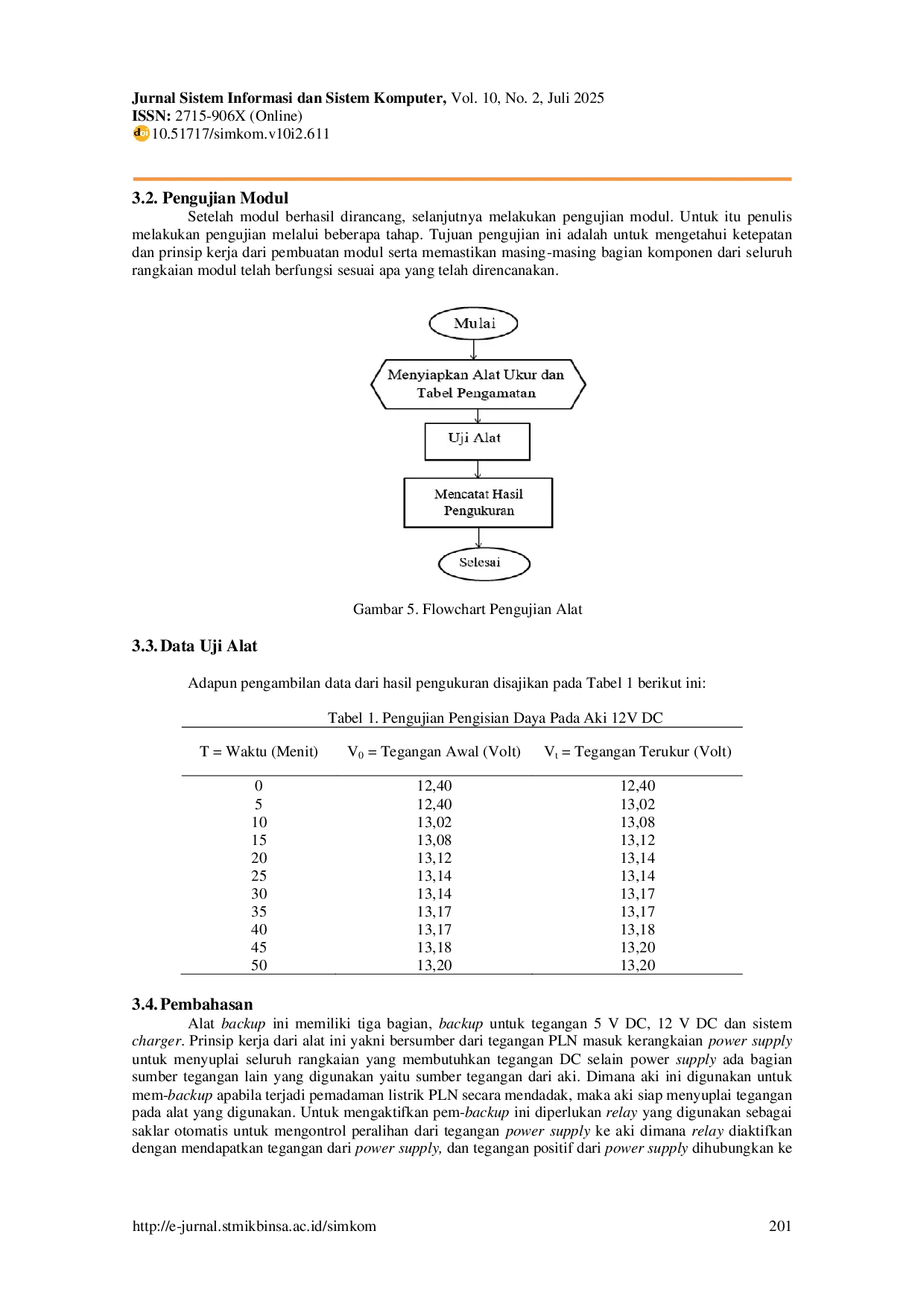
STMIKBINSASTMIKBINSA Charger secara otomatis menghentikan pengisian ketika aki mencapai 13,6 V DC dan kembali beroperasi setelah power supply dinyalakan kembali. SistemCharger secara otomatis menghentikan pengisian ketika aki mencapai 13,6 V DC dan kembali beroperasi setelah power supply dinyalakan kembali. Sistem

UNIVERSITASJAKARTAUNIVERSITASJAKARTA Desain penelitian ini menggunakan metode kualitatif. Data yang disajikan menggunakan data primer melalui wawancara terstruktur dan observasi yang berkaitanDesain penelitian ini menggunakan metode kualitatif. Data yang disajikan menggunakan data primer melalui wawancara terstruktur dan observasi yang berkaitan