MKRIMKRI
Jurnal KonstitusiJurnal KonstitusiPenelitian ini penting karena pemisahan kaku antara validitas hukum dan pertanggungjawaban etik memungkinkan produk yudisial yang tercemar konflik kepentingan tetap berlaku secara hukum. Penelitian ini menggunakan metode yuridis normatif dengan pendekatan perundang-undangan, konseptual, kasus, dan komparatif. Hasil penelitian menunjukkan bahwa integritas yudisial merupakan syarat konstitusional objektif bagi validitas ajudikasi konstitusional. Penelitian ini menawarkan doktrin finalitas bersyarat, yaitu finalitas putusan dapat dibuka kembali apabila cacat integritas terbukti secara otoritatif oleh lembaga etik. Doktrin tersebut dioperasionalkan melalui mekanisme Pemeriksaan Kembali Konstitusional sebagai bentuk koreksi diri peradilan. Penelitian ini menyimpulkan bahwa Indonesia perlu mengadopsi ajudikasi berbasis integritas melalui reformasi legislasi dan hukum acara untuk menyelaraskan hukum, etika, kepastian hukum, dan keadilan substantif.
This study concludes that the legitimacy crisis following Constitutional Court Decision Number 90/PUU-XXI/2023 reveals a structural fragmentation between ethical accountability and judicial validity in Indonesias constitutional adjudication.The dominant legal-positivist reading of final and binding decisions has preserved formal certainty, but it leaves no procedural bridge when an authoritative ethics body establishes a serious integrity defect in the decision-making process.To address this gap, the study proposes the doctrine of conditional finality.finality remains binding in ordinary circumstances, but becomes defeasible when a gross integrity defect, such as conflict of interest or compromised impartiality, is authoritatively proven.This doctrine should be operationalized through a Constitutional Rehearing mechanism as a limited form of judicial self-correction.Such rehearing must be bounded by strict safeguards, including statutory authorization, limited standing, a short time bar, a high materiality threshold, and prospective protection for completed legal effects.Accordingly, Indonesia should revise the Constitutional Court Law and relevant procedural regulations to recognize ethics decisions as constitutional triggers for reassessing finality.This model harmonizes law, ethics, legal certainty, judicial independence, and substantive justice while preserving the dignity of constitutional adjudication.
Based on the findings and analysis, the following research suggestions are proposed for further exploration:. . 1. **Exploring the Impact of Ethics Decisions on Judicial Power**: A comprehensive study could be conducted to analyze the impact of ethics decisions on the legitimacy and functioning of judicial power in Indonesia. This research could delve into the practical implications of ethics findings and their potential influence on the validity of judicial decisions. It would involve examining the interplay between legal and ethical frameworks, exploring the challenges and opportunities presented by integrating ethics into judicial processes, and proposing strategies to enhance the effectiveness of ethics enforcement mechanisms.. . 2. **Developing a Comprehensive Model for Judicial Harmonization**: Building upon the concept of judicial harmonization, a more detailed and practical model could be developed to integrate legal and ethical adjudication. This model should address the specific challenges and complexities of the Indonesian legal system, including the relationship between the MKMK and the MK. It could involve proposing amendments to existing laws and regulations, designing new procedural mechanisms, and suggesting institutional reforms to ensure a seamless integration of ethics and law in judicial processes.. . 3. **Examining the Role of Ethics in Constitutional Adjudication**: Given the focus on constitutional integrity, a dedicated study could be conducted to explore the role of ethics in constitutional adjudication. This research could investigate how ethical considerations can be incorporated into the decision-making process of the Constitutional Court, ensuring that constitutional interpretations are not only legally sound but also ethically justifiable. It would involve analyzing the potential benefits and challenges of integrating ethics into constitutional adjudication and proposing guidelines or principles to guide constitutional justices in their ethical decision-making.
- Code of Ethics Violations Due to Constitutional Court Decision Number 90/PUU-XXI/2023 Towards the Dynamics... ejournal.uhb.ac.id/index.php/inconcreto/article/view/1484Code of Ethics Violations Due to Constitutional Court Decision Number 90 PUU XXI 2023 Towards the Dynamics ejournal uhb ac index php inconcreto article view 1484
- Conditional Finality and Constitutional Rehearing: Recalibrating Judicial Integrity in Indonesia’s... jurnalkonstitusi.mkri.id/index.php/jk/article/view/3347Conditional Finality and Constitutional Rehearing Recalibrating Judicial Integrity in IndonesiaAos jurnalkonstitusi mkri index php jk article view 3347
- Jurnal Ilmu Syari'ah dan Hukum. teori aliran positivisme kritik kritiknya asy syir jurnal ilmu syari... doi.org/10.14421/ajish.v42i2.115Jurnal Ilmu Syariah dan Hukum teori aliran positivisme kritik kritiknya asy syir jurnal ilmu syari doi 10 14421 ajish v42i2 115
- Menyoal Efektivitas Kode Etik Hakim dalam Menjaga Marwah Kualitas Putusan yang Berkeadilan | Verfassung:... jurnalfasya.iainkediri.ac.id/index.php/verfassung/article/view/178Menyoal Efektivitas Kode Etik Hakim dalam Menjaga Marwah Kualitas Putusan yang Berkeadilan Verfassung jurnalfasya iainkediri ac index php verfassung article view 178
- "Memperkenalkan Peradilan Etika" by Prof. Jimly Asshiddiqie. peradilan etika jimly asshiddiqie... scholarhub.ui.ac.id/jurnalkonsdem/vol1/iss1/1Memperkenalkan Peradilan Etika by Prof Jimly Asshiddiqie peradilan etika jimly asshiddiqie scholarhub ui ac jurnalkonsdem vol1 iss1 1
| File size | 1022.88 KB |
| Pages | 32 |
| DMCA | Report |
Related /
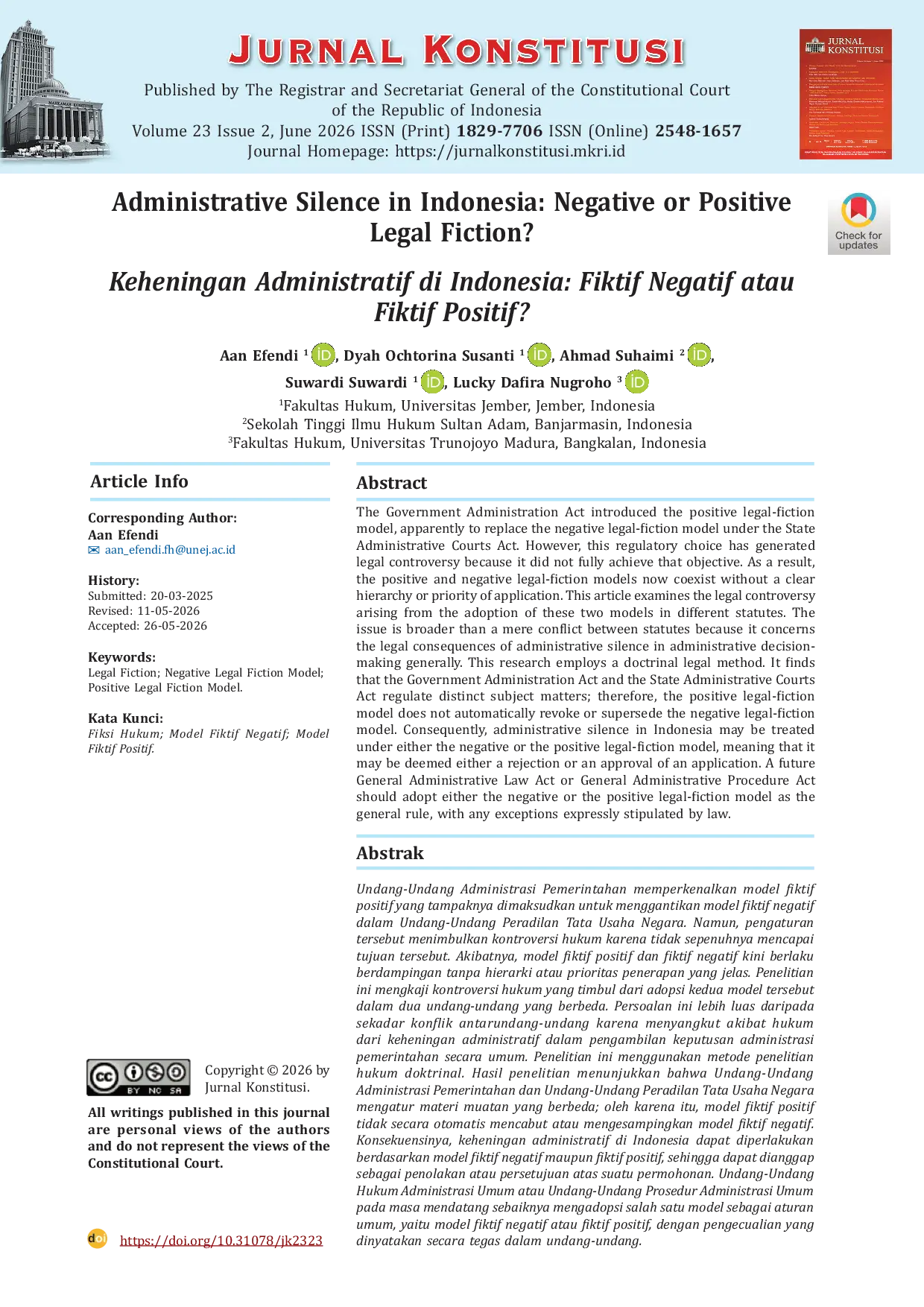
MKRIMKRI Kedua model ini berlaku tanpa prioritas yang jelas dalam kasus keheningan administratif. Model fiktif negatif dan positif tidak seharusnya berlaku bersamaanKedua model ini berlaku tanpa prioritas yang jelas dalam kasus keheningan administratif. Model fiktif negatif dan positif tidak seharusnya berlaku bersamaan
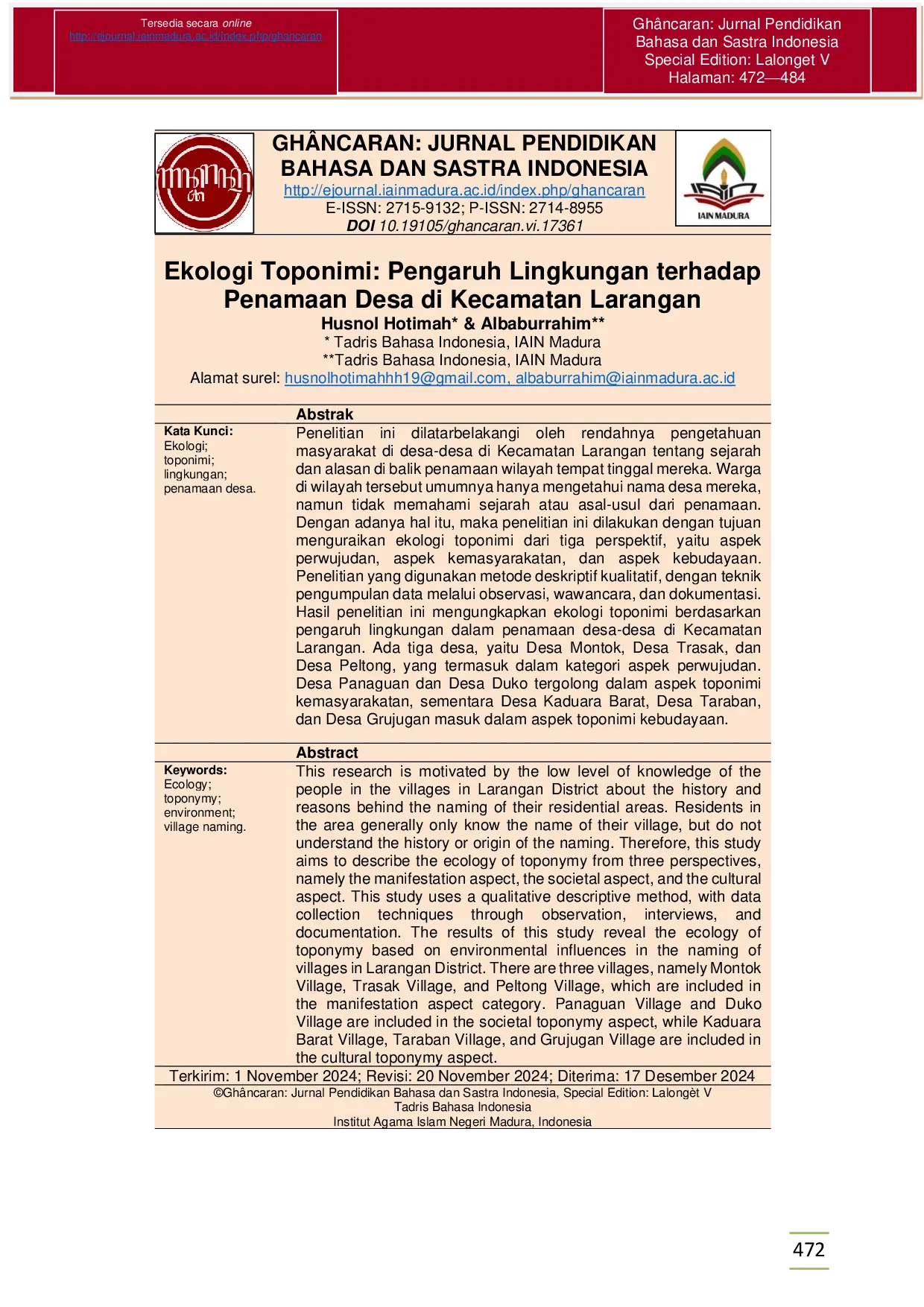
UINMADURAUINMADURA Dengan adanya hal itu, maka penelitian ini dilakukan dengan tujuan menguraikan ekologi toponimi dari tiga perspektif, yaitu aspek perwujudan, aspek kemasyarakatan,Dengan adanya hal itu, maka penelitian ini dilakukan dengan tujuan menguraikan ekologi toponimi dari tiga perspektif, yaitu aspek perwujudan, aspek kemasyarakatan,

UINMADURAUINMADURA Dengan menggunakan pendekatan Ekofenomenologi dari Saras Dewi, dapat dianalisis adanya ekuilibrium dan disekuilibrium dalam relasi antara alam, dalam halDengan menggunakan pendekatan Ekofenomenologi dari Saras Dewi, dapat dianalisis adanya ekuilibrium dan disekuilibrium dalam relasi antara alam, dalam hal
UINMADURAUINMADURA Proses pengembangan menggunakan model 4D (Define, Design, Develop, Disseminate), dengan fokus pada tiga tahap pertama. Teknik pengumpulan data meliputiProses pengembangan menggunakan model 4D (Define, Design, Develop, Disseminate), dengan fokus pada tiga tahap pertama. Teknik pengumpulan data meliputi
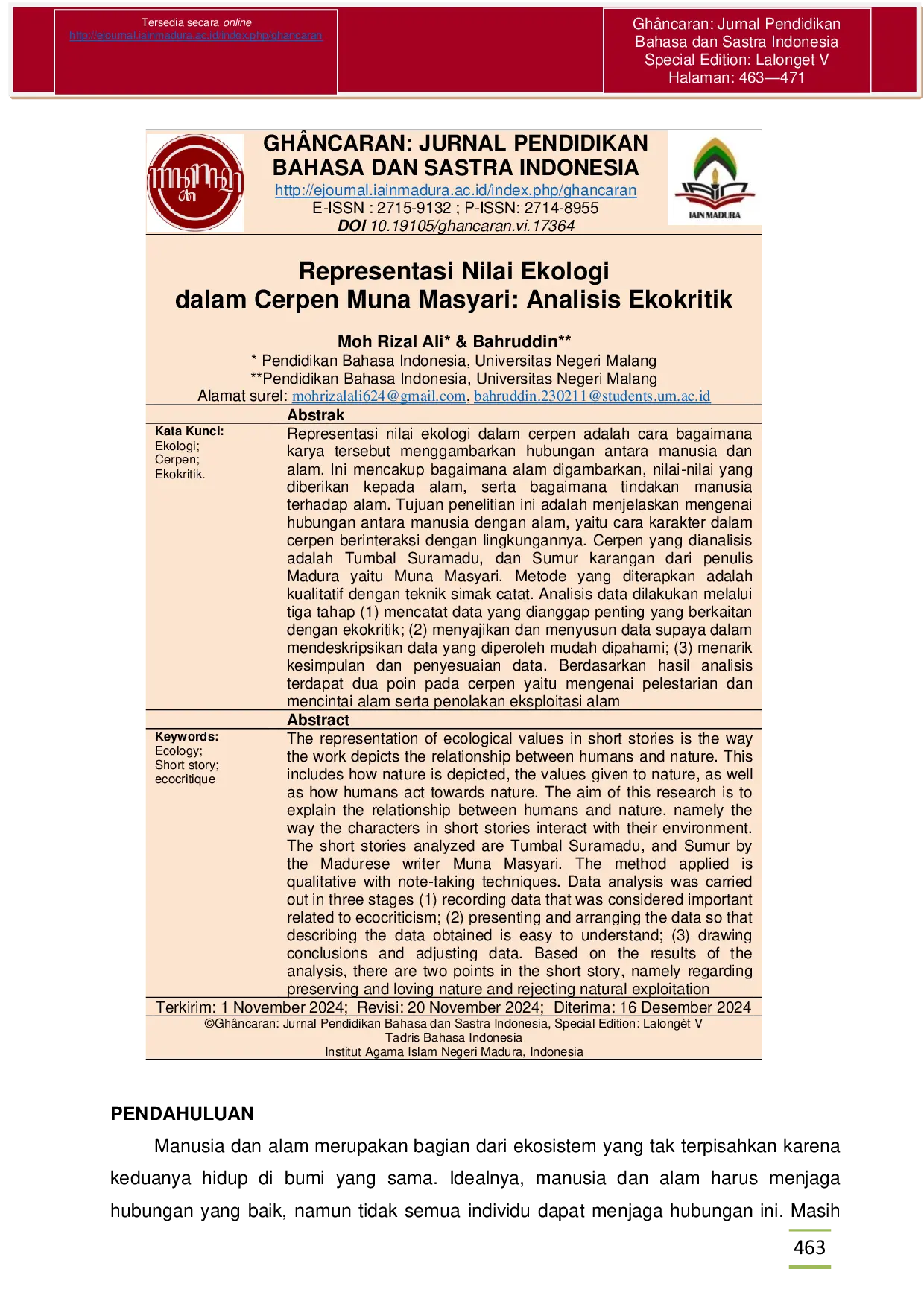
UINMADURAUINMADURA Berdasarkan hasil analisis terdapat dua poin pada cerpen yaitu mengenai pelestarian dan mencintai alam serta penolakan eksploitasi alam. Berdasarkan analisisBerdasarkan hasil analisis terdapat dua poin pada cerpen yaitu mengenai pelestarian dan mencintai alam serta penolakan eksploitasi alam. Berdasarkan analisis

UINMADURAUINMADURA Melalui narasi yang menggambarkan hubungan harmonis antara manusia dan alam, buku ini mengajak pembaca untuk menghormati dan melestarikan lingkungan. DenganMelalui narasi yang menggambarkan hubungan harmonis antara manusia dan alam, buku ini mengajak pembaca untuk menghormati dan melestarikan lingkungan. Dengan

UINMADURAUINMADURA Hasil penelitian memperlihatkan yakni game Wordwall memerlukan persiapan, pelaksanaan, dan evaluasi. Seluruh tahapan ini ditandai dengan adanya peningkatanHasil penelitian memperlihatkan yakni game Wordwall memerlukan persiapan, pelaksanaan, dan evaluasi. Seluruh tahapan ini ditandai dengan adanya peningkatan
UTMUTM Penelitian ini bertujuan untuk mengetahui perbedaan daya, torsi dan konsumsi bahan bakar antar ke 4 roller tersebut dan untuk mengetahui perbedaan antaraPenelitian ini bertujuan untuk mengetahui perbedaan daya, torsi dan konsumsi bahan bakar antar ke 4 roller tersebut dan untuk mengetahui perbedaan antara
Useful /

UINMADURAUINMADURA Penelitian ini memiliki beberapa keterbatasan yang perlu diakui. Model integrasi budaya dan modal sosial sangat bergantung pada ketersediaan sumber dayaPenelitian ini memiliki beberapa keterbatasan yang perlu diakui. Model integrasi budaya dan modal sosial sangat bergantung pada ketersediaan sumber daya

STIETRIBHAKTISTIETRIBHAKTI Temuan mengungkapkan bahwa konsumen Generasi Z menunjukkan responsivitas yang lebih tinggi terhadap konten iklan, yang memperkuat efeknya pada persepsiTemuan mengungkapkan bahwa konsumen Generasi Z menunjukkan responsivitas yang lebih tinggi terhadap konten iklan, yang memperkuat efeknya pada persepsi
UINMADURAUINMADURA Nilai-nilai ekologis dalam peribahasa Madura terdiri dari empat kategori. nilai relasional sebagai sumber belajar untuk tangguh, nilai spiritual sebagaiNilai-nilai ekologis dalam peribahasa Madura terdiri dari empat kategori. nilai relasional sebagai sumber belajar untuk tangguh, nilai spiritual sebagai

UINMADURAUINMADURA Data dikumpulkan melalui kuesioner dan tes berpikir kreatif yang diuji validitas dan reliabilitasnya. Hasil analisis menunjukkan bahwa karakter siswa memilikiData dikumpulkan melalui kuesioner dan tes berpikir kreatif yang diuji validitas dan reliabilitasnya. Hasil analisis menunjukkan bahwa karakter siswa memiliki