IKIP SILIWANGIIKIP SILIWANGI
Infinity JournalInfinity JournalTo make students actively involved in learning to grasp mathematical higher-order thinking skills (MHOTS) is not easy. Meanwhile, the ability is so important for students to master for it takes place when students continue their studies to a higher level as well as work within a variety of professions, especially in the era of the industrial revolution such nowadays. Many factors affect students thinking abilities, including learning factors. This study, which implemented constructivism-based learning, aims to investigate the role and contribution of constructivism-based learning approaches as well as mathematical prior knowledge (MPK) to the achievement of MHOTS of middle secondary school students. The data tested through Multivariate Analysis at the 0.05 significance level. In general, this study found that: (1) In the experimental class, the learning approach plays an important role in the way it increased students MHOTS significantly. (2) The average contribution of constructivism-based learning to MHOTS was at the range of 18% to 57%. (3) Student activity in learning increased significantly. (4) In some cases, there is an effect of interaction between learning factors and MPK towards the achievement of MHOTS. The study recommended the teachers to have courageous in implementing constructivism-based teaching and learning to improve MHOTS.
Based on the research results, it can be concluded that constructivism-based learning can improve mathematical high-order thinking skills (MHOTS), such as mathematical understanding, problem-solving skills, and creative thinking abilities.Student activity significantly increased in the experimental class, indicating that constructivism-based learning effectively engages students.In some cases, an interaction effect was observed between the learning approach and students prior mathematical knowledge regarding the achievement of MHOTS.
Further research should investigate the optimal integration of local cultural contexts into constructivism-based learning to enhance student engagement and relevance. Another study could examine the effectiveness of incorporating Information and Communication Technology (ICT) tools, such as Geogebra, to facilitate understanding and improve mathematical problem-solving skills. Finally, it is recommended to explore the impact of specific affective factors like mathematical disposition, social skills, and self-regulated learning on the effectiveness of constructivism-based approaches to deliver the most effective learning experience and improve higher-order thinking skills of students.
- Domain‐Specific Principles Affect Learning and Transfer in Children - Brown - 1990 - Cognitive Science... onlinelibrary.wiley.com/doi/10.1207/s15516709cog1401_6DomainAaSpecific Principles Affect Learning and Transfer in Children Brown 1990 Cognitive Science onlinelibrary wiley doi 10 1207 s15516709cog1401 6
- On Eight Grade Students Understanding in Solving Mathematical Problems | Minarni | Asian Social Science... ccsenet.org/journal/index.php/ass/article/view/70496On Eight Grade Students Understanding in Solving Mathematical Problems Minarni Asian Social Science ccsenet journal index php ass article view 70496
- Infinity Journal. developing students ability mathematical connection outdoor mathematics learning infinity... e-journal.stkipsiliwangi.ac.id/index.php/infinity/article/view/234Infinity Journal developing students ability mathematical connection outdoor mathematics learning infinity e journal stkipsiliwangi ac index php infinity article view 234
| File size | 645.01 KB |
| Pages | 22 |
| DMCA | Report |
Related /

UNUKALTIMUNUKALTIM Siswa dan guru yang merasakan layanan responsif dan ramah dari staf perpustakaan cenderung memiliki pandangan positif terhadap penggunaan perpustakaan.Siswa dan guru yang merasakan layanan responsif dan ramah dari staf perpustakaan cenderung memiliki pandangan positif terhadap penggunaan perpustakaan.

UNUKALTIMUNUKALTIM Pengaruh kepemimpinan yang melibatkan pujian, teguran, dan permintaan maaf terhadap karyawan menunjukkan peningkatan motivasi dan kepuasan kerja. PujianPengaruh kepemimpinan yang melibatkan pujian, teguran, dan permintaan maaf terhadap karyawan menunjukkan peningkatan motivasi dan kepuasan kerja. Pujian

UNUKALTIMUNUKALTIM Penelitian ini menggunakan pendekatan kualitatif dengan metode observasi partisipatif dan wawancara mendalam. Informan penelitian adalah pimpinan ponpes,Penelitian ini menggunakan pendekatan kualitatif dengan metode observasi partisipatif dan wawancara mendalam. Informan penelitian adalah pimpinan ponpes,

UNUKALTIMUNUKALTIM Dengan pendekatan kualitatif, studi ini mengeksplorasi berbagai strategi yang diterapkan oleh pemimpin dalam kurikulum merdeka, termasuk komunikasi yangDengan pendekatan kualitatif, studi ini mengeksplorasi berbagai strategi yang diterapkan oleh pemimpin dalam kurikulum merdeka, termasuk komunikasi yang

UNUKALTIMUNUKALTIM Hasil penelitian menunjukkan bahwa SMP Negeri 39 Samarinda telah melakukan strategi perencanaan berdasarkan analisis SWOT untuk mengidentifikasi kebutuhanHasil penelitian menunjukkan bahwa SMP Negeri 39 Samarinda telah melakukan strategi perencanaan berdasarkan analisis SWOT untuk mengidentifikasi kebutuhan

UNUKALTIMUNUKALTIM Pengumpulan data dilakukan melalui metode wawancara, observasi dan dokumentasi. Subjek penelitian ini adalah kepala sekolah dan para guru di SD NegeriPengumpulan data dilakukan melalui metode wawancara, observasi dan dokumentasi. Subjek penelitian ini adalah kepala sekolah dan para guru di SD Negeri

UNUKALTIMUNUKALTIM Hasil penelitian menunjukkan bahwa Kepala MTs Al Mujahidin 2 Samarinda menerapkan berbagai gaya kepemimpinan seperti mengarahkan, melatihi, berpartisipasi,Hasil penelitian menunjukkan bahwa Kepala MTs Al Mujahidin 2 Samarinda menerapkan berbagai gaya kepemimpinan seperti mengarahkan, melatihi, berpartisipasi,

UNUKALTIMUNUKALTIM Dalam penelitian ini, peneliti menggunakan pendekatan kualitatif deskriptif, yang berfokus pada kepala UPTD Tahura Bukit Soeharto dan tim polisi kehutananDalam penelitian ini, peneliti menggunakan pendekatan kualitatif deskriptif, yang berfokus pada kepala UPTD Tahura Bukit Soeharto dan tim polisi kehutanan
Useful /

UNDHIRA BALIUNDHIRA BALI Hasilnya, website desa wisata www. dwgumbrih.com telah diluncurkan dan dapat diakses secara global, meningkatkan pemahaman pengurus dalam pengelolaan websiteHasilnya, website desa wisata www. dwgumbrih.com telah diluncurkan dan dapat diakses secara global, meningkatkan pemahaman pengurus dalam pengelolaan website
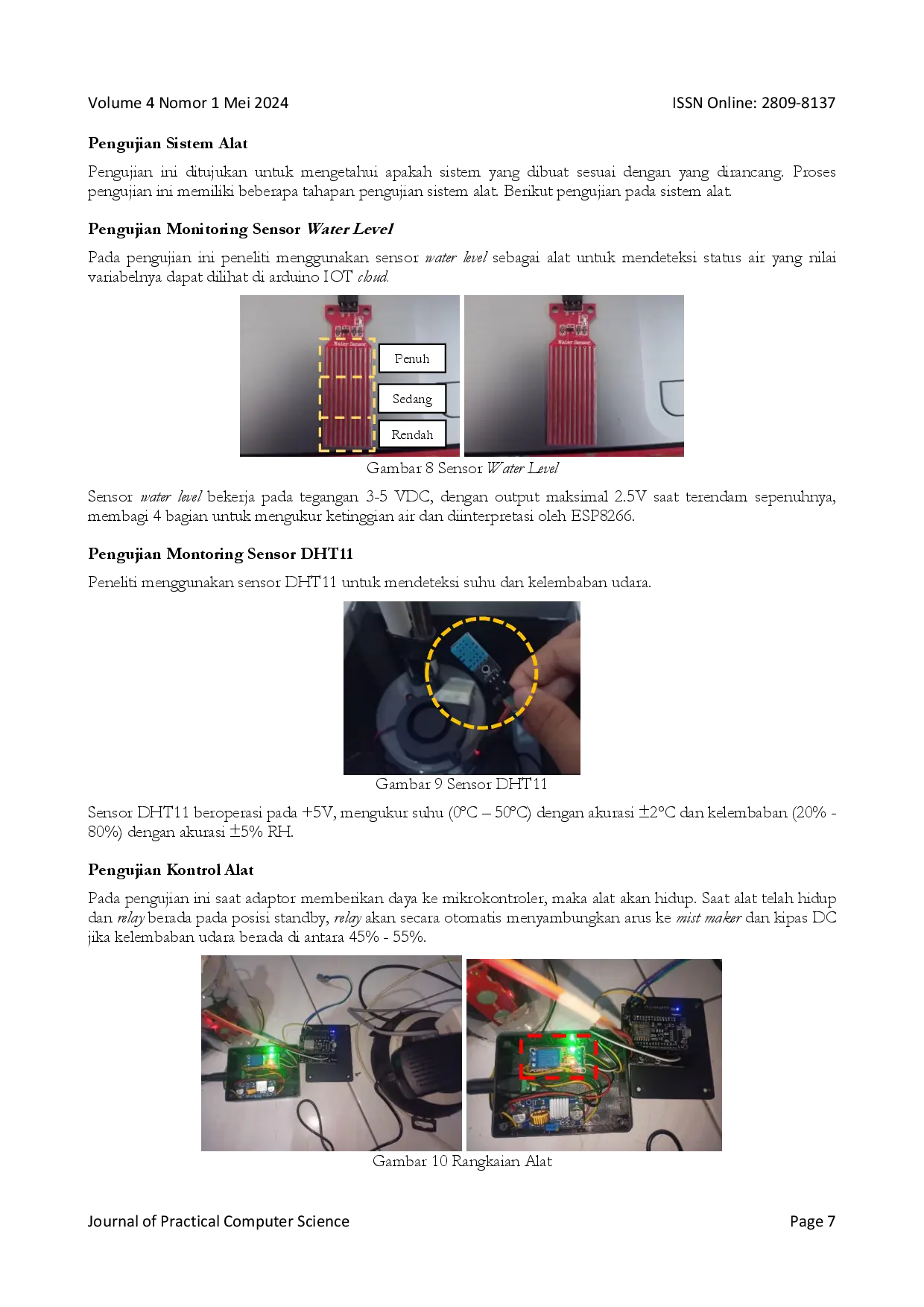
PELITABANGSAPELITABANGSA Dalam rancangan sistem, NodeMCU ESP8266 digunakan untuk mengendalikan suhu dan kelembaban dengan sensor. Prototipe juga melibatkan sensor DHT11, sensorDalam rancangan sistem, NodeMCU ESP8266 digunakan untuk mengendalikan suhu dan kelembaban dengan sensor. Prototipe juga melibatkan sensor DHT11, sensor

IAINPTKIAINPTK Hasil penelitian ini didasarkan pada telaah historis tentang peningkatan eksistensi perempuan yang sudah ada pada masa turunnya wahyu, ketentuan umum dalamHasil penelitian ini didasarkan pada telaah historis tentang peningkatan eksistensi perempuan yang sudah ada pada masa turunnya wahyu, ketentuan umum dalam

STTAASTTAA 21‑26 menunjukkan bahwa dikaisounh tidak dapat dipisahkan dari pemahaman Injil, yaitu kebenaran Allah yang ditunjukkan dalam pengorbanan Yesus Kristus21‑26 menunjukkan bahwa dikaisounh tidak dapat dipisahkan dari pemahaman Injil, yaitu kebenaran Allah yang ditunjukkan dalam pengorbanan Yesus Kristus