UNISSULAUNISSULA
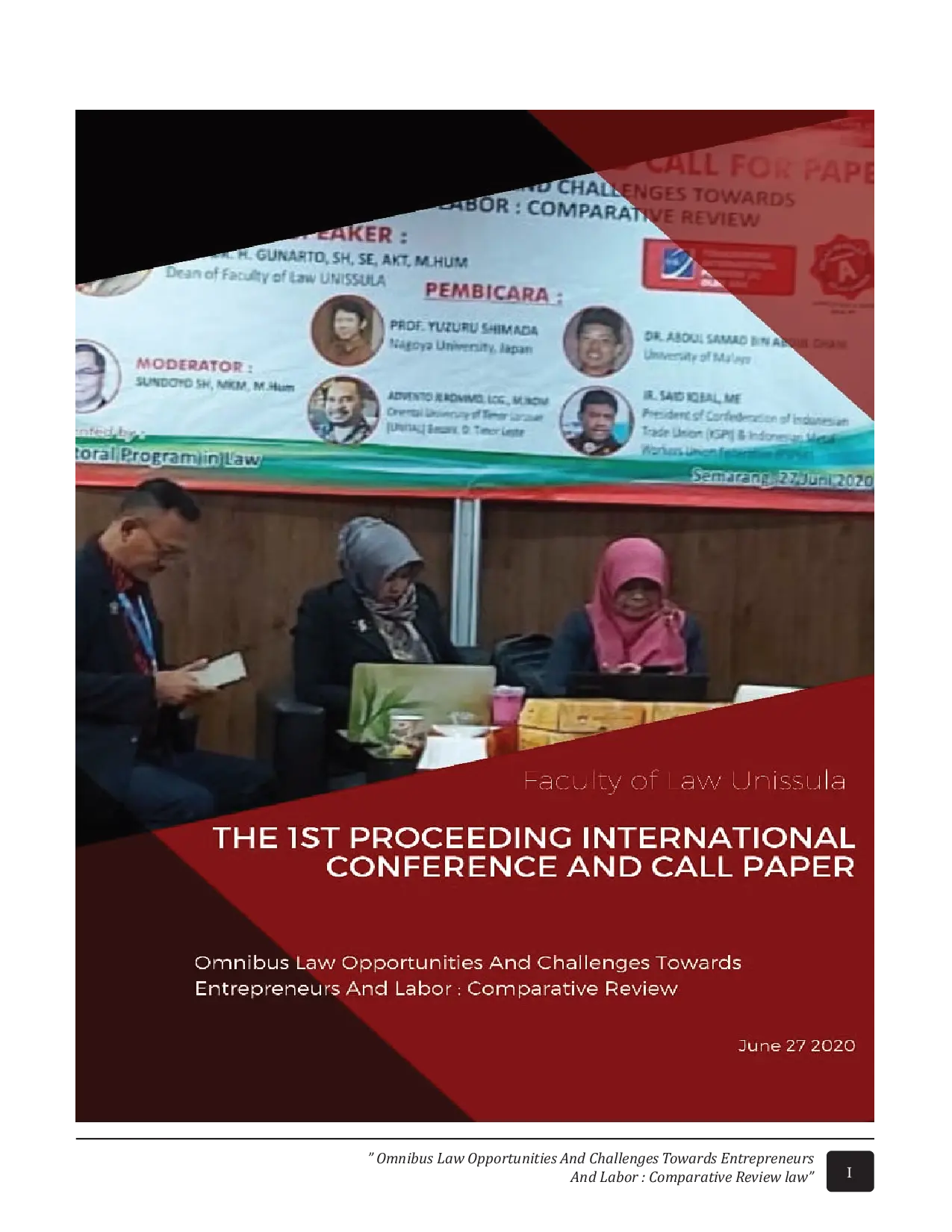
The 1st Proceeding International Conference And Call PaperThe 1st Proceeding International Conference And Call PaperThe governments ambition to form a model of legislation such as the omnibus law raises much public opposition. The Omnibus Law will cut down existing regulations and will create 493 (four hundred ninety three) Government Regulations, 19 (nineteen) Presidential Regulations, and 4 (four) new Regional Regulations so that they can be able to run. Many advantages and disadvantages that will occur. The omnibus Law on job creation bill will bring social harm for labor. The zemiology approach is part of critical criminology. The approach will provide a new perspective in assessing plans for making omnibus law in Indonesia. Structural violence is one of the themes being discussed. Public rejection of the omnibus law is not related to the promise of improvement in the peoples economy but rather to the actual structural violence that will occur. Denial and violation of human rights is the price exchanged from the making of the omnibus law. The government as the organizer of the State should protect the interests of the people rather than protecting the interests of investors. That is the promise that must be fulfilled by the State administrators, as in the 1945 Constitution.
Utilizing the perspective of zemiology is the best way to prevent exploitative practices and social hazards that will occur.Labor exploitation should be minimized even eliminated.The interests of entrepreneurs and workers need to be facilitated collaboratively in an aspirational law product.Democratically formed laws will produce a comfortable and profitable business climate.
Further research should investigate the long-term impacts of the Omnibus Law on specific vulnerable worker groups, such as women and those in informal sectors, to understand the nuanced ways in which structural violence manifests. Another avenue for research could explore the effectiveness of alternative regulatory frameworks, such as participatory governance models, in balancing economic development with worker protection and environmental sustainability. Finally, a comparative study examining the implementation of similar omnibus laws in other countries could provide valuable insights into best practices and potential pitfalls, informing future policy decisions in Indonesia and contributing to a more just and equitable legal system. These studies should be conducted with a focus on qualitative data collection, including interviews with affected workers and community stakeholders, to ensure a comprehensive understanding of the lived experiences and challenges arising from the new legislation.
| File size | 896.78 KB |
| Pages | 18 |
| DMCA | Report |
Related /
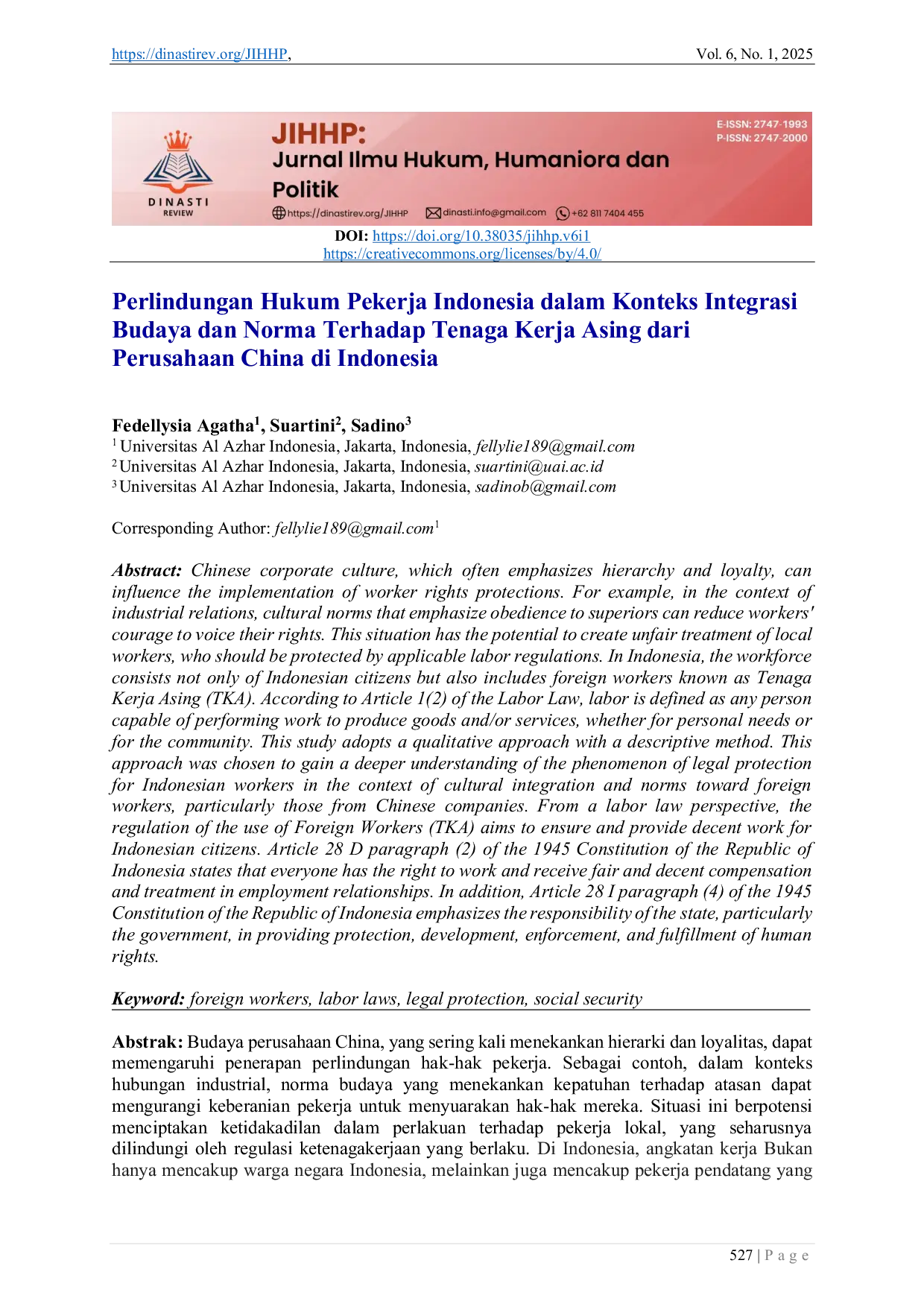
DINASTIREVDINASTIREV Integrasi budaya asing membawa norma dan praktik kerja yang berbeda, yang dapat menimbulkan benturan nilai dan merugikan pekerja lokal. Oleh karena itu,Integrasi budaya asing membawa norma dan praktik kerja yang berbeda, yang dapat menimbulkan benturan nilai dan merugikan pekerja lokal. Oleh karena itu,
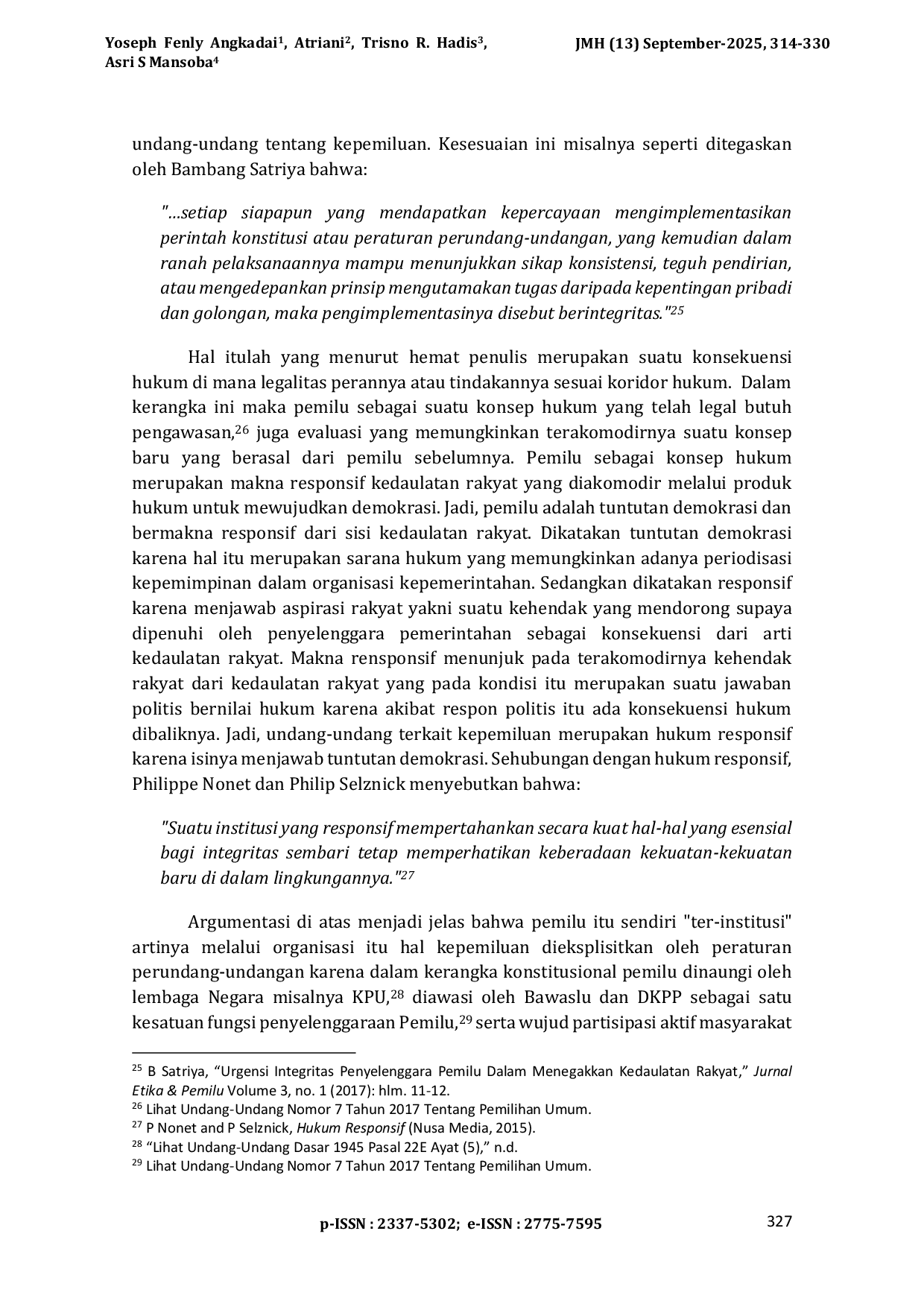
UntikaUntika Peraturan perundang-undangan dimaksud merupakan “kontrak normatif yang menjadi acuan konstitusional yang terealisasi dalam “kontrak politis ketikaPeraturan perundang-undangan dimaksud merupakan “kontrak normatif yang menjadi acuan konstitusional yang terealisasi dalam “kontrak politis ketika
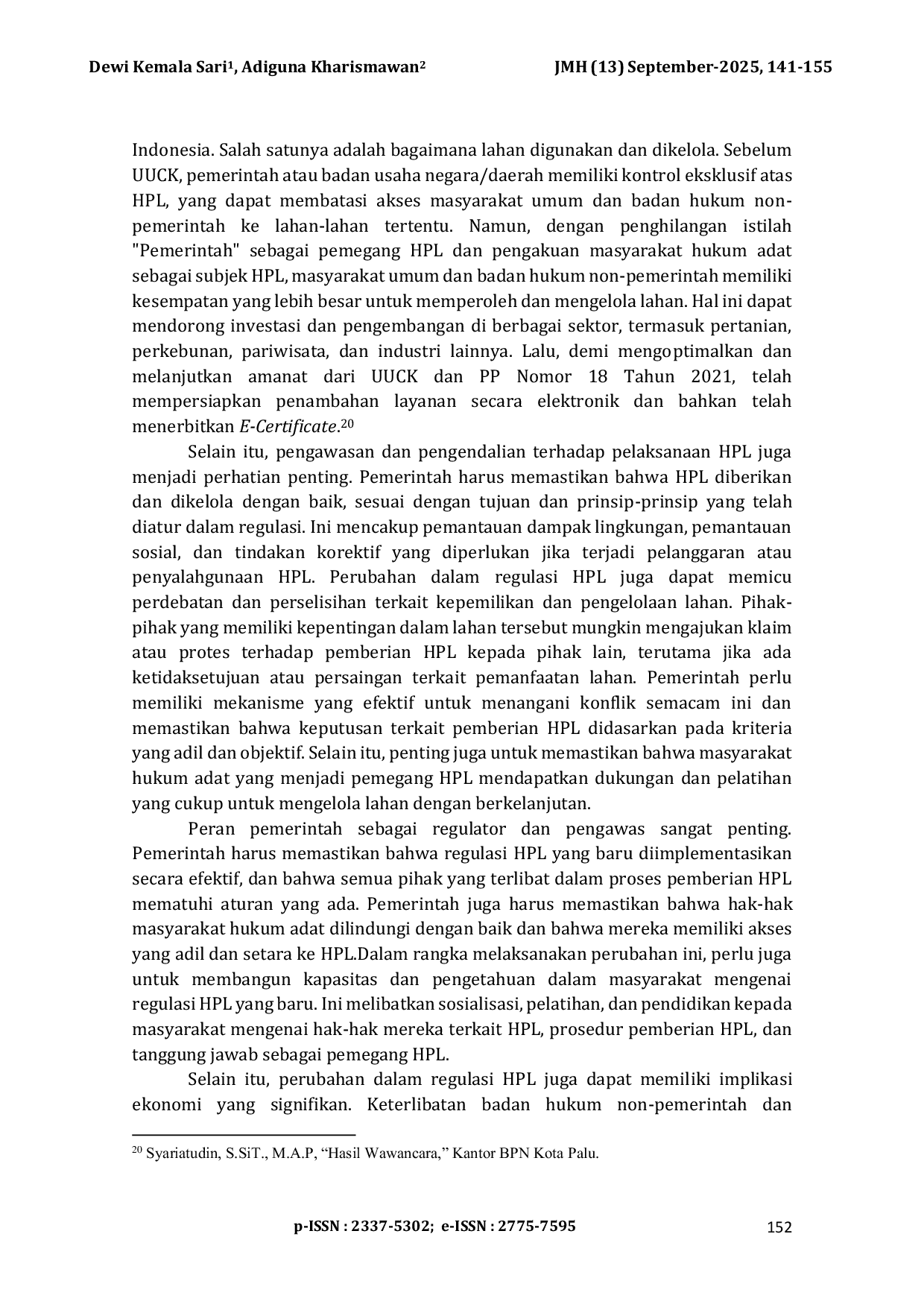
UntikaUntika Temuan studi menunjukkan bahwa ketentuan mengenai Hak Pengelolaan atas tanah negara dalam UUPA tidak diformulasikan secara eksplisit, dan posisi hukumnyaTemuan studi menunjukkan bahwa ketentuan mengenai Hak Pengelolaan atas tanah negara dalam UUPA tidak diformulasikan secara eksplisit, dan posisi hukumnya

UntikaUntika Influencer sebagai bagian dari sistem pemasaran dapat dimintai pertanggungjawaban hukum secara perdata, pidana, hingga administrasi. Sehingga hasil analisisInfluencer sebagai bagian dari sistem pemasaran dapat dimintai pertanggungjawaban hukum secara perdata, pidana, hingga administrasi. Sehingga hasil analisis

UntikaUntika Partisipasi masyarakat yang bermakna masih terbatas, namun kelompok tani menunjukkan potensi sebagai agen informal dalam pengawasan akuntabilitas danaPartisipasi masyarakat yang bermakna masih terbatas, namun kelompok tani menunjukkan potensi sebagai agen informal dalam pengawasan akuntabilitas dana

UntikaUntika Selain itu, putusan Mahkamah Konstitusi dapat mempengaruhi perubahan terhadap perundang-undangan yang berlaku atau menciptakan norma baru serta mempengaruhiSelain itu, putusan Mahkamah Konstitusi dapat mempengaruhi perubahan terhadap perundang-undangan yang berlaku atau menciptakan norma baru serta mempengaruhi

UntikaUntika Namun, Forkopimcam Kintom belum optimal dalam melaksanakan tugasnya karena menghadapi kendala koordinasi, keterbatasan kemampuan deteksi dini dan komunikasiNamun, Forkopimcam Kintom belum optimal dalam melaksanakan tugasnya karena menghadapi kendala koordinasi, keterbatasan kemampuan deteksi dini dan komunikasi

IAIN CURUPIAIN CURUP Penelitian ini menawarkan model integrasi hukum tiga dimensi sebagai solusi konseptual untuk mewujudkan digitalisasi sertifikasi tanah yang efektif, inklusif,Penelitian ini menawarkan model integrasi hukum tiga dimensi sebagai solusi konseptual untuk mewujudkan digitalisasi sertifikasi tanah yang efektif, inklusif,
Useful /

UntikaUntika Studi ini menyarankan peneguhan lembaga siber nasional, reformasi norma hukum pidana yang berorientasi pada AI, serta penyatuan perlindungan perempuanStudi ini menyarankan peneguhan lembaga siber nasional, reformasi norma hukum pidana yang berorientasi pada AI, serta penyatuan perlindungan perempuan

UntikaUntika Penelitian ini bertujuan untuk menganalisis keabsahan hukum dari perjanjian nominee dalam kaitannya dengan kasus hukum No: 144/PDT/2021/PT DPS, serta konsekuensiPenelitian ini bertujuan untuk menganalisis keabsahan hukum dari perjanjian nominee dalam kaitannya dengan kasus hukum No: 144/PDT/2021/PT DPS, serta konsekuensi
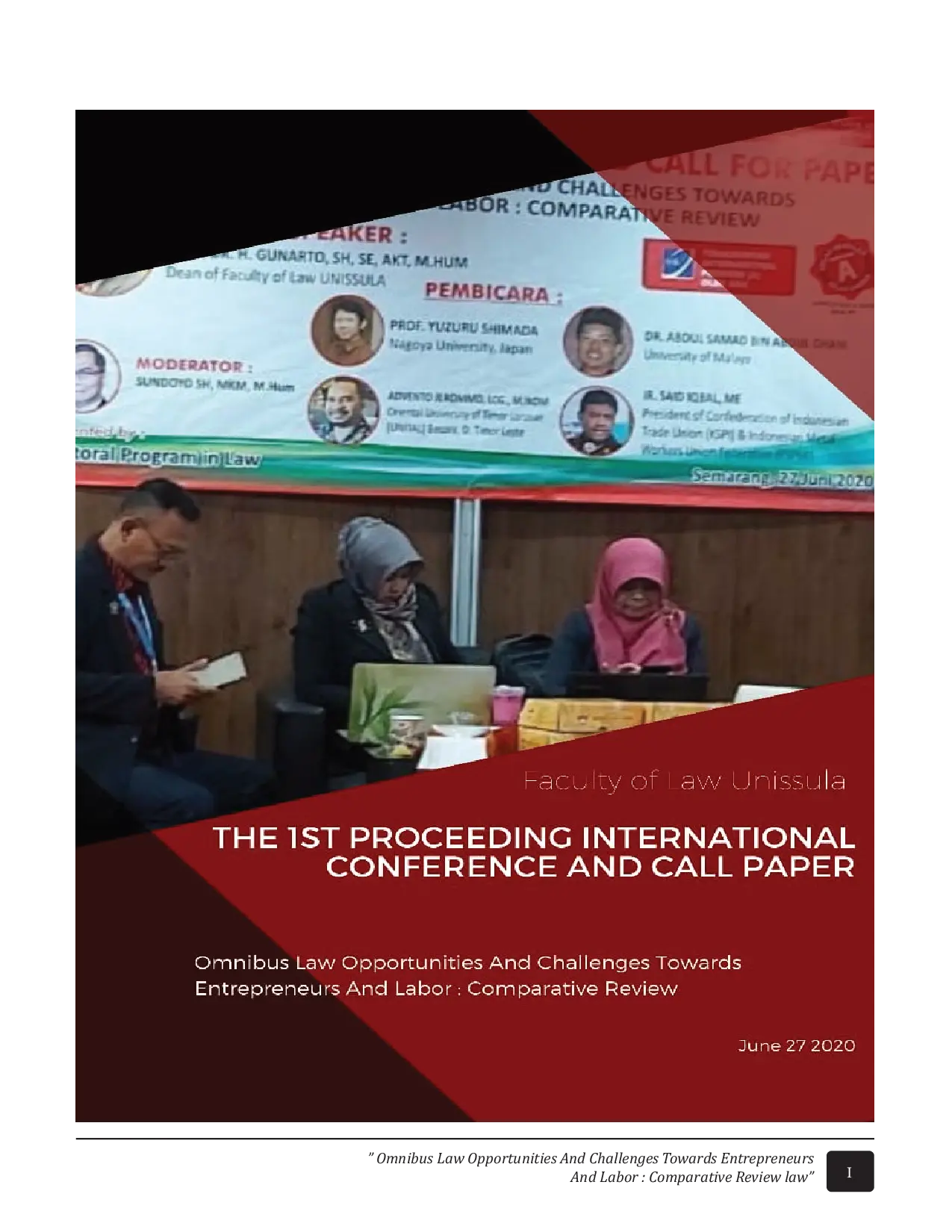
UNISSULAUNISSULA Rencana Omnibus Law di Indonesia meliputi Omnibus Law Ketenagakerjaan, Hak Cipta, dan Perpajakan, serta pembentukan Omnibus Law Task Force oleh PemerintahRencana Omnibus Law di Indonesia meliputi Omnibus Law Ketenagakerjaan, Hak Cipta, dan Perpajakan, serta pembentukan Omnibus Law Task Force oleh Pemerintah
UNISSULAUNISSULA Berdasarkan pendekatan teoretis dan konseptual, artikel ini menunjukkan bahwa regulasi hak konstitusional pekerja dalam RUU Cipta Kerja tidak sejalan denganBerdasarkan pendekatan teoretis dan konseptual, artikel ini menunjukkan bahwa regulasi hak konstitusional pekerja dalam RUU Cipta Kerja tidak sejalan dengan