UMPUMP
Proceedings Series on Social Sciences & HumanitiesProceedings Series on Social Sciences & HumanitiesThis research aims to identify and introduce Javanese traditional games as a tool for BIPA learning in the VUCA (Volatility, Unpredictability, Complexity, and Ambiguity) era to improve the language skills of BIPA learners. The research method used a qualitative research method with a phenomenological approach. Primary data sources include observation of BIPA classes, interviews with BIPA learners, and documentation of traditional games. Secondary data sources include literature on traditional games, language learning theory, and cultural context analysis in the VUCA era. Data collection was conducted through classroom observation, and interviews with BIPA teaching lecturers and BIPA learners. Data analysis was conducted through thematic techniques to identify themes in the data. The results of the analysis show that traditional Javanese games can improve language skills, creativity, and engagement in BIPA learning. As well as helping to understand culture and social values related to language. Research that introduces Javanese traditional games in BIPA learning is an effective strategy to improve the quality of language learning in the VUCA era. The results of this study are used as a reference for BIPA teachers or BIPA researchers to integrate Javanese traditional games into the BIPA learning process.
The study concludes that Javanese traditional games are effective tools for enhancing Indonesian language skills among BIPA learners.These games provide a context for interactive learning, fostering communication and cultural understanding.The application of these games aligns with the principles of VUCA, promoting adaptability and resilience in language acquisition.Therefore, integrating Javanese traditional games into BIPA curricula is recommended to improve the quality of language education.
Further research should explore the specific cognitive processes activated by Javanese traditional games during language learning, potentially utilizing neuroimaging techniques to understand brain activity. Additionally, studies could investigate the effectiveness of adapting these games for online BIPA instruction, addressing the challenges of remote learning and maintaining engagement. Finally, a comparative analysis of Javanese traditional games with those from other Indonesian cultures could reveal best practices for incorporating cultural elements into BIPA curricula, ultimately enriching the learning experience and fostering a deeper appreciation for Indonesian heritage. These investigations will contribute to a more nuanced understanding of how traditional games can be leveraged to optimize BIPA learning outcomes and prepare students for effective communication in a diverse and dynamic world.
- Análisis bibliométrico y de contenido sobre VUCA | Revista Española de Documentación... doi.org/10.3989/redc.2023.2.1968Anylisis bibliomytrico y de contenido sobre VUCA Revista Espayola de Documentaciyn doi 10 3989 redc 2023 2 1968
- Javanese Traditional Games in BIPA Learning in the VUCA Era: An Effective Strategy to Improve Language... doi.org/10.30595/pssh.v20i.1312Javanese Traditional Games in BIPA Learning in the VUCA Era An Effective Strategy to Improve Language doi 10 30595 pssh v20i 1312
- The SAC 3.0 Android-Based Application as A Learning Media in Teaching Basic BIPA - EUDL. sac android... eudl.eu/doi/10.4108/eai.9-11-2019.2294978The SAC 3 0 Android Based Application as A Learning Media in Teaching Basic BIPA EUDL sac android eudl eu doi 10 4108 eai 9 11 2019 2294978
| File size | 518.93 KB |
| Pages | 9 |
| DMCA | Report |
Related /
IC MESIC MES Tujuan AS dalam melancarkan GWOT adalah untuk menakuti-nakuti publik dunia (politics of fear) sehingga negara-negara bersedia bergabung dalam berbagaiTujuan AS dalam melancarkan GWOT adalah untuk menakuti-nakuti publik dunia (politics of fear) sehingga negara-negara bersedia bergabung dalam berbagai
STITALSTITAL Kab. Bangkalan. Dengan menggukan jenis penelitian kuantitatif deskriptif, dan pengumpulan datanya dengan menggunakan metode Observasi (Kondisi tempat,Kab. Bangkalan. Dengan menggukan jenis penelitian kuantitatif deskriptif, dan pengumpulan datanya dengan menggunakan metode Observasi (Kondisi tempat,
UMPUMP Data berupa materi atau teks promosi dan teks komunikasi branding Kampung Batik Laweyan. Content analysis, wawancara, dan observasi digunakan dalam pengumpulanData berupa materi atau teks promosi dan teks komunikasi branding Kampung Batik Laweyan. Content analysis, wawancara, dan observasi digunakan dalam pengumpulan

UMPUMP van Dijk. Jenis penelitian ini adalah deskriptif kualitatif. Teknik pengumpulan data menggunakan Teknik rekam, simak, dan catat. Teknik analisis data menggunakanvan Dijk. Jenis penelitian ini adalah deskriptif kualitatif. Teknik pengumpulan data menggunakan Teknik rekam, simak, dan catat. Teknik analisis data menggunakan
UNPANDUNPAND Budaya Jawa dikenal dan dikembangkan oleh banyak anak muda, yang akan membantunya berkembang dan berubah menjadi budaya yang diakui di luar. PerencanaanBudaya Jawa dikenal dan dikembangkan oleh banyak anak muda, yang akan membantunya berkembang dan berubah menjadi budaya yang diakui di luar. Perencanaan
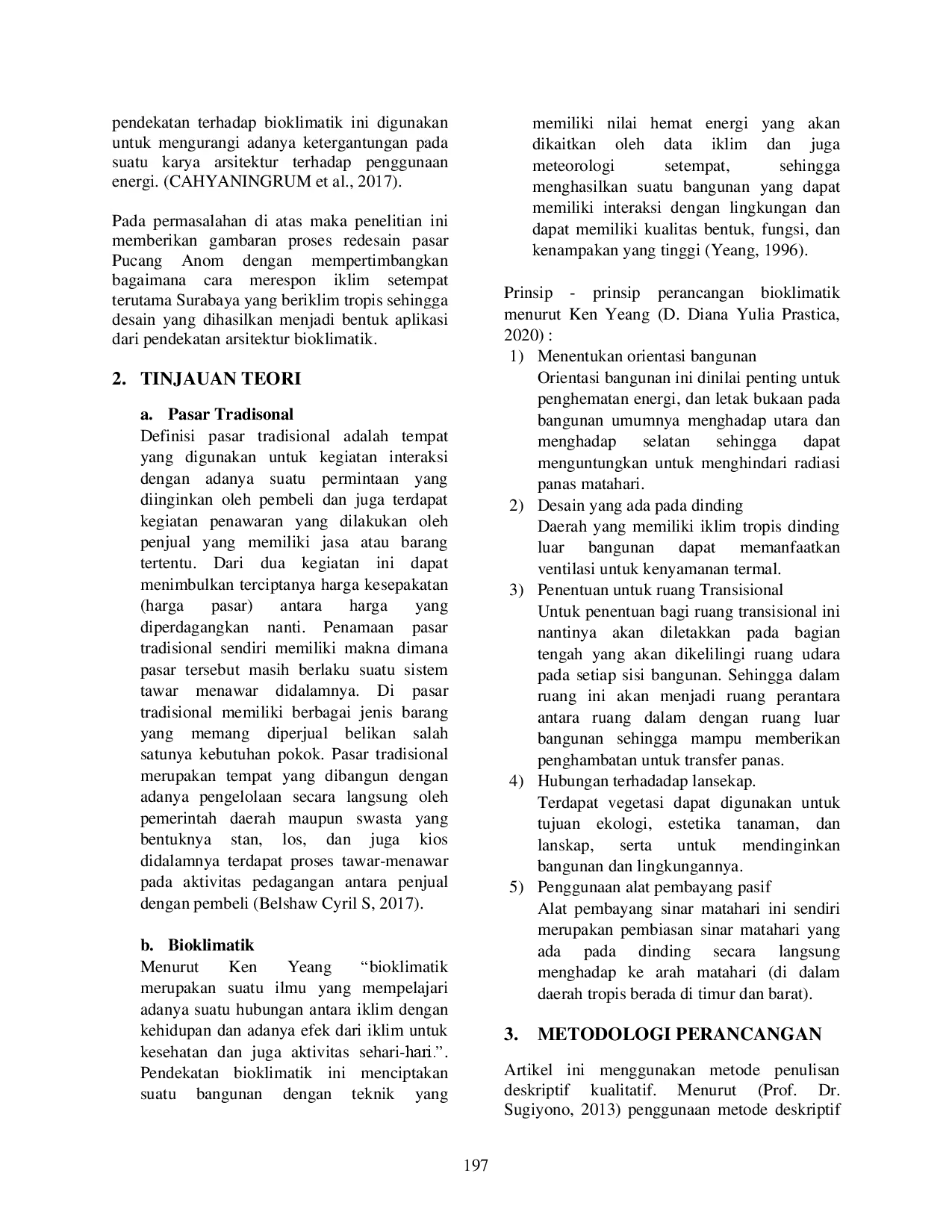
UNPANDUNPAND Dari penjelasan diatas maka dapat ditarik kesimpulan bahwa pada penerapan arsitektur bioklimatik untuk proses redesain pasar Pucang Anom ini dapat memperbaikiDari penjelasan diatas maka dapat ditarik kesimpulan bahwa pada penerapan arsitektur bioklimatik untuk proses redesain pasar Pucang Anom ini dapat memperbaiki

ISBIISBI Subjek penelitian ini adalah seluruh masyarakat Desa Lembongan. Metode yang digunakan dalam penelitian ini adalah metode kualitatif yang seluruh datanyaSubjek penelitian ini adalah seluruh masyarakat Desa Lembongan. Metode yang digunakan dalam penelitian ini adalah metode kualitatif yang seluruh datanya

AKBIDHIPEKALONGANAKBIDHIPEKALONGAN Tradisi di masyarakat Kemurang salah satunya adalah pijat perut. Pijat perut sangat bertentangan dengan ilmu medis karena dapat menyebabkan rupture uteriTradisi di masyarakat Kemurang salah satunya adalah pijat perut. Pijat perut sangat bertentangan dengan ilmu medis karena dapat menyebabkan rupture uteri
Useful /
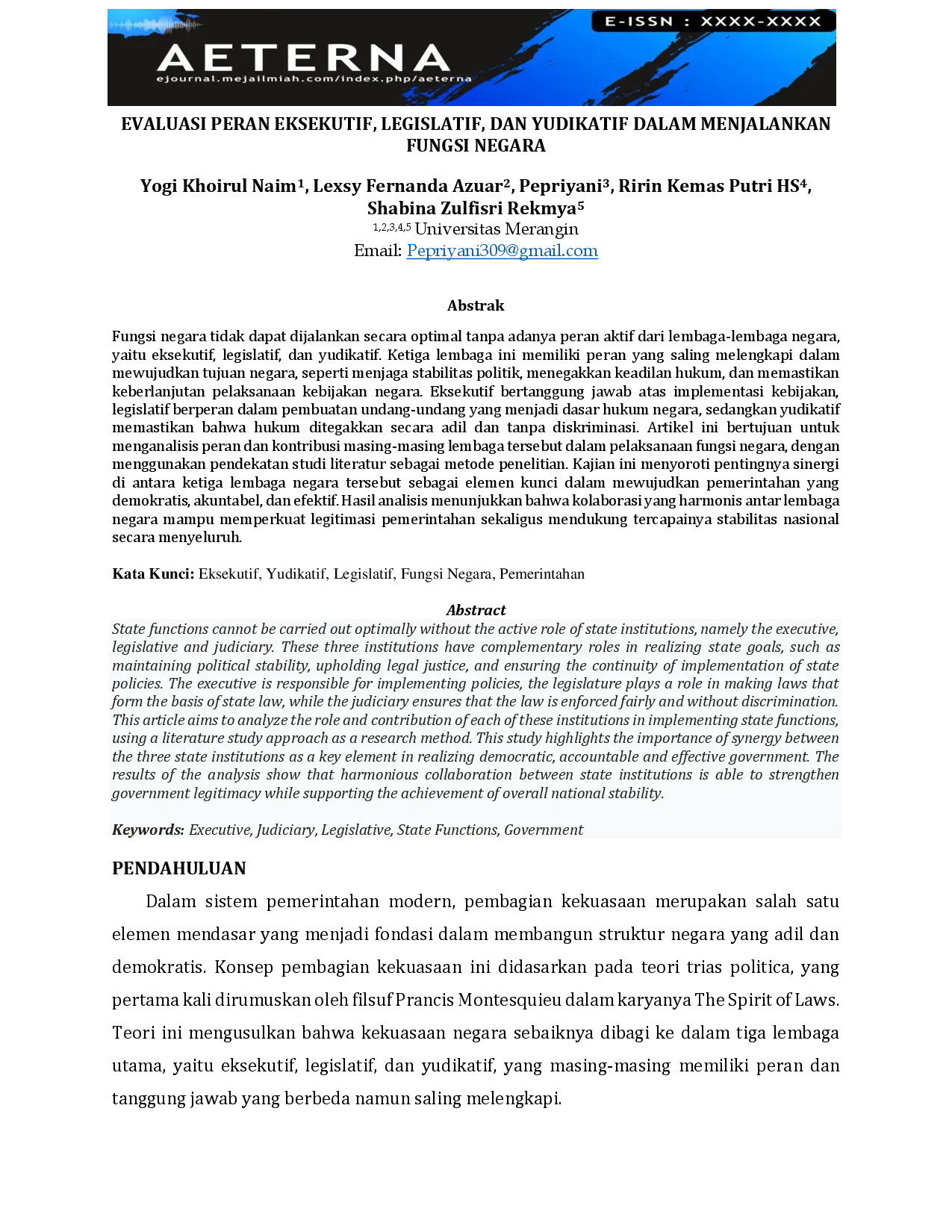
MEJAILMIAHMEJAILMIAH Ketiga lembaga negara, yaitu eksekutif, legislatif, dan yudikatif, memiliki peran krusial dalam menjalankan fungsi negara dengan saling melengkapi melaluiKetiga lembaga negara, yaitu eksekutif, legislatif, dan yudikatif, memiliki peran krusial dalam menjalankan fungsi negara dengan saling melengkapi melalui

AMORFATIAMORFATI Hasil menunjukkan bahwa integrasi pengetahuan asli ke dalam proses QA meningkatkan afirmasi budaya, keterlibatan siswa, dan standar keunggulan yang kontekstual.Hasil menunjukkan bahwa integrasi pengetahuan asli ke dalam proses QA meningkatkan afirmasi budaya, keterlibatan siswa, dan standar keunggulan yang kontekstual.

UMPUMP Evaluasi dilakukan via WhatsApp dan diakhiri home visit untuk memantau perkembangan.meski dihadapkan pada kendala jaringan, penurun semangat, dan kurangnyaEvaluasi dilakukan via WhatsApp dan diakhiri home visit untuk memantau perkembangan.meski dihadapkan pada kendala jaringan, penurun semangat, dan kurangnya

UMPUMP Hasil penelitian merangkum perkembangan bahasa berdasarkan empat poin Blommaert. bahasa negara sebagai proses ideologis, sociolinguistic truism, rezimHasil penelitian merangkum perkembangan bahasa berdasarkan empat poin Blommaert. bahasa negara sebagai proses ideologis, sociolinguistic truism, rezim