ARKAINSTITUTEARKAINSTITUTE
Educenter : Jurnal Ilmiah PendidikanEducenter : Jurnal Ilmiah PendidikanStudent learning outcomes are an indicator of the success of teaching and learning activities carried out. This research aims to determine the improvement in student learning outcomes in economics courses by implementing the problem-based learning model. A quantitative research method with a quasi-experimental approach was used. The population of this research was 205 students in class XI social at SMAN 7 Tasikmalaya, and the sample used was 136 students using a purposive sampling technique consisting of two experimental classes and two control classes. The experimental class uses the Problem-Based Learning learning model, while the control class uses the conventional learning model. Students in each class are given a pretest, and then learning is carried out according to a predetermined model, and then a posttest is carried out. The questions used are 25 multiple-choice questions, and then the results or grades obtained by students are analyzed further. The results of this study show that there are differences between before and after treatment in the experimental class and control class. This research concludes that the implications of implementing a problem-based learning model as an alternative to conventional models can be used in an effort to improve student learning outcomes in economics courses.
The research demonstrates that students who learn through Problem-Based Learning (PBL) exhibit a deeper understanding of the subject matter compared to those using conventional methods.Specifically, the study found differences in learning outcomes between the experimental class, utilizing PBL, and the control class, employing conventional learning.Furthermore, the implementation of the PBL model significantly improved student learning outcomes in economics courses, suggesting its effectiveness as an alternative to traditional teaching approaches.
Future research should explore the integration of diverse learning media within the Problem-Based Learning framework to enhance student engagement and comprehension. Additionally, studies could investigate the effectiveness of PBL across a broader range of high school subjects and student populations, moving beyond economics. Finally, research is needed to examine the long-term impact of PBL on students critical thinking skills and their ability to apply knowledge to real-world situations, building upon the current studys focus on immediate learning outcomes. These investigations will contribute to a more comprehensive understanding of PBLs potential to transform education and prepare students for future challenges.
- Learning about learning outcomes: the student perspective: Teaching in Higher Education: Vol 19, No 6.... doi.org/10.1080/13562517.2014.901964Learning about learning outcomes the student perspective Teaching in Higher Education Vol 19 No 6 doi 10 1080 13562517 2014 901964
- Motivasi Belajar dan Regulasi Diri Mahasiswa Selama Pandemi Covid-19 | Edunesia : Jurnal Ilmiah Pendidikan.... doi.org/10.51276/edu.v2i1.127Motivasi Belajar dan Regulasi Diri Mahasiswa Selama Pandemi Covid 19 Edunesia Jurnal Ilmiah Pendidikan doi 10 51276 edu v2i1 127
| File size | 348.89 KB |
| Pages | 10 |
| DMCA | Report |
Related /

PERMAPENDIS SUMUTPERMAPENDIS SUMUT Berdasarkan hasil penelitian, pembelajaran matematika pada materi KPK dan FPB dengan pendekatan RME dan media bahan pokok mendapatkan apresiasi dari siswaBerdasarkan hasil penelitian, pembelajaran matematika pada materi KPK dan FPB dengan pendekatan RME dan media bahan pokok mendapatkan apresiasi dari siswa

PERMAPENDIS SUMUTPERMAPENDIS SUMUT Penelitian ini menemukan bahwa perilaku atau sikap mandiri seseorang tidak terbentuk secara mendadak, akan tetapi melalui proses sejak masa kanak-kanak.Penelitian ini menemukan bahwa perilaku atau sikap mandiri seseorang tidak terbentuk secara mendadak, akan tetapi melalui proses sejak masa kanak-kanak.

PERMAPENDIS SUMUTPERMAPENDIS SUMUT Narasumber dalam penelitian ini adalah guru kelas I, sedangkan narasumber selanjutnya adalah siswa kelas I yang diambil berdasarkan kunci jawaban dan nilaiNarasumber dalam penelitian ini adalah guru kelas I, sedangkan narasumber selanjutnya adalah siswa kelas I yang diambil berdasarkan kunci jawaban dan nilai

PERMAPENDIS SUMUTPERMAPENDIS SUMUT Hasil penelitian ini menunjukkan bahwa pendekatan pembelajaran kontekstual memprioritaskan pada perilaku belajar yang nyata dan konkrit, hal ini didasarkanHasil penelitian ini menunjukkan bahwa pendekatan pembelajaran kontekstual memprioritaskan pada perilaku belajar yang nyata dan konkrit, hal ini didasarkan

PERMAPENDIS SUMUTPERMAPENDIS SUMUT Penelitian kualitatif dilaksanakan untuk membangun pengetahuan melalui pemahaman dan penemuan. Hasil penelitian ini adalah bahwa qiyas adalah menerapkanPenelitian kualitatif dilaksanakan untuk membangun pengetahuan melalui pemahaman dan penemuan. Hasil penelitian ini adalah bahwa qiyas adalah menerapkan

PERMAPENDIS SUMUTPERMAPENDIS SUMUT Terdapat korelasi yang signifikan antara guided discovery learning dengan kemampuan pemecahan masalah siswa pada mata pelajaran fikih di Madrasah AliyahTerdapat korelasi yang signifikan antara guided discovery learning dengan kemampuan pemecahan masalah siswa pada mata pelajaran fikih di Madrasah Aliyah

ARKAINSTITUTEARKAINSTITUTE Sekolah tidak dapat memenuhi tugasnya tanpa guru berkualitas, dan keluarga sebagai salah satu pilar pendidikan (tripod) harus terus menuntut instruksiSekolah tidak dapat memenuhi tugasnya tanpa guru berkualitas, dan keluarga sebagai salah satu pilar pendidikan (tripod) harus terus menuntut instruksi

IKIP SILIWANGIIKIP SILIWANGI This study, which implemented constructivism-based learning, aims to investigate the role and contribution of constructivism-based learning approachesThis study, which implemented constructivism-based learning, aims to investigate the role and contribution of constructivism-based learning approaches
Useful /

UIJUIJ Dengan demikian maka jelaslah bahwa pendidikan kepramukaan mempunyai korelasi dengan akhlak siswa. pramuka juga berperan dan ikut andil memberikan sertaDengan demikian maka jelaslah bahwa pendidikan kepramukaan mempunyai korelasi dengan akhlak siswa. pramuka juga berperan dan ikut andil memberikan serta

JBE UPIYPTKJBE UPIYPTK Penelitian ini menunjukkan bahwa profitabilitas berpengaruh positif dan signifikan terhadap financial distress, sedangkan struktur modal, pergantian CEO,Penelitian ini menunjukkan bahwa profitabilitas berpengaruh positif dan signifikan terhadap financial distress, sedangkan struktur modal, pergantian CEO,
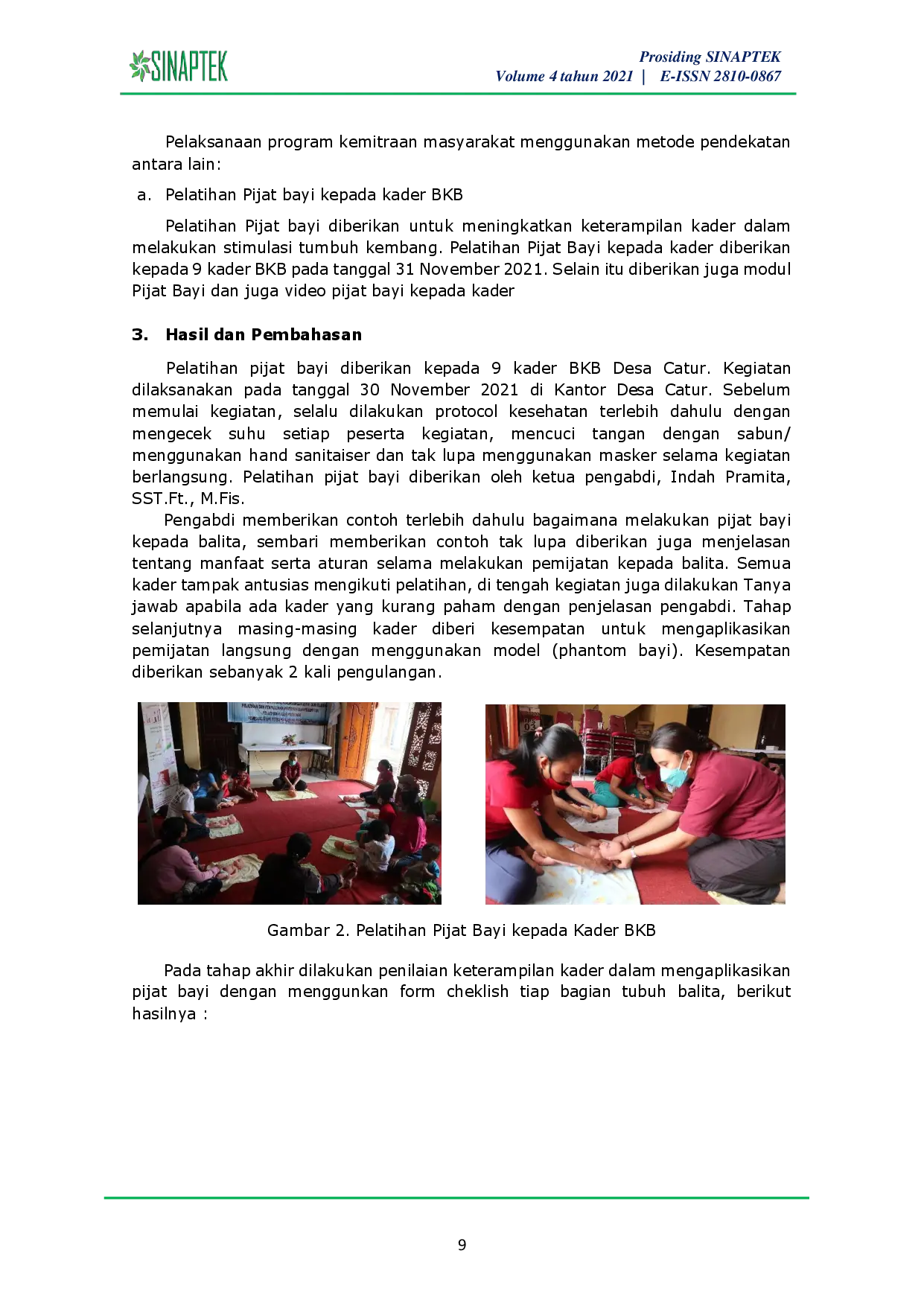
UNDHIRA BALIUNDHIRA BALI Kader BKB bertugas memberikan pengajaran dan pelatihan kepada kader posyandu dan orang tua tentang tumbuh kembang anak usia 0-5 tahun. Sejak tahun 2016,Kader BKB bertugas memberikan pengajaran dan pelatihan kepada kader posyandu dan orang tua tentang tumbuh kembang anak usia 0-5 tahun. Sejak tahun 2016,

LINGUISTIK INDONESIALINGUISTIK INDONESIA Berdasarkan data, terdapat delapan metafora yang digunakan Tempo. Metafora tersebut dipetakan ke dalam ranah sumber dan ranah target, kemudian ditemukanBerdasarkan data, terdapat delapan metafora yang digunakan Tempo. Metafora tersebut dipetakan ke dalam ranah sumber dan ranah target, kemudian ditemukan