UNINDRAUNINDRA
Scope : Journal of English Language TeachingScope : Journal of English Language TeachingTranslation skill is viewed as the fifth skill after the other four skills that should be mastered by the second or foreign learner on studying English. This study aims at analyzing and describing translation techniques and translation competence of Indonesian EFL learners. The research was carried by descriptive research method. The number of respondent is 35 students on majoring of English Education, and the translation test as the instrument. The result of descriptive analysis shows that the literal translation technique (word by word) is mostly used. Moreover, the other techniques, sorting from the highest percentage, are free translation technique, omission, addition, and compensation, replacement of word class, explication-implication, and paraphrase. Moreover, the translation competence of respondents was on 48.57% in the interval scores 60-70. With the average score of 72, 34, the translation competence achieved by the respondents is categorized as fair. Therefore, translation competence by the source text is quite fair organized with comprehending of the content sufficiently, yet there is still mistake on diction, grammar, punctuation and word selection influencing the quality of the translated target text.
The study concludes that the most frequently used translation technique among Indonesian EFL learners is literal translation.While the translation competence of the respondents is categorized as fair, indicating a sufficient understanding of the content but with weaknesses in grammar, punctuation, and word choice.This result highlights the need for focused instruction to improve the quality of translation skills among Indonesian EFL learners.
Further research should investigate the specific challenges faced by Indonesian EFL learners in translating informative texts, focusing on areas such as grammatical accuracy and appropriate word selection. Additionally, studies could explore the effectiveness of different pedagogical approaches for improving translation competence, such as incorporating more practice with contextualized translation tasks and providing feedback on common errors. Finally, research might also examine the impact of specific cultural elements on translation choices and potential misunderstandings, deepening the understanding of the complex interplay between language and culture in the translation process to prepare the students to cope with the real world translation needs. This could involve analyzing translation errors related to cultural concepts or idiomatic expressions. Considering the importance of translation skills in various professional contexts, understanding the factors that contribute to effective translation competence is vital for fostering successful communication in a globalized world.
| File size | 455.17 KB |
| Pages | 12 |
| DMCA | Report |
Related /
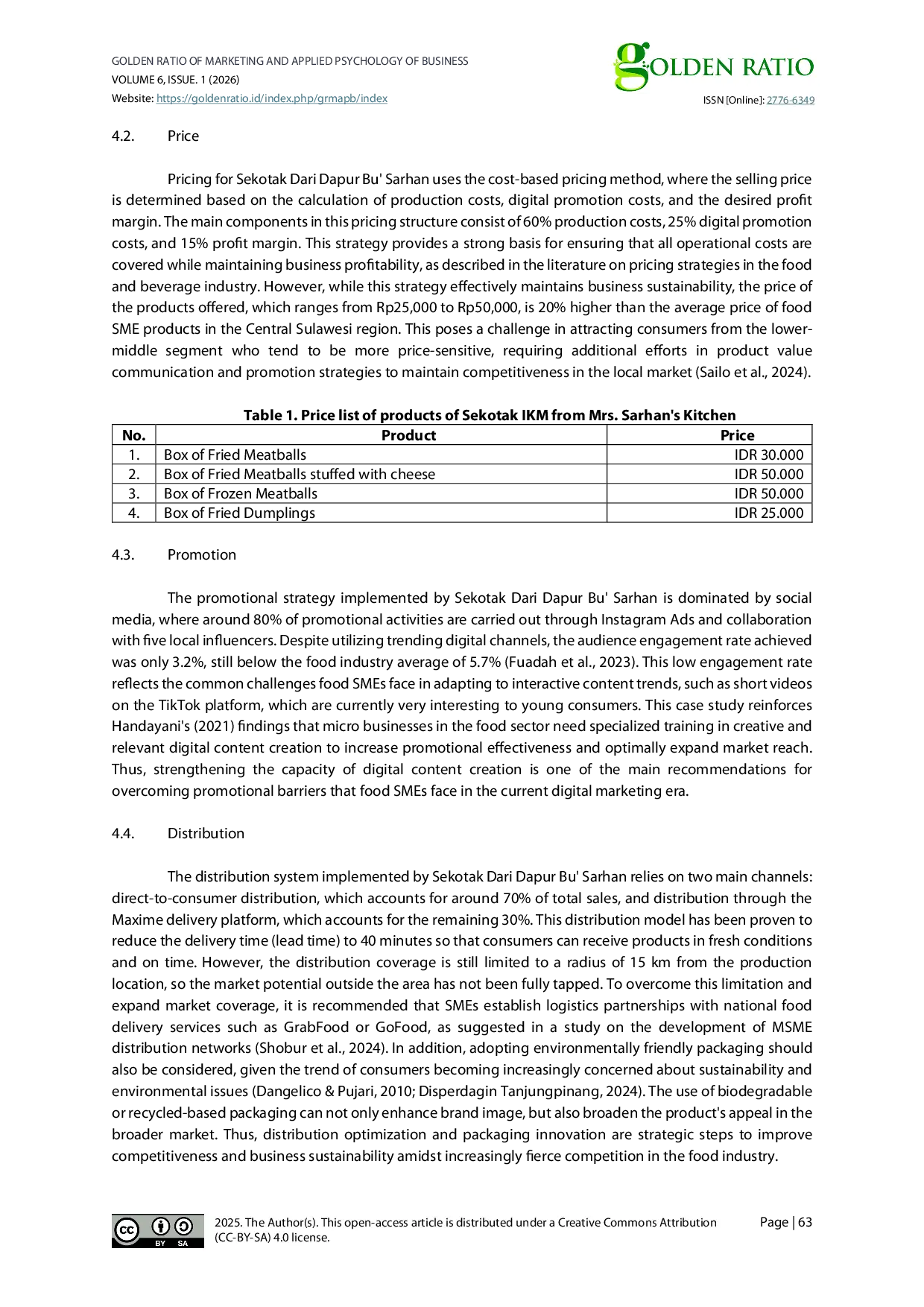
GOLDENRATIOGOLDENRATIO While cost-based pricing is effective, the study recommends adjusting pricing strategies to cater to a wider range of consumers and enhancing digital promotionWhile cost-based pricing is effective, the study recommends adjusting pricing strategies to cater to a wider range of consumers and enhancing digital promotion

UNMUNM The quantitative analysis revealed that the experimental group showed significantly greater improvement in vocabulary retention compared to the controlThe quantitative analysis revealed that the experimental group showed significantly greater improvement in vocabulary retention compared to the control

SEAN INSTITUTESEAN INSTITUTE The research method used is qualitative, with a case study approach. Data was collected through in-depth interviews with 15 informants who are SkintificThe research method used is qualitative, with a case study approach. Data was collected through in-depth interviews with 15 informants who are Skintific

ENDLESS JOURNALENDLESS JOURNAL Data was obtained through primary and secondary data and analyzed in depth. Based on the data obtained through literacy studies and interviews, in producingData was obtained through primary and secondary data and analyzed in depth. Based on the data obtained through literacy studies and interviews, in producing

OJS INDONESIAOJS INDONESIA The purpose of this study is to determine the strategy of human resource management (MSMEs) to strengthen the national economy in the Anget Bread business.The purpose of this study is to determine the strategy of human resource management (MSMEs) to strengthen the national economy in the Anget Bread business.
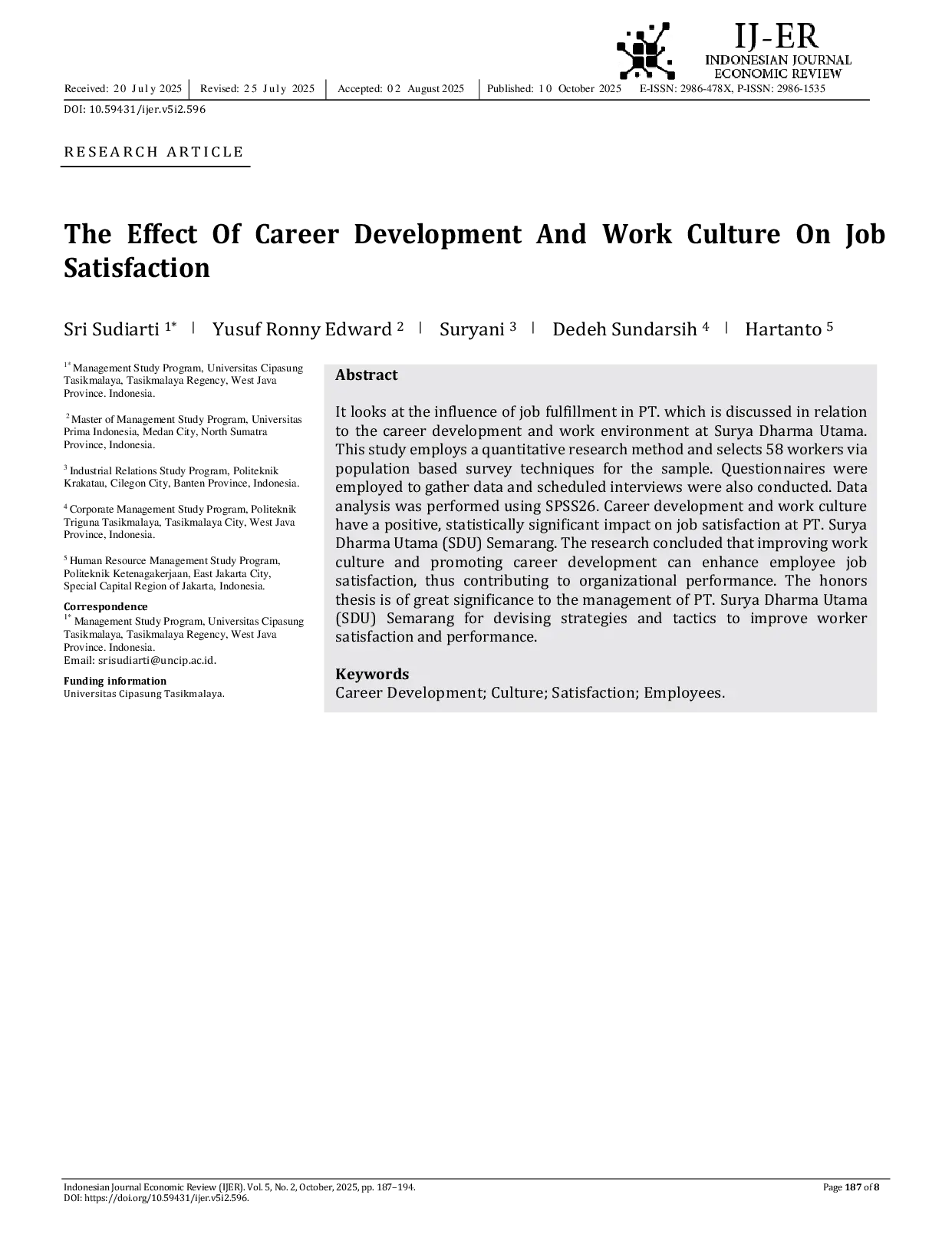
MSTI INDONESIAMSTI INDONESIA Providing employees with growth opportunities and fostering a positive work environment are crucial for enhancing their satisfaction. These findings provideProviding employees with growth opportunities and fostering a positive work environment are crucial for enhancing their satisfaction. These findings provide

CEREDINDONESIACEREDINDONESIA Results show the system successfully achieved a steady-state error of 1. 491°C, overshoot of 45.14%, and settling time of 30. 0 minutes, meeting validationResults show the system successfully achieved a steady-state error of 1. 491°C, overshoot of 45.14%, and settling time of 30. 0 minutes, meeting validation

UNISSULAUNISSULA Legally, in the utilization of village funds in the context of village development. The Ministry of Villages and Underdeveloped and Outermost Regions(KemendesLegally, in the utilization of village funds in the context of village development. The Ministry of Villages and Underdeveloped and Outermost Regions(Kemendes
Useful /

WIDYAYUWANAWIDYAYUWANA Namun, pada kenyataannya, banyak guru yang hanya memenuhi kewajiban mengajar mereka. Penelitian ini bertujuan untuk mengetahui relevansi pola pengajaranNamun, pada kenyataannya, banyak guru yang hanya memenuhi kewajiban mengajar mereka. Penelitian ini bertujuan untuk mengetahui relevansi pola pengajaran
UNISSULAUNISSULA Metode pengumpulan data yang digunakan dalam penelitian ini adalah studi pustaka, setelah bahan atau data terkumpul dari berbagai sumber data dan bahanMetode pengumpulan data yang digunakan dalam penelitian ini adalah studi pustaka, setelah bahan atau data terkumpul dari berbagai sumber data dan bahan
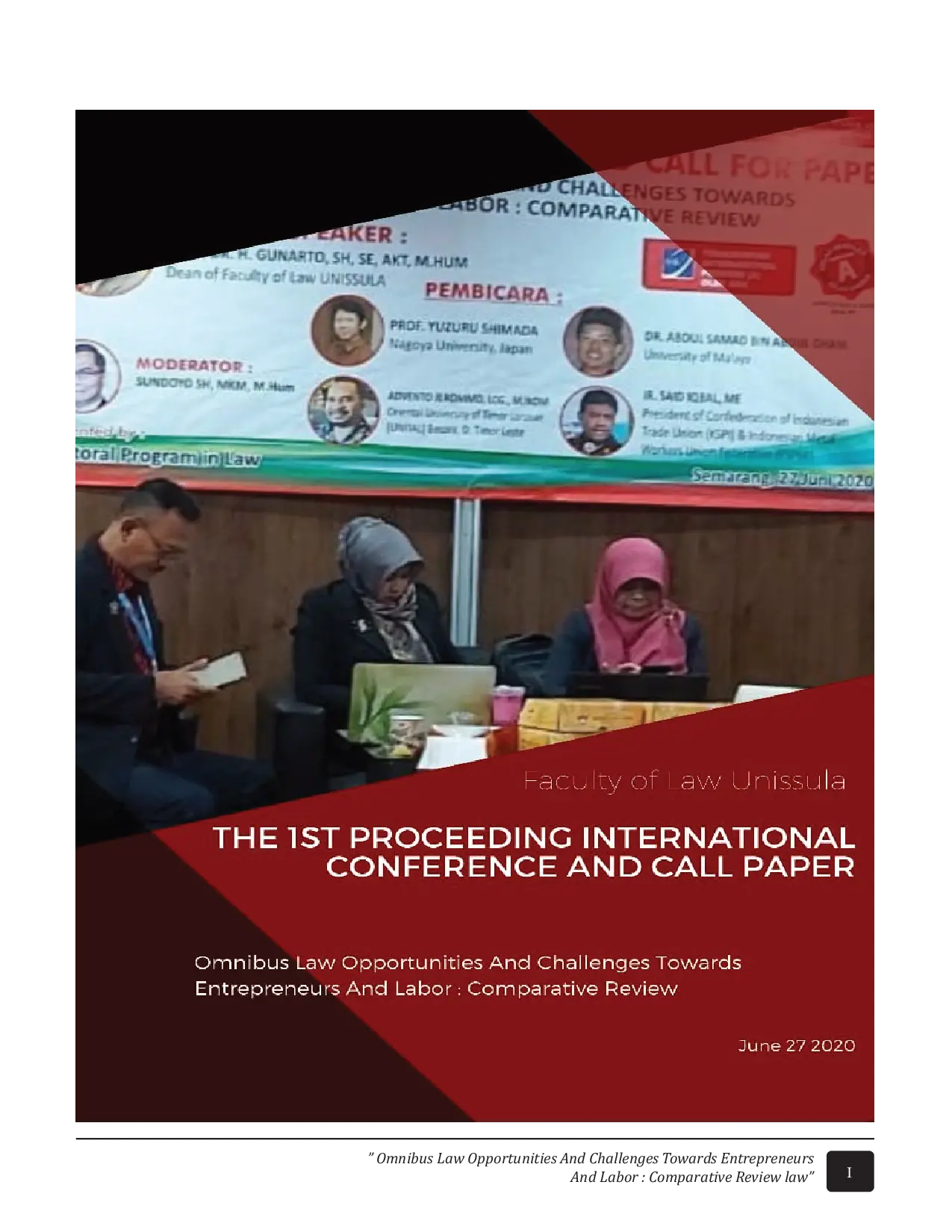
UNISSULAUNISSULA Setiap negara memiliki peraturan mengenai kejahatan perdagangan manusia yang sesuai dengan sistem hukum yang berlaku. Setiap kasus perdagangan manusiaSetiap negara memiliki peraturan mengenai kejahatan perdagangan manusia yang sesuai dengan sistem hukum yang berlaku. Setiap kasus perdagangan manusia
UNISSULAUNISSULA Salah satunya adalah memfasilitasi penggunaan Kawasan Hutan (IPKH), Izin Pinjam dan Penggunaan Kawasan Hutan (IPPKH), dan Pelepasan Kawasan Hutan. DariSalah satunya adalah memfasilitasi penggunaan Kawasan Hutan (IPKH), Izin Pinjam dan Penggunaan Kawasan Hutan (IPPKH), dan Pelepasan Kawasan Hutan. Dari