PPSDPPPSDP
PPSDP International Journal of EducationPPSDP International Journal of EducationThis study investigates how community-based apprenticeship functions as a pedagogical mechanism for developing learners uncertainty preparedness and examines its scalability within non-formal education systems in emerging contexts. Adopting a qualitative case study design, this research analyses a community-based apprenticeship program implemented through the collaboration between PKBM Alam Jingga and Rumah Magang Hebat in Indonesia. Data were drawn from a corpus of program documents, including implementation reports, learning modules, and prior empirical studies, and analyzed using reflexive thematic analysis to identify core learning mechanisms. The findings demonstrate that uncertainty preparedness is developed through three interrelated mechanisms: (1) situated experiential learning within authentic work environments under practitioner mentorship, (2) active engagement in dynamic community-based economic and social practices, and (3) iterative reflective processes that enable learners to interpret and adapt to unpredictable situations. These mechanisms collectively foster adaptive capacity, decision-making competence, social communication, and critical thinking as integrated dimensions of preparedness. The study offers a context-sensitive and resource-efficient model that can be adopted by non-formal education providers, particularly in regions with limited access to formal vocational training, by leveraging local community ecosystems as learning environments. This research advances the conceptualization of apprenticeship by repositioning it from a formal vocational pathway to a flexible, community-embedded pedagogical model, and by operationalizing uncertainty preparedness as a measurable outcome of experiential learning processes. By bridging experiential learning theory with community-based education practices, this study provides an empirically grounded and scalable framework for designing apprenticeship models that respond to the challenges of uncertainty in contemporary education, particularly in developing country contexts.
The study demonstrates that community-based apprenticeship effectively develops students uncertainty preparedness through direct learning experiences within the community.These experiences cultivate adaptive abilities, problem-solving skills, and decision-making capacity.The models potential for replication is strong due to its utilization of local community resources and the flexibility of PKBM institutions.Further research is needed to develop policy frameworks and implementation guidelines for wider adoption.
Berdasarkan hasil penelitian ini, beberapa saran penelitian lanjutan dapat diajukan. Pertama, penelitian lebih lanjut perlu dilakukan untuk menginvestigasi dampak jangka panjang dari program apprenticeship berbasis komunitas terhadap transisi karir dan kesuksesan ekonomi peserta didik. Hal ini dapat dilakukan dengan melacak peserta didik setelah menyelesaikan program dan menganalisis lintasan karir mereka, serta mengukur tingkat pendapatan dan kepuasan kerja mereka. Kedua, penelitian perlu mengeksplorasi bagaimana model apprenticeship ini dapat diadaptasi dan diterapkan dalam konteks pendidikan non-formal yang berbeda di Indonesia, dengan mempertimbangkan variasi budaya, ekonomi, dan sosial di berbagai daerah. Penelitian ini dapat melibatkan studi komparatif di berbagai PKBM atau lembaga pendidikan non-formal lainnya. Ketiga, penelitian lanjutan dapat berfokus pada pengembangan dan evaluasi modul pelatihan bagi mentor apprenticeship, untuk meningkatkan kualitas bimbingan dan dukungan yang diberikan kepada peserta didik. Modul pelatihan ini dapat mencakup topik-topik seperti teknik mentoring yang efektif, strategi untuk mengatasi tantangan dalam lingkungan kerja, dan cara memfasilitasi refleksi pembelajaran peserta didik. Dengan demikian, penelitian-penelitian ini diharapkan dapat memberikan kontribusi signifikan terhadap pengembangan model pendidikan yang lebih relevan, adaptif, dan berkelanjutan, serta mampu membekali peserta didik dengan keterampilan dan kompetensi yang dibutuhkan untuk menghadapi tantangan di masa depan.
- Community-Based Education in the Digital Age: Challenges and Opportunities | Journal of Asian Primary... doi.org/10.59966/joape.v1i1.851Community Based Education in the Digital Age Challenges and Opportunities Journal of Asian Primary doi 10 59966 joape v1i1 851
- Rumah Magang HEbAT sebagai Model Reformasi Kurikulum Berbasis Pengalaman bagi Siswa SMP dan SMA di Indonesia... economics.pubmedia.id/index.php/jpem/article/view/799Rumah Magang HEbAT sebagai Model Reformasi Kurikulum Berbasis Pengalaman bagi Siswa SMP dan SMA di Indonesia economics pubmedia index php jpem article view 799
- Edutrip sebagai Sarana Peningkatan Uncertainty Preparedness Siswa Paket B di PKBM Alam Jingga | Jurnal... doi.org/10.47134/jpem.v2i3.800Edutrip sebagai Sarana Peningkatan Uncertainty Preparedness Siswa Paket B di PKBM Alam Jingga Jurnal doi 10 47134 jpem v2i3 800
- Eurasian Journal of Educational Research – An Open Access Journal | Print ISSN : 1302-597X | e-ISSN... doi.org/10.14689/ejer.2017.67.11Eurasian Journal of Educational Research Ae An Open Access Journal Print ISSN 1302 597X e ISSN doi 10 14689 ejer 2017 67 11
| File size | 165.18 KB |
| Pages | 11 |
| DMCA | Report |
Related /

UNIFLORUNIFLOR Dengan desain kuantitatif deskriptif‑korelasi, sampel acak sederhana sebanyak 40 peserta dipilih dari populasi 115 peserta, dan data dikumpulkan melaluiDengan desain kuantitatif deskriptif‑korelasi, sampel acak sederhana sebanyak 40 peserta dipilih dari populasi 115 peserta, dan data dikumpulkan melalui

JOURNAL STIEHIDAYATULLAHJOURNAL STIEHIDAYATULLAH Kolaborasi yang terjalin antara mahasiswa KKN dan tenaga pendidik memperkuat efektivitas penyuluhan, di mana guru berperan aktif dalam memfasilitasi kegiatan,Kolaborasi yang terjalin antara mahasiswa KKN dan tenaga pendidik memperkuat efektivitas penyuluhan, di mana guru berperan aktif dalam memfasilitasi kegiatan,

UNIFLORUNIFLOR Metode kuasi‑eksperimental dengan desain pretest–posttest kelompok kontrol dipakai; 30 siswa dibagi menjadi kelompok eksperimen (AR‑assisted) danMetode kuasi‑eksperimental dengan desain pretest–posttest kelompok kontrol dipakai; 30 siswa dibagi menjadi kelompok eksperimen (AR‑assisted) dan

IBNUSINAPUBLISHERIBNUSINAPUBLISHER Drill praktik ibadah menghadirkan pengalaman nyata dalam penyucian najis, sedangkan keteladanan guru dan pengasuh menanamkan nilai moral dan religius melaluiDrill praktik ibadah menghadirkan pengalaman nyata dalam penyucian najis, sedangkan keteladanan guru dan pengasuh menanamkan nilai moral dan religius melalui
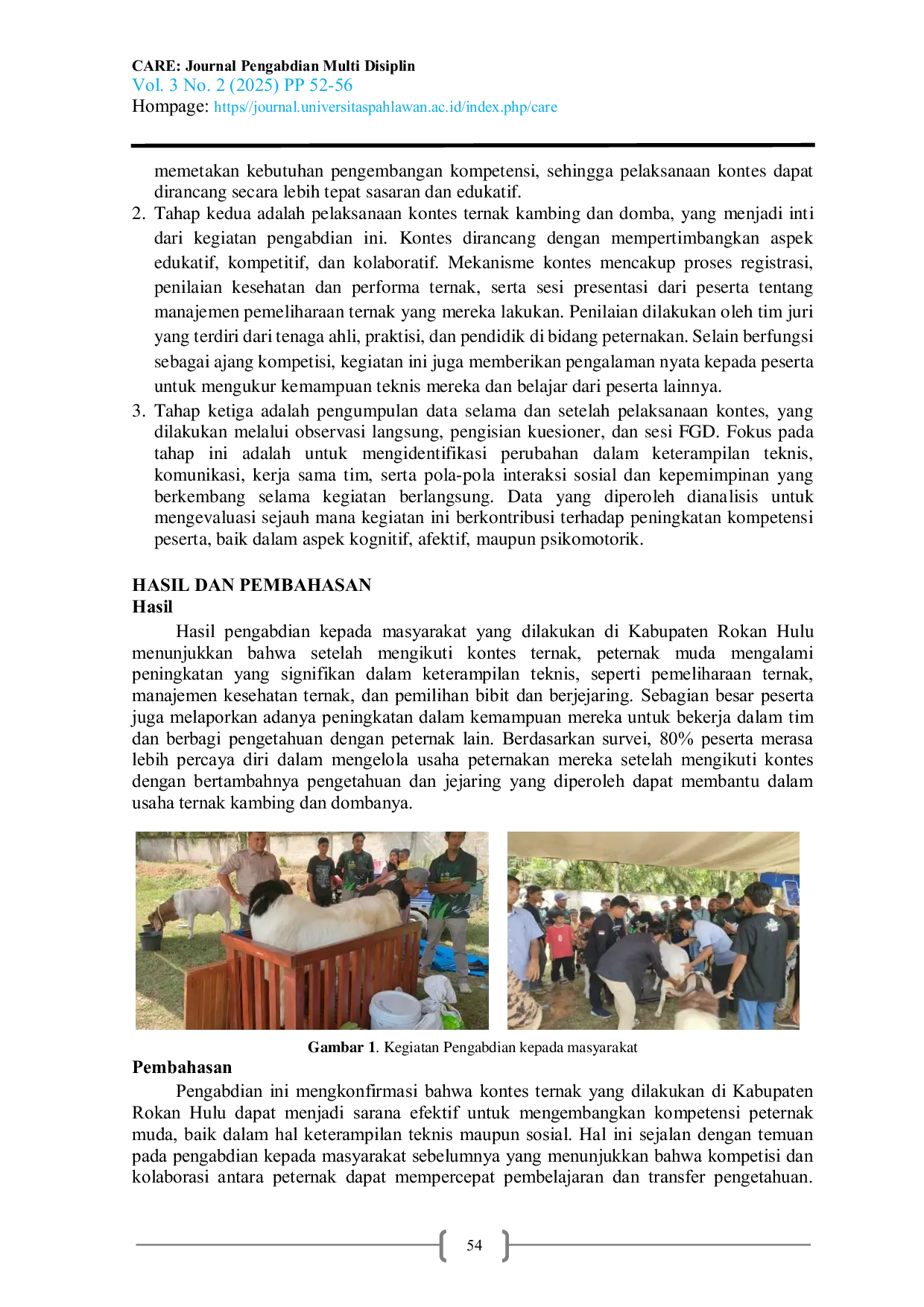
UPUP Latar belakang kegiatan ini adalah pentingnya peningkatan keterampilan dan wawasan siswa sebagai calon peternak, agar mampu bersaing dalam dunia usahaLatar belakang kegiatan ini adalah pentingnya peningkatan keterampilan dan wawasan siswa sebagai calon peternak, agar mampu bersaing dalam dunia usaha

UNIPEMUNIPEM The systematic review reveals that research on student experience quality (SXQ) heavily relies on quantitative methods, particularly Structural EquationThe systematic review reveals that research on student experience quality (SXQ) heavily relies on quantitative methods, particularly Structural Equation

UNIDAUNIDA Hasil akhir penelitian menggunakan uji-t pada kemampuan pemecahan masalah matematis siswa dengan memperoleh signifikansi 0,000 < 0,05. Dari hasil uji-tHasil akhir penelitian menggunakan uji-t pada kemampuan pemecahan masalah matematis siswa dengan memperoleh signifikansi 0,000 < 0,05. Dari hasil uji-t
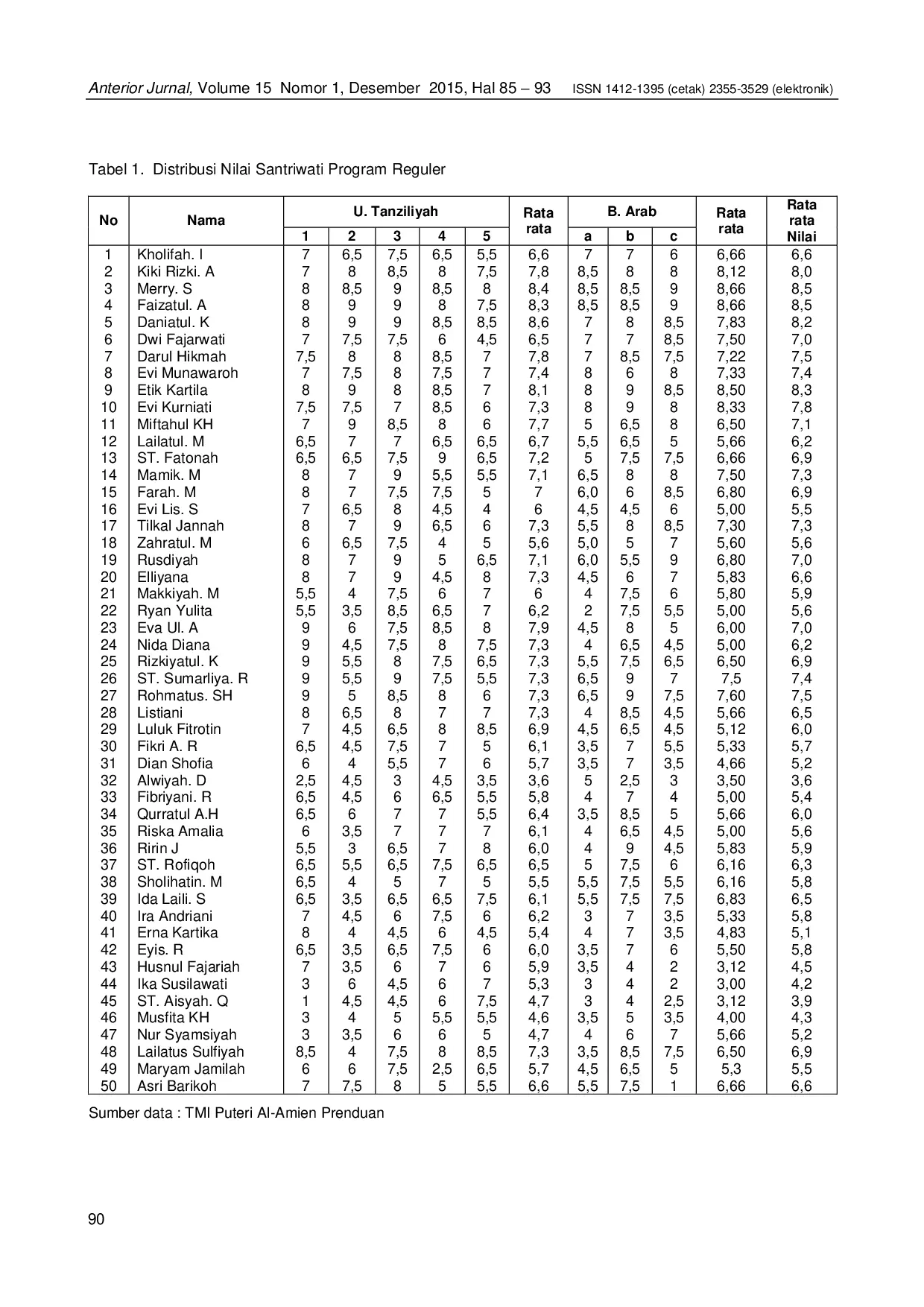
UMPRUMPR Berangkat dari latar belakang pendidikan yang berbeda, yakni santriwati dari lulusan SD/MI (program reguler) dan santriwati lulusan SLTP/MTs (program intensif),Berangkat dari latar belakang pendidikan yang berbeda, yakni santriwati dari lulusan SD/MI (program reguler) dan santriwati lulusan SLTP/MTs (program intensif),
Useful /

PPSDPPPSDP Penelitian ini merekomendasikan pemeliharaan metode pengajaran yang bervariasi dan pemberian bimbingan yang lebih personal untuk mempertahankan motivasiPenelitian ini merekomendasikan pemeliharaan metode pengajaran yang bervariasi dan pemberian bimbingan yang lebih personal untuk mempertahankan motivasi

PPSDPPPSDP Results demonstrate high expert validity (91.72%) and strong practicality (93.14%) during small-group and large-group trials. Effectiveness evaluationResults demonstrate high expert validity (91.72%) and strong practicality (93.14%) during small-group and large-group trials. Effectiveness evaluation

PPSDPPPSDP Penundaan akademik adalah masalah umum di kalangan remaja dan berpotensi menghambat prestasi akademik dan pengembangan keterampilan belajar. Namun, pemetaanPenundaan akademik adalah masalah umum di kalangan remaja dan berpotensi menghambat prestasi akademik dan pengembangan keterampilan belajar. Namun, pemetaan

PPSDPPPSDP Sekolah harus memprioritaskan pengembangan profesional guru yang berkelanjutan dan menciptakan lingkungan fisik dan psikososial yang mendukung untuk memastikanSekolah harus memprioritaskan pengembangan profesional guru yang berkelanjutan dan menciptakan lingkungan fisik dan psikososial yang mendukung untuk memastikan