PPSDPPPSDP
PPSDP International Journal of EducationPPSDP International Journal of EducationThis study aims to design, develop, implement, and evaluate a collaborative Home–School Partnership model to enhance childrens foundational competencies during the transition from early childhood education to primary school in Gorontalo Province, Indonesia. Employing a research and development approach within the ADDIE framework (Analysis, Design, Development, Implementation, Evaluation), data were collected from parents of Grade I and II students across several elementary schools using questionnaires, observations, interviews, and focus group discussions. Model effectiveness was assessed through a pretest–posttest experimental design measuring changes in parental understanding and engagement. Results demonstrate high expert validity (91.72%) and strong practicality (93.14%) during small-group and large-group trials. Effectiveness evaluation revealed significant improvements in parental understanding, with posttest scores ranging from 79.70 to 84.20. Parents reported increased awareness of childrens socio-emotional development, communication skills, independence, and positive learning attitudes beyond academic preparation. The study concludes that the Home–School Partnership model effectively strengthens parent–teacher collaboration and supports holistic child development during the transition to primary education. The novelty lies in its systematic development and validation of a structured partnership model specifically contextualized to the Indonesian educational landscape, addressing the critical yet underexplored transition period between early childhood and primary schooling. Practically, the model offers a replicable framework that can be integrated into school programs to foster sustainable home–school partnerships. This study contributes to educational literature by providing empirical evidence that structured family-school collaboration significantly enhances parental engagement and competency development during a pivotal stage in childrens educational trajectories.
The study demonstrates that a structured Home–School Partnership model effectively enhances parental engagement and supports the development of childrens foundational competencies during the transition to primary education.The intervention led to significant improvements in parental understanding of holistic child development, encompassing socio-emotional skills, communication, independence, and positive learning attitudes.The models high validity and practicality suggest its potential for replication and integration into school programs to foster sustainable family-school partnerships.
Future research should investigate the long-term impacts of collaborative home-school partnerships on childrens academic performance, socio-emotional development, and school adjustment across diverse educational systems. Further studies could explore adaptations of the model in varied cultural contexts to enhance its applicability and effectiveness in different communities. Additionally, research is needed to examine the sustainability of parental engagement practices beyond the intervention period, identifying strategies to maintain ongoing collaboration between families and schools. Investigating the potential of integrating digital tools and platforms into the Home-School Partnership model could also enhance accessibility and engagement for a wider range of families, particularly those facing geographical or logistical barriers. Finally, exploring the role of teacher training and professional development in effectively implementing and sustaining these partnerships is crucial for ensuring long-term success and maximizing the benefits for both children and families.
| File size | 199.36 KB |
| Pages | 17 |
| DMCA | Report |
Related /

UNIFLORUNIFLOR This study aims to analyze the effect of process-based differentiation learning on student learning outcomes at SMA POMOSDA Tanjunganom. With a quantitativeThis study aims to analyze the effect of process-based differentiation learning on student learning outcomes at SMA POMOSDA Tanjunganom. With a quantitative

ASIAASIA Penelitian ini menggunakan metode observasi kualitatif untuk mendapatkan pemahaman mendalam tentang perkembangan emosional dan pola komunikasi anak-anakPenelitian ini menggunakan metode observasi kualitatif untuk mendapatkan pemahaman mendalam tentang perkembangan emosional dan pola komunikasi anak-anak

ASIAASIA Metode: Metode yang digunakan adalah penelitian kuantitatif pre‑eksperimental dengan desain satu kelompok pre‑test dan post‑test yang melibatkanMetode: Metode yang digunakan adalah penelitian kuantitatif pre‑eksperimental dengan desain satu kelompok pre‑test dan post‑test yang melibatkan

ASIAASIA Program KKN secara signifikan meningkatkan pemahaman dan rasa tanggung jawab Gapoktan terkait RDKK, serta mengoreksi kesalahpahaman bahwa pendaftaran semata-mataProgram KKN secara signifikan meningkatkan pemahaman dan rasa tanggung jawab Gapoktan terkait RDKK, serta mengoreksi kesalahpahaman bahwa pendaftaran semata-mata
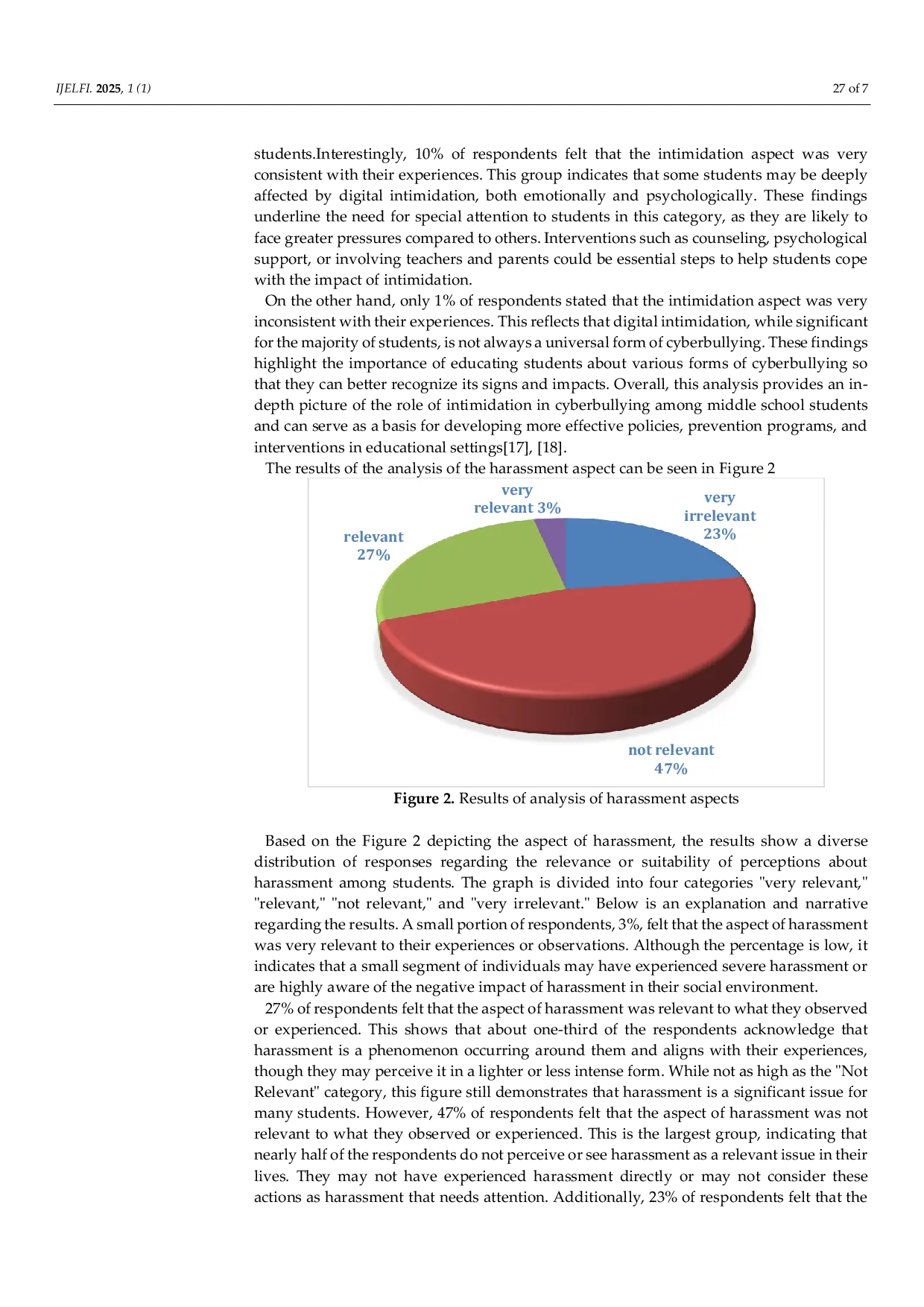
JPPIJPPI The results showed that the majority of students experienced some form of bullying via digital platforms, although with varying levels of intensity. InThe results showed that the majority of students experienced some form of bullying via digital platforms, although with varying levels of intensity. In

UIN SUSKAUIN SUSKA Educational management strategies focusing on student well-being can create a more positive environment and better quality education. This study also opensEducational management strategies focusing on student well-being can create a more positive environment and better quality education. This study also opens

RESCOLLACOMMRESCOLLACOMM Namun, terdapat indikasi penurunan minat generasi muda terhadap pengetahuan lokal ini, dengan hanya 27,8% informan muda yang mampu mengidentifikasi lebihNamun, terdapat indikasi penurunan minat generasi muda terhadap pengetahuan lokal ini, dengan hanya 27,8% informan muda yang mampu mengidentifikasi lebih

IAINAMBONIAINAMBON Therefore, further optimization is needed, including enhanced training for educators and increased parental awareness of the importance of Al-Quran education,Therefore, further optimization is needed, including enhanced training for educators and increased parental awareness of the importance of Al-Quran education,
Useful /

PPSDPPPSDP Temuan menunjukkan bahwa (1) persepsi siswa berpengaruh signifikan dan positif terhadap kinerja guru, menunjukkan bahwa pandangan siswa yang positif berkaitanTemuan menunjukkan bahwa (1) persepsi siswa berpengaruh signifikan dan positif terhadap kinerja guru, menunjukkan bahwa pandangan siswa yang positif berkaitan

PPSDPPPSDP Studi selanjutnya harus menyelidiki determinan potensial lainnya seperti budaya membaca keluarga, akses ke bahan bacaan yang beragam di rumah, pengaruhStudi selanjutnya harus menyelidiki determinan potensial lainnya seperti budaya membaca keluarga, akses ke bahan bacaan yang beragam di rumah, pengaruh

UNIFLORUNIFLOR Penelitian ini menunjukkan bahwa penggunaan model Problem Based Learning (PBL) dengan media Slidesgo efektif meningkatkan kemampuan pemecahan masalah matematisPenelitian ini menunjukkan bahwa penggunaan model Problem Based Learning (PBL) dengan media Slidesgo efektif meningkatkan kemampuan pemecahan masalah matematis

BTPBTP Aktivitas ini biasanya lebih fokus pada isu sosial dan kemanusiaan serta dilakukan secara gratis tanpa mengharapkan keuntungan finansial. Distribusi kebutuhanAktivitas ini biasanya lebih fokus pada isu sosial dan kemanusiaan serta dilakukan secara gratis tanpa mengharapkan keuntungan finansial. Distribusi kebutuhan