ASIAASIA
Jurnal Pengabdian MasyarakatJurnal Pengabdian MasyarakatThis study addresses the challenge of ineffective organic waste management in Indonesia by developing a technology-driven, community-based model. An integrated system was implemented at an Integrated Waste Processing Facility (TPST), featuring an automatic sorter using color, infrared, and weight sensors, combined with an anaerobic bioreactor for biogas production. The process was monitored through an IoT platform for real-time control. The system improved sorting efficiency and reduced processing time, while community training increased participation from 15% to 48%.
The model achieved 92% sorting accuracy and produced an average of 22 m³ of biogas per ton of waste, demonstrating that combining automation with social empowerment creates an effective and replicable solution for sustainable waste management and renewable energy transition.This study confirms that integrating automated sorting, biogas conversion, and IoT-based monitoring significantly improves the efficiency of community-scale waste management systems.The findings contribute to both theory and practice by illustrating that sustainable waste-to-energy solutions require a synergy between technology and social engagement.
Berdasarkan hasil penelitian, terdapat beberapa saran untuk penelitian lanjutan. Pertama, perlu dilakukan penelitian lebih lanjut mengenai optimasi desain sistem penyortiran otomatis agar dapat beradaptasi dengan variasi komposisi sampah yang berbeda di berbagai wilayah. Kedua, studi komparatif perlu dilakukan untuk membandingkan efisiensi biaya dan dampak lingkungan dari model pengelolaan sampah berbasis teknologi ini dengan metode konvensional. Ketiga, penelitian lanjutan dapat fokus pada pengembangan sistem pemantauan dan kontrol berbasis IoT yang lebih cerdas dan adaptif, yang mampu memprediksi potensi gangguan dan melakukan penyesuaian secara otomatis untuk menjaga stabilitas proses fermentasi biogas. Penelitian-penelitian ini diharapkan dapat memperluas penerapan model pengelolaan sampah berkelanjutan ini dan memberikan kontribusi signifikan terhadap transisi energi terbarukan di Indonesia, serta meningkatkan kesadaran dan partisipasi masyarakat dalam pengelolaan sampah yang bertanggung jawab.
- System Design Renewable Energy Using Applications Bright Energy Solar Meter Panel Based on The Internet... doi.org/10.2991/978-94-6463-358-0_10System Design Renewable Energy Using Applications Bright Energy Solar Meter Panel Based on The Internet doi 10 2991 978 94 6463 358 0 10
- Purwarupa Pendeteksi Liquified Petroleum Gas (LPG) Menggunakan Sensor MQ-2 dengan Blynk | Kusumadewi... doi.org/10.22146/juliet.v3i1.74621Purwarupa Pendeteksi Liquified Petroleum Gas LPG Menggunakan Sensor MQ 2 dengan Blynk Kusumadewi doi 10 22146 juliet v3i1 74621
- Solar panel performance monitoring using Wireless Sensor Network in State Polytechnic of Malang - IOPscience.... doi.org/10.1088/1757-899x/1073/1/012045Solar panel performance monitoring using Wireless Sensor Network in State Polytechnic of Malang IOPscience doi 10 1088 1757 899x 1073 1 012045
- In Malang, Indonesia, a techno-economic analysis of hybrid energy systems in public buildings | Junus... doi.org/10.11591/eei.v11i5.3795In Malang Indonesia a techno economic analysis of hybrid energy systems in public buildings Junus doi 10 11591 eei v11i5 3795
| File size | 355.46 KB |
| Pages | 8 |
| DMCA | Report |
Related /

ASIAASIA Tujuan pembelajaran interaktif adalah menciptakan lingkungan belajar yang dinamis, partisipatif, dan menyenangkan, sehingga siswa tidak hanya menjadi penerimaTujuan pembelajaran interaktif adalah menciptakan lingkungan belajar yang dinamis, partisipatif, dan menyenangkan, sehingga siswa tidak hanya menjadi penerima

ASIAASIA Berdasarkan kegiatan pengabdian masyarakat di Yayasan Tarbiyatul Ajyaal Darussalam, disimpulkan bahwa penerapan teori behavioristik melalui metode QiroahBerdasarkan kegiatan pengabdian masyarakat di Yayasan Tarbiyatul Ajyaal Darussalam, disimpulkan bahwa penerapan teori behavioristik melalui metode Qiroah

ASIAASIA Penelitian ini menyimpulkan bahwa strategi pengumpulan zakat profesional BAZNAS Jember yang berfokus pada sosialisasi dan promosi media efektif, namunPenelitian ini menyimpulkan bahwa strategi pengumpulan zakat profesional BAZNAS Jember yang berfokus pada sosialisasi dan promosi media efektif, namun

ASIAASIA Aplikasi Praktis: Temuan mendukung strategi HR dengan menekankan keamanan psikologis, kepemimpinan yang suportif, dan partisipasi karyawan untuk meningkatkanAplikasi Praktis: Temuan mendukung strategi HR dengan menekankan keamanan psikologis, kepemimpinan yang suportif, dan partisipasi karyawan untuk meningkatkan

ASIAASIA The program aligns with Sustainable Development Goals 8 and 11, contributing to local economic empowerment and sustainable community development. DespiteThe program aligns with Sustainable Development Goals 8 and 11, contributing to local economic empowerment and sustainable community development. Despite

ASIAASIA Penelitian ini menggunakan pendekatan kualitatif dari April hingga Juni 2025, melibatkan latihan ritmis dan berkebun dalam polybag. Pengamatan harian danPenelitian ini menggunakan pendekatan kualitatif dari April hingga Juni 2025, melibatkan latihan ritmis dan berkebun dalam polybag. Pengamatan harian dan

ASIAASIA Pendekatan partisipatif digunakan, melibatkan observasi, pelatihan, mentoring, dan evaluasi dengan delapan UMKM terpilih. Data dikumpulkan melalui wawancara,Pendekatan partisipatif digunakan, melibatkan observasi, pelatihan, mentoring, dan evaluasi dengan delapan UMKM terpilih. Data dikumpulkan melalui wawancara,
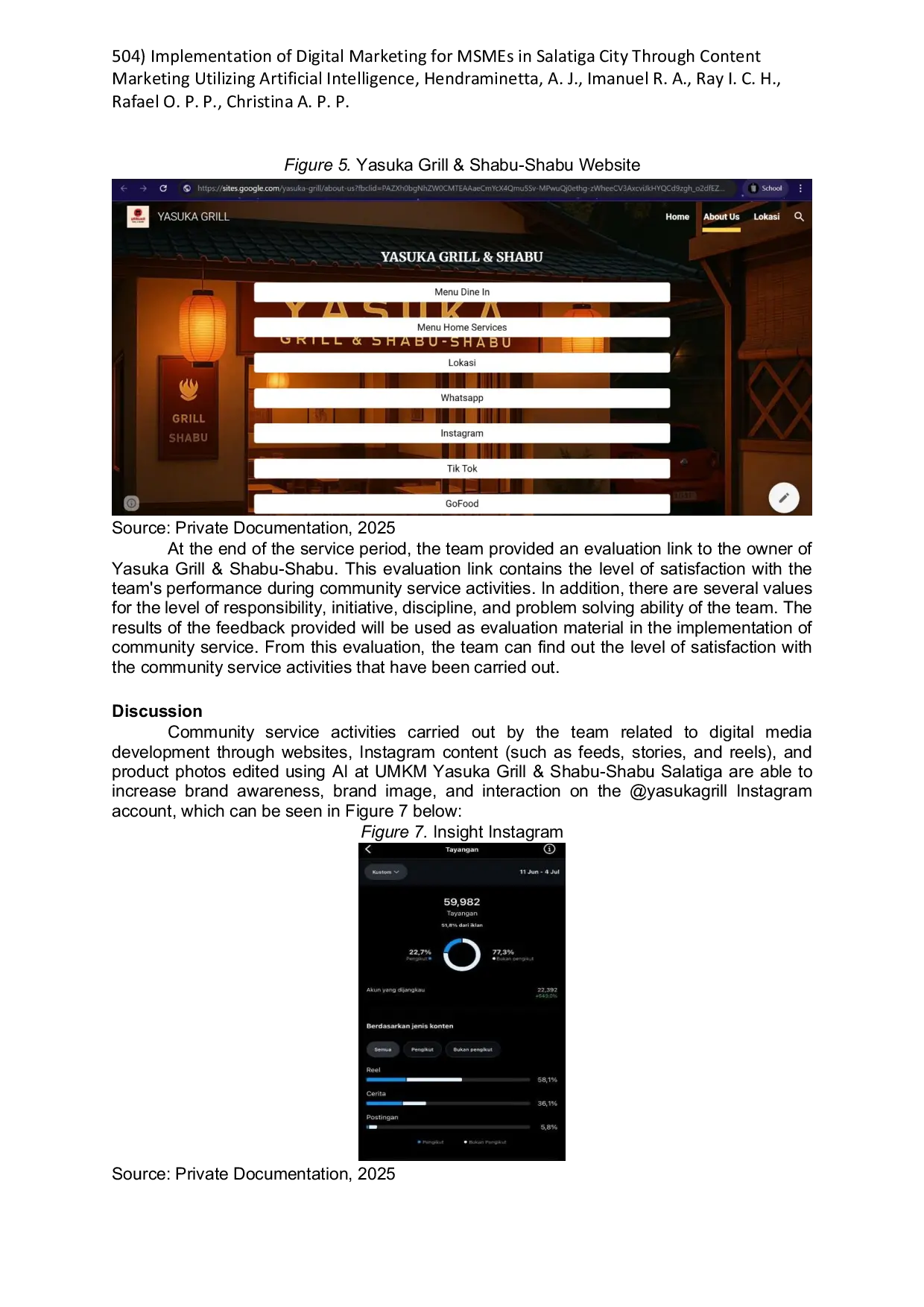
ASIAASIA Activities included social media optimization (Instagram/TikTok), website creation via Google Sites, and AI tool utilization (ChatGPT, Canva, CapCut).Activities included social media optimization (Instagram/TikTok), website creation via Google Sites, and AI tool utilization (ChatGPT, Canva, CapCut).
Useful /

STISIPOLRAJAHAJISTISIPOLRAJAHAJI Pengelolaan ekowisata yang terencana dan partisipatif memberdayakan komunitas lokal sebagai pelaku utama, menciptakan rasa kepemilikan, meningkatkan lapanganPengelolaan ekowisata yang terencana dan partisipatif memberdayakan komunitas lokal sebagai pelaku utama, menciptakan rasa kepemilikan, meningkatkan lapangan

ASIAASIA Tujuan penelitian ini adalah meningkatkan pengetahuan dan keterampilan masyarakat dalam pengelolaan limbah organik berkelanjutan melalui pembuatan komposTujuan penelitian ini adalah meningkatkan pengetahuan dan keterampilan masyarakat dalam pengelolaan limbah organik berkelanjutan melalui pembuatan kompos
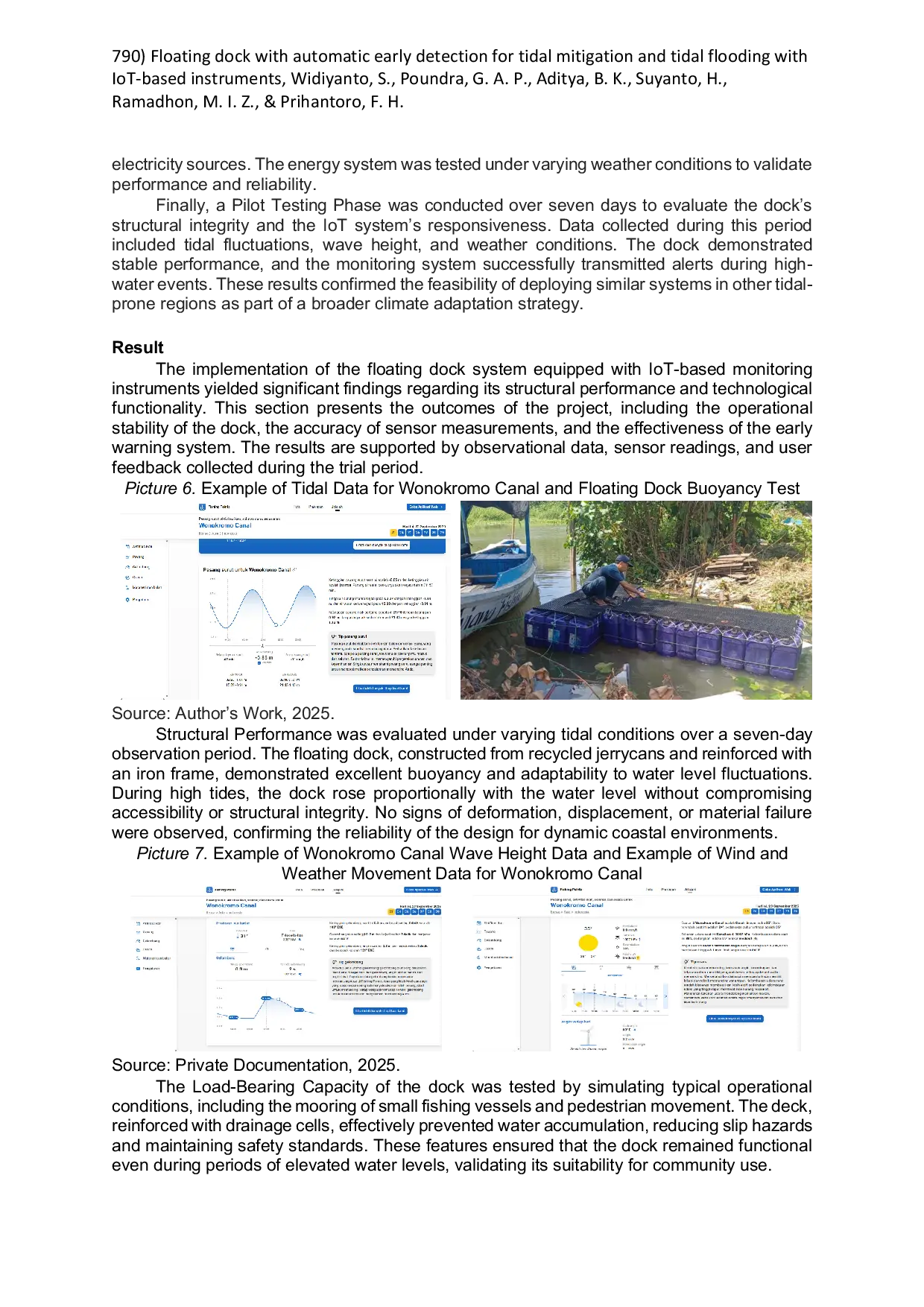
ASIAASIA Metode: Sistem Dermaga Apung Deteksi Dini Otomatis berbasis Internet of Things (IoT) adalah solusi mitigasi adaptif. Sistem ini dilengkapi dengan berbagaiMetode: Sistem Dermaga Apung Deteksi Dini Otomatis berbasis Internet of Things (IoT) adalah solusi mitigasi adaptif. Sistem ini dilengkapi dengan berbagai

IAI MBIMAIAI MBIMA Setelah dilakukan kegiatan terjadi peningkatan pengetahuan ibu hamil dan menyusui tentang manfaat kesehatan dari ASI eksklusif bagi bayi dan ibu, peningkatanSetelah dilakukan kegiatan terjadi peningkatan pengetahuan ibu hamil dan menyusui tentang manfaat kesehatan dari ASI eksklusif bagi bayi dan ibu, peningkatan