POMPOM
Eruditio : Indonesia Journal of Food and Drug SafetyEruditio : Indonesia Journal of Food and Drug SafetyPeredaran pangan olahan khususnya asal impor Tanpa Izin Edar (TIE) mendominasi kerawanan kejahatan di wilayah perbatasan dengan persentase sebesar 71% dari total temuan. Hal tersebut telah menjadi permasalahan kompleks karena kaitan yang erat dengan sosial ekonomi masyarakat setempat. Pendekatan represif saja terbukti tidak cukup dalam upaya komprehensif penanggulangan fenomena tersebut. Penelitian disusun dengan menggunakan metode mix method yakni kuantitatif dan kualitatif dengan tujuan untuk mengetahui dan menjelaskan bagaimana partisipasi masyarakat dan instansi terkait termasuk aparat penegak hukum dalam upaya penanggulangan kerawanan kejahatan khususnya untuk komoditi Pangan Olahan di wilayah perbatasan Negara Indonesia berdasarkan pendekatan tipologi Tonry-Farrington. Cakupan wilayah perbatasan yang dibahas adalah Provinsi Kalimantan Utara, Kalimantan Barat, Riau, Kepulauan Riau, dan Nusa Tenggara Timur. Hasil penelitian menunjukkan bahwa pendekatan pencegahan kejahatan dengan tipologi Tonry-Farrington, dapat diperoleh melalui konsep: (1) Developmental and Social Prevention terkait fungsi pencegahan kejahatan, perlu dilakukan penggalangan kepada key-opinion leader setempat termasuk tokoh masyarakat dan adat setempat yang memiliki reputasi baik serta mendukung upaya Badan POM; (2) Community Based terkait pendekatan kolaborasi dan berbagi sumber daya diperlukan dalam rangka meningkatkan nilai tambah; (3) Situational Prevention terkait kolaborasi yang dapat dilakukan dengan melakukan pengawasan bersama dan menggandeng pemangku kepentingan yang sudah teredukasi dengan baik; dan sebagai upaya terakhir (4) Law Enforcement yaitu upaya kolaboratif dengan Criminal Justice System sebagai upaya untuk memberikan legitimasi yang kuat untuk mewujudkan efek gentar kepada pelaku kejahatan. Teori tipologi Tonry-Farrington dapat diadaptasi oleh BPOM sebagai pendekatan baru dalam penanggulangan permasalahan peredaran produk pangan TIE di wilayah Perbatasan Indonesia sehingga mampu ditangani secara holistik.
The circulation of processed food, especially imported food without a distribution permit (TIE), dominates the crime risk in border areas.This has been going on for a long time and has become a complex problem because the problem is closely related to the social culture of the community.A repressive approach alone is not enough in a comprehensive effort to overcome this case, so another approach is needed which is a collaboration between elements of duties and functions, especially within the POM Agency.The research concentrates on overcoming the problem of the circulation of TIE food in Indonesias border areas.Among the provinces discussed are North Kalimantan, West Kalimantan, Riau, Riau Islands, and East Nusa Tenggara.This discussion will focus on North Kalimantan as the youngest province in Indonesia.Through a crime prevention approach with the Tonry-Farrington typology, a concept can be obtained for handling the circulation of processed food without a distribution permit in border areas, namely (1) Developmental and Social Prevention.and as a last resort (4) Law Enforcement, namely collaboration can be carried out by conducting joint supervision and involving stakeholders who have been well educated.The Tonry-Farrington typology theory can be adapted by the Food and Drug Monitoring Agency (BPOM) as a new approach to addressing the problem of the circulation of TIE food products in Indonesias border regions, enabling holistic management.Further research can focus on pilot projects implementing the Tonry-Farrington typology crime prevention in border regions for further evaluation.
Based on the analysis, the following research suggestions are proposed: . . 1. Pilot projects implementing the Tonry-Farrington typology crime prevention in border regions, focusing on community empowerment and processed food business development. This can involve collaboration with local leadership forums and culinary communities to promote local processed food products and utilize cross-border food products as raw materials, strengthening community-based economic resilience.. . 2. Further research on social engineering and public communication strategies, identifying demographic characteristics and cultural contexts in border regions. Engaging key opinion leaders and influencers can help tailor communication strategies to foster local pride in domestic production and ensure effective and sustainable messaging.. . 3. Collective engagement with local government agencies for pre- and post-market supervision, ensuring shared perspectives and coordinated action. Strengthening physical and digital uniformed patrols can reinforce the presence of regulatory institutions and safeguard food safety and public health.. . These suggestions aim to address the complex issue of illegal processed food circulation in border regions, emphasizing socio-cultural approaches, economic value creation, and community mobilization.
- Unri Conference Series: Agriculture and Food Security. pembangunan ekonomi wilayah perbatasan negara... conference.unri.ac.id/index.php/unricsagr/article/view/a24Unri Conference Series Agriculture and Food Security pembangunan ekonomi wilayah perbatasan negara conference unri ac index php unricsagr article view a24
- Tonry-Farrington Typological Approach to Preventing the Circulation of Illegal Processed Food in Indonesia's... doi.org/10.54384/eruditio.v5i2.169Tonry Farrington Typological Approach to Preventing the Circulation of Illegal Processed Food in Indonesias doi 10 54384 eruditio v5i2 169
| File size | 880.98 KB |
| Pages | 15 |
| DMCA | Report |
Related /
UMSUMS Intervensi berbasis komunitas ini memberikan dampak ganda, yaitu peningkatan status kesehatan melalui pencegahan stunting sekaligus mendorong kemandirianIntervensi berbasis komunitas ini memberikan dampak ganda, yaitu peningkatan status kesehatan melalui pencegahan stunting sekaligus mendorong kemandirian

JURNALFKIPUNTADJURNALFKIPUNTAD Retensi karoten tertinggi terjadi pada suhu 190°C, yaitu sebesar 86%. Hasil ini mengindikasikan bahwa suhu pemanggangan yang lebih rendah dapat membantuRetensi karoten tertinggi terjadi pada suhu 190°C, yaitu sebesar 86%. Hasil ini mengindikasikan bahwa suhu pemanggangan yang lebih rendah dapat membantu

JURNALFKIPUNTADJURNALFKIPUNTAD 182 % and ash content of 12.633 %. Further analysis of potassium obtained average results for potassium of 612.605 mg /100 g and an average for calcium182 % and ash content of 12.633 %. Further analysis of potassium obtained average results for potassium of 612.605 mg /100 g and an average for calcium
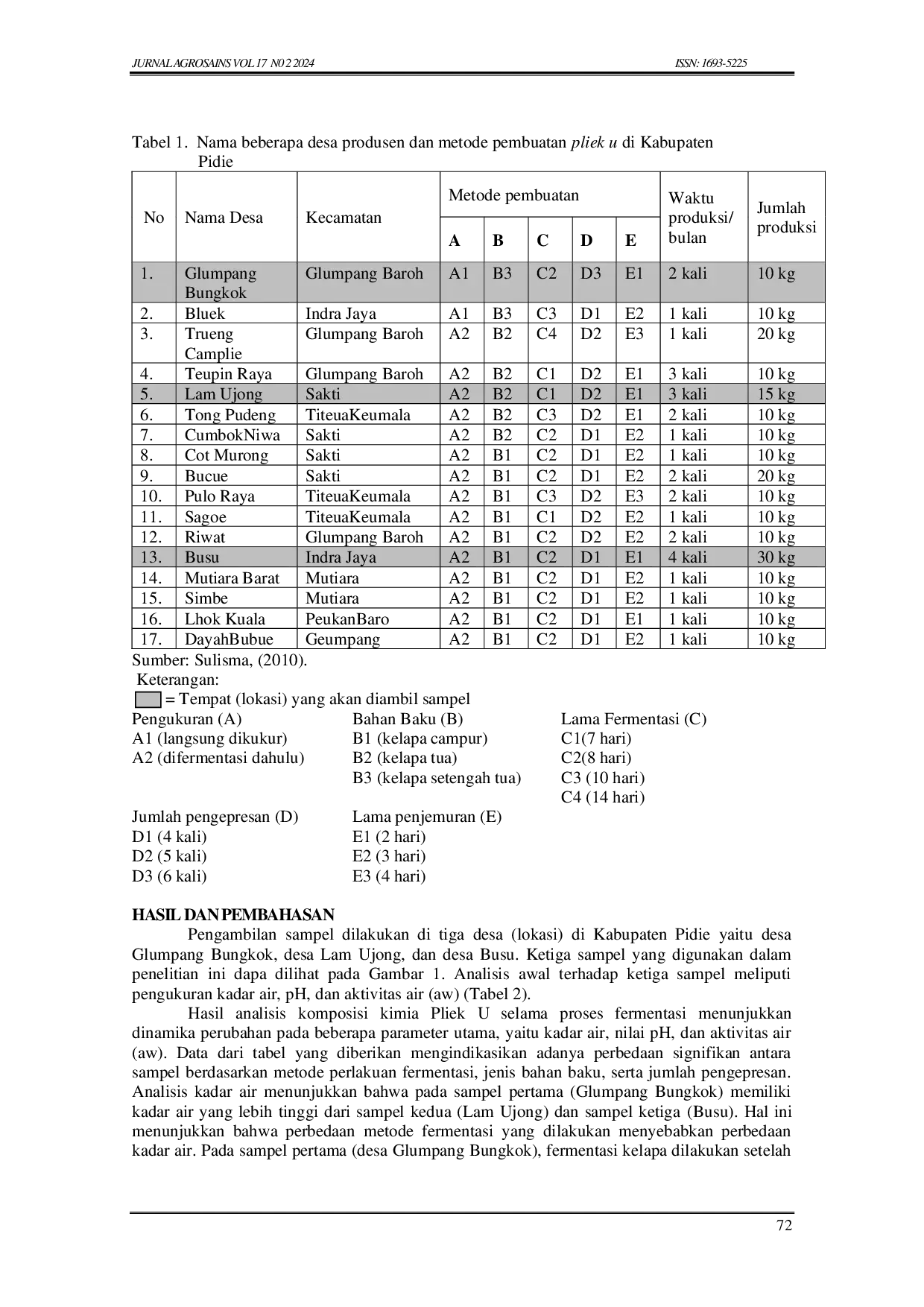
UPBUPB Kadar air dipengaruhi oleh bahan baku dan metode pengolahan, nilai pH yang stabil mencerminkan aktivitas bakteri asam laktat yang efektif, dan nilai awKadar air dipengaruhi oleh bahan baku dan metode pengolahan, nilai pH yang stabil mencerminkan aktivitas bakteri asam laktat yang efektif, dan nilai aw
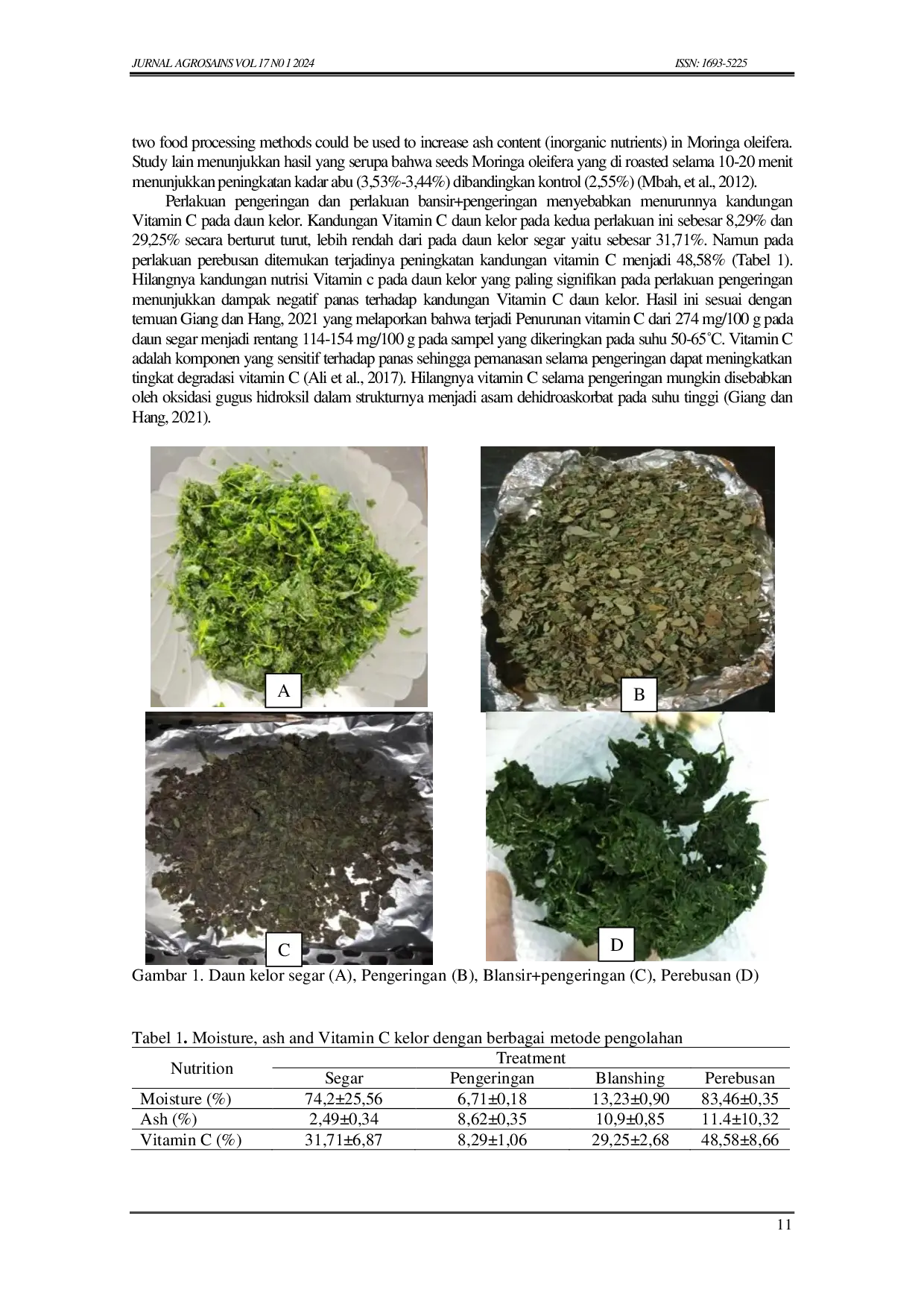
UPBUPB Penelitian ini bertujuan untuk mengetahui pengaruh metode pengolahan terhadap nilai kadar air, kadar abu, dan vitamin C daun kelor. Metode yang digunakanPenelitian ini bertujuan untuk mengetahui pengaruh metode pengolahan terhadap nilai kadar air, kadar abu, dan vitamin C daun kelor. Metode yang digunakan

UNIVET BANTARAUNIVET BANTARA Hasil penelitian menunjukkan bahwa penambahan konsentrasi ZnCl2 dan penggunaan variasi bahan pengisi berpengaruh secara nyata terhadap kadar klorofil,Hasil penelitian menunjukkan bahwa penambahan konsentrasi ZnCl2 dan penggunaan variasi bahan pengisi berpengaruh secara nyata terhadap kadar klorofil,

ATIDEWANTARAATIDEWANTARA Tujuan dalam pengabdian ini yaitu untuk meningkatkan aktivitas dan hasil belajar siswa melalui Model Kooperatif Tipe Number Heads Together. Setiap siklusTujuan dalam pengabdian ini yaitu untuk meningkatkan aktivitas dan hasil belajar siswa melalui Model Kooperatif Tipe Number Heads Together. Setiap siklus

AKSAQILAJURNALAKSAQILAJURNAL Isu klasik yang selalu muncul selama ini ialah: usaha apa yang paling tepat untuk meningkatkan mutu pendidikan melalui peningkatan mutu pendidik dan tenagaIsu klasik yang selalu muncul selama ini ialah: usaha apa yang paling tepat untuk meningkatkan mutu pendidikan melalui peningkatan mutu pendidik dan tenaga
Useful /

UNIBAUNIBA Dapat disimpulkan bahwa terdapat hubungan bermakna antara hubungan antara kualitas tidur dengan memori jangka pendek (short-term memory) pada pelajar kelasDapat disimpulkan bahwa terdapat hubungan bermakna antara hubungan antara kualitas tidur dengan memori jangka pendek (short-term memory) pada pelajar kelas

POLIBATAMPOLIBATAM Hasil penelitian berupa database matriks berupa model gerakan ekspresi wajah karakter 3D seperti sedih, marah, takut, dan kaget yang dapat diintegrasikanHasil penelitian berupa database matriks berupa model gerakan ekspresi wajah karakter 3D seperti sedih, marah, takut, dan kaget yang dapat diintegrasikan
POMPOM Informasi nilai gizi pangan olahan menjadi alternatif membantu konsumen mengonsumsi pangan olahan sesuai kebutuhan gizi. Logo “Pilihan Lebih Sehat menjadiInformasi nilai gizi pangan olahan menjadi alternatif membantu konsumen mengonsumsi pangan olahan sesuai kebutuhan gizi. Logo “Pilihan Lebih Sehat menjadi

ATIDEWANTARAATIDEWANTARA Hasil yang diharapkan dari pengabdian masyarakat ini adalah petani di Moyo Utara memiliki pemahaman yang lebih baik tentang bahaya pestisida dan cara penggunaanHasil yang diharapkan dari pengabdian masyarakat ini adalah petani di Moyo Utara memiliki pemahaman yang lebih baik tentang bahaya pestisida dan cara penggunaan