UNESAUNESA
STEAM Journal For Elementary School EducationSTEAM Journal For Elementary School EducationThe purpose of this study is to describe students mathematical problem-solving abilities and to identify the factors that influence them. This research is a qualitative study with a descriptive approach conducted at SDN 1 Mendolo Kidul, with fourth-grade students and their teacher as research subjects. Data were collected using tests, interviews, and documentation. The validity of the data was ensured through source triangulation and technique triangulation. The data were analyzed using the Miles and Huberman model, which includes data reduction, data display, and conclusion drawing. The results show that students in the high category tend to apply all problem-solving steps correctly, while those in the medium category still make mistakes in some steps. In contrast, students in the low category make errors in almost all of the steps. The factors that influence students mathematical problem-solving abilities include experiential, affective, and cognitive factors. The results of this study can serve as a reference for teachers in designing more effective strategies to improve students mathematical problem-solving abilities. In addition, the findings can assist schools in developing remedial programs tailored to students ability levels. This study also contributes to providing empirical information on the variation of mathematical problem-solving abilities at the elementary school level and the influencing factors, which can serve as a reference for further research in this field.
The study concludes that students with high mathematical problem-solving skills demonstrate a strong understanding of problem-solving steps, while those in the medium category exhibit inconsistencies in applying these steps.Students in the low category struggle with understanding problems and executing problem-solving plans effectively.These abilities are influenced by experiential, affective, and cognitive factors, highlighting the importance of a holistic learning approach.Therefore, improving mathematical problem-solving abilities requires considering not only cognitive aspects but also students learning experiences and emotional states.
Further research should investigate the effectiveness of specific interventions designed to enhance students affective domain, such as building confidence and reducing math anxiety, to improve their problem-solving performance. Additionally, studies could explore the impact of incorporating real-world contexts and collaborative learning activities into mathematics instruction to foster deeper understanding and engagement with problem-solving. Finally, longitudinal studies are needed to track the development of students problem-solving abilities over time and identify the long-term effects of different instructional approaches, particularly focusing on how early interventions impact later academic success in mathematics and related fields. These investigations should aim to provide educators with evidence-based strategies for cultivating robust problem-solving skills in elementary school students, ultimately preparing them for success in higher-level mathematics and beyond.
- PISA 2022 Results (Volume I) | OECD. pisa results volume oecd skip main content state learning equity... doi.org/10.1787/53f23881-enPISA 2022 Results Volume I OECD pisa results volume oecd skip main content state learning equity doi 10 1787 53f23881 en
- KEMAMPUAN PEMECAHAN MASALAH MATEMATIS SISWA SEKOLAH DASAR MENURUT TEORI POLYA | Ibriez Jurnal Kependidikan... ibriez.iainponorogo.ac.id/index.php/ibriez/article/view/420KEMAMPUAN PEMECAHAN MASALAH MATEMATIS SISWA SEKOLAH DASAR MENURUT TEORI POLYA Ibriez Jurnal Kependidikan ibriez iainponorogo ac index php ibriez article view 420
- Peran Media Pembelajaran Monopoli Matematika terhadap Motivasi Belajar Siswa Sekolah Dasar | Scholarly... doi.org/10.21137/sjes.2023.3.2.7Peran Media Pembelajaran Monopoli Matematika terhadap Motivasi Belajar Siswa Sekolah Dasar Scholarly doi 10 21137 sjes 2023 3 2 7
- Analisis Kemampuan Pemecahan Masalah Berdasarkan Teori Polya Materi Pecahan Di Sekolah Dasar | JURNAL... doi.org/10.54066/jupendis-itb.v1i1.116Analisis Kemampuan Pemecahan Masalah Berdasarkan Teori Polya Materi Pecahan Di Sekolah Dasar JURNAL doi 10 54066 jupendis itb v1i1 116
| File size | 452.07 KB |
| Pages | 14 |
| DMCA | Report |
Related /
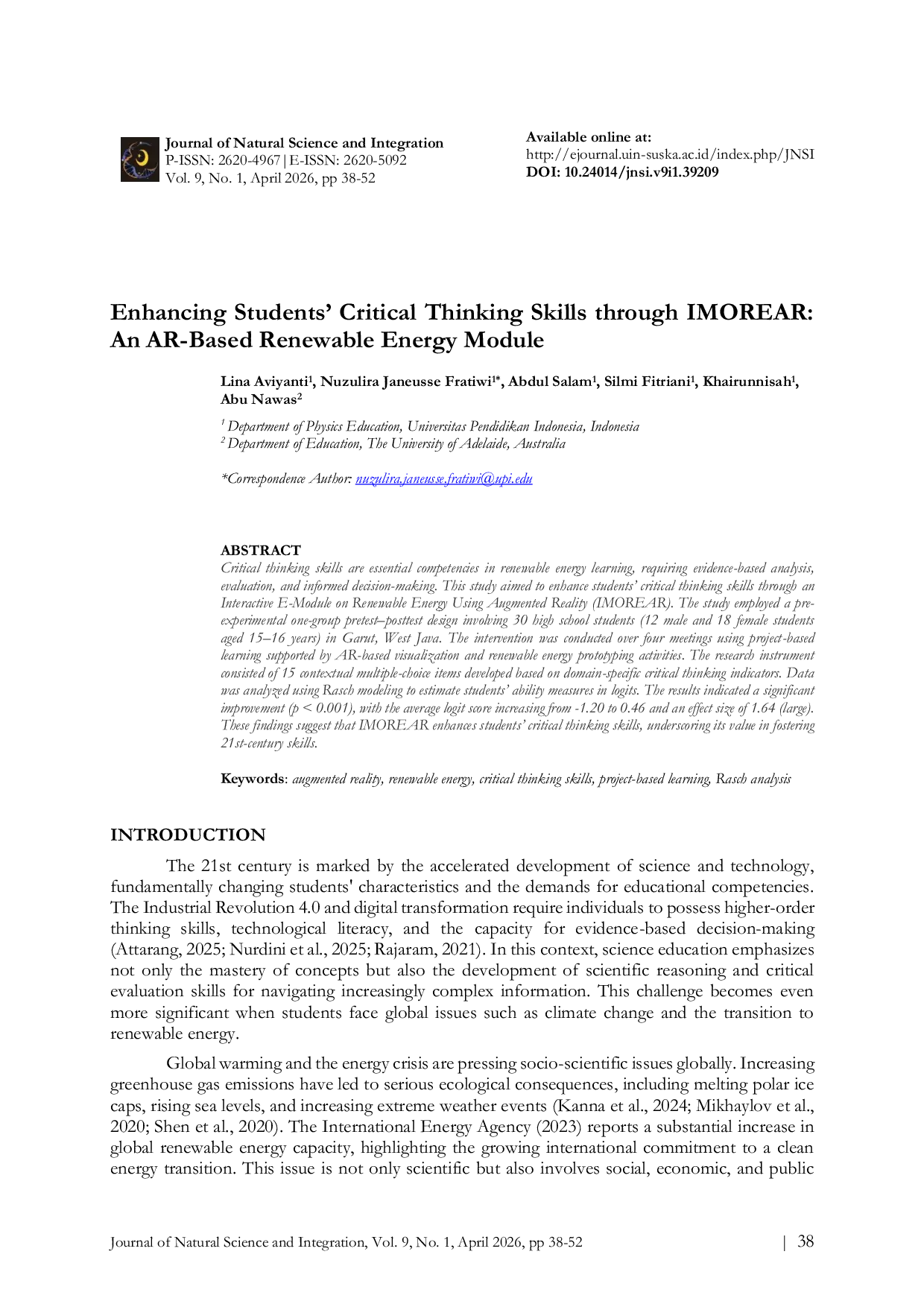
UIN SUSKAUIN SUSKA Penelitian ini bertujuan meningkatkan keterampilan berpikir kritis siswa melalui Interactive E-Module on Renewable Energy Using Augmented Reality (IMOREAR).Penelitian ini bertujuan meningkatkan keterampilan berpikir kritis siswa melalui Interactive E-Module on Renewable Energy Using Augmented Reality (IMOREAR).
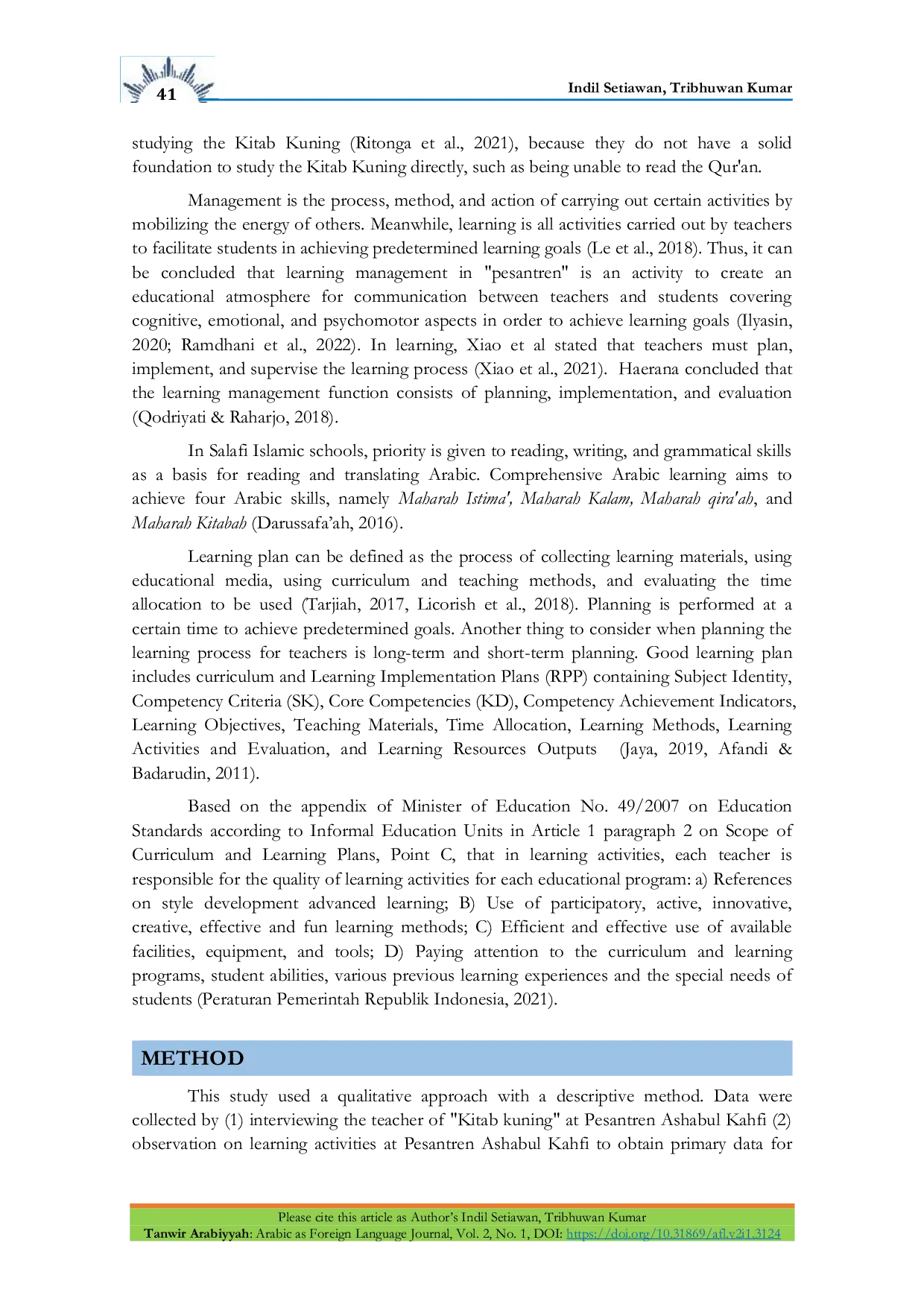
UMSBUMSB The Kitab Kuning Learning Planning at Pesantren Ashabul Kahfi Surantih Pesisir Selatan West Sumatra was carried out through a meeting attended by all teachersThe Kitab Kuning Learning Planning at Pesantren Ashabul Kahfi Surantih Pesisir Selatan West Sumatra was carried out through a meeting attended by all teachers

UNIDAUNIDA Terdapat kesamaan dan perbedaan dalam metode, media, strategi, serta faktor lingkungan dan siswa yang memengaruhi pembelajaran di kedua sekolah. PenelitianTerdapat kesamaan dan perbedaan dalam metode, media, strategi, serta faktor lingkungan dan siswa yang memengaruhi pembelajaran di kedua sekolah. Penelitian
GOLDENRATIOGOLDENRATIO Untuk menyeimbangkan persamaan, silabus harus dapat menargetkan Hati (afektif) dan Tangan (psikomotor). Hal ini hanya dapat dicapai jika perhatian diberikanUntuk menyeimbangkan persamaan, silabus harus dapat menargetkan Hati (afektif) dan Tangan (psikomotor). Hal ini hanya dapat dicapai jika perhatian diberikan
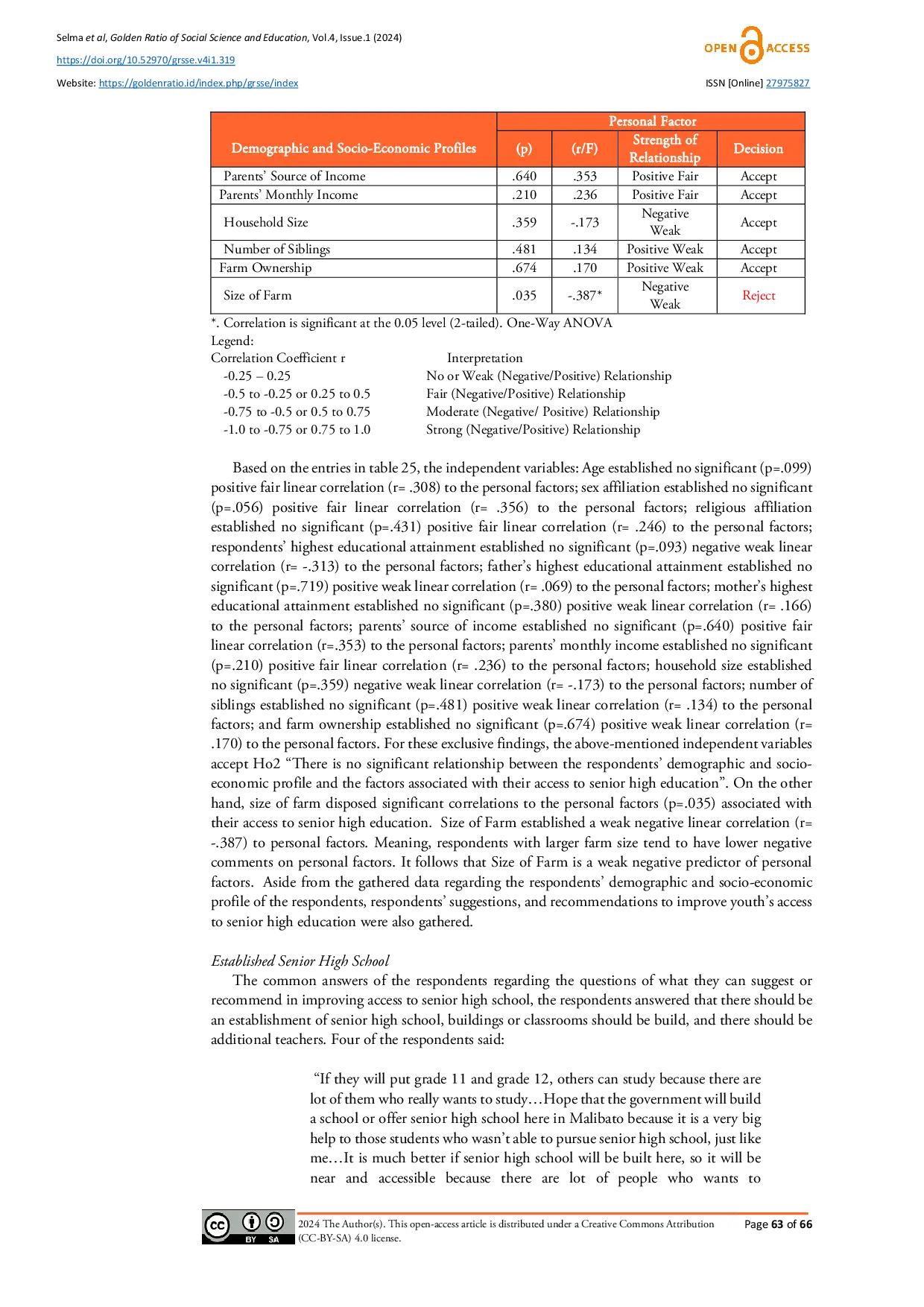
GOLDENRATIOGOLDENRATIO Penelitian menggunakan desain penelitian campuran. Metode kuantitatif digunakan untuk mendeskripsikan profil demografis dan sosio‑ekonomi responden sertaPenelitian menggunakan desain penelitian campuran. Metode kuantitatif digunakan untuk mendeskripsikan profil demografis dan sosio‑ekonomi responden serta

GOLDENRATIOGOLDENRATIO Furthermore, teaching students solely in English or their native language (Twi) did not demonstrate improvement in their mathematics proficiency. Therefore,Furthermore, teaching students solely in English or their native language (Twi) did not demonstrate improvement in their mathematics proficiency. Therefore,
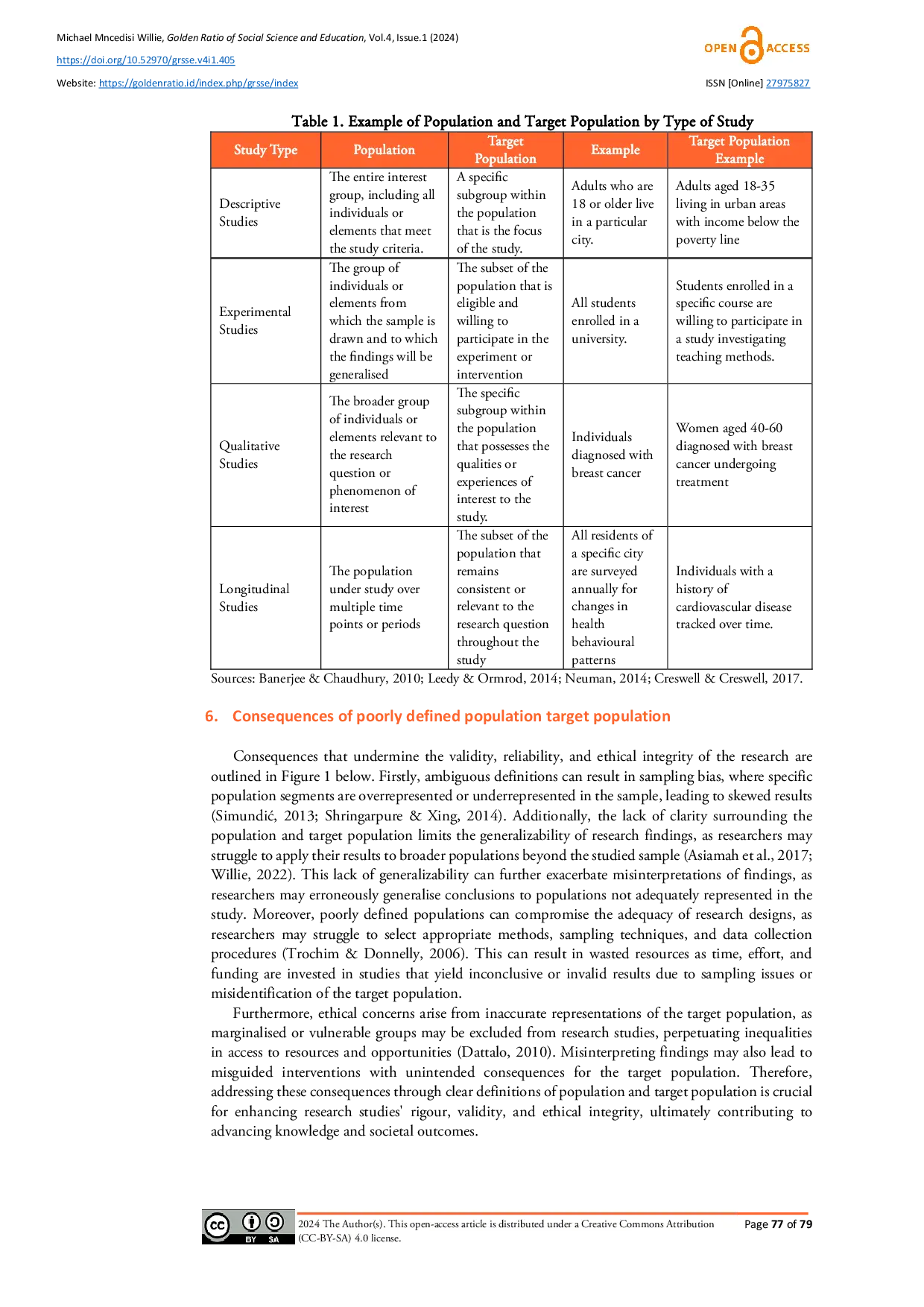
GOLDENRATIOGOLDENRATIO Studi ini menekankan dampak mereka pada strategi pengambilan sampel, generalisasi temuan, dan pertimbangan etis, menekankan pentingnya ketepatan dalamStudi ini menekankan dampak mereka pada strategi pengambilan sampel, generalisasi temuan, dan pertimbangan etis, menekankan pentingnya ketepatan dalam
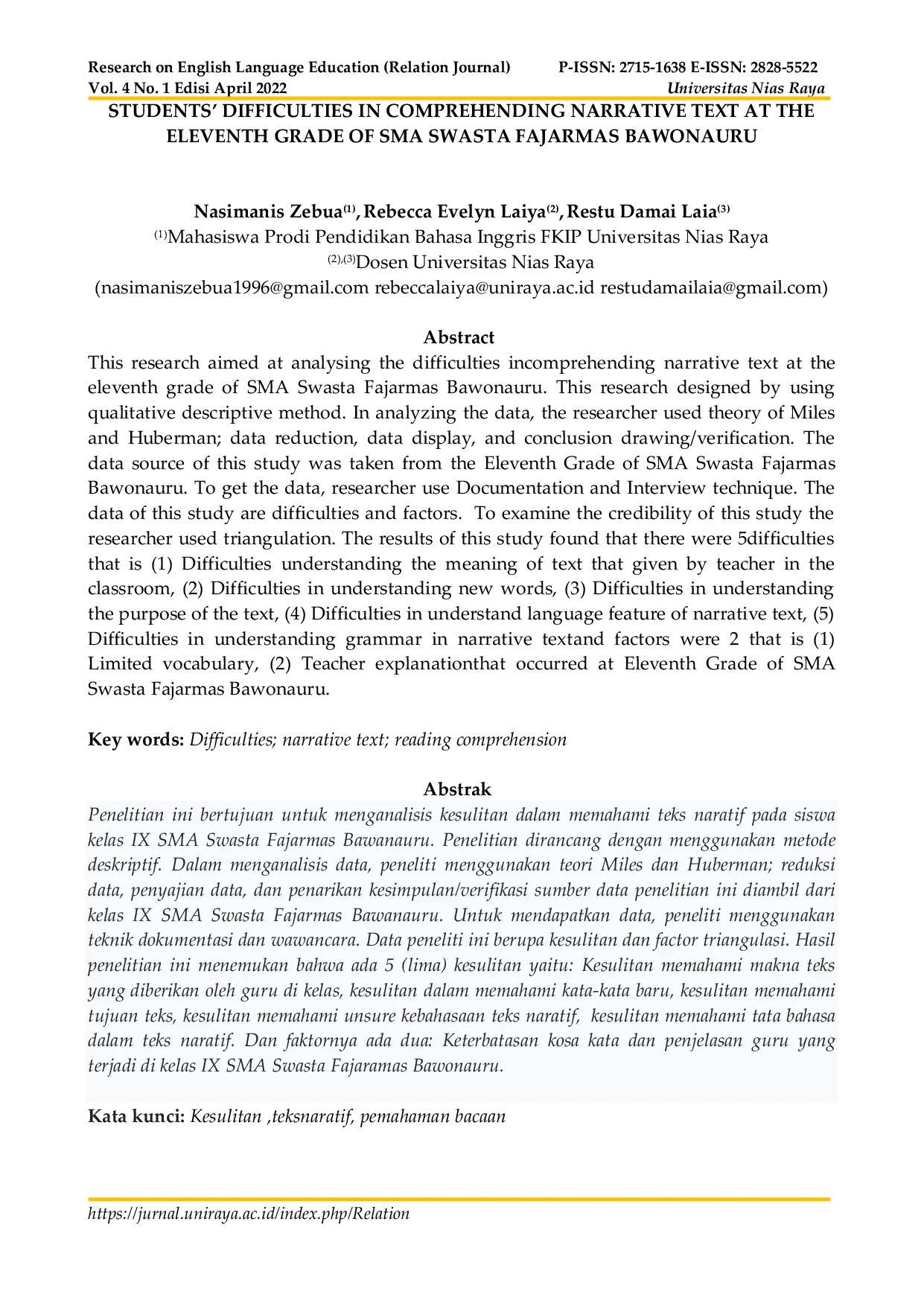
UNIRAYAUNIRAYA The research identified several difficulties students face in comprehending narrative text at SMA Swasta Fajarmas Bawonauru, including understanding theThe research identified several difficulties students face in comprehending narrative text at SMA Swasta Fajarmas Bawonauru, including understanding the
Useful /
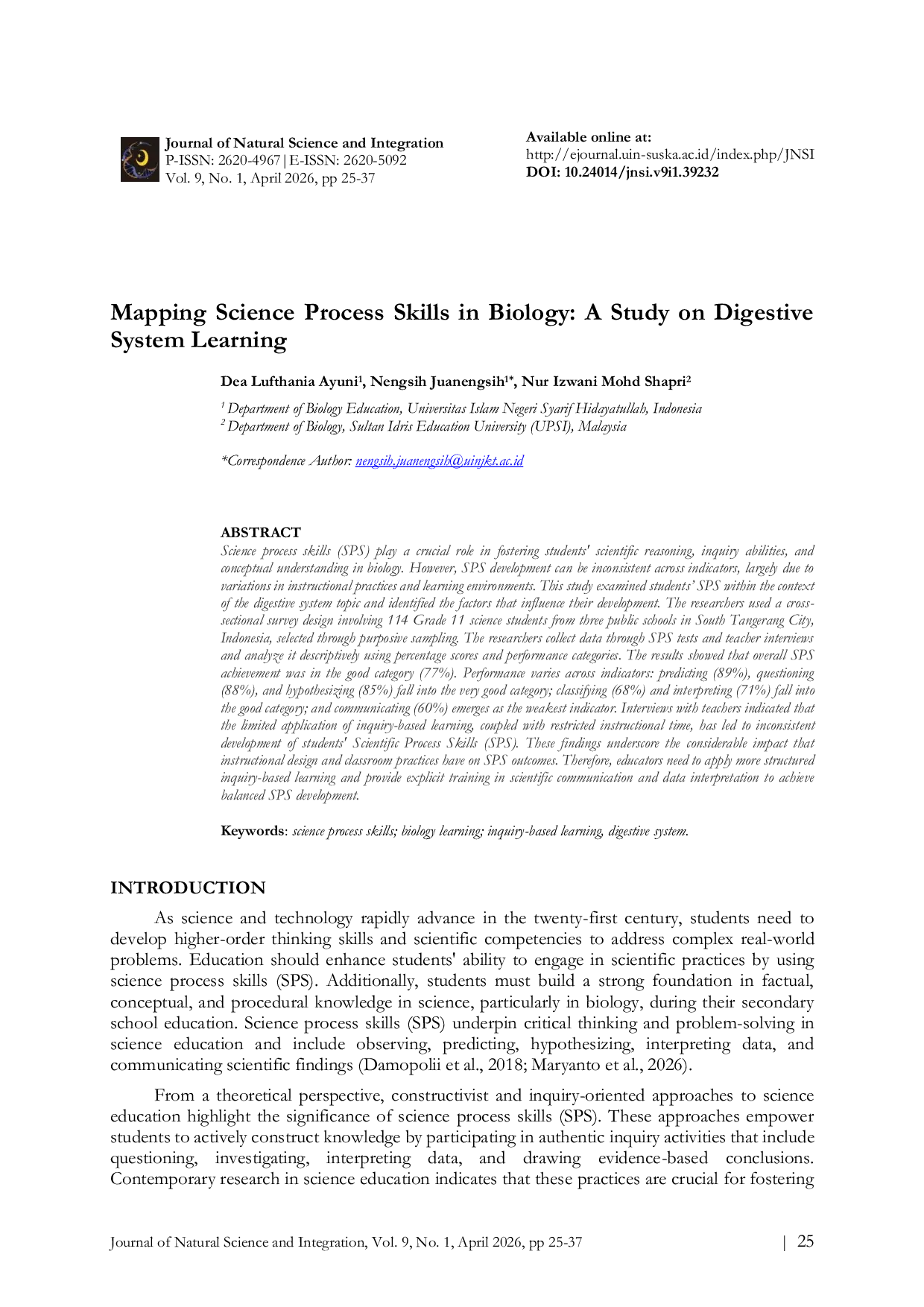
UIN SUSKAUIN SUSKA Keterampilan yang terkait dengan proses penyelidikan, seperti memprediksi (89%), bertanya (88%), dan menghipotesis (85%), relatif berkembang dengan baik,Keterampilan yang terkait dengan proses penyelidikan, seperti memprediksi (89%), bertanya (88%), dan menghipotesis (85%), relatif berkembang dengan baik,

UIN SUSKAUIN SUSKA Hasil validasi instrumen oleh para ahli menunjukkan bahwa komponen teoretis, tujuan, sintaksis, dan sistem sosial model ini berada dalam kategori sangatHasil validasi instrumen oleh para ahli menunjukkan bahwa komponen teoretis, tujuan, sintaksis, dan sistem sosial model ini berada dalam kategori sangat
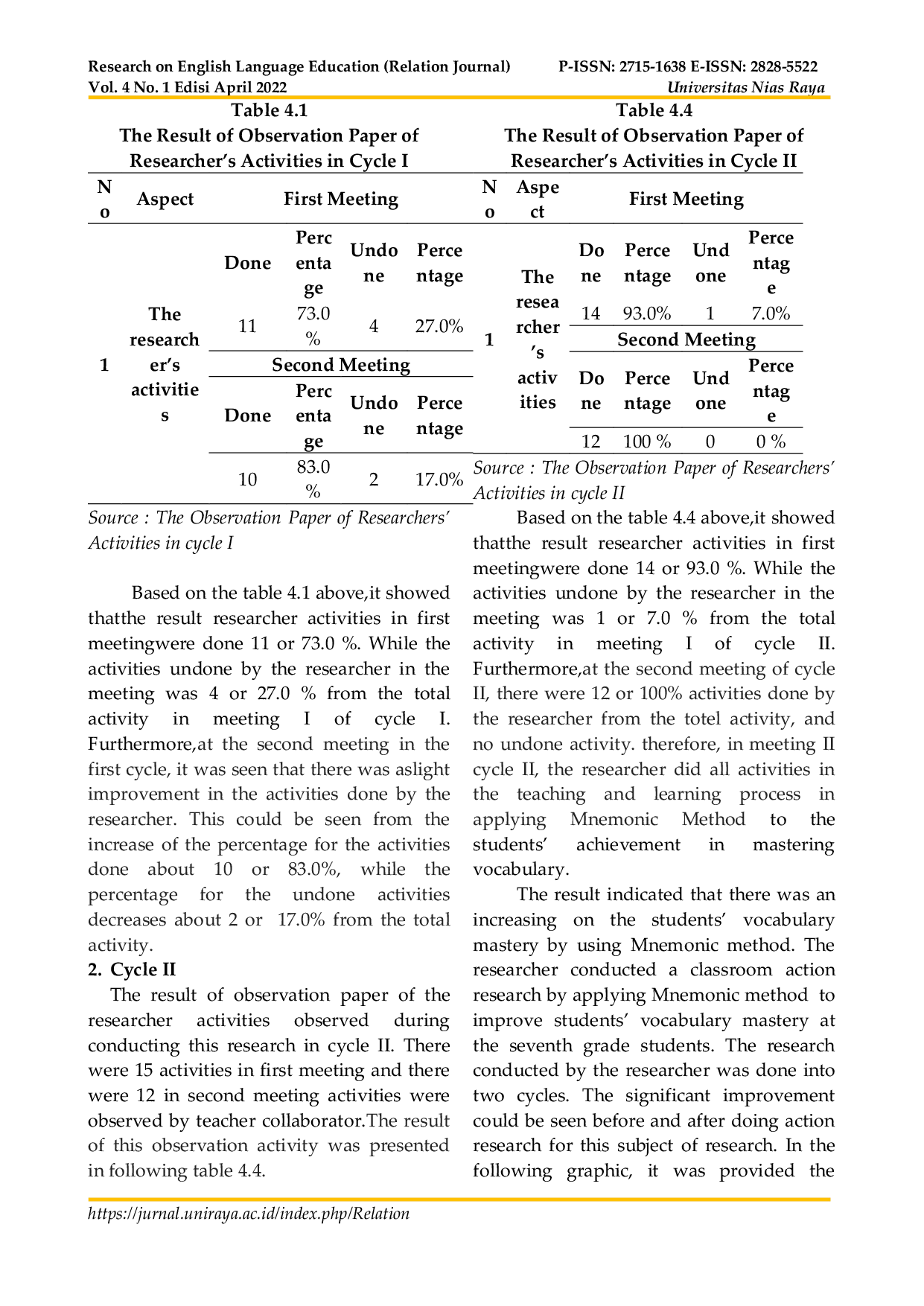
UNIRAYAUNIRAYA Selanjutnya persentase keaktifan siswa pada pertemuan I siklus II 93,6%, sedangkan pada pertemuan II siklus II adalah 94,8%. Rata-rata nilai siswa padaSelanjutnya persentase keaktifan siswa pada pertemuan I siklus II 93,6%, sedangkan pada pertemuan II siklus II adalah 94,8%. Rata-rata nilai siswa pada
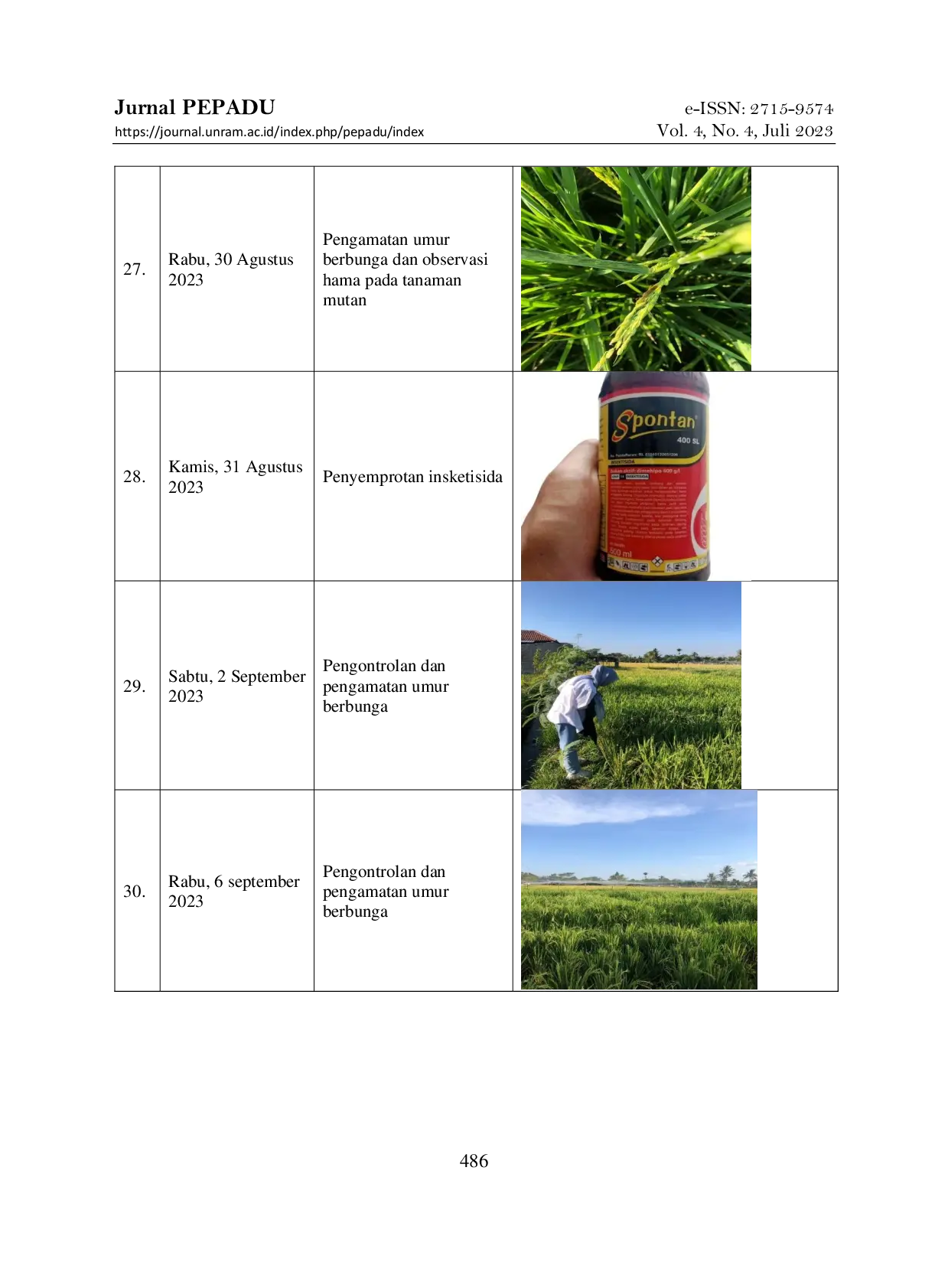
UNRAMUNRAM Waktu pelaksanaan mulai bulan Mei hingga September 2023. Untuk melihat keberhasilan kegiatan dilakukan evaluasi sebelum dan setelah pelaksanaan pengabdianWaktu pelaksanaan mulai bulan Mei hingga September 2023. Untuk melihat keberhasilan kegiatan dilakukan evaluasi sebelum dan setelah pelaksanaan pengabdian