LP3MZHLP3MZH
ASMARALOKA: Jurnal Bidang Pendidikan, Linguistik, dan Sastra IndonesiaASMARALOKA: Jurnal Bidang Pendidikan, Linguistik, dan Sastra IndonesiaThis study aims to develop and examine the effectiveness of an integrated Problem-Based Learning (PBL) and e-learning model in enhancing students literary analysis skills in the Literary Theory and Criticism course. The study is grounded in the identified gap between students conceptual understanding of literary theory and their ability to apply it critically in textual analysis. Employing a Research and Development (R&D) design with a mixed-method approach, the research was conducted in the English Literature Study Program at Muhammadiyah University of Gorontalo. The development process followed the ADDIE framework, encompassing the stages of analysis, design, development, implementation, and evaluation. Nine fourth-semester students participated in a limited trial using a one-group pretest-posttest design. Data were collected through validation sheets, classroom observations, reflective journals, and literary analysis essay tests. Quantitative data were analyzed using descriptive statistics, normalized gain (N-Gain), and paired-sample t-tests, while qualitative data were examined through thematic analysis. The findings indicate that the developed model meets three essential criteria of educational product quality: validity, practicality, and effectiveness. Expert validation results demonstrate high levels of content and construct validity. The implementation of the model revealed strong student engagement and positive responses toward digitally supported collaborative learning. Statistical analysis shows a significant improvement between pretest and posttest scores, with high N-Gain categories across all indicators. The integration of PBL and e-learning fosters student-centered learning, critical thinking, collaborative inquiry, and the strengthening of digital literacy skills.
The integrated Problem-Based Learning (PBL) and e-learning model effectively addresses instructional challenges in teaching literary theory and criticism by bridging the gap between theoretical understanding and practical analytical competence.The model, developed using the ADDIE framework and grounded in constructivist learning theory, demonstrates validity, practicality, and effectiveness through expert evaluation, successful implementation, and significant improvements in student literary analysis skills.Ultimately, this study contributes to pedagogical innovation in literary education and advances digital humanities practices by integrating technology as an integral part of analytical processes.
Further research should investigate the models effectiveness with larger participant groups and across diverse institutional contexts to enhance its generalizability. Expanding the model to incorporate more advanced text analysis technologies, such as computational linguistics tools, could provide students with a wider range of analytical approaches and deepen their understanding of literary texts. Additionally, exploring the long-term impact of the integrated PBL and e-learning model on students critical thinking skills and their ability to apply literary theory in professional settings is crucial. These investigations should also consider the potential for adapting the model to other humanities disciplines, fostering a broader adoption of student-centered, technology-enhanced pedagogical practices. By addressing these research avenues, we can continue to refine and improve the quality of literary education and prepare students for success in a rapidly evolving academic and professional landscape, ensuring they are equipped with the analytical skills and digital literacy necessary to navigate complex textual and cultural environments. This will require a sustained commitment to research and development, coupled with a willingness to embrace innovative pedagogical approaches that prioritize student engagement and active learning.
- A taxonomy of problemâbased learning methods - BARROWS - 1986 - Medical Education - Wiley Online... doi.org/10.1111/j.1365-2923.1986.tb01386.xA taxonomy of problemyAAAabased learning methods BARROWS 1986 Medical Education Wiley Online doi 10 1111 j 1365 2923 1986 tb01386 x
- THE CHALLENGES IN THE TEACHING OF ENGLISH LITERATURE: A SYSTEMATIC REVIEW | Journey: Journal of English... doi.org/10.33503/journey.v6i1.619THE CHALLENGES IN THE TEACHING OF ENGLISH LITERATURE A SYSTEMATIC REVIEW Journey Journal of English doi 10 33503 journey v6i1 619
- Problem-Based Teaching of Literature | Markušić | Journal of Education and Training Studies.... doi.org/10.11114/jets.v7i4.4066Problem Based Teaching of Literature MarkuiN Journal of Education and Training Studies doi 10 11114 jets v7i4 4066
- Does Active Learning Work? A Review of the Research - Prince - 2004 - Journal of Engineering Education... doi.org/10.1002/j.2168-9830.2004.tb00809.xDoes Active Learning Work A Review of the Research Prince 2004 Journal of Engineering Education doi 10 1002 j 2168 9830 2004 tb00809 x
| File size | 475.88 KB |
| Pages | 11 |
| DMCA | Report |
Related /

PERADABANPERADABAN Penelitian ini merupakan penelitian tindakan kelas yang bertujuan untuk meningkatkan hasil belajar matematika melalui penggunaan metode mind mapping. HasilPenelitian ini merupakan penelitian tindakan kelas yang bertujuan untuk meningkatkan hasil belajar matematika melalui penggunaan metode mind mapping. Hasil

SINTHOPSINTHOP Alat-alat ini telah berkontribusi secara berarti dalam meningkatkan minat belajar siswa, mendorong keterlibatan aktif, dan meningkatkan pemahaman tentangAlat-alat ini telah berkontribusi secara berarti dalam meningkatkan minat belajar siswa, mendorong keterlibatan aktif, dan meningkatkan pemahaman tentang

SINTHOPSINTHOP Menurut Iqbal, negara tersebut harus dipandu oleh Al-Quran dan Sunnah, dengan hukum ilahi sebagai sumber otoritas tertinggi dan kepala negara sebagai pelaksananya.Menurut Iqbal, negara tersebut harus dipandu oleh Al-Quran dan Sunnah, dengan hukum ilahi sebagai sumber otoritas tertinggi dan kepala negara sebagai pelaksananya.

SINTHOPSINTHOP Namun, proses internalisasi nilai spiritual menghadapi sejumlah tantangan, termasuk variasi motivasi siswa, pengawasan yang terbatas, pengaruh media sosialNamun, proses internalisasi nilai spiritual menghadapi sejumlah tantangan, termasuk variasi motivasi siswa, pengawasan yang terbatas, pengaruh media sosial

SINTHOPSINTHOP Temuan menunjukkan bahwa ajaran nabi—seperti anjuran menikah, larangan celibacy (tabattul), dan penekanan pada tawakal melalui puasa—masih relevanTemuan menunjukkan bahwa ajaran nabi—seperti anjuran menikah, larangan celibacy (tabattul), dan penekanan pada tawakal melalui puasa—masih relevan

SINTHOPSINTHOP Studi ini menunjukkan bahwa akun Instagram PKMB UIN Ar-Raniry efektif dalam mempromosikan moderasi beragama di kalangan pemuda Indonesia melalui kontenStudi ini menunjukkan bahwa akun Instagram PKMB UIN Ar-Raniry efektif dalam mempromosikan moderasi beragama di kalangan pemuda Indonesia melalui konten

SINTHOPSINTHOP Dalam konteks modern, prinsip ini tetap relevan dan dapat diaplikasikan dalam berbagai aspek kehidupan, termasuk dalam mengatasi tantangan sosial dan mempromosikanDalam konteks modern, prinsip ini tetap relevan dan dapat diaplikasikan dalam berbagai aspek kehidupan, termasuk dalam mengatasi tantangan sosial dan mempromosikan

SINTHOPSINTHOP Menggunakan pendekatan kualitatif, data dikumpulkan melalui observasi lapangan, wawancara mendalam, dan dokumentasi. Temuan mengungkapkan bahwa perubahanMenggunakan pendekatan kualitatif, data dikumpulkan melalui observasi lapangan, wawancara mendalam, dan dokumentasi. Temuan mengungkapkan bahwa perubahan
Useful /

LP3MZHLP3MZH Setiap masyarakat memiliki bahasa yang berbeda-beda, dengan perbedaan berbagai bahasa tersebut otomatis memunculkan tatanan bahasa yang berbeda pula, danSetiap masyarakat memiliki bahasa yang berbeda-beda, dengan perbedaan berbagai bahasa tersebut otomatis memunculkan tatanan bahasa yang berbeda pula, dan

PERADABANPERADABAN Hasil penelitian menunjukan untuk soal yang cenderung mudah siswa paling banyak melakukan kesalahan tipe penarikan kesimpulan dengan persentase sebesarHasil penelitian menunjukan untuk soal yang cenderung mudah siswa paling banyak melakukan kesalahan tipe penarikan kesimpulan dengan persentase sebesar
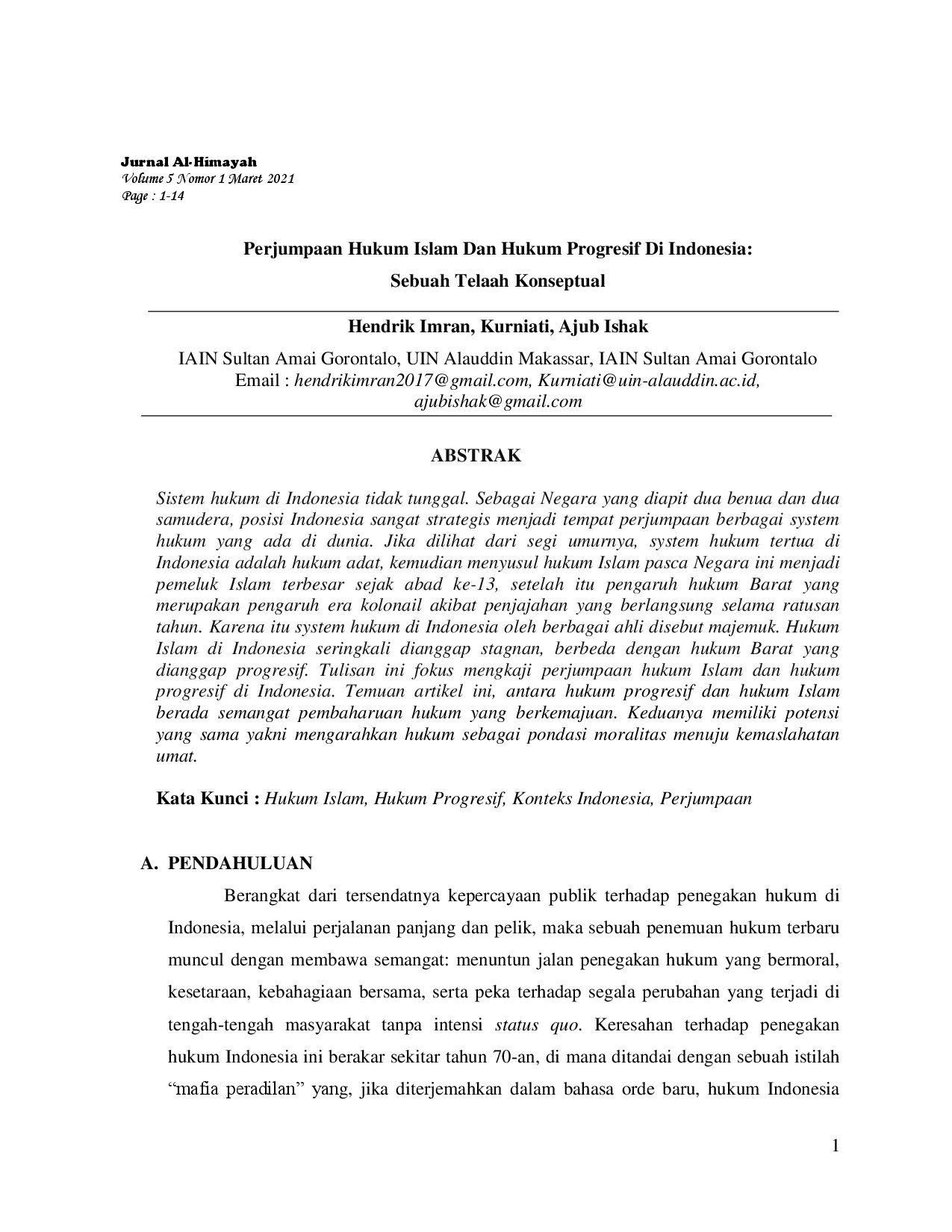
IAIN GORONTALOIAIN GORONTALO Sebagai negara yang diapit dua benua dan dua samudera, posisi Indonesia sangat strategis menjadi tempat perjumpaan berbagai sistem hukum yang ada di dunia.Sebagai negara yang diapit dua benua dan dua samudera, posisi Indonesia sangat strategis menjadi tempat perjumpaan berbagai sistem hukum yang ada di dunia.

UNINDRAUNINDRA Penelitian ini bertujuan untuk menganalisis pengaruh nilai intrinsik, parental influence, dan persepsi mahasiswa dengan pendekatan Teori Karier Anne RoePenelitian ini bertujuan untuk menganalisis pengaruh nilai intrinsik, parental influence, dan persepsi mahasiswa dengan pendekatan Teori Karier Anne Roe