UIADUIAD
JTMT: Journal Tadris MatematikaJTMT: Journal Tadris MatematikaAlthough numerous studies have examined mathematics anxiety among preservice teachers, research focusing on its association with stress coping strategies remains limited. This study collected data on mathematics anxiety and stress coping from 211 preservice mathematics teachers to investigate whether differences in mathematics anxiety exist based on the coping strategies they employed. A quantitative approach with a cross-sectional design was applied. The instruments included the Revised Mathematics Anxiety Survey (R-MANX) to assess mathematics anxiety and a stress coping questionnaire based on Lazarus and Folkmans theory, categorized into Problem-Focused Coping (PFC) and Emotion-Focused Coping (EFC). Data were analyzed using descriptive statistics, cross-tabulation, and the Kruskal–Wallis H test. The findings revealed that most preservice mathematics teachers experienced moderate levels of mathematics anxiety. The majority of respondents predominantly relied on Emotion-Focused Coping (EFC) to manage stress, and this tendency was consistent across all levels of anxiety—low, moderate, and high. Although descriptive results indicated differences in coping preferences, statistical analysis showed no significant differences in mathematics anxiety across coping strategy types. Therefore, it can be concluded that coping strategies did not emerge as significant differentiating factors for mathematics anxiety among preservice mathematics teachers in this study.
The study concluded that most preservice mathematics teachers experienced moderate levels of mathematics anxiety and predominantly employed Emotion-Focused Coping (EFC) strategies.However, the type of coping strategy used did not significantly differentiate mathematics anxiety levels among the participants.These findings suggest that other factors may play a more substantial role in shaping mathematics anxiety within this population.
Further research should investigate the specific cognitive and emotional processes underlying the relationship between coping strategies and mathematics anxiety in preservice teachers, potentially utilizing qualitative methods to gain deeper insights into their experiences. Additionally, studies could explore the effectiveness of interventions designed to promote Problem-Focused Coping (PFC) skills among preservice teachers, examining their impact on both anxiety levels and teaching efficacy. Finally, future research could examine the role of contextual factors, such as university culture and pedagogical training, in shaping preservice teachers coping mechanisms and their subsequent experiences with mathematics anxiety, aiming to identify supportive environments that foster resilience and effective stress management. These investigations, encompassing approximately 200-250 words, will contribute to a more nuanced understanding of the complex interplay between anxiety, coping, and teacher preparation, ultimately informing the development of targeted support programs and pedagogical practices.
- APA PsycNet. psycnet loading doi.org/10.1037/0033-2909.129.2.216APA PsycNet psycnet loading doi 10 1037 0033 2909 129 2 216
- Mathematics Anxiety and Preservice Elementary Teachers' Confidence to Teach Mathematics and Science... doi.org/10.1111/j.1949-8594.2006.tb18073.xMathematics Anxiety and Preservice Elementary Teachers Confidence to Teach Mathematics and Science doi 10 1111 j 1949 8594 2006 tb18073 x
- Mathematics Anxiety and Mathematics Teacher Efficacy: What is the Relationship in Elementary Preservice... onlinelibrary.wiley.com/doi/10.1111/j.1949-8594.2006.tb17921.xMathematics Anxiety and Mathematics Teacher Efficacy What is the Relationship in Elementary Preservice onlinelibrary wiley doi 10 1111 j 1949 8594 2006 tb17921 x
| File size | 482.87 KB |
| Pages | 7 |
| DMCA | Report |
Related /

PAPANDAPAPANDA Temuan ini menunjukkan bahwa model pembelajaran Discovery Learning berpengaruh signifikan dalam meningkatkan pemahaman konsep dan hasil belajar siswa padaTemuan ini menunjukkan bahwa model pembelajaran Discovery Learning berpengaruh signifikan dalam meningkatkan pemahaman konsep dan hasil belajar siswa pada

PAPANDAPAPANDA Secara teoretis, kurikulum ini mencerminkan paradigma konstruktivistik dan humanistik yang memandang pembelajaran sebagai ekosistem adaptif untuk menumbuhkanSecara teoretis, kurikulum ini mencerminkan paradigma konstruktivistik dan humanistik yang memandang pembelajaran sebagai ekosistem adaptif untuk menumbuhkan

PAPANDAPAPANDA Penelitian tindakan kelas ini dilaksanakan dalam dua siklus, dengan setiap siklus terdiri dari perencanaan, pelaksanaan, pengamatan, dan refleksi. DataPenelitian tindakan kelas ini dilaksanakan dalam dua siklus, dengan setiap siklus terdiri dari perencanaan, pelaksanaan, pengamatan, dan refleksi. Data

JOURNAL GEHUJOURNAL GEHU Namun, Universitas Pamulang hanya mengoperasikan asosiasi berbasis fakultas (HIMA) tanpa BEM tingkat universitas. Dengan pendekatan yuridis normatif danNamun, Universitas Pamulang hanya mengoperasikan asosiasi berbasis fakultas (HIMA) tanpa BEM tingkat universitas. Dengan pendekatan yuridis normatif dan

JOURNAL GEHUJOURNAL GEHU Analisis berfokus pada empat indikator pemahaman: menafsirkan, mengklasifikasikan, menyimpulkan, dan membandingkan. Temuan menunjukkan bahwa text-to-speechAnalisis berfokus pada empat indikator pemahaman: menafsirkan, mengklasifikasikan, menyimpulkan, dan membandingkan. Temuan menunjukkan bahwa text-to-speech

JOURNAL GEHUJOURNAL GEHU Diperlukan inisiatif kolaborasi antara museum, institusi pendidikan, dan pemerintah daerah untuk meningkatkan peran pendidikan museum. Museum harus memodernisasiDiperlukan inisiatif kolaborasi antara museum, institusi pendidikan, dan pemerintah daerah untuk meningkatkan peran pendidikan museum. Museum harus memodernisasi
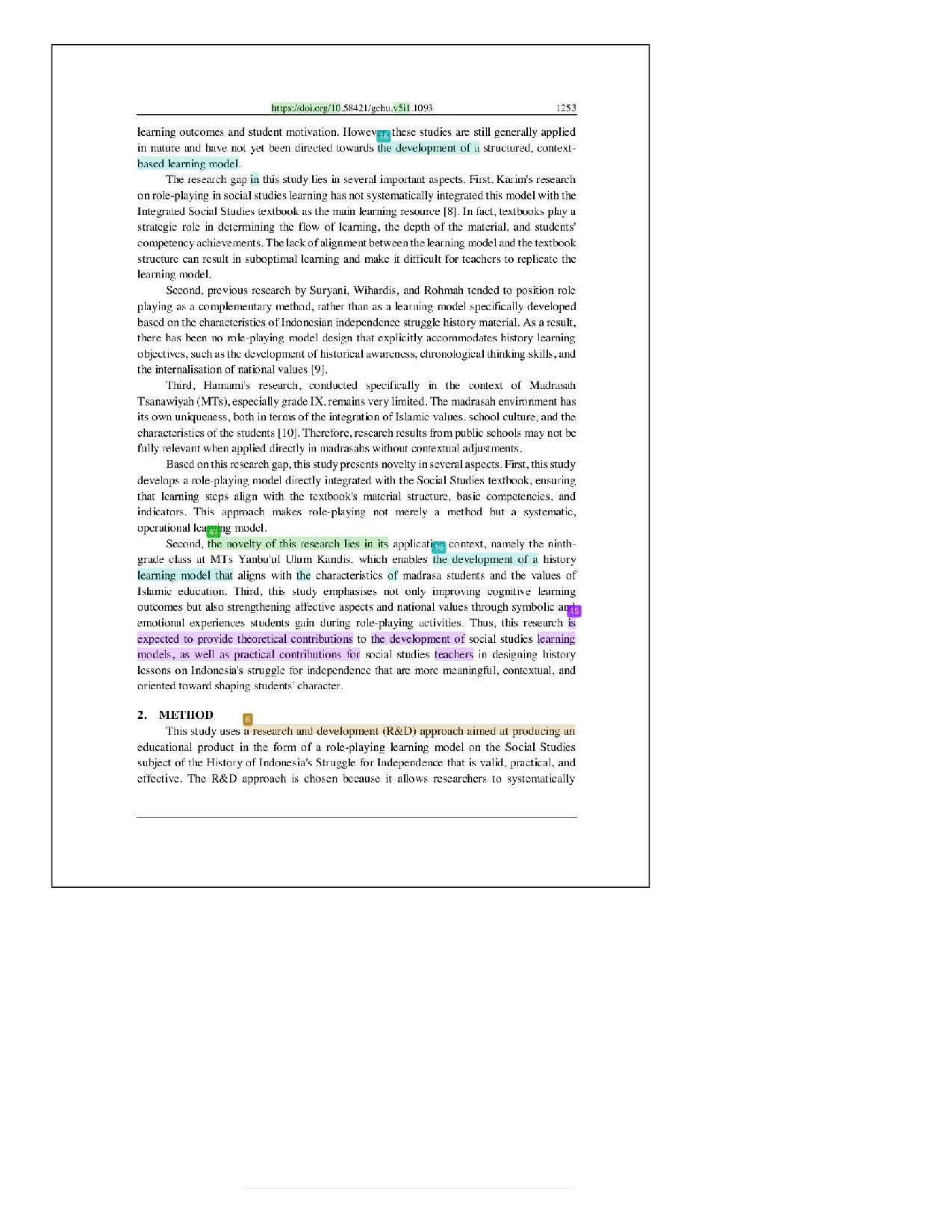
JOURNAL GEHUJOURNAL GEHU Peningkatan hasil belajar ini menunjukkan efektivitas model pembelajaran role playing dalam konteks pembelajaran IPS di sekolah dasar. Penelitian selanjutnyaPeningkatan hasil belajar ini menunjukkan efektivitas model pembelajaran role playing dalam konteks pembelajaran IPS di sekolah dasar. Penelitian selanjutnya
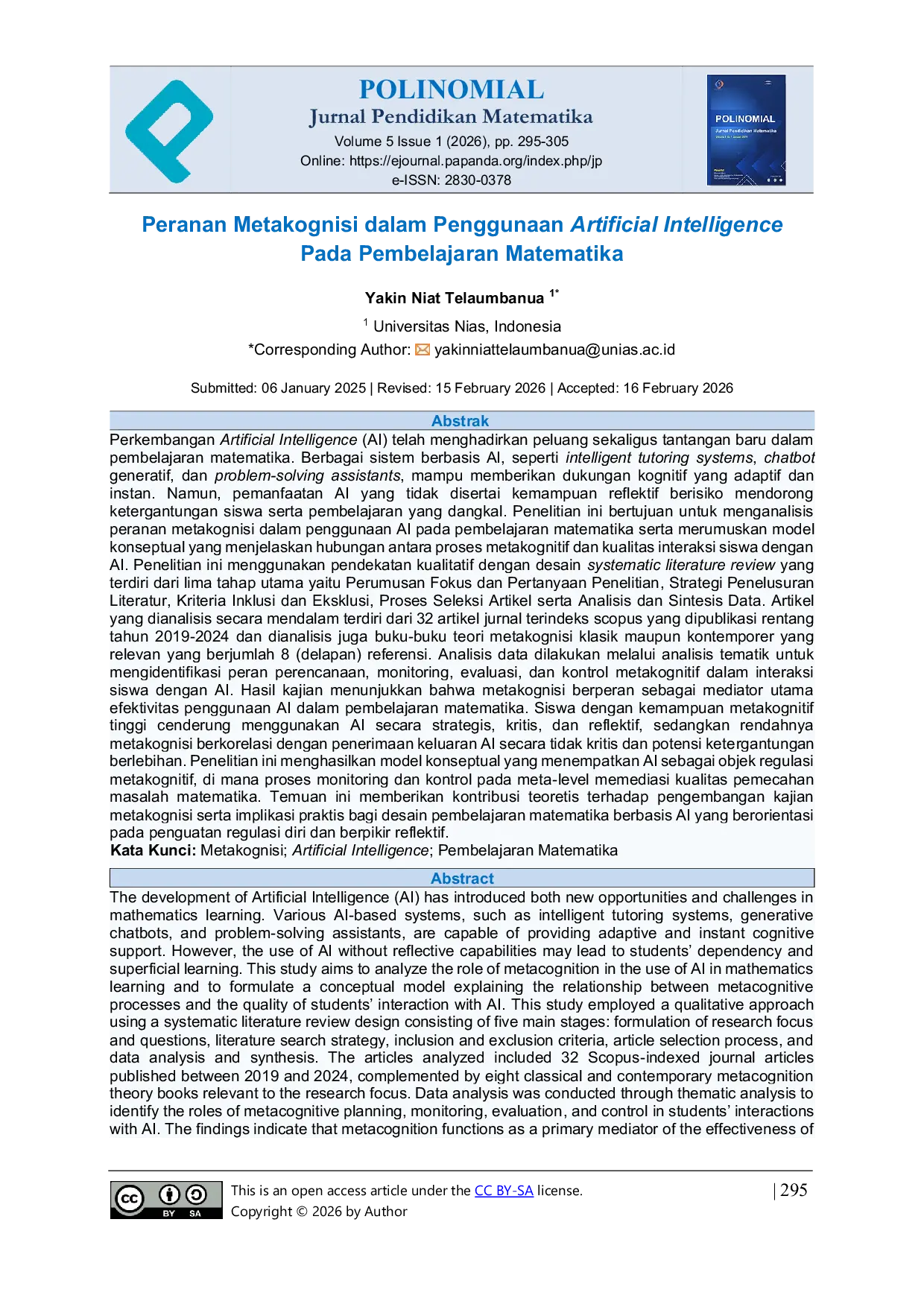
PAPANDAPAPANDA Artikel yang dianalisis secara mendalam terdiri dari 32 artikel jurnal terindeks scopus yang dipublikasi rentang tahun 2019-2024 dan dianalisis juga buku-bukuArtikel yang dianalisis secara mendalam terdiri dari 32 artikel jurnal terindeks scopus yang dipublikasi rentang tahun 2019-2024 dan dianalisis juga buku-buku
Useful /

STIKESLHOKSEUMAWESTIKESLHOKSEUMAWE Teknik pengumpulan data menggunakan Cyberbullying and Online Aggression Survey Instrument berbentuk angket dan dianalisis secara statistik deskriptif.Teknik pengumpulan data menggunakan Cyberbullying and Online Aggression Survey Instrument berbentuk angket dan dianalisis secara statistik deskriptif.

JMAN UPIYPTKJMAN UPIYPTK Oleh karena itu, manajemen kampus disarankan memberikan dukungan moral yang lebih intensif kepada dosen, khususnya perempuan, melalui motivasi, berbagiOleh karena itu, manajemen kampus disarankan memberikan dukungan moral yang lebih intensif kepada dosen, khususnya perempuan, melalui motivasi, berbagi

JMAN UPIYPTKJMAN UPIYPTK Namun, leverage dan pertumbuhan perusahaan tidak memiliki pengaruh signifikan terhadap kinerja keuangan. Temuan ini dapat menjadi acuan bagi perusahaanNamun, leverage dan pertumbuhan perusahaan tidak memiliki pengaruh signifikan terhadap kinerja keuangan. Temuan ini dapat menjadi acuan bagi perusahaan

JMAN UPIYPTKJMAN UPIYPTK Wawasan dari analisis faktor ini akan penting untuk mendefinisikan preferensi pelanggan dalam meningkatkan kualitas layanan wisata Solo di masa depan.Wawasan dari analisis faktor ini akan penting untuk mendefinisikan preferensi pelanggan dalam meningkatkan kualitas layanan wisata Solo di masa depan.