JOURNAL GEHUJOURNAL GEHU
Journal of General Education and HumanitiesJournal of General Education and HumanitiesThis study examined the mathematical reasoning abilities of elementary students at MI Salamah, in Jambi City, on the topics of patterns and geometric figures. The research was motivated by the limited number of studies that explore students real-time reasoning processes in elementary geometry contexts. The study aimed to describe how students with different ability levels demonstrate mathematical reasoning when solving pattern and geometry problems. A descriptive qualitative method was applied, involving three purposively selected fifth-grade students representing high, medium, and low ability levels. Data were collected through two open-ended reasoning indicators: making conjectures, performing mathematical manipulations, providing justification, and drawing conclusions. The findings revealed clear variations in students reasoning abilities: high-ability students demonstrated logical reasoning but had difficulty generalizing patterns; medium-ability students showed partial conceptual understanding with low-ability students relied on guessing without coherent reasoning. These results indicate that students tended to depend on procedural thinking rather than conceptual reasoning. The study contributes to understanding the developmental shift from procedural to conceptual reasoning and offers implications for designing instructional activities to strengthen reasoning in elementary mathematics learning.
The study reveals variations in elementary students mathematical reasoning abilities based on their ability levels.Students with lower abilities primarily exhibit procedural tendencies without deep conceptual understanding, while those with higher abilities demonstrate more integrated reasoning skills.These findings underscore the importance of incorporating reasoning-focused activities into mathematics instruction to foster conceptual understanding and reflective learning.
Further research should investigate the effectiveness of targeted interventions designed to enhance the conceptual understanding and reasoning skills of low-ability students, potentially through the use of visual aids or concrete manipulatives. Additionally, studies could explore the impact of teacher professional development programs focused on implementing reasoning-based instructional strategies in elementary mathematics classrooms. Finally, future investigations could broaden the scope by examining students mathematical reasoning across diverse mathematical domains and grade levels, incorporating longitudinal studies to track the development of reasoning abilities over time, and utilizing mixed-methods approaches to gain a more comprehensive understanding of the cognitive processes involved in mathematical reasoning. These explorations will contribute to a more nuanced understanding of how to effectively cultivate mathematical reasoning skills in elementary students, ultimately improving their mathematical proficiency and problem-solving capabilities.
- Exploring Elementary Students’ Mathematical Reasoning through Patterns and Geometric Shapes: A... doi.org/10.58421/gehu.v5i1.763Exploring Elementary StudentsAo Mathematical Reasoning through Patterns and Geometric Shapes A doi 10 58421 gehu v5i1 763
- ANALISIS KEMAMPUAN PENALARAN MATEMATIS SISWA DITINJAU DARI KEMAMPUAN AWAL | Salam | AKSIOMA: Jurnal Program... ojs.fkip.ummetro.ac.id/index.php/matematika/article/view/7448ANALISIS KEMAMPUAN PENALARAN MATEMATIS SISWA DITINJAU DARI KEMAMPUAN AWAL Salam AKSIOMA Jurnal Program ojs fkip ummetro ac index php matematika article view 7448
| File size | 858.05 KB |
| Pages | 9 |
| DMCA | Report |
Related /
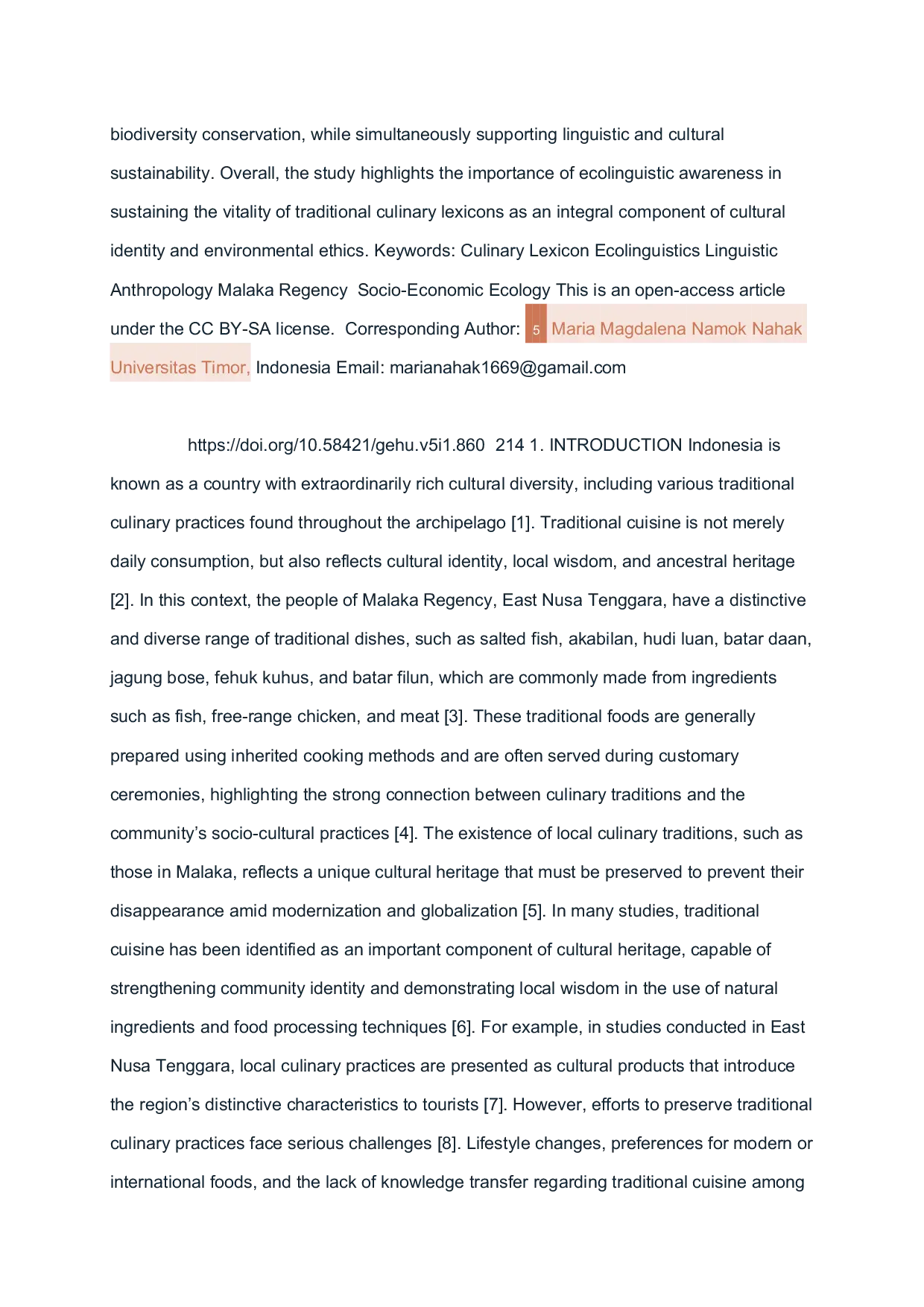
JOURNAL GEHUJOURNAL GEHU Variasi dalam familiaritas, pemahaman, dan penggunaan leksikal - khususnya di kalangan generasi muda - menunjukkan adanya kesenjangan linguistik dan budayaVariasi dalam familiaritas, pemahaman, dan penggunaan leksikal - khususnya di kalangan generasi muda - menunjukkan adanya kesenjangan linguistik dan budaya

JOURNAL GEHUJOURNAL GEHU Terrys management functions (planning, organising, actuating, and controlling) provides a coherent managerial framework for strengthening teachers andTerrys management functions (planning, organising, actuating, and controlling) provides a coherent managerial framework for strengthening teachers and
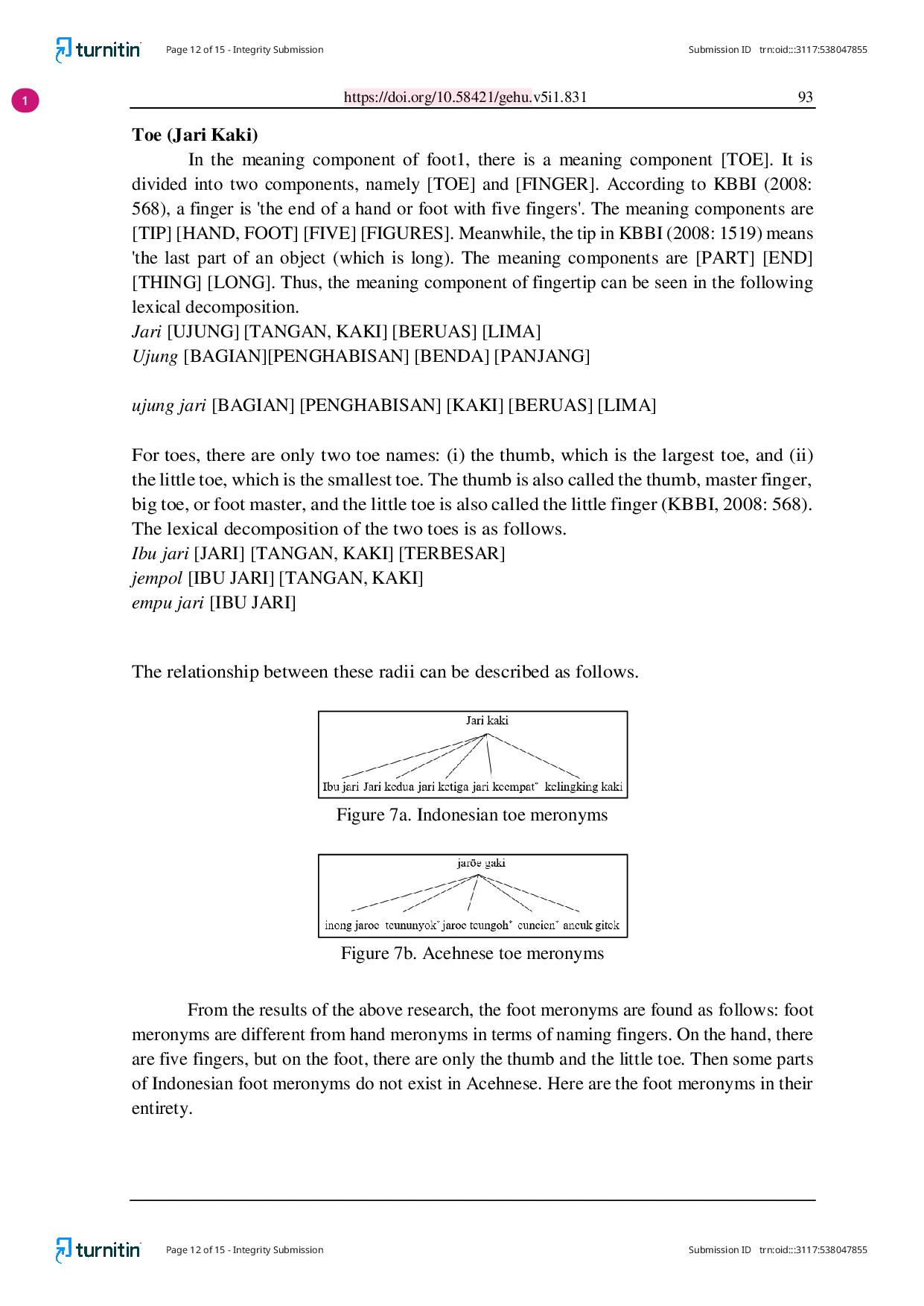
JOURNAL GEHUJOURNAL GEHU Bahasa Indonesia menunjukkan hierarki yang lebih halus (misalnya, betis betis, telapak kaki telapak kaki, tumit tumit, punggung kaki instep), sedangkanBahasa Indonesia menunjukkan hierarki yang lebih halus (misalnya, betis betis, telapak kaki telapak kaki, tumit tumit, punggung kaki instep), sedangkan

JOURNAL GEHUJOURNAL GEHU Implikasi penelitian ini menegaskan pentingnya menekankan substansi komunikasi audit, baik dalam pengembangan teori pelaporan audit maupun dalam praktikImplikasi penelitian ini menegaskan pentingnya menekankan substansi komunikasi audit, baik dalam pengembangan teori pelaporan audit maupun dalam praktik

STAINUPASTAINUPA Temuan mengungkap tiga bottleneck kapasitas yang saling terkait: (1) beban kerja siswa dan kapasitas pemulihan, di mana beban kurikulum ganda mengurangiTemuan mengungkap tiga bottleneck kapasitas yang saling terkait: (1) beban kerja siswa dan kapasitas pemulihan, di mana beban kurikulum ganda mengurangi

STAINUPASTAINUPA Penelitian ini bertujuan menganalisis relevansi gagasan Ki Hadjar Dewantara terhadap implementasi pendidikan karakter dalam Kurikulum Merdeka. Metode penelitianPenelitian ini bertujuan menganalisis relevansi gagasan Ki Hadjar Dewantara terhadap implementasi pendidikan karakter dalam Kurikulum Merdeka. Metode penelitian
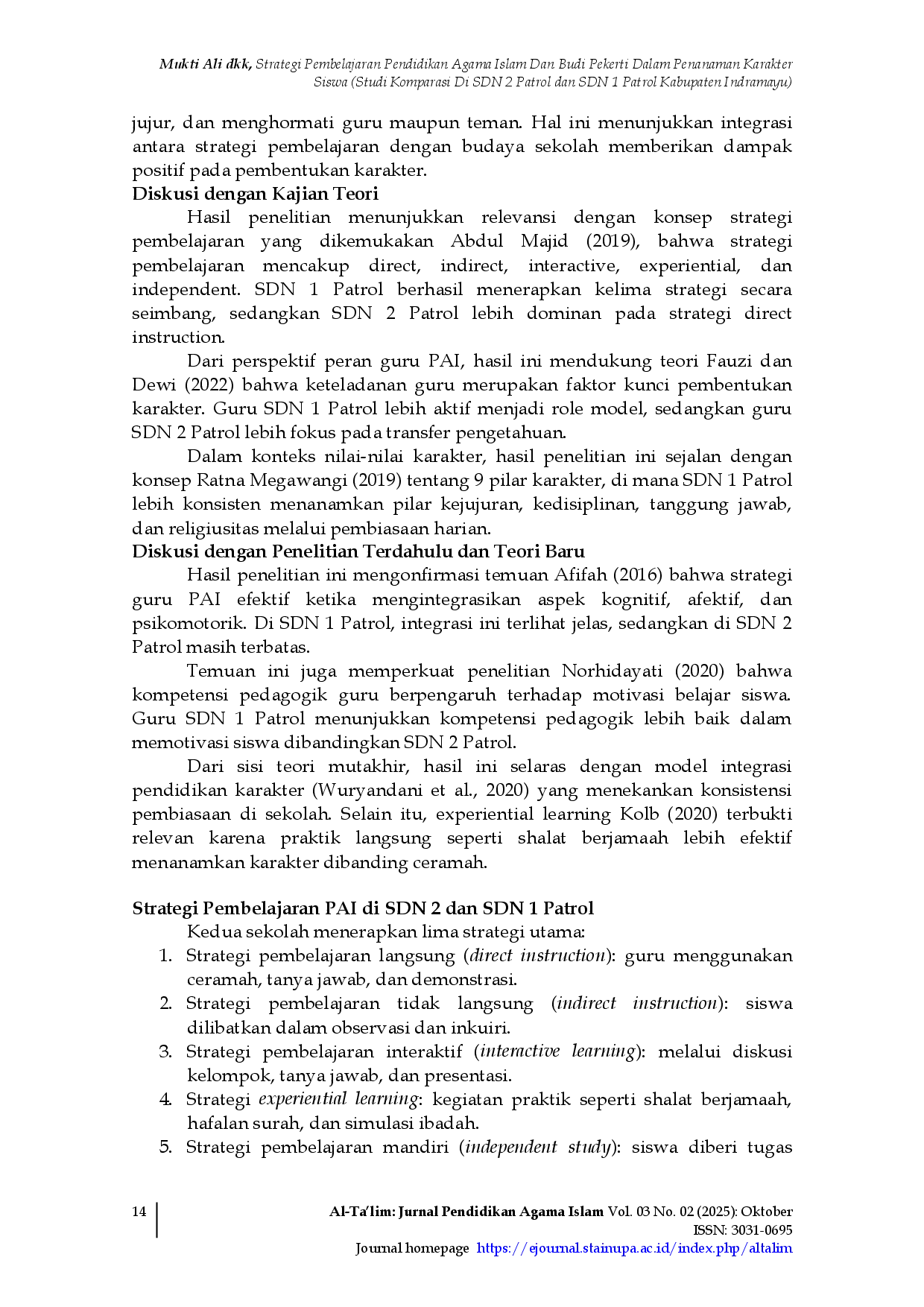
STAINUPASTAINUPA Latar belakang penelitian ini berangkat dari fenomena krisis karakter yang banyak terjadi pada siswa sekolah dasar, yang tercermin dalam perilaku kurangLatar belakang penelitian ini berangkat dari fenomena krisis karakter yang banyak terjadi pada siswa sekolah dasar, yang tercermin dalam perilaku kurang
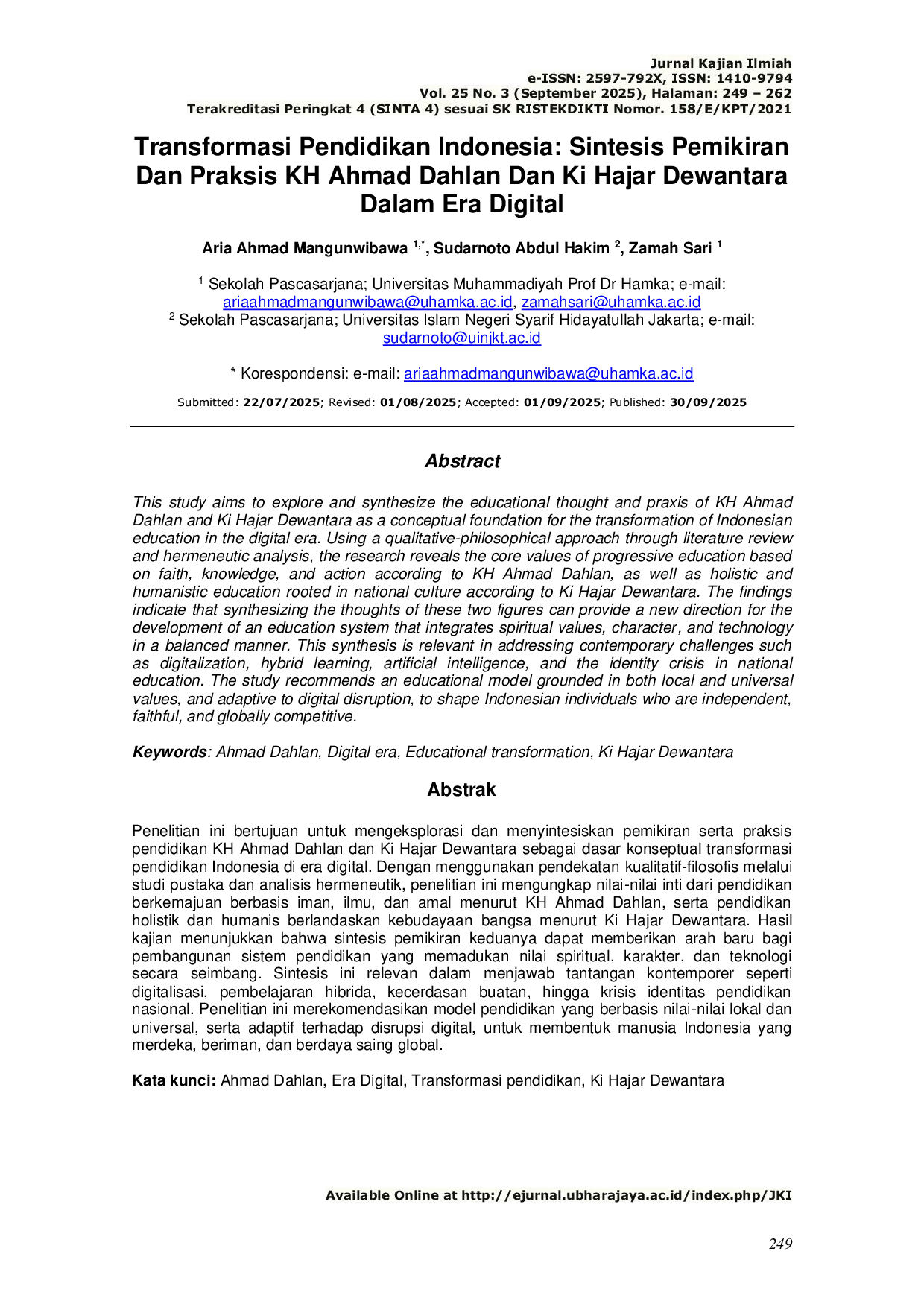
UBHARAJAYAUBHARAJAYA Penelitian ini bertujuan untuk mengeksplorasi dan menyintesiskan pemikiran serta praksis pendidikan KH Ahmad Dahlan dan Ki Hajar Dewantara sebagai dasarPenelitian ini bertujuan untuk mengeksplorasi dan menyintesiskan pemikiran serta praksis pendidikan KH Ahmad Dahlan dan Ki Hajar Dewantara sebagai dasar
Useful /

JOURNAL GEHUJOURNAL GEHU Penelitian ini berfokus pada dua perpustakaan kontainer, yaitu Perpustakaan Janger di Taman Janggan Renon dan Perpustakaan Widya Kumara di Lapangan I GustiPenelitian ini berfokus pada dua perpustakaan kontainer, yaitu Perpustakaan Janger di Taman Janggan Renon dan Perpustakaan Widya Kumara di Lapangan I Gusti

JOURNAL GEHUJOURNAL GEHU Pembangunan komik matematika berbasis Problem-Based Learning (PBL) melibatkan pembuatan media pembelajaran matematika yang menggabungkan unsur gambar danPembangunan komik matematika berbasis Problem-Based Learning (PBL) melibatkan pembuatan media pembelajaran matematika yang menggabungkan unsur gambar dan

ESDMESDM Evolusi delta sangat dipengaruhi oleh faktor sedimentasi dan erosi. Analisis citra Landsat dengan menggunakan perangkat lunak ArcGIS mengungkapkan bahwaEvolusi delta sangat dipengaruhi oleh faktor sedimentasi dan erosi. Analisis citra Landsat dengan menggunakan perangkat lunak ArcGIS mengungkapkan bahwa
IUSIUS Hasil penelitian menunjukkan bahwa pembinaan yang dilakukan oleh Majelis Kehormatan Notaris dan Majelis Pengawas Notaris sama‑sama bertujuan menjagaHasil penelitian menunjukkan bahwa pembinaan yang dilakukan oleh Majelis Kehormatan Notaris dan Majelis Pengawas Notaris sama‑sama bertujuan menjaga