ADPETIKISINDOADPETIKISINDO
Moderation | Journal of Islamic Studies ReviewModeration | Journal of Islamic Studies ReviewThis article examines the thoughts and approaches of Robert Gleave in the study of Islamic law, focusing on criticizing his methodology and epistemology. As an orientalist, Gleave adopts a philological and historical approach in researching Islamic law, especially in the Shia tradition. This approach has been criticized by various Muslim scholars for ignoring the normative and transcendental aspects of Islamic law. Moreover, Gleaves skepticism towards classical sources of Islamic law raises questions regarding the validity of his approach in understanding Islamic law as a revelation-based system. The paper also discusses Gleaves bias in interpreting Islamic hermeneutics as well as the limitations of his analysis in applying Islamic law in the context of contemporary Muslim life. Using the perspective of Islamic epistemology, this paper concludes that Gleaves approach needs to be examined more critically so that it is not only Western academically oriented but also respects the principles of Islamic law held by Muslims.
Robert Gleaves approach to Islamic law exhibits fundamental flaws, primarily by neglecting the normative and transcendental dimensions inherent in the faith.His hermeneutical approach, leaning towards Western academic traditions, inadequately reflects Islamic interpretive methodologies.Furthermore, his disproportionate focus on Shia jurisprudence creates an imbalanced understanding of Islamic law as a whole.A more comprehensive study should integrate Islamic epistemological principles, acknowledging the spiritual and normative aspects of the legal system.
Penelitian lanjutan perlu dilakukan untuk mengeksplorasi secara mendalam bagaimana pendekatan Robert Gleave memengaruhi pemahaman kontemporer tentang hukum Islam di kalangan umat Muslim. Studi komparatif yang lebih luas antara pendekatan Gleave dengan interpretasi hukum Islam dari perspektif ulama tradisional perlu dilakukan, dengan mempertimbangkan aspek spiritual dan normatif yang seringkali terabaikan. Selain itu, penelitian dapat difokuskan pada dampak pendekatan Gleave terhadap dialog antar-madzhab dan upaya rekonsiliasi antara berbagai aliran pemikiran dalam Islam. Penelitian ini dapat menggunakan metode kualitatif, seperti wawancara mendalam dengan ulama dan ahli hukum Islam, serta analisis tekstual terhadap karya-karya Gleave dan respons dari para kritikusnya. Dengan demikian, penelitian ini diharapkan dapat memberikan pemahaman yang lebih komprehensif tentang kontribusi dan keterbatasan pendekatan Gleave dalam studi hukum Islam, serta implikasinya bagi perkembangan pemikiran hukum Islam di masa depan. Penelitian lebih lanjut juga dapat menginvestigasi bagaimana bias metodologis dalam studi orientalistik secara umum memengaruhi representasi hukum Islam dalam wacana akademik global, dan bagaimana bias tersebut dapat diatasi untuk mencapai pemahaman yang lebih akurat dan seimbang.
| File size | 487.2 KB |
| Pages | 14 |
| DMCA | Report |
Related /
IAIN SUIAIN SU The study focuses on the classification of sexual activity inside vehicles within the categories of jarīmah (ḥudūd or tazīr) and on the extent toThe study focuses on the classification of sexual activity inside vehicles within the categories of jarīmah (ḥudūd or tazīr) and on the extent to
IAIN LANGSAIAIN LANGSA Praktik pemberian grasi kepada pelaku tindak pidana korupsi yang mengembalikan aset hasil kejahatan masih belum banyak dikaji dalam kerangka hukum Islam,Praktik pemberian grasi kepada pelaku tindak pidana korupsi yang mengembalikan aset hasil kejahatan masih belum banyak dikaji dalam kerangka hukum Islam,

UINGUSDURUINGUSDUR Changes in the law and disagreements in the law that arise among Islamic jurists are all advantageous. Change is an essential component of human existence.Changes in the law and disagreements in the law that arise among Islamic jurists are all advantageous. Change is an essential component of human existence.
STAIN TDMSTAIN TDM Faktor-faktor ini secara kolektif memperkuat praktik masyarakat yang memprioritaskan formalitas agama sambil mengabaikan konsekuensi hukum jangka panjang,Faktor-faktor ini secara kolektif memperkuat praktik masyarakat yang memprioritaskan formalitas agama sambil mengabaikan konsekuensi hukum jangka panjang,
UIMUIM Pendekatan holistik yang melibatkan edukasi, dukungan psikososial, dan kebijakan pemerintah diperlukan untuk mencegah dan menangani dampak pernikahan dini.Pendekatan holistik yang melibatkan edukasi, dukungan psikososial, dan kebijakan pemerintah diperlukan untuk mencegah dan menangani dampak pernikahan dini.
IAISAMBASIAISAMBAS Wali al-faqih pertama adalah almarhum Ayatullah Khomeini (1979-1989). Kemudian dipegang oleh Ayatollah Ali Khomeeni. Namun, seorang Wali al-Faqih tidakWali al-faqih pertama adalah almarhum Ayatullah Khomeini (1979-1989). Kemudian dipegang oleh Ayatollah Ali Khomeeni. Namun, seorang Wali al-Faqih tidak
STIBASTIBA Permasalahan yang diangkat dalam penelitian ini yaitu; Pertama, bagaimana jual beli mata uang menurut pandangan Islam. Kedua, bagaimana praktik jual beliPermasalahan yang diangkat dalam penelitian ini yaitu; Pertama, bagaimana jual beli mata uang menurut pandangan Islam. Kedua, bagaimana praktik jual beli
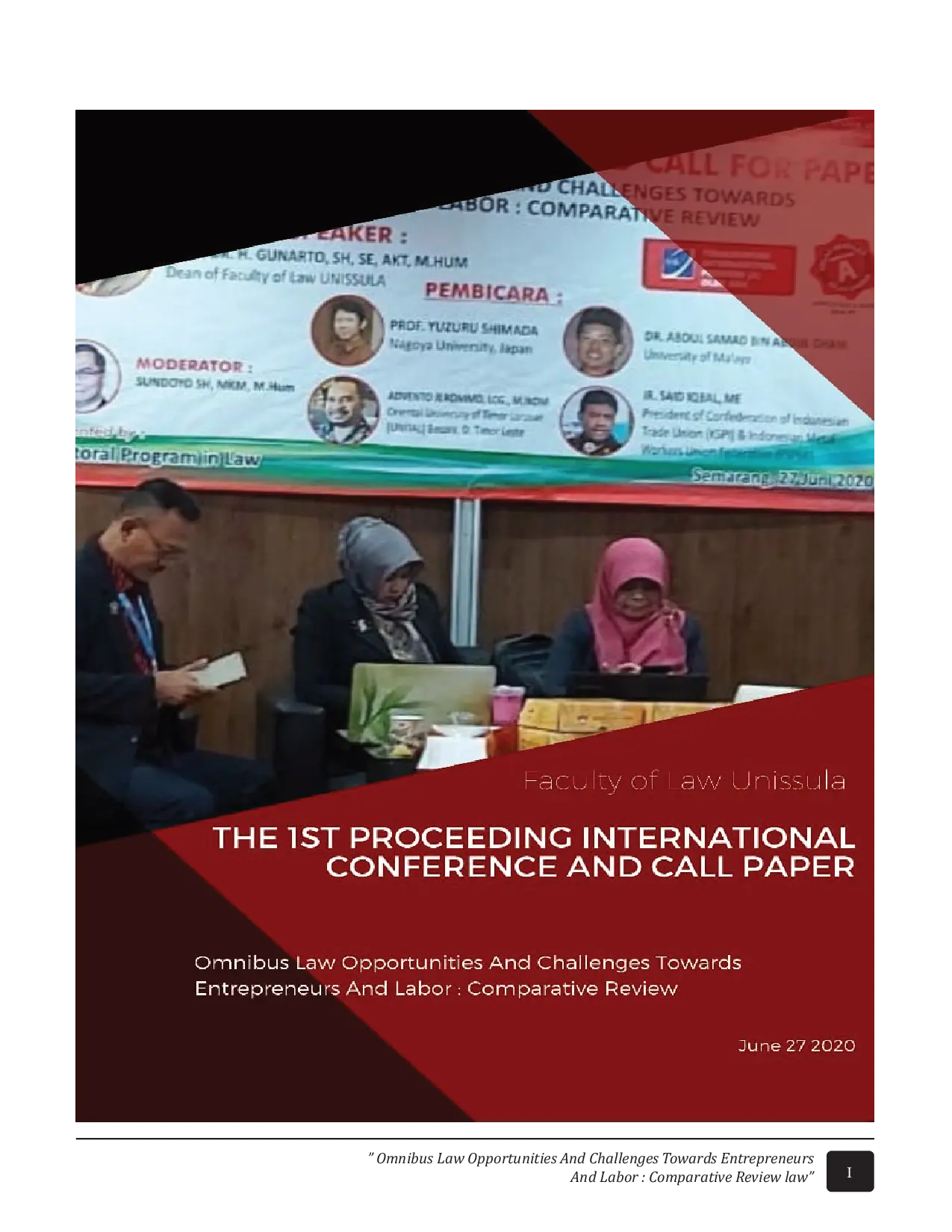
UNISSULAUNISSULA The omnibus law is expected to resolve overlaps and conflicts in maritime defense, fostering a more coordinated system. From an Islamic perspective, defendingThe omnibus law is expected to resolve overlaps and conflicts in maritime defense, fostering a more coordinated system. From an Islamic perspective, defending
Useful /
STAIN TDMSTAIN TDM Temuan menunjukkan bahwa NFT, sebagai aset digital, memiliki objek yang dapat didefinisikan, kepemilikan yang jelas, dan penyerahan yang dapat diverifikasiTemuan menunjukkan bahwa NFT, sebagai aset digital, memiliki objek yang dapat didefinisikan, kepemilikan yang jelas, dan penyerahan yang dapat diverifikasi
STAIN TDMSTAIN TDM Praktik ini melemahkan kepastian hukum, posisi pekerja, dan bertentangan dengan prinsip-prinsip keadilan yang tertanam dalam hukum Islam dan hukum positif.Praktik ini melemahkan kepastian hukum, posisi pekerja, dan bertentangan dengan prinsip-prinsip keadilan yang tertanam dalam hukum Islam dan hukum positif.

STAIN TDMSTAIN TDM Namun, praktik pembuatan surat kuasa bertingkat—di mana kuasa yang diberikan dialihkan kepada pihak ketiga tanpa persetujuan eksplisit dari pemberi kuasa—menimbulkanNamun, praktik pembuatan surat kuasa bertingkat—di mana kuasa yang diberikan dialihkan kepada pihak ketiga tanpa persetujuan eksplisit dari pemberi kuasa—menimbulkan
UNISSULAUNISSULA Beberapa pihak berpendapat bahwa tindakan Presiden masih dalam koridor konstitusi karena dianggap sebagai bagian dari kewenangan prerogatif Presiden. Namun,Beberapa pihak berpendapat bahwa tindakan Presiden masih dalam koridor konstitusi karena dianggap sebagai bagian dari kewenangan prerogatif Presiden. Namun,