UIBUUIBU
One moment, please...One moment, please...One strategy to reduce misconceptions and strengthen science literacy in the classification of living things is to facilitate students with contextual learning resources. Therefore, this study aims to develop an e-module as a learning resource that is integrated with the approach of Jelajah Alam Sekitar (JAS) so as to enable students to understand science concepts through collaborative practices of nature exploration. This research method is research and development using the 4D development model (define, design, develop, and disseminate). Class VII students at MTs Ishthifaiyah Nahdliyah were involved as samples with details of 180 students as the standardization test sample of the integrated science misconception-literacy instrument, 29 students as the e-module readability sample, and 32 students as the e-module implementation sample. Data collection was carried out using interviews, a questionnaire, and student science literacy and misconception tests. The instruments used included interview guidelines, e-module characteristic questionnaires, e-module feasibility questionnaires, student response questionnaires, and pretest-posttest questions. Data analysis for the effectiveness of the e-module on student science literacy and misconceptions was performed using a paired t-test. The developed JAS E-module proved to be very feasible in terms of material concept, presentation, language, and graphics, and had excellent characteristics in terms of module characteristics, JAS components, and activities that contained indicators of misconceptions and science literacy. In addition, based on the results of the effectiveness test, in general, the e-module proved significant in reducing misconceptions (p<.05; t=-4.818; df=31) and strengthening students science literacy (p<.05; t=4.636; df=31). Thus, this development contributes to improving science learning, especially in reducing misconceptions and strengthening science literacy.
The developed JAS-based e-module demonstrates very good characteristics and feasibility.Furthermore, it has been proven effective in strengthening scientific literacy and reducing student misconceptions regarding the classification of living things.For optimal impact, JAS-based e-modules should be supported by more intensive learning strategies to overcome student misconceptions.
Future research should investigate the effectiveness of the JAS-based e-module in other science topics and at different educational levels to broaden its applicability. Additionally, studies could explore the integration of more advanced technologies, such as augmented reality or virtual reality, within the e-module to enhance student engagement and understanding. Finally, research is needed to develop and evaluate targeted interventions to address specific types of misconceptions, such as false positives, that remain persistent even after using the e-module, potentially incorporating personalized learning pathways based on diagnostic assessment results. These interventions could involve more focused conceptual change strategies or collaborative problem-solving activities designed to challenge and correct flawed understandings.
- Development of E-Modules Based on the Socrates Method to Improve Learning Outcomes of Madrasah Ibtidaiyah... doi.org/10.24256/pijies.v6i2.4318Development of E Modules Based on the Socrates Method to Improve Learning Outcomes of Madrasah Ibtidaiyah doi 10 24256 pijies v6i2 4318
- Analisis Miskonsepsi Kimia dan Instrumen Diagnosisnya: Literatur Review | Rokhim | Jurnal Inovasi Pendidikan... journal.unnes.ac.id/nju/JIPK/article/view/34245Analisis Miskonsepsi Kimia dan Instrumen Diagnosisnya Literatur Review Rokhim Jurnal Inovasi Pendidikan journal unnes ac nju JIPK article view 34245
- The Development of a Four-Tier Diagnostic Test Based on Modern Test Theory in Physics Education. development... doi.org/10.12973/eu-jer.12.1.371The Development of a Four Tier Diagnostic Test Based on Modern Test Theory in Physics Education development doi 10 12973 eu jer 12 1 371
- INTEGRASI LITERASI SAINS PESERTA DIDIK DALAM PEMBELAJARAN SAINS | Satya Widya. integrasi literasi sains... doi.org/10.24246/j.sw.2016.v32.i1.p49-56INTEGRASI LITERASI SAINS PESERTA DIDIK DALAM PEMBELAJARAN SAINS Satya Widya integrasi literasi sains doi 10 24246 j sw 2016 v32 i1 p49 56
- Development of Interactive E-Modules to Increase Learning Motivation and Science Literacy in Elementary... journal.iaimnumetrolampung.ac.id/index.php/ji/article/view/2699Development of Interactive E Modules to Increase Learning Motivation and Science Literacy in Elementary journal iaimnumetrolampung ac index php ji article view 2699
| File size | 1.4 MB |
| Pages | 19 |
| DMCA | Report |
Related /
STIE AASSTIE AAS Menggunakan pendekatan deskriptif kualitatif berbasis analisis literatur dan dokumen, penelitian ini menggunakan data dari Otoritas Jasa Keuangan dan BadanMenggunakan pendekatan deskriptif kualitatif berbasis analisis literatur dan dokumen, penelitian ini menggunakan data dari Otoritas Jasa Keuangan dan Badan
TEFLINTEFLIN Survei respons mahasiswa dan diskusi partisipatif mereka memberikan wawasan tentang bagaimana media sosial membantu pencapaian kompetensi yang diperlukan.Survei respons mahasiswa dan diskusi partisipatif mereka memberikan wawasan tentang bagaimana media sosial membantu pencapaian kompetensi yang diperlukan.
UNDARISUNDARIS Guru sebagai tokoh sentral dalam pendidikan diharapkan mampu berperan lebih dari sekadar pengajar, yaitu sebagai Islamic teacherpreneur yang mampu mengintegrasikanGuru sebagai tokoh sentral dalam pendidikan diharapkan mampu berperan lebih dari sekadar pengajar, yaitu sebagai Islamic teacherpreneur yang mampu mengintegrasikan
IAIN KEDIRIIAIN KEDIRI Implementasi pedagogi multimodal memerlukan pengembangan profesional dan instruksi eksplisit guna memperkuat efektivitasnya. Penelitian selanjutnya harusImplementasi pedagogi multimodal memerlukan pengembangan profesional dan instruksi eksplisit guna memperkuat efektivitasnya. Penelitian selanjutnya harus

UNISMUHUNISMUH Bahasa Inggris maritim sangat penting untuk memastikan keselamatan, efisiensi, dan komunikasi yang efektif dalam industri maritim global, khususnya bagiBahasa Inggris maritim sangat penting untuk memastikan keselamatan, efisiensi, dan komunikasi yang efektif dalam industri maritim global, khususnya bagi
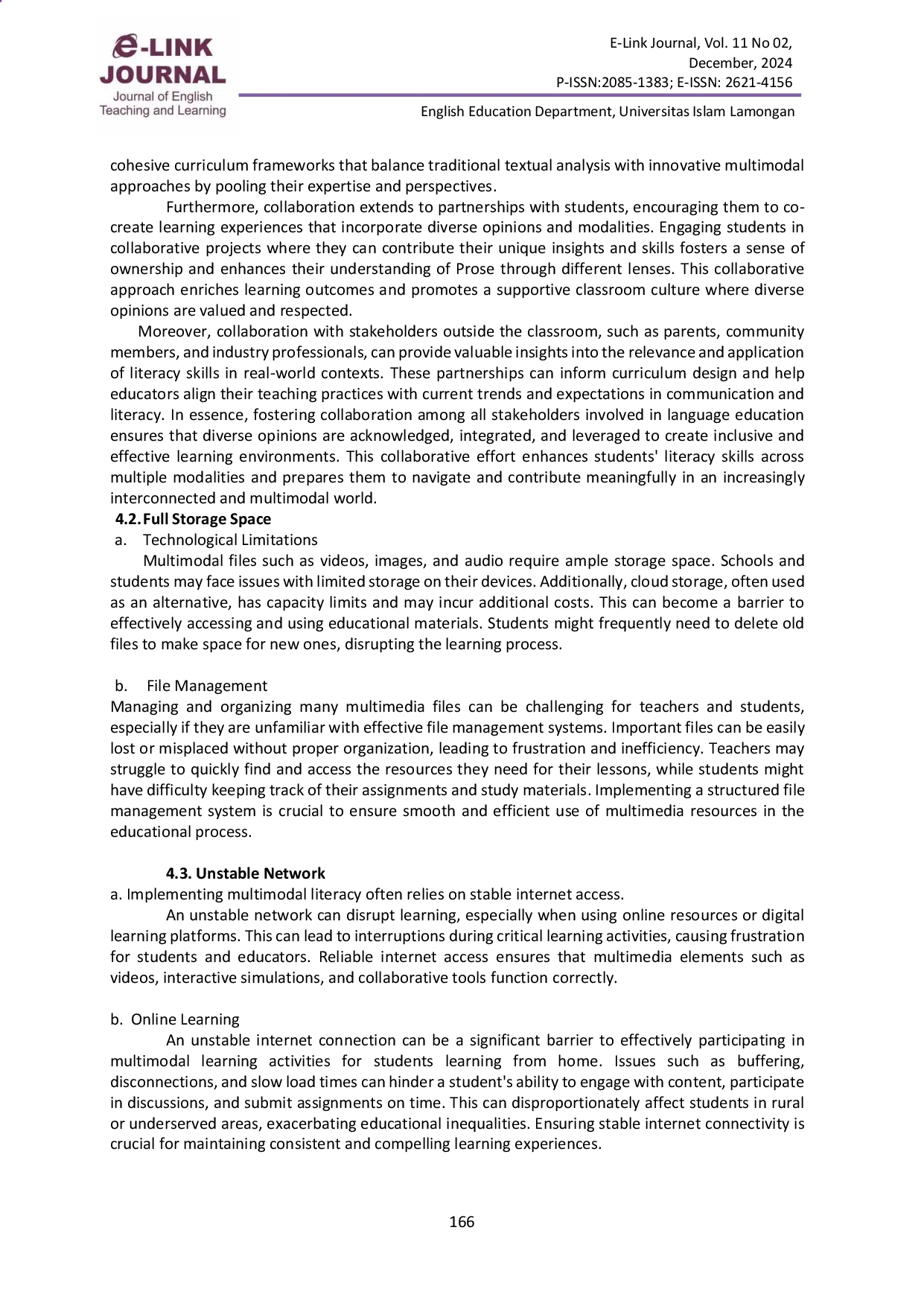
UNISLAUNISLA Integrasi literasi multimodal terbukti penting karena meningkatkan pemahaman materi, mendukung beragam gaya belajar, serta meningkatkan motivasi dan kepercayaanIntegrasi literasi multimodal terbukti penting karena meningkatkan pemahaman materi, mendukung beragam gaya belajar, serta meningkatkan motivasi dan kepercayaan

ALMEERAEDUCATIONALMEERAEDUCATION Tujuan dari penelitian ini adalah untuk menunjukkan beberapa respon siswa mengenai materi matematika pada e-modul dalam konteks materi bangun ruang sisiTujuan dari penelitian ini adalah untuk menunjukkan beberapa respon siswa mengenai materi matematika pada e-modul dalam konteks materi bangun ruang sisi
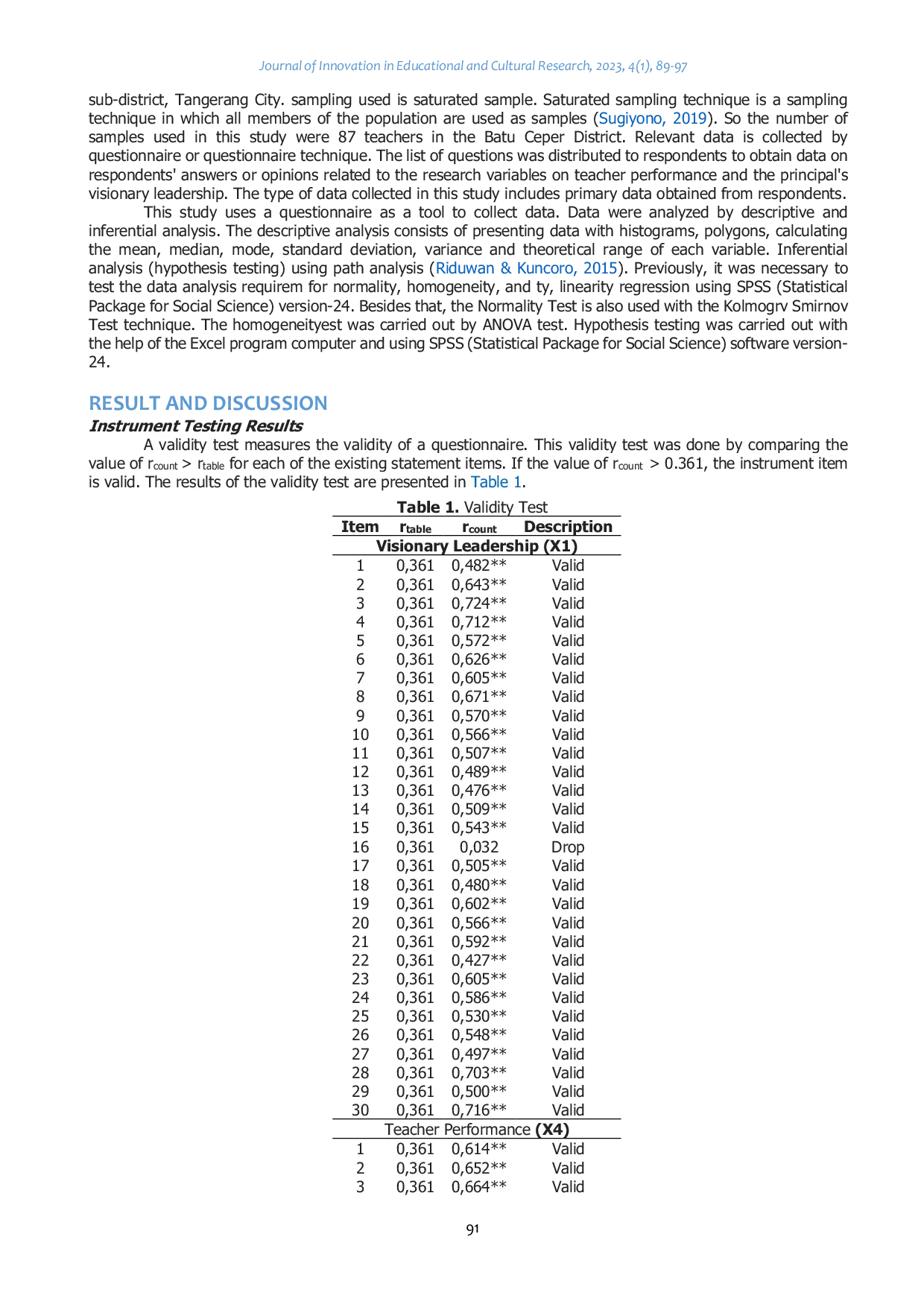
JIECRJIECR Penelitian ini bertujuan untuk menganalisis pengaruh kepemimpinan visioner kepala sekolah terhadap kinerja guru taman kanak-kanak. Pendekatan yang digunakanPenelitian ini bertujuan untuk menganalisis pengaruh kepemimpinan visioner kepala sekolah terhadap kinerja guru taman kanak-kanak. Pendekatan yang digunakan
Useful /

IAIN KEDIRIIAIN KEDIRI These findings highlight the significance of these factors in fostering EFL learner engagement and offer valuable insights for enhancing EFL educationThese findings highlight the significance of these factors in fostering EFL learner engagement and offer valuable insights for enhancing EFL education
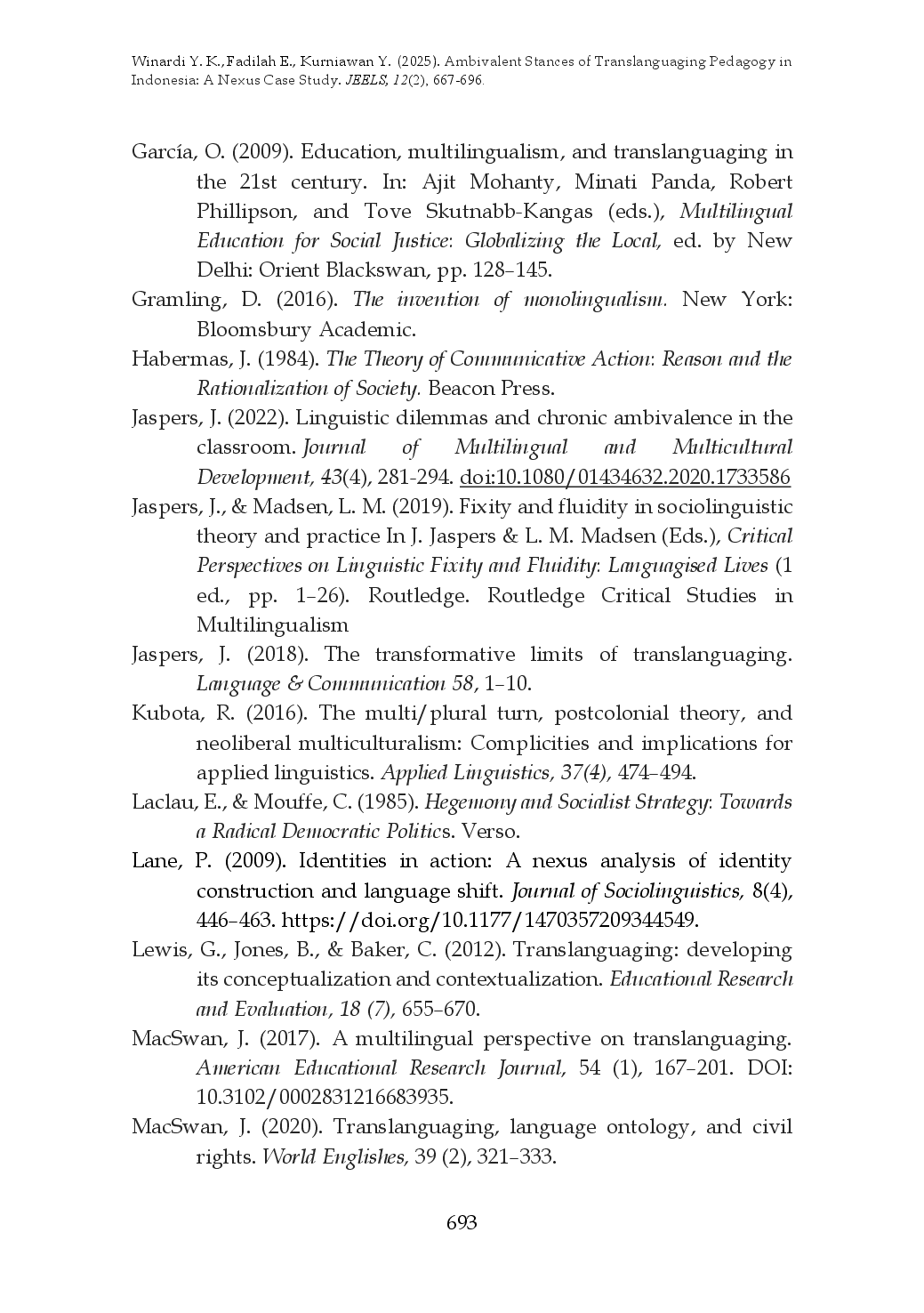
IAIN KEDIRIIAIN KEDIRI Peserta cenderung menggunakan bahasa Inggris secara eksklusif dalam situasi formal, meskipun mereka mengakui manfaat translanguaging dalam diskusi kelompok.Peserta cenderung menggunakan bahasa Inggris secara eksklusif dalam situasi formal, meskipun mereka mengakui manfaat translanguaging dalam diskusi kelompok.

UNISMUHUNISMUH Seiring pergeseran minat menuju hiburan publik, khususnya siaran esports, mayoritas pengguna beralih menjadi penonton. Namun cara mereka mengekspresikanSeiring pergeseran minat menuju hiburan publik, khususnya siaran esports, mayoritas pengguna beralih menjadi penonton. Namun cara mereka mengekspresikan
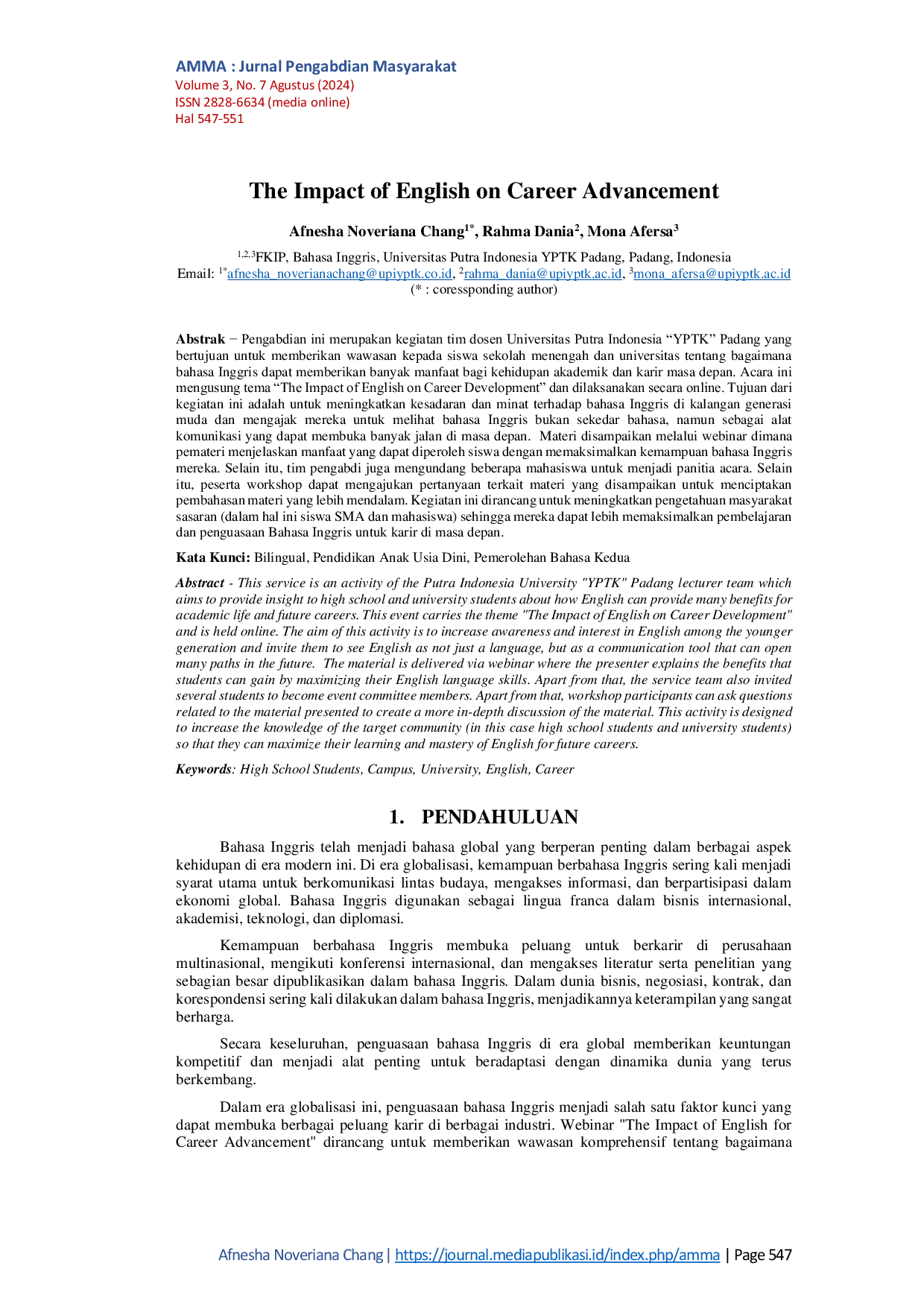
MEDIAPUBLIKASIMEDIAPUBLIKASI Selain itu, tim pengabdi juga mengundang beberapa mahasiswa untuk menjadi panitia acara. Selain itu, peserta workshop dapat mengajukan pertanyaan terkaitSelain itu, tim pengabdi juga mengundang beberapa mahasiswa untuk menjadi panitia acara. Selain itu, peserta workshop dapat mengajukan pertanyaan terkait