STAIRAYASTAIRAYA
BARAYA : International Journal of Arabic and World Languages EducationBARAYA : International Journal of Arabic and World Languages EducationPenelitian ini mengkaji implementasi metode drama musikal dalam pembelajaran kosakata bahasa Arab (mufrodat) di sekolah dasar Islam. Pendekatan deskriptif kualitatif digunakan untuk meneliti proses pengajaran, respons siswa, dan hasil pembelajaran. Data dikumpulkan melalui observasi kelas, wawancara guru, dan tes penilaian siswa selama periode tiga bulan yang melibatkan 26 siswa kelas lima. Penelitian ini menggunakan teknik drama musikal yang menggabungkan lagu-lagu Arab, bermain peran, dan aktivitas gerakan untuk mengajarkan 100 kosakata dasar bahasa Arab dalam lima unit tematik. Hasil menunjukkan peningkatan signifikan dalam retensi kosakata (dari 48% menjadi 87%), tingkat keterlibatan siswa, dan kepercayaan diri komunikasi lisan. Siswa menunjukkan peningkatan kapasitas hafalan melalui pola ritmis dan pendekatan pembelajaran kinestetik. Guru melaporkan peningkatan partisipasi kelas dan berkurangnya kecemasan belajar di antara siswa. Metode drama musikal terbukti efektif dalam menciptakan lingkungan belajar yang menyenangkan sambil mempertahankan ketat akademik. Tantangan implementasi meliputi manajemen waktu, persyaratan persiapan guru, dan alokasi sumber daya. Penelitian ini menyimpulkan bahwa drama musikal merupakan inovasi pedagogis yang layak untuk pengajaran kosakata bahasa Arab dalam pengaturan pendidikan Islam tingkat dasar. Rekomendasi meliputi program pelatihan guru yang komprehensif, strategi integrasi kurikulum, dan sistem dukungan institusional untuk memfasilitasi implementasi yang luas.
This study demonstrates that musical drama methods represent a highly effective and culturally appropriate approach for Arabic vocabulary instruction in Madrasah Ibtidaiyah settings.The substantial improvements in vocabulary retention (from 48% to 87%), dramatic increases in student engagement and participation, and positive shifts in attitudes toward Arabic language learning provide compelling evidence for the pedagogical value of integrating musical and dramatic elements into vocabulary curriculum.The alignment between musical drama approaches and elementary students developmental needs, combined with successful adaptation to Islamic educational values, suggests particular appropriateness for Indonesian Madrasah Ibtidaiyah contexts.The enthusiasm demonstrated by students, positive feedback from teachers and administrators, and community acceptance indicate strong potential for sustainable adoption and institutional integration.Key findings reveal that successful implementation requires comprehensive teacher preparation, adequate time allocation, institutional support for innovative pedagogical approaches, and creative problem-solving to address resource limitations.The willingness of teachers to invest additional preparation time, coupled with their reports of enhanced job satisfaction and professional growth, suggests intrinsic motivation for continued implementation beyond the research period.Based on comprehensive analysis of implementation experiences and outcomes, several practical recommendations emerge for educators and administrators interested in adopting musical drama methods for Arabic vocabulary instruction.Teacher training programs should focus specifically on musical drama techniques integrated with Arabic language pedagogy, including melody selection, movement coordination, dramatic facilitation, and multi-modal assessment strategies.These programs should provide hands-on experience with musical drama activities and opportunities for peer collaboration and resource sharing.Institutional support systems should include flexible scheduling arrangements that accommodate extended lesson periods for musical drama activities, resource allocation for basic musical and dramatic materials, administrative encouragement for pedagogical innovation and experimentation, and recognition systems that acknowledge teacher creativity and professional development efforts.Schools should also consider developing resource libraries containing songs, scripts, activity guides, and assessment materials suitable for different vocabulary themes and proficiency levels.Curriculum integration strategies should incorporate musical drama components into formal Arabic language frameworks while maintaining alignment with educational standards and learning objectives.Sequential implementation beginning with concrete vocabulary categories before progressing to abstract concepts, regular assessment and documentation of student progress and engagement, and coordination with other subject areas to reinforce vocabulary learning across disciplines represent important considerations for effective integration.
Based on the research findings and limitations, future studies could explore the long-term retention effects and skill transfer of musical drama methods over extended periods (6-12 months). Comparative studies investigating the effectiveness of musical drama across different age groups, proficiency levels, and institutional contexts would enhance our understanding of optimal applications and adaptation requirements. Additionally, mixed-methods research combining musical drama with other innovative teaching approaches, such as technology integration or game-based learning, could identify synergistic effects and improved pedagogical strategies. Investigating implementation factors in diverse institutional contexts, including urban versus rural settings, varying socioeconomic levels, and resource availability, would provide valuable insights into scalability and adaptation needs. Furthermore, exploring the application of musical drama to other Arabic language skills, such as grammar instruction, reading comprehension, and writing development, would expand our understanding of this approachs broader potential. Research on teacher professional development models and training effectiveness would contribute to more effective implementation programming. Educational policy recommendations emphasize the need for systemic support for innovative teaching methods in Islamic education contexts. Professional development funding should prioritize training programs focused on arts-integrated approaches and creative pedagogy. Curriculum flexibility policies should allow for pedagogical experimentation and adaptation while maintaining educational standards and religious values. Recognition and incentive systems should acknowledge teacher innovation and student achievement in creative learning contexts. Administrative recommendations include establishing peer collaboration networks for sharing successful practices and addressing implementation challenges, developing partnerships with teacher education institutions to integrate musical drama methods into pre-service training programs, and creating evaluation frameworks that assess both academic achievement and student engagement in innovative learning environments.
- Drama pedagogy in foreign language learning: investigating the impact of theatre texts and theatre performance... tandfonline.com/doi/full/10.1080/13569783.2021.2019578Drama pedagogy in foreign language learning investigating the impact of theatre texts and theatre performance tandfonline doi full 10 1080 13569783 2021 2019578
- Full article: The power of creative drama: integrating playful learning approaches in teacher education.... tandfonline.com/doi/full/10.1080/13569783.2025.2457745Full article The power of creative drama integrating playful learning approaches in teacher education tandfonline doi full 10 1080 13569783 2025 2457745
- Effectiveness of Experiential Learning Based on Multiple Intelligence to Increase MI Student Learning... doi.org/10.51169/ideguru.v9i1.782Effectiveness of Experiential Learning Based on Multiple Intelligence to Increase MI Student Learning doi 10 51169 ideguru v9i1 782
- Fostering foreign language skills through an extracurricular drama project: The Language Learning Journal:... tandfonline.com/doi/full/10.1080/09571736.2017.1406532Fostering foreign language skills through an extracurricular drama project The Language Learning Journal tandfonline doi full 10 1080 09571736 2017 1406532
- Use of Music and Songs as Pedagogical Tools in Teaching English as Foreign Language Contexts. music songs... hindawi.com/journals/edri/2022/3384067Use of Music and Songs as Pedagogical Tools in Teaching English as Foreign Language Contexts music songs hindawi journals edri 2022 3384067
| File size | 358.08 KB |
| Pages | 13 |
| DMCA | Report |
Related /
BUSTANULULUMBUSTANULULUM This study examines the impact of Career Development Learning (CDL) on students Self-Perceived Employability (SPE), with Self-Efficacy (SE) as a mediatorThis study examines the impact of Career Development Learning (CDL) on students Self-Perceived Employability (SPE), with Self-Efficacy (SE) as a mediator
UIGMUIGM Implementasi strategi‑strategi tersebut menghasilkan pembelajaran yang bermakna, aktif, reflektif, dan berpusat pada siswa, serta mendukung pengembanganImplementasi strategi‑strategi tersebut menghasilkan pembelajaran yang bermakna, aktif, reflektif, dan berpusat pada siswa, serta mendukung pengembangan

UIGMUIGM Oleh karena itu, penting bagi kita untuk belajar dan terbiasa menggunakan bahasa Indonesia yang baik dan benar sesuai dengan aturan linguistik. Hasil penelitianOleh karena itu, penting bagi kita untuk belajar dan terbiasa menggunakan bahasa Indonesia yang baik dan benar sesuai dengan aturan linguistik. Hasil penelitian

UIGMUIGM Penelitian ini berkontribusi pada studi stilistika dan wacana media dengan menunjukkan bahwa ekspresi kiasan dalam berita ekonomi kontemporer bukan hanyaPenelitian ini berkontribusi pada studi stilistika dan wacana media dengan menunjukkan bahwa ekspresi kiasan dalam berita ekonomi kontemporer bukan hanya

USBYPKPUSBYPKP Pengelolaan persediaan merupakan salah satu aspek penting dalam meningkatkan profitabilitas perusahaan, khususnya pada sektor Consumer Non-Cyclicals yangPengelolaan persediaan merupakan salah satu aspek penting dalam meningkatkan profitabilitas perusahaan, khususnya pada sektor Consumer Non-Cyclicals yang

ASSYIFAASSYIFA Penelitian ini menggunakan metode deskriptif kualitatif, dengan teknik pengumpulan data berupa observasi dan kuesioner. Hasil penelitian menunjukkan bahwa:Penelitian ini menggunakan metode deskriptif kualitatif, dengan teknik pengumpulan data berupa observasi dan kuesioner. Hasil penelitian menunjukkan bahwa:

UNP KEDIRIUNP KEDIRI Sampel penelitian terdiri atas dua kelas, yaitu kelas eksperimen yang diberikan pembelajaran menggunakan model Role Playing dan kelas kontrol yang menggunakanSampel penelitian terdiri atas dua kelas, yaitu kelas eksperimen yang diberikan pembelajaran menggunakan model Role Playing dan kelas kontrol yang menggunakan

ALHIKMAHJKTALHIKMAHJKT Sampel penelitian ini adalah siswa kelas VII-A sebagai kelas eksperimen dan siswa kelas VII-B sebagai kelas kontrol. Instrumen penelitian ini adalah tesSampel penelitian ini adalah siswa kelas VII-A sebagai kelas eksperimen dan siswa kelas VII-B sebagai kelas kontrol. Instrumen penelitian ini adalah tes
Useful /
UIGMUIGM Penelitian ini mengeksplorasi persepsi guru calon EFL tentang literasi visual dan kesiapan mereka untuk mengintegrasikannya dalam praktik pengajaran. TemuanPenelitian ini mengeksplorasi persepsi guru calon EFL tentang literasi visual dan kesiapan mereka untuk mengintegrasikannya dalam praktik pengajaran. Temuan

UNP KEDIRIUNP KEDIRI Variabel kepercayaan tidak memiliki pengaruh signifikan terhadap keputusan pembelian produk fashion Islami secara online, kemungkinan karena adanya faktorVariabel kepercayaan tidak memiliki pengaruh signifikan terhadap keputusan pembelian produk fashion Islami secara online, kemungkinan karena adanya faktor
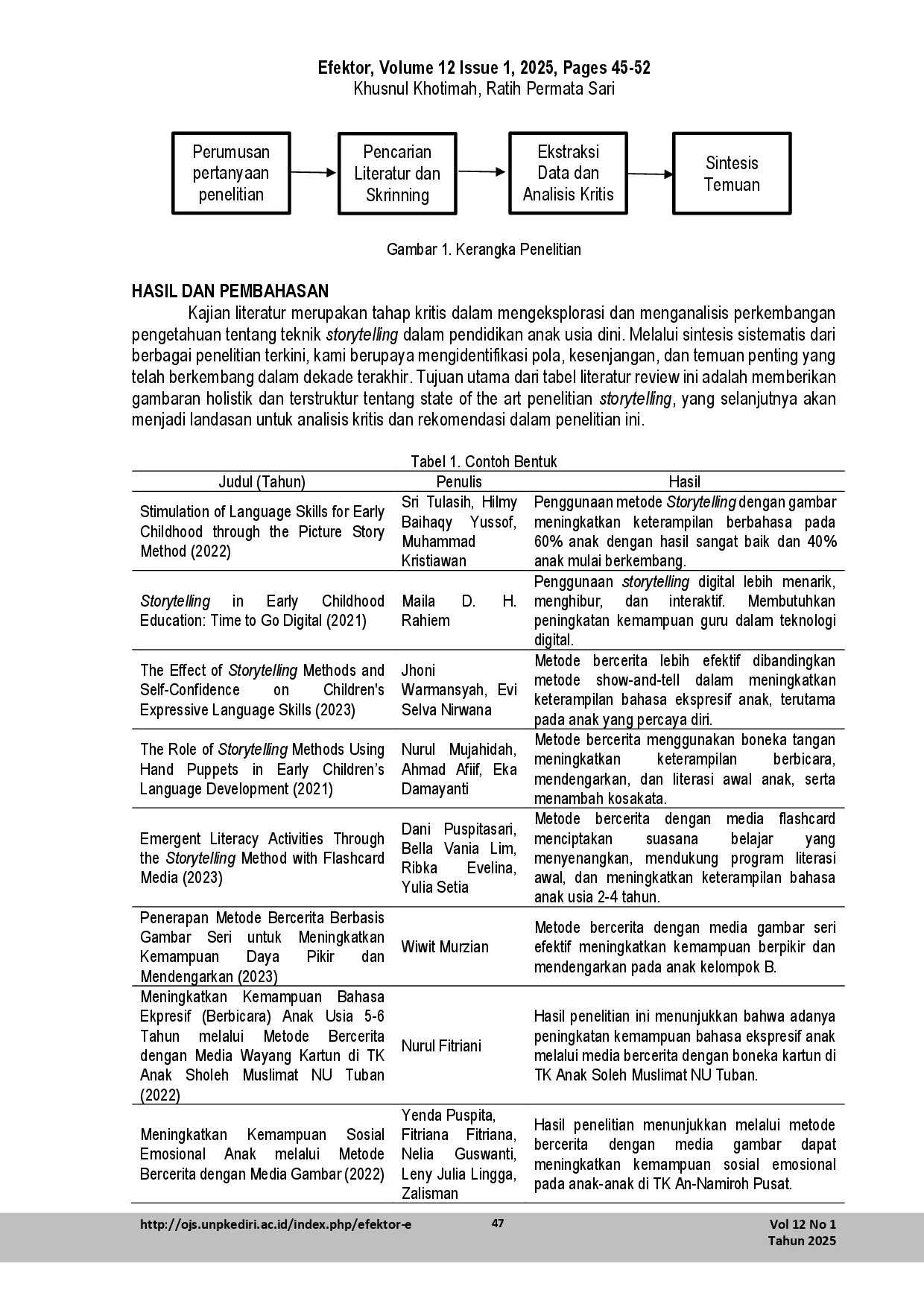
UNP KEDIRIUNP KEDIRI Keberhasilan implementasi bergantung pada pemilihan metode yang sesuai dengan kebutuhan anak serta kemampuan pendidik dalam menciptakan lingkungan belajarKeberhasilan implementasi bergantung pada pemilihan metode yang sesuai dengan kebutuhan anak serta kemampuan pendidik dalam menciptakan lingkungan belajar

ALHIKMAHJKTALHIKMAHJKT Artikel ini mengemukakan bahwa tafsir maqashidi merupakan pendekatan kritis yang dapat menjadi landasan konseptual bagi moderasi Islam di Indonesia. DenganArtikel ini mengemukakan bahwa tafsir maqashidi merupakan pendekatan kritis yang dapat menjadi landasan konseptual bagi moderasi Islam di Indonesia. Dengan