ITSITS
IPTEK The Journal for Technology and ScienceIPTEK The Journal for Technology and ScienceCancer is the worlds second-leading cause of death, arising from abnormal cell growth that invades the bodys cells and tissues. Simultaneous occurrences of lung and colon cancer are not uncommon, with lung cancer often emerging as the second primary cancer in colon cancer patients. While Deep Learning (DL) approaches have shown promise in accurate cancer classification, recent studies highlight the susceptibility of DL models to perturbations in input images. Merely achieving accuracy is insufficient; models must demonstrate resilience against even the slightest perturbations by applying adversarial defence methods. This study aims to enhance the reliability of the Convolutional Neural Network (CNN) algorithm in the face of adversarial attacks by implementing adversarial training. Leveraging the LC25000 dataset and various pre-trained CNN models for classification, we employ adversarial attack methods such as Carlini and Wagner, DeepFool, and SaliencyMap alongside adversarial training for defence. Evaluation metrics include precision, recall, F1-score, accuracy. Our assessment involves scrutinizing adversarial attacks and defences on histopathology images related to lung and colon issues, representing a state-of-the-art endeavour. The results indicate a significant improvement in susceptibility to adversarial attacks on histopathological images of the lungs and colon, from 0% to 81%.
This research successfully implemented robustness for trained models to classify lung and colon cancer histopathology data using adversarial training.The models were initially vulnerable to adversarial attacks, with accuracy dropping to 0%, but were improved through adversarial training.The best results were achieved with the GoogLeNet model, increasing accuracy on perturbed data from 0% to 81%.These findings demonstrate the effectiveness of adversarial training in enhancing the resilience of CNN models against adversarial attacks in histopathological image classification.
Further research should investigate the application of alternative defense mechanisms, such as Defensive Distillation, Interval Bound Propagation, and Defense GAN, to further enhance model robustness. Expanding the study to include diverse datasets of histopathological images from various sources and patient populations is crucial to assess the generalizability of the proposed adversarial training approach. Future work could explore the development of novel adversarial attack strategies specifically tailored to the characteristics of histopathological images, potentially uncovering new vulnerabilities in existing CNN models. Investigating the interpretability of CNN models after adversarial training could provide insights into how the models learn to defend against attacks and identify potential biases or artifacts. Finally, exploring the integration of adversarial training with other techniques, such as data augmentation and transfer learning, may lead to even more robust and accurate cancer classification systems, ultimately improving diagnostic capabilities and patient outcomes.
| File size | 602.77 KB |
| Pages | 12 |
| DMCA | Report |
Related /

UNWAHAUNWAHA Rumah sakit kini memiliki dasar pengetahuan yang kuat untuk mengoptimalkan wakaf uang sebagai sumber pendanaan sosial yang produktif dan berkelanjutanRumah sakit kini memiliki dasar pengetahuan yang kuat untuk mengoptimalkan wakaf uang sebagai sumber pendanaan sosial yang produktif dan berkelanjutan
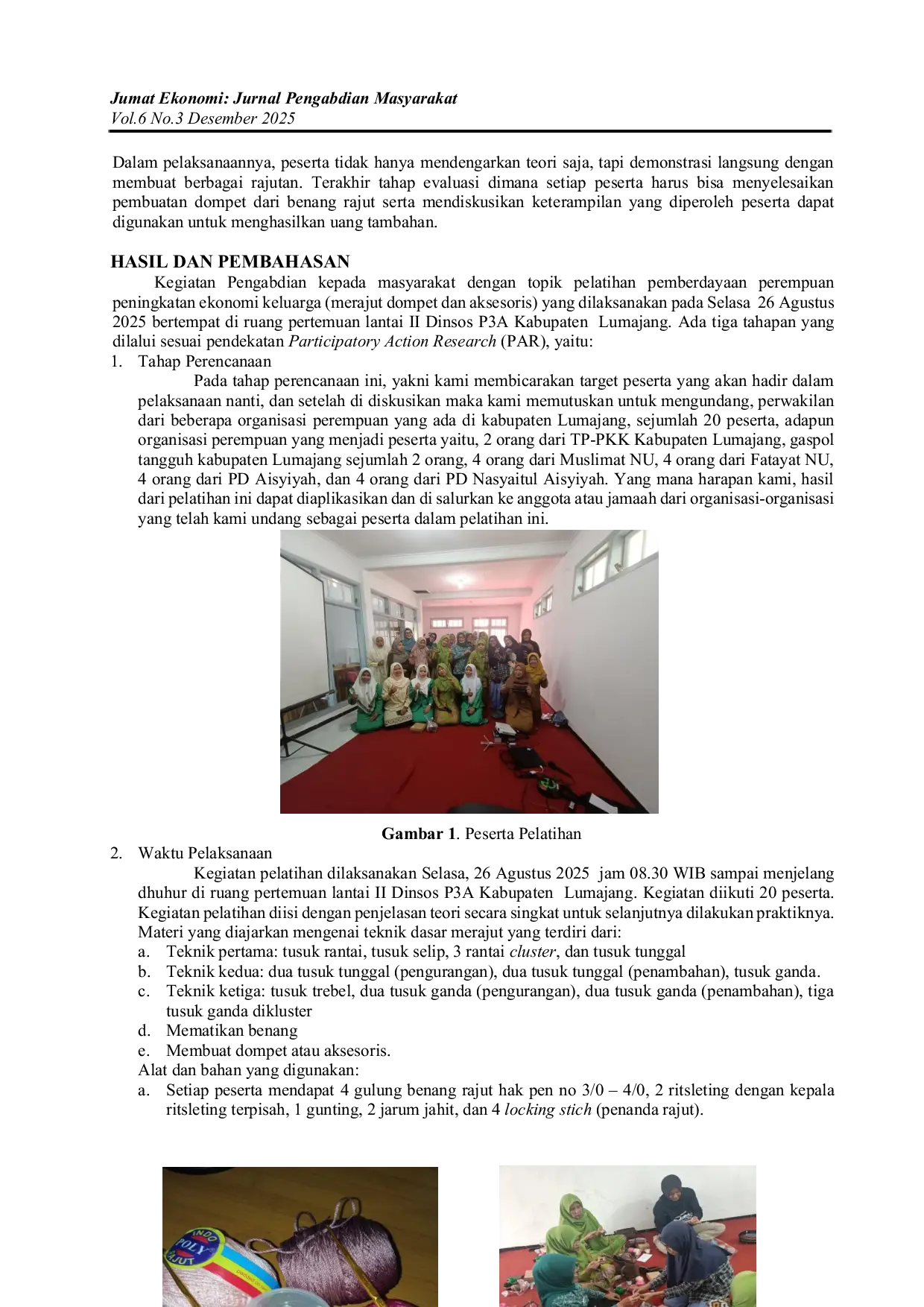
UNWAHAUNWAHA Diharapkan keterampilan merajut yang sudah dimiliki bisa menjadi peluang kaum perempuan membuat berbagai kreasi dari benang rajut untuk digunakan sendiriDiharapkan keterampilan merajut yang sudah dimiliki bisa menjadi peluang kaum perempuan membuat berbagai kreasi dari benang rajut untuk digunakan sendiri

UNWAHAUNWAHA Kegiatan ini berfokus pada penguatan kemampuan peserta dalam memanfaatkan perdagangan elektronik dan media sosial sebagai sarana pemasaran produk desa.Kegiatan ini berfokus pada penguatan kemampuan peserta dalam memanfaatkan perdagangan elektronik dan media sosial sebagai sarana pemasaran produk desa.

UNWAHAUNWAHA Hasil penelitian menunjukkan bahwa pendampingan mahasiswa berhasil meningkatkan visibilitas digital UMKM melalui implementasi Google My Business (GMB)Hasil penelitian menunjukkan bahwa pendampingan mahasiswa berhasil meningkatkan visibilitas digital UMKM melalui implementasi Google My Business (GMB)

UNWAHAUNWAHA Program pengabdian masyarakat di Desa Plosokerep berhasil meningkatkan keterampilan peserta dalam inovasi produk mie dan nugget pakcoy serta desain grafisProgram pengabdian masyarakat di Desa Plosokerep berhasil meningkatkan keterampilan peserta dalam inovasi produk mie dan nugget pakcoy serta desain grafis
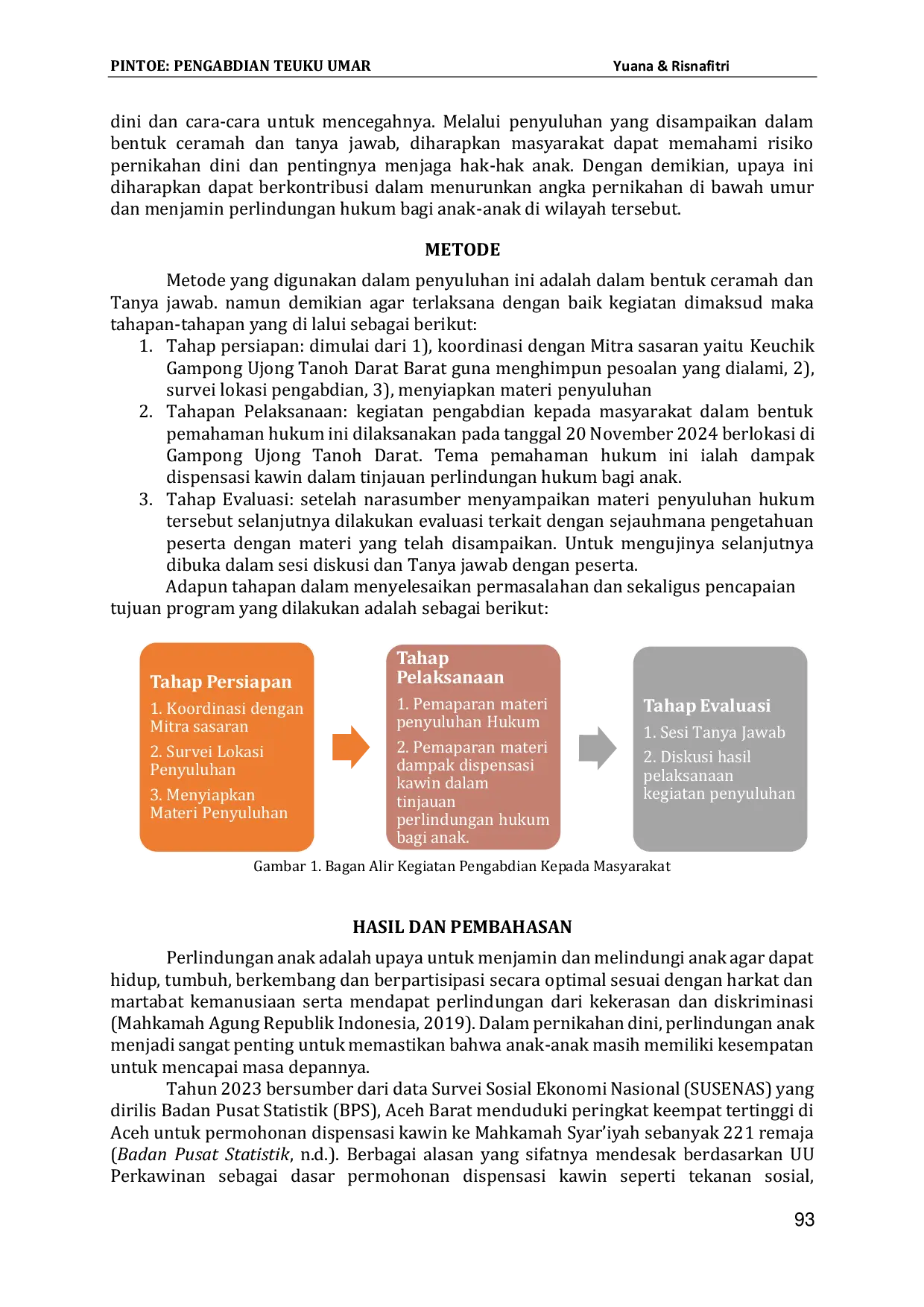
4141 Metode penyuluhan dilakukan dalam bentuk ceramah dan tanya jawab. Hasil kegiatan menunjukkan bahwa peserta memahami dampak pernikahan dini dan langkah-langkahMetode penyuluhan dilakukan dalam bentuk ceramah dan tanya jawab. Hasil kegiatan menunjukkan bahwa peserta memahami dampak pernikahan dini dan langkah-langkah

4141 Desa Selok Aceh merupakan salah satu daerah yang kaya akan sumber daya alam, termasuk daun pandan duri (Pandanus tectorius), yang memiliki potensi besarDesa Selok Aceh merupakan salah satu daerah yang kaya akan sumber daya alam, termasuk daun pandan duri (Pandanus tectorius), yang memiliki potensi besar

4141 Program ini juga mendapat respons positif dari masyarakat, khususnya para ibu, yang merasakan manfaat dari makanan olahan yang mudah dipraktikkan dan efektifProgram ini juga mendapat respons positif dari masyarakat, khususnya para ibu, yang merasakan manfaat dari makanan olahan yang mudah dipraktikkan dan efektif
Useful /

ADPEBIADPEBI Masalah akan timbul jika: Penyedia Barang/Jasa tidak setuju dengan proses audit klaim ke BPKP karena tidak tercantum dalam kontrak konstruksi atau PenyediaMasalah akan timbul jika: Penyedia Barang/Jasa tidak setuju dengan proses audit klaim ke BPKP karena tidak tercantum dalam kontrak konstruksi atau Penyedia
ISBIISBI Dimensi perasaan keagamaan adalah dimensi yang dapat dikaitkan dengan perasaan seseorang terhadap agamanya, pengalaman, atau bentuk perasaan lainnya sepertiDimensi perasaan keagamaan adalah dimensi yang dapat dikaitkan dengan perasaan seseorang terhadap agamanya, pengalaman, atau bentuk perasaan lainnya seperti
ADPEBIADPEBI PT PLN (Persero) diharuskan untuk meminta penggantian bentuk jaminan lain yang disepakati dalam kontrak (dalam bentuk bank guarantee) dengan nilai setaraPT PLN (Persero) diharuskan untuk meminta penggantian bentuk jaminan lain yang disepakati dalam kontrak (dalam bentuk bank guarantee) dengan nilai setara
ADPEBIADPEBI Tujuan penelitian ini adalah untuk mengeksplorasi hubungan kekuasaan antara pemilik hotel dan operator dalam kontrak manajemen hotel dan pengeluaran modalTujuan penelitian ini adalah untuk mengeksplorasi hubungan kekuasaan antara pemilik hotel dan operator dalam kontrak manajemen hotel dan pengeluaran modal