FMIPAUKITFMIPAUKIT
Biofarmasetikal Tropis (The Tropical Journal of Biopharmaceutical)Biofarmasetikal Tropis (The Tropical Journal of Biopharmaceutical)The most common health problem in Indonesia is bacterial infection. Dysphania ambrosioides L., also known as epazote leaves, is an herbal plant that has antimicrobial potential. This research was conducted to see at what concentration there is antibacterial activity of epazote leaf infusion Dysphania ambrosioides L. against Escherichia coli bacteria. This laboratory experimental study used a complete randomized design (RAL) research. Antibacterial activity testing of epazote leaves was carried out using the disc paper diffusion method with concentrations of 50%, 75%, and 100%. Epazote leaves are boiled in an infusion pan for 15 minutes, until the temperature reaches 90 degrees Celsius. Ampicillin positive control 10 μg/disc. Based on the test results of secondary metabolites of positive epazote leaf infusion there are alkaloids, flavonoids, tannins, saponins, triterpenoids, and phenolics. The results of the study showed that infusion of epazote leaves inhibited Escherichia coli bacteria by diameter inhibition. Average at a concentration of 50% = 14.04 mm, 75% = 16.92 mm, 100% = 17.94 mm, which means that there is antibacterial activity of epazote leaf infusion against Escherichia coli bacteria.
The results showed that the infusion of epazote leaves inhibited Escherichia coli bacteria.However, further research is needed to make epazote leaves safer for public consumption.Based on statistical tests, epazote leaf infusion at a 50% concentration has the same effect as 75% and 100% concentrations, indicating that using a 50% concentration is sufficient to inhibit the growth of Escherichia coli bacteria.
Penelitian lebih lanjut perlu dilakukan untuk mengidentifikasi senyawa spesifik dalam infusa daun epazote yang bertanggung jawab atas aktivitas antibakterinya, sehingga dapat dimanfaatkan secara optimal dalam pengembangan obat herbal. Selain itu, studi toksisitas yang komprehensif perlu dilakukan untuk memastikan keamanan penggunaan infusa daun epazote sebagai alternatif pengobatan infeksi bakteri, terutama dalam jangka panjang. Sebagai pengembangan, penelitian dapat difokuskan pada formulasi infusa daun epazote menjadi sediaan farmasi yang lebih praktis dan stabil, seperti kapsul atau salep, untuk meningkatkan efektivitas dan kemudahan penggunaannya. Penelitian lanjutan juga dapat mengeksplorasi potensi sinergis antara infusa daun epazote dengan antibiotik konvensional, untuk mengatasi masalah resistensi bakteri dan meningkatkan efektivitas terapi. Terakhir, studi epidemiologi dapat dilakukan untuk mengkaji efektivitas penggunaan tradisional daun epazote dalam mengatasi infeksi bakteri di masyarakat, serta mengidentifikasi potensi manfaat dan risiko yang terkait.
| File size | 310.17 KB |
| Pages | 7 |
| DMCA | Report |
Related /

UMLAUMLA Pengobatan TB yang membutuhkan keteraturan dalam jangka waktu yang lama berdampak pada penurunan motivasi pengobatan pada pasien TB. Penurunan motivasiPengobatan TB yang membutuhkan keteraturan dalam jangka waktu yang lama berdampak pada penurunan motivasi pengobatan pada pasien TB. Penurunan motivasi

POLTEKKES PALEMBANGPOLTEKKES PALEMBANG Metode: Jenis penelitian ini adalah deskriptif korelatif. Sampel merupakan penderita Tuberkulosis paru BTA positif di RSUD Cideres Majalengka pada bulanMetode: Jenis penelitian ini adalah deskriptif korelatif. Sampel merupakan penderita Tuberkulosis paru BTA positif di RSUD Cideres Majalengka pada bulan

FMIPAUKITFMIPAUKIT Tujuan dari penelitian ini adalah mengeksplorasi aktivitas antioksidan lotion kombinasi daun S. caseolaris dan propolis lebah Trigona sp. Pengujian aktivitasTujuan dari penelitian ini adalah mengeksplorasi aktivitas antioksidan lotion kombinasi daun S. caseolaris dan propolis lebah Trigona sp. Pengujian aktivitas
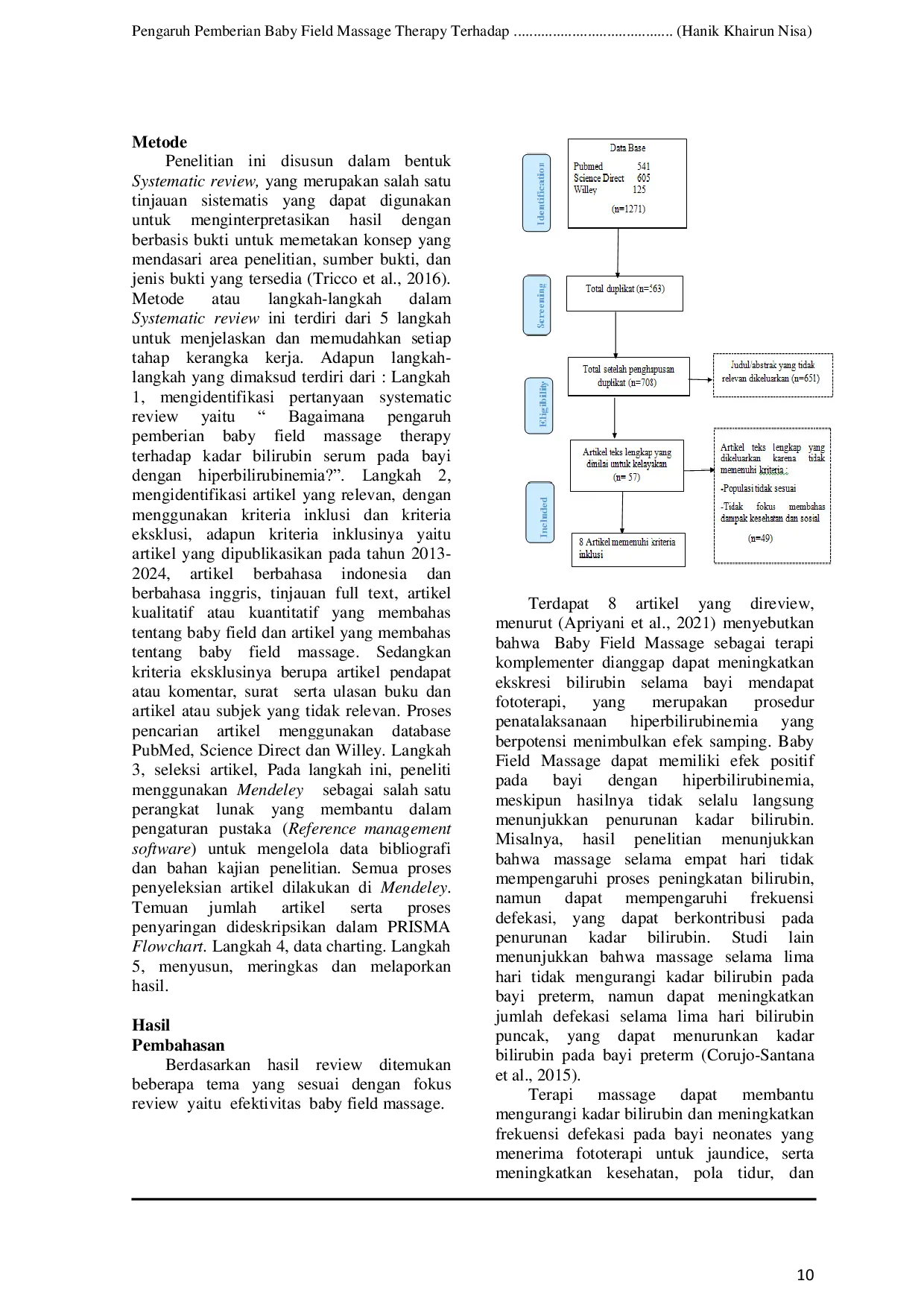
STIKESPAMENANGSTIKESPAMENANG Fototerapi sebagai pengobatan hiperbilirubinemia dapat menimbulkan efek samping sehingga diperlukan terapi komplementer. Baby field massage sebagai terapiFototerapi sebagai pengobatan hiperbilirubinemia dapat menimbulkan efek samping sehingga diperlukan terapi komplementer. Baby field massage sebagai terapi
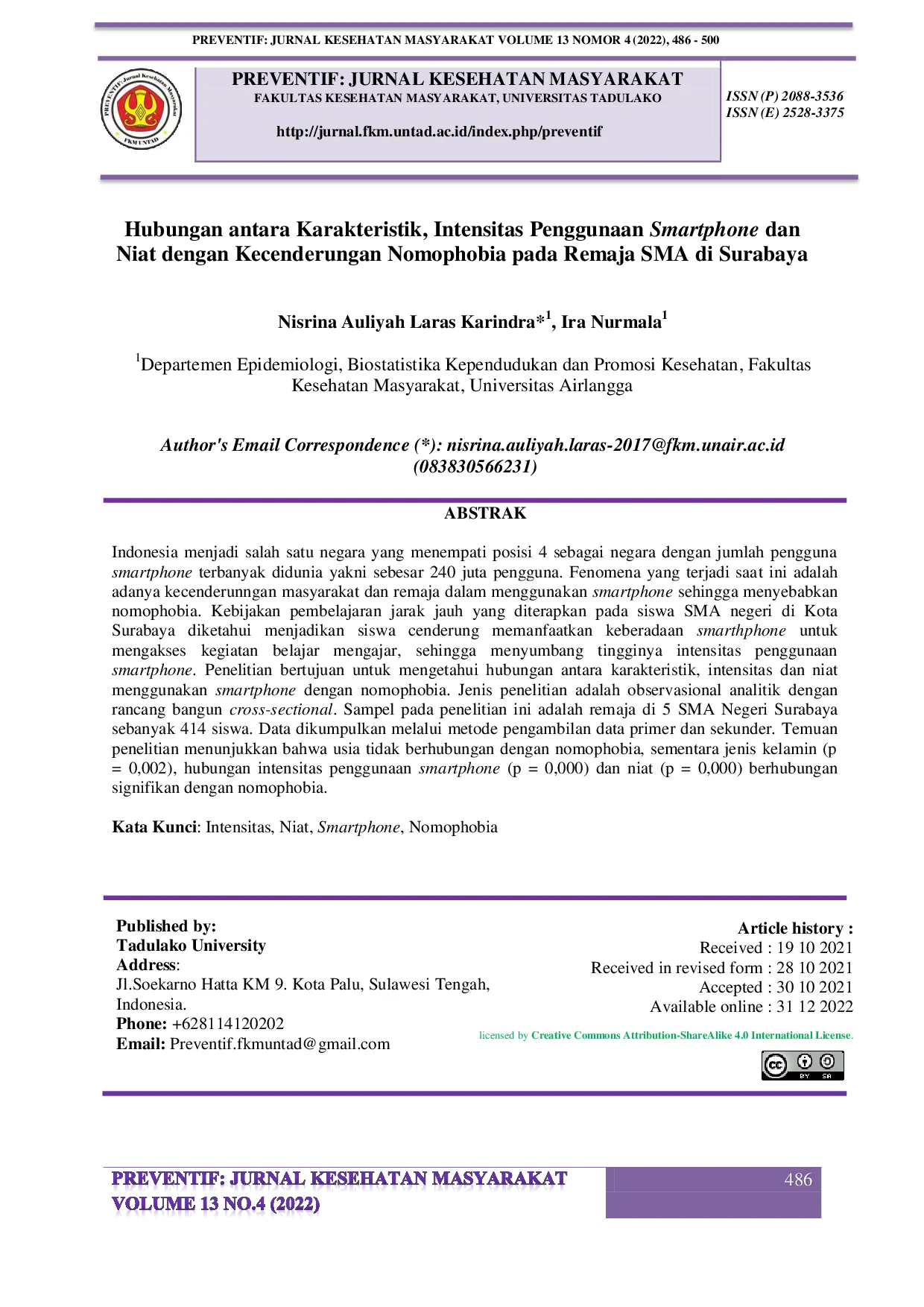
UNTADUNTAD Semakin tinggi intensitas penggunaan smartphone maka semakin tinggi tingkat nomophobia remaja. Sejalan dengan hal tersebut, semakin tinggi niat menggunakanSemakin tinggi intensitas penggunaan smartphone maka semakin tinggi tingkat nomophobia remaja. Sejalan dengan hal tersebut, semakin tinggi niat menggunakan
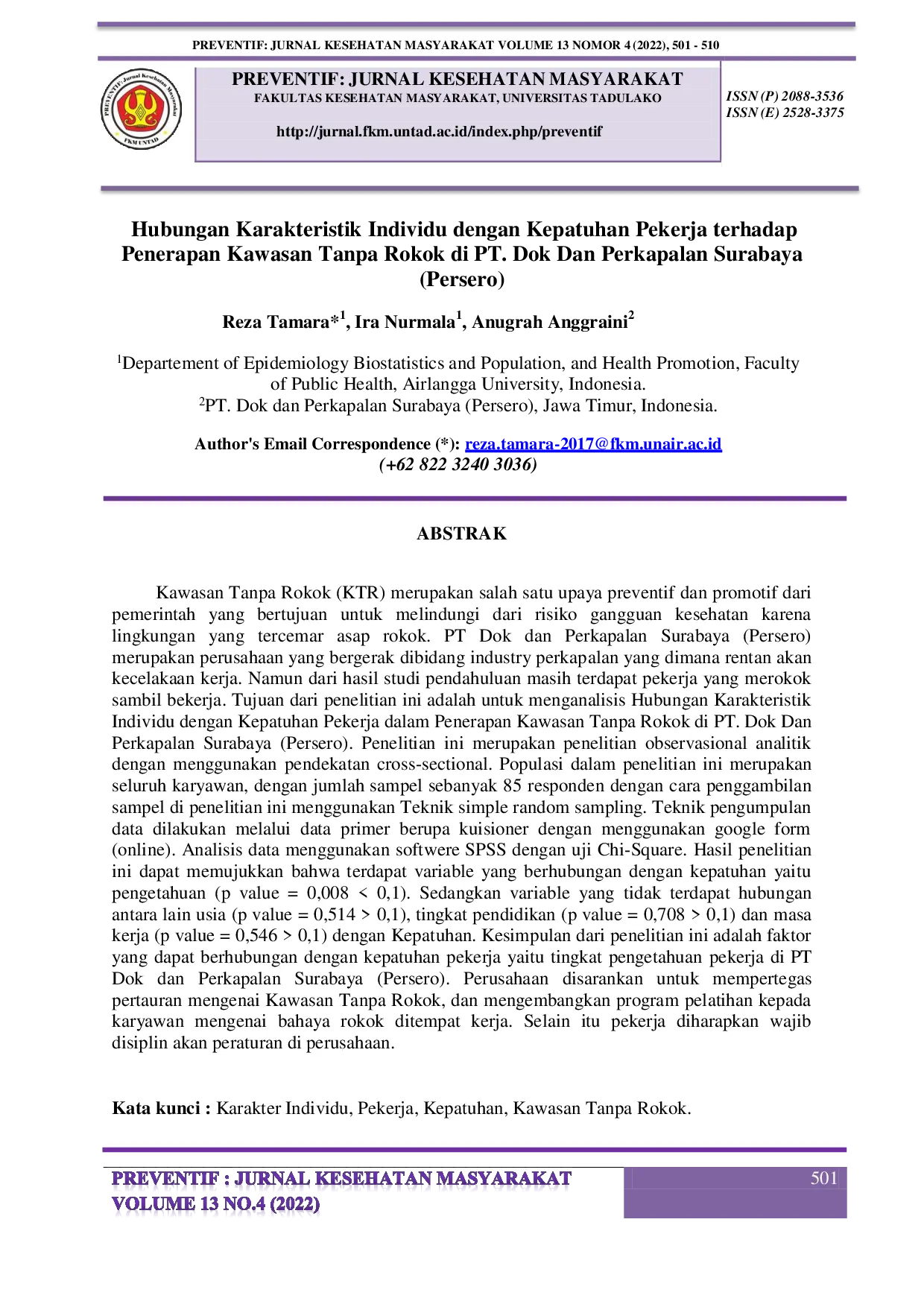
UNTADUNTAD Sedangkan variable yang tidak terdapat hubungan antara lain usia (p value = 0,514 > 0,1), tingkat pendidikan (p value = 0,708 > 0,1) dan masa kerja (pSedangkan variable yang tidak terdapat hubungan antara lain usia (p value = 0,514 > 0,1), tingkat pendidikan (p value = 0,708 > 0,1) dan masa kerja (p

UNTADUNTAD Penelitian ini diharapkan dapat memberikan informasi dan mengurangi angka kejadian penyakit TB di wilayah Puskesmas Pegirian. Kesimpulan dari penelitianPenelitian ini diharapkan dapat memberikan informasi dan mengurangi angka kejadian penyakit TB di wilayah Puskesmas Pegirian. Kesimpulan dari penelitian

UNTADUNTAD 036. Penularan HIV dari ibu ke anak menjadi penyebab tingginya prevalensi kejadian HIV pada orang dewasa dan anak-anak. Kelompok ibu rumah tangga terutama036. Penularan HIV dari ibu ke anak menjadi penyebab tingginya prevalensi kejadian HIV pada orang dewasa dan anak-anak. Kelompok ibu rumah tangga terutama
Useful /

UKSWUKSW Studi ini dilatarbelakangi oleh urgensi peningkatan implementasi nilai kejujuran dalam kurikulum pendidikan dasar, mengingat fenomena rendahnya perilakuStudi ini dilatarbelakangi oleh urgensi peningkatan implementasi nilai kejujuran dalam kurikulum pendidikan dasar, mengingat fenomena rendahnya perilaku

UNTADUNTAD Hasil penelitian menunjukkan adanya hubungan yang signifikan antara penggunaan rokok elektrik yang sering (≥4 kali per minggu) dan gejala bronkitis berulang,Hasil penelitian menunjukkan adanya hubungan yang signifikan antara penggunaan rokok elektrik yang sering (≥4 kali per minggu) dan gejala bronkitis berulang,

POLTEKKES PALEMBANGPOLTEKKES PALEMBANG Pengukuran kadar kolesterol dilakukan di Balai Besar Laboratorium Kesehatan Masyarakat (BBLKM) menggunakan alat Kenza (enzimatik kolorimetrik CHOD-PAP),Pengukuran kadar kolesterol dilakukan di Balai Besar Laboratorium Kesehatan Masyarakat (BBLKM) menggunakan alat Kenza (enzimatik kolorimetrik CHOD-PAP),

UBTUBT lentillifera dapat dilakukan melalui rekayasa dengan penambahan pupuk dalam budidayanya. Tujuan dari penelitian ini yaitu untuk mengetahui dosis pupuklentillifera dapat dilakukan melalui rekayasa dengan penambahan pupuk dalam budidayanya. Tujuan dari penelitian ini yaitu untuk mengetahui dosis pupuk