JOURNAL UIM MAKASSARJOURNAL UIM MAKASSAR
ASHLITION : Ash-Shahabah English Literature, Linguistics, & EducationASHLITION : Ash-Shahabah English Literature, Linguistics, & EducationThis study explores the use of figurative language in selected songs by Taylor Swift to understand its prevalence and impact. The primary objectives are to identify the types of figurative language used and determine the most dominant form. Employing a qualitative approach, this research analyzes five songs: Bad Blood, Blank Space, Look What You Made Me Do, End Game, and You Belong With Me. The study utilizes the theoretical framework of Kennedy and Gioia to categorize figurative language into metaphors, similes, hyperboles, repetitions, symbols, and personifications. Findings reveal that metaphors are the most dominant, accounting for 38% of the figurative language, followed by hyperboles (24%) and repetitions (16%). The results underscore the role of figurative language in enriching song lyrics, creating depth, and enhancing listener engagement. These insights provide a foundation for further exploration of figurative language in contemporary music and its relevance to literary studies.
This study reveals the significant role of figurative language in Taylor Swifts music, demonstrating its effectiveness in enhancing lyrical depth and audience connection.Metaphors emerged as the most dominant type of figurative language, accounting for 38% of the instances, highlighting Swifts ability to vividly convey complex emotions and themes.The findings underscore that figurative language is not merely an artistic embellishment but a vital tool for storytelling and emotional engagement in contemporary music.
Future research could extend this analysis to diverse musical genres and artists, exploring cross-cultural and linguistic nuances in figurative language usage. Furthermore, investigations could focus on the cognitive processes involved in listeners interpretation of figurative language in music, examining how individual experiences and cultural backgrounds shape understanding. Expanding on the current study, researchers could also explore the relationship between the use of figurative language and the emotional impact of songs, potentially utilizing physiological measures to assess listener responses. These avenues of inquiry will contribute to a more comprehensive understanding of the interplay between language, music, and human cognition, enriching both literary studies and music psychology.
- Genre Analysis of English vs. Indonesian Application Letters | Warsidi | Journal of English Language... jeltl.org/index.php/jeltl/article/view/857Genre Analysis of English vs Indonesian Application Letters Warsidi Journal of English Language jeltl index php jeltl article view 857
- Journal of Applied Linguistics and Literature. promoting research claiming centrality explicit applied... doi.org/10.33369/joall.v8i2.26491Journal of Applied Linguistics and Literature promoting research claiming centrality explicit applied doi 10 33369 joall v8i2 26491
- ACADEMIC CONFLICTS IN RESEARCH ARTICLE DISCUSSIONS: THE CASE OF INDONESIAN AND MALAYSIAN AUTHORS | Issues... doi.org/10.33736/ils.5865.2024ACADEMIC CONFLICTS IN RESEARCH ARTICLE DISCUSSIONS THE CASE OF INDONESIAN AND MALAYSIAN AUTHORS Issues doi 10 33736 ils 5865 2024
- The Rhetorical Model of Indonesian Research Article Introductions (RAIs) in the Law Discipline: Problems... doi.org/10.24071/joll.v24i2.6455The Rhetorical Model of Indonesian Research Article Introductions RAIs in the Law Discipline Problems doi 10 24071 joll v24i2 6455
| File size | 146.37 KB |
| Pages | 7 |
| DMCA | Report |
Related /

UNUGHAUNUGHA Hal ini akan mengarah pada pendekatan pembelajaran yang lebih efektif dan meminimalkan kesalahan potensial dalam penilaian kemampuan siswa. Oleh karenaHal ini akan mengarah pada pendekatan pembelajaran yang lebih efektif dan meminimalkan kesalahan potensial dalam penilaian kemampuan siswa. Oleh karena
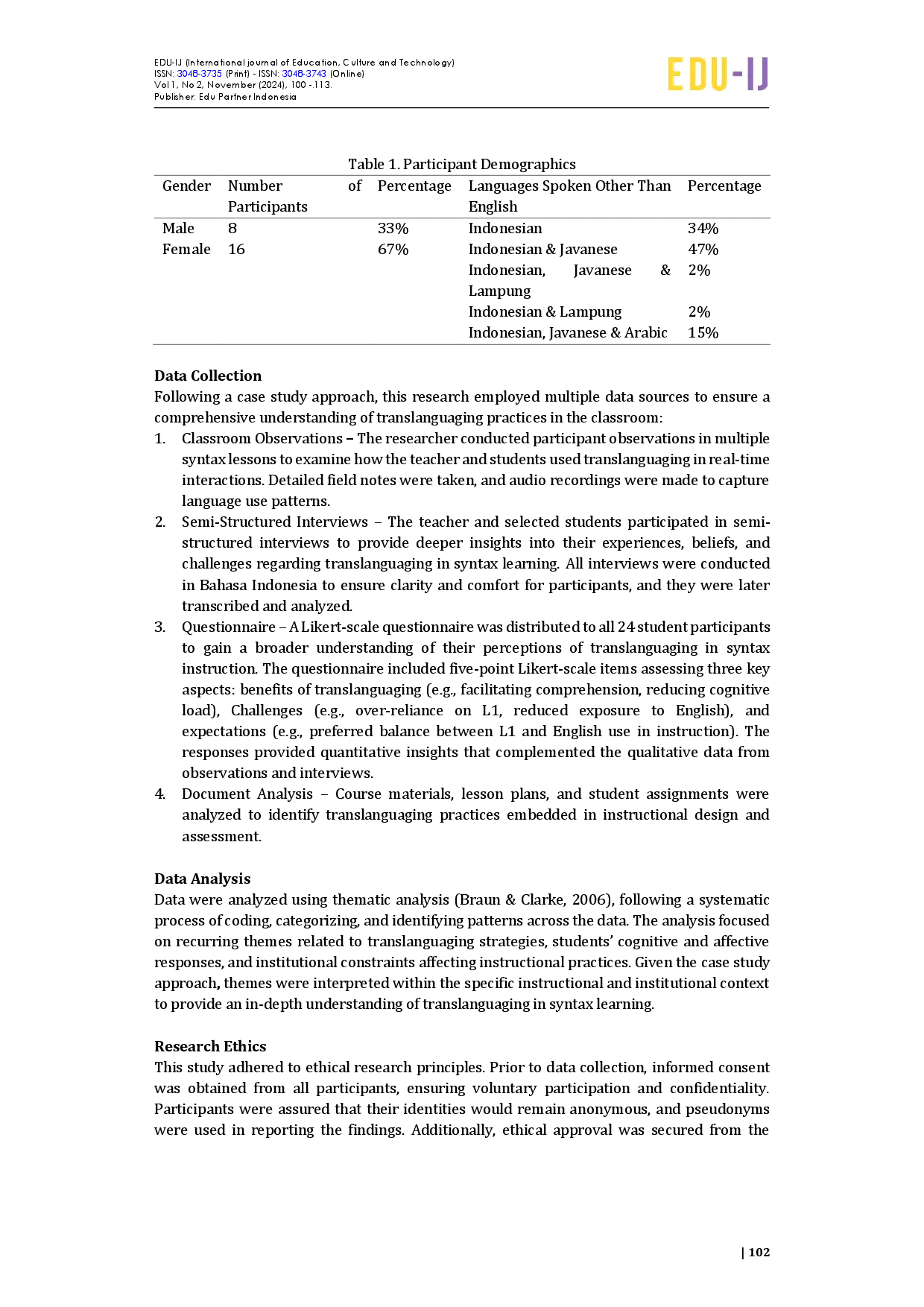
EDUPARTNEREDUPARTNER Temuan ini menekankan pentingnya penggunaan translanguaging yang responsif terhadap konteks dan adaptif untuk mendukung perkembangan bahasa sambil secaraTemuan ini menekankan pentingnya penggunaan translanguaging yang responsif terhadap konteks dan adaptif untuk mendukung perkembangan bahasa sambil secara

UNIBUNIB Bagi siswa, penelitian ini menawarkan bahan belajar yang ditingkatkan dan disesuaikan dengan kebutuhan mereka, sehingga mendorong akuisisi bahasa yangBagi siswa, penelitian ini menawarkan bahan belajar yang ditingkatkan dan disesuaikan dengan kebutuhan mereka, sehingga mendorong akuisisi bahasa yang
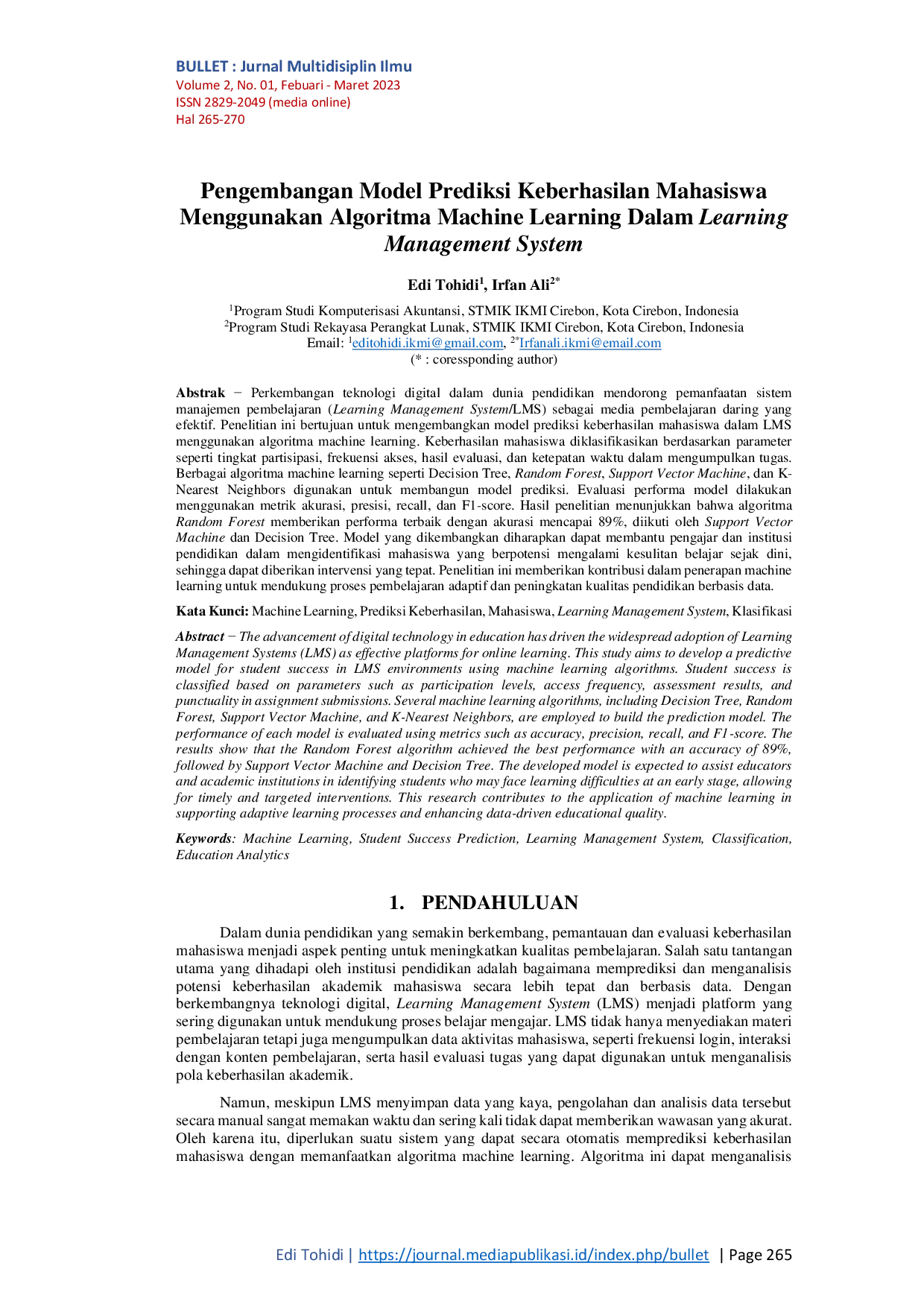
MEDIAPUBLIKASIMEDIAPUBLIKASI Hasil penelitian menunjukkan bahwa algoritma Random Forest memberikan performa terbaik dengan akurasi mencapai 89%, diikuti oleh Support Vector MachineHasil penelitian menunjukkan bahwa algoritma Random Forest memberikan performa terbaik dengan akurasi mencapai 89%, diikuti oleh Support Vector Machine
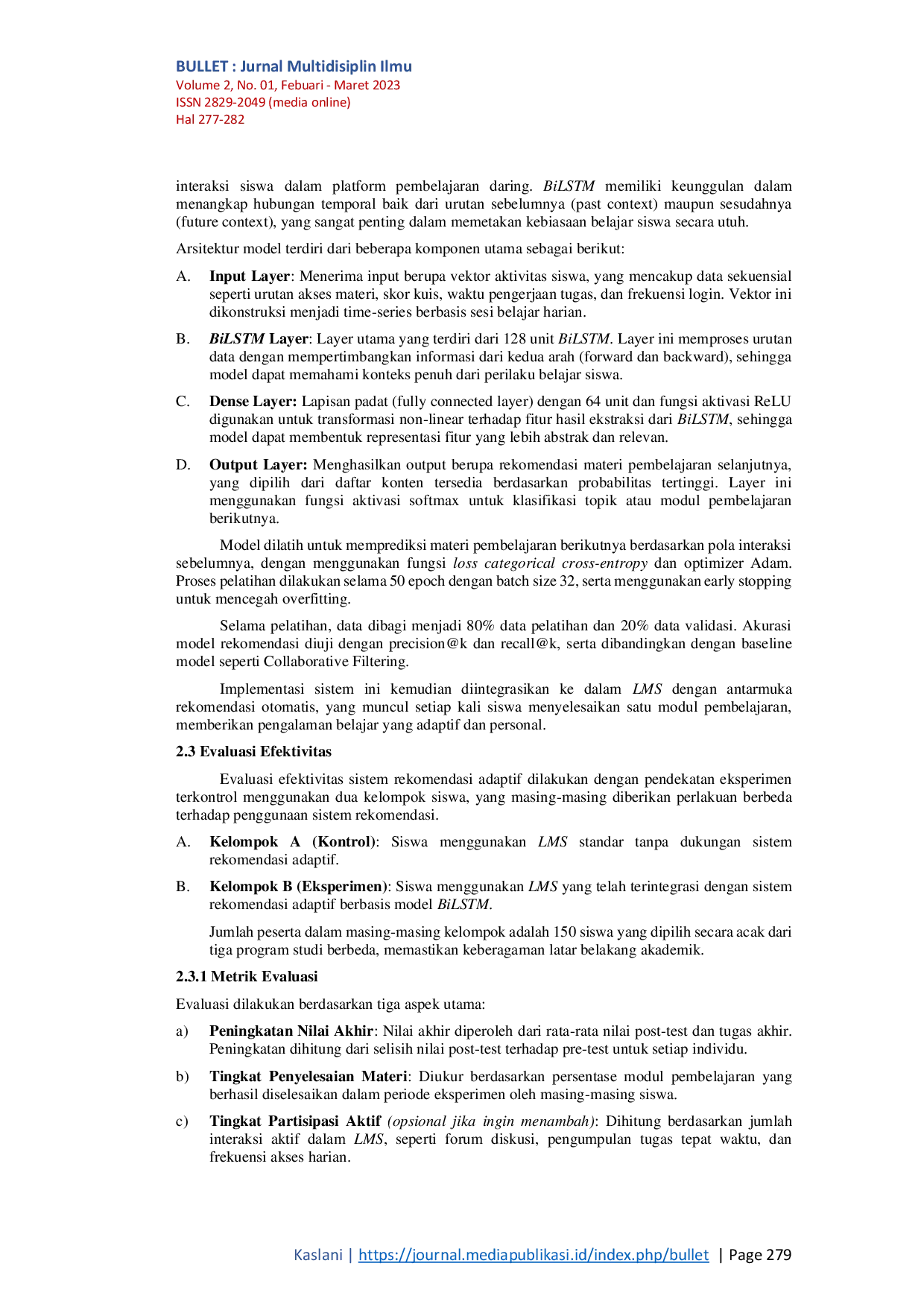
MEDIAPUBLIKASIMEDIAPUBLIKASI Model dikembangkan untuk menganalisis pola interaksi siswa pada Learning Management System (LMS) dan memberikan rekomendasi materi pembelajaran yang sesuaiModel dikembangkan untuk menganalisis pola interaksi siswa pada Learning Management System (LMS) dan memberikan rekomendasi materi pembelajaran yang sesuai

JOURNAL UIM MAKASSARJOURNAL UIM MAKASSAR The most frequently used strategy is sarcasm or feigned incivility. In addition, there are five factors that cause incivility, namely social status, ageThe most frequently used strategy is sarcasm or feigned incivility. In addition, there are five factors that cause incivility, namely social status, age
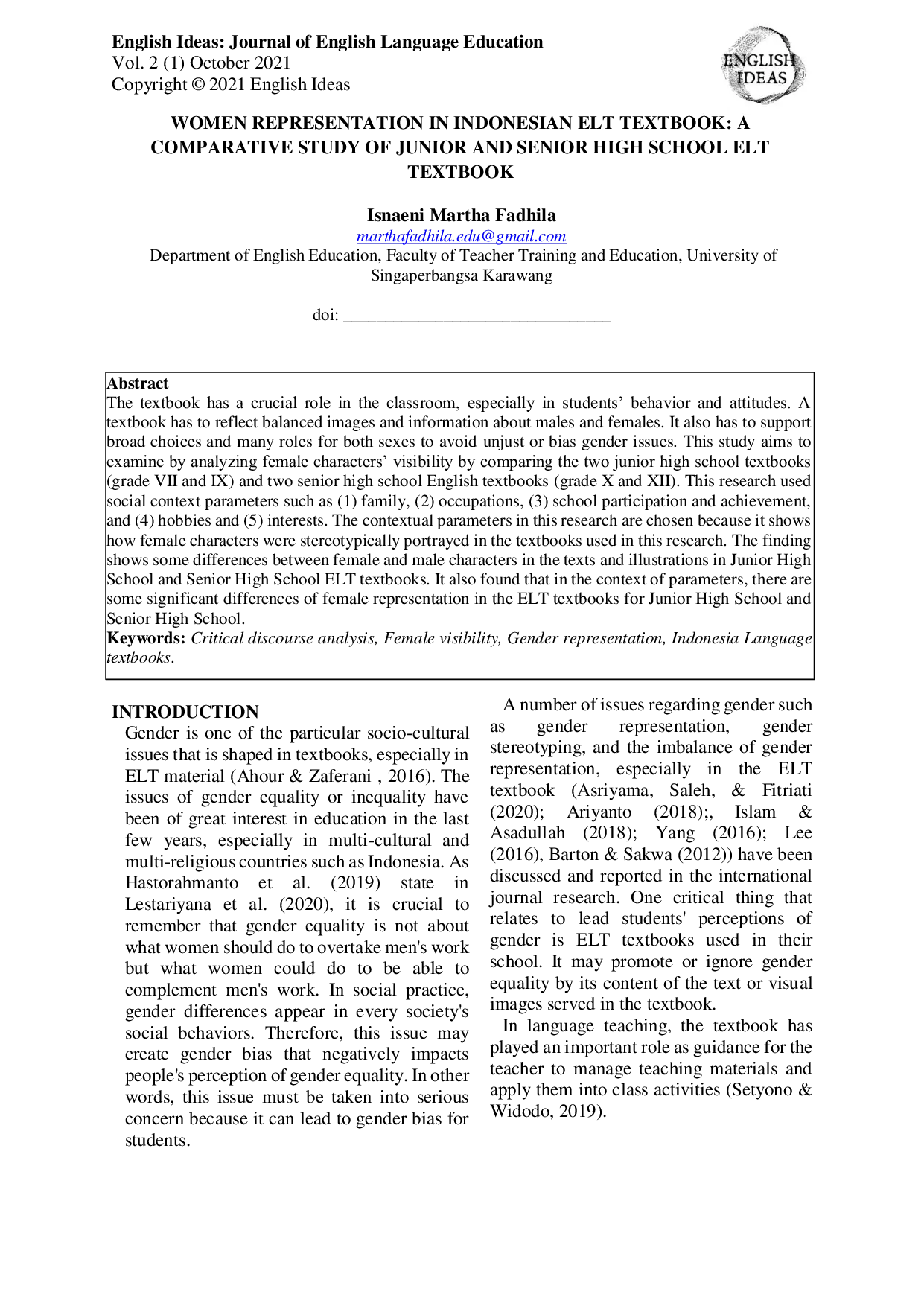
UNSIKAUNSIKA Penting untuk dicatat bahwa hanya teks verbal dan visual yang mewakili karakter wanita yang dianalisis. Penelitian ini berusaha memberikan pemahaman yangPenting untuk dicatat bahwa hanya teks verbal dan visual yang mewakili karakter wanita yang dianalisis. Penelitian ini berusaha memberikan pemahaman yang

JOURNAL UIM MAKASSARJOURNAL UIM MAKASSAR The research revealed that 40% of the students identified issues at the word level as the most significant challenge, while 30% reported difficulties withThe research revealed that 40% of the students identified issues at the word level as the most significant challenge, while 30% reported difficulties with
Useful /

JOURNAL UIM MAKASSARJOURNAL UIM MAKASSAR Hasil penelitian menunjukkan bahwa terdapat 2 data poin mengenai reward power, 4 data poin mengenai coercive power, 18 data poin mengenai legitimate power,Hasil penelitian menunjukkan bahwa terdapat 2 data poin mengenai reward power, 4 data poin mengenai coercive power, 18 data poin mengenai legitimate power,

AMIKOMAMIKOM Temuan menunjukkan bahwa kesadaran masif akan produk halal, terutama kosmetik, tidak sepenuhnya dimotivasi oleh motif religius. Produk halal tidak secaraTemuan menunjukkan bahwa kesadaran masif akan produk halal, terutama kosmetik, tidak sepenuhnya dimotivasi oleh motif religius. Produk halal tidak secara

AMIKOMAMIKOM Artikel ini menyimpulkan bahwa pemerintah Indonesia telah berhasil menggunakan metode stigmatisasi untuk menghambat pengaruh HTI di Indonesia. StigmatisasiArtikel ini menyimpulkan bahwa pemerintah Indonesia telah berhasil menggunakan metode stigmatisasi untuk menghambat pengaruh HTI di Indonesia. Stigmatisasi

JOURNAL UIM MAKASSARJOURNAL UIM MAKASSAR The study demonstrates that Shakespeare utilizes figurative language—simile, hyperbole, metaphor, irony, and allusion—to challenge conventional beautyThe study demonstrates that Shakespeare utilizes figurative language—simile, hyperbole, metaphor, irony, and allusion—to challenge conventional beauty