UMPRUMPR
Suluh: Jurnal Bimbingan dan KonselingSuluh: Jurnal Bimbingan dan KonselingBackground: The Fourth Industrial Revolution (4IR)—driven by artificial intelligence, robotics, big data and virtual platforms—is disrupting counselling in Nigeria, where youth unemployment, uneven infrastructure and legacy curricula constrain practice and employability. Aim: To identify the competencies, service models and policy levers required for Nigerian counsellors to remain effective and competitive in the 4IR. Method: A position-paper design using systematic document analysis of peer-reviewed articles, national and international policy reports, and labour-market statistics (2015–2025). The review followed a staged flow—scoping, eligibility screening, thematic categorisation and synthesis—using a document-analysis protocol and a coding matrix as instruments; data were analysed through thematic synthesis and integrative argumentation. Results and Discussion: Evidence indicates a persistent digital-skills gap in counsellor education (digital literacy, online/hybrid delivery, ethical data governance) and limited institutional readiness, which collectively depress service quality and labour-market outcomes. Yet, technology-enabled models—AI-assisted intake/triage, tele-mental-health platforms, secure cloud records and data-informed career guidance—can expand reach, reduce wait times, personalise interventions and strengthen counsellors roles in tackling youth employability and mental-health burdens. Realising these gains requires curriculum redesign aligned to 4IR competencies, mandatory CPD in cyberpsychology and data ethics, minimum technology standards and practice guidelines to manage privacy, bias and equity risks, with targeted support for rural and resource-constrained settings. Conclusion: The research answers its guiding question by showing that Nigerian counselling will sustain relevance only through a deliberate shift to technologically informed, ethically grounded hybrid practice, underwritten by curriculum reform, structured CPD and enabling policy and infrastructure; without this integration, counsellors face progressive marginalisation, whereas with it they can deliver broader access, higher efficiency and better outcomes.
The study concludes that the sustainability of the counselling profession in Nigeria hinges on integrating Fourth Industrial Revolution (4IR) competencies into both training and practice.Without this deliberate shift, Nigerian counsellors risk becoming obsolete.Embracing technological literacy, data ethics, and adaptive service models is crucial for remaining effective and competitive.This requires curriculum reform, continuous professional development, ethical guidelines, and infrastructure support to ensure equitable access and relevance in a rapidly changing society.
To ensure the future relevance of counselling in Nigeria, several research avenues should be explored. First, a comprehensive needs assessment should be conducted to identify the specific digital skills gaps among practicing counsellors and those in training. Second, research is needed to develop and evaluate culturally appropriate, technology-enhanced counselling interventions that address the unique challenges faced by Nigerian youth, such as unemployment and mental health concerns. Finally, studies should investigate the ethical implications of using AI and big data in counselling, focusing on issues of privacy, bias, and equitable access to services. These investigations should inform the development of policy recommendations and best practices for integrating technology into counselling while upholding ethical standards and promoting client well-being. This multi-faceted approach will help to ensure that Nigerian counsellors are well-equipped to navigate the complexities of the 4IR and continue to provide effective support to their communities.
| File size | 272.63 KB |
| Pages | 8 |
| DMCA | Report |
Related /
UNPARUNPAR Sistem mampu membedakan dokumen lowongan kerja yang relevan dan dokumen noise dengan baik. Kedua, tingkat akurasi pencarian (Precision) tinggi, denganSistem mampu membedakan dokumen lowongan kerja yang relevan dan dokumen noise dengan baik. Kedua, tingkat akurasi pencarian (Precision) tinggi, dengan
UNPARUNPAR Metode MSER terbukti efektif dalam mendeteksi wilayah kandidat teks meskipun terdapat variasi font, ukuran, dan orientasi, sementara OCR menunjukkan kemampuanMetode MSER terbukti efektif dalam mendeteksi wilayah kandidat teks meskipun terdapat variasi font, ukuran, dan orientasi, sementara OCR menunjukkan kemampuan
UNPARUNPAR Kriteria yang digunakan meliputi harga pupuk, dampak lingkungan, kesesuaian tanah, kualitas kandungan nutrisi, efisiensi dan dosis aplikasi, serta ketahananKriteria yang digunakan meliputi harga pupuk, dampak lingkungan, kesesuaian tanah, kualitas kandungan nutrisi, efisiensi dan dosis aplikasi, serta ketahanan
UNPARUNPAR Pendekatan yang diusulkan mengintegrasikan data spasial pelanggan, informasi kapasitas ODP, dan parameter jarak untuk menghasilkan rekomendasi lokasi ODPPendekatan yang diusulkan mengintegrasikan data spasial pelanggan, informasi kapasitas ODP, dan parameter jarak untuk menghasilkan rekomendasi lokasi ODP
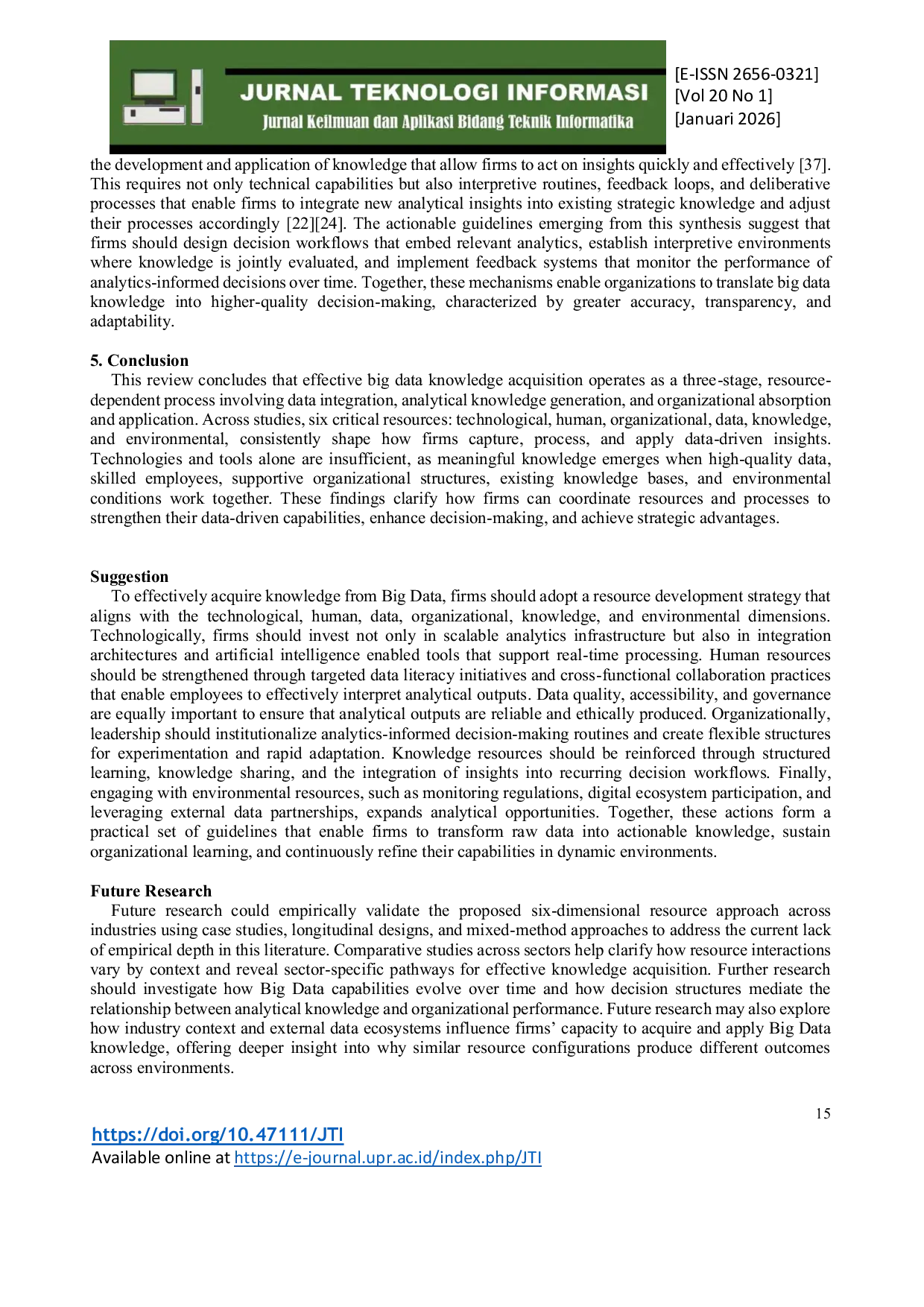
UNPARUNPAR Big Data telah menjadi penggerak penting inovasi dan daya saing, tetapi banyak organisasi masih berjuang untuk mengubah data menjadi pengetahuan yang dapatBig Data telah menjadi penggerak penting inovasi dan daya saing, tetapi banyak organisasi masih berjuang untuk mengubah data menjadi pengetahuan yang dapat
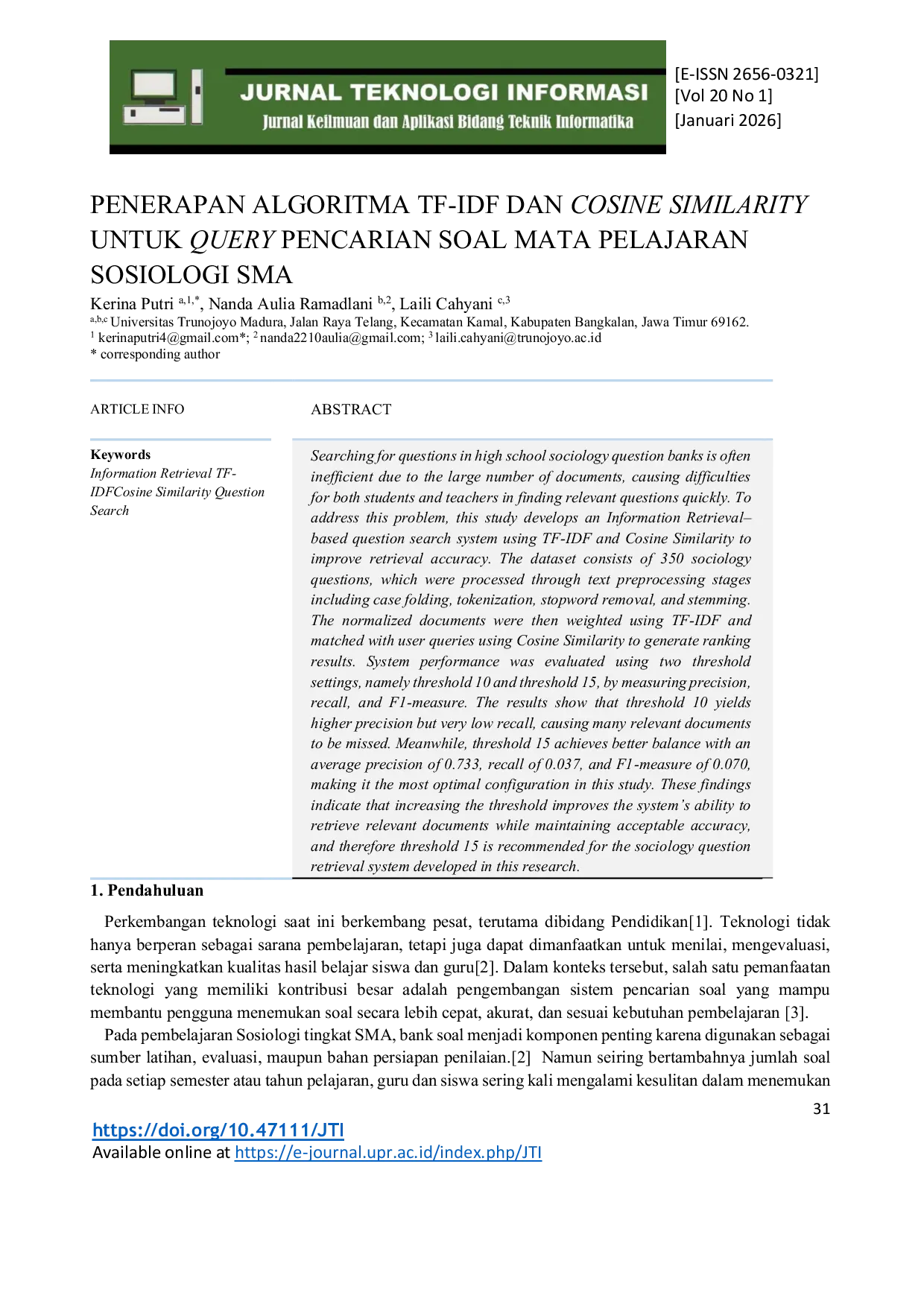
UNPARUNPAR Sistem Information Retrieval berbasis TF-IDF dan Cosine Similarity mampu menjalankan proses pencarian dokumen sesuai query setelah melalui tahapan preprocessing,Sistem Information Retrieval berbasis TF-IDF dan Cosine Similarity mampu menjalankan proses pencarian dokumen sesuai query setelah melalui tahapan preprocessing,

STAIMUNSTAIMUN Menggunakan pendekatan kualitatif deskriptif, penelitian mengumpulkan data melalui wawancara mendalam dengan kepala sekolah, guru, dan orang tua, sertaMenggunakan pendekatan kualitatif deskriptif, penelitian mengumpulkan data melalui wawancara mendalam dengan kepala sekolah, guru, dan orang tua, serta

STAIMUNSTAIMUN Penelitian ini mengungkapkan bahwa budaya pesantren memiliki kontribusi signifikan terhadap pengembangan sistem manajemen pendidikan Islam yang relevanPenelitian ini mengungkapkan bahwa budaya pesantren memiliki kontribusi signifikan terhadap pengembangan sistem manajemen pendidikan Islam yang relevan
Useful /
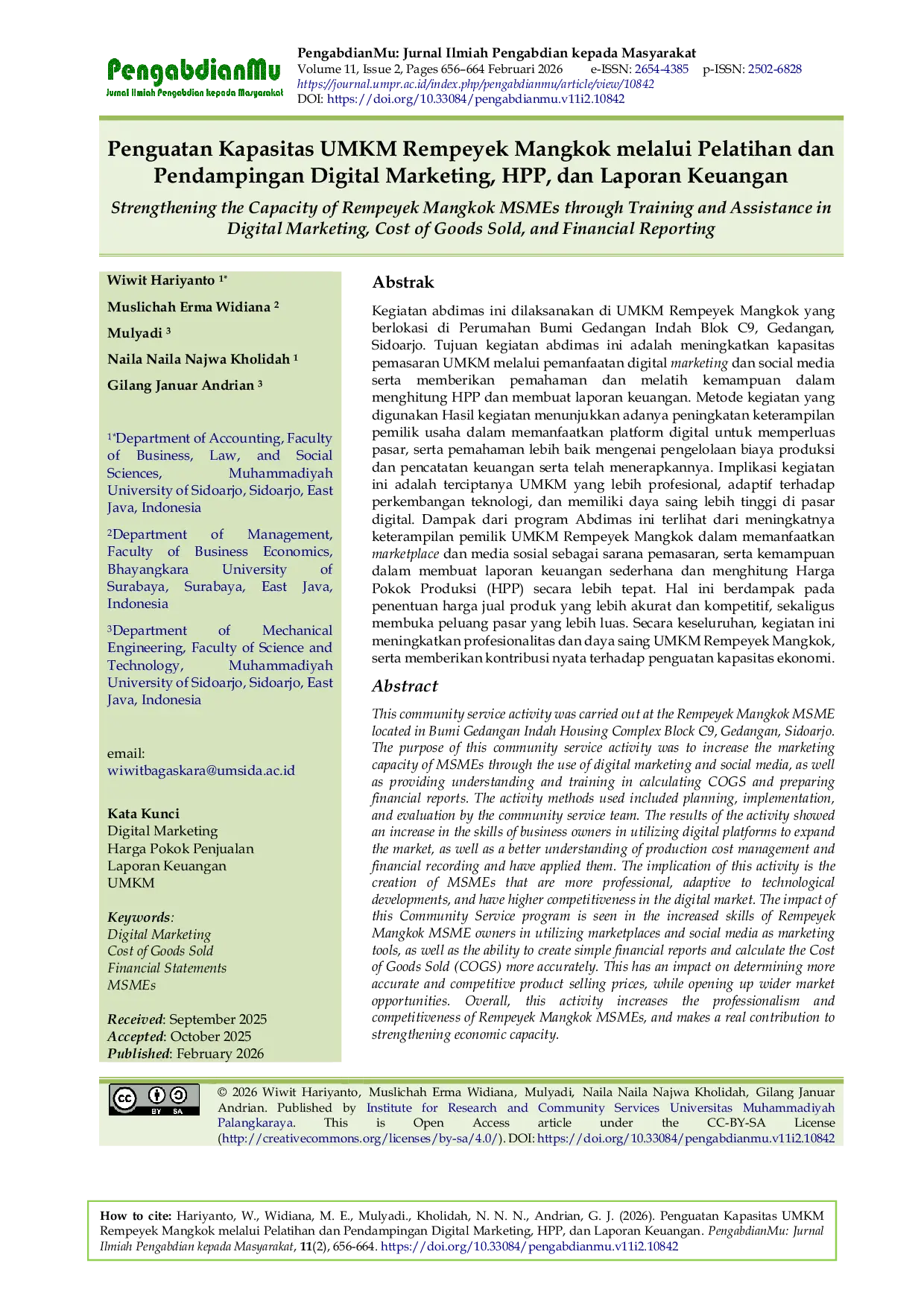
UMPRUMPR Hasil kegiatan menunjukkan adanya peningkatan keterampilan pemilik usaha dalam memanfaatkan platform digital untuk memperluas pasar, serta pemahaman lebihHasil kegiatan menunjukkan adanya peningkatan keterampilan pemilik usaha dalam memanfaatkan platform digital untuk memperluas pasar, serta pemahaman lebih
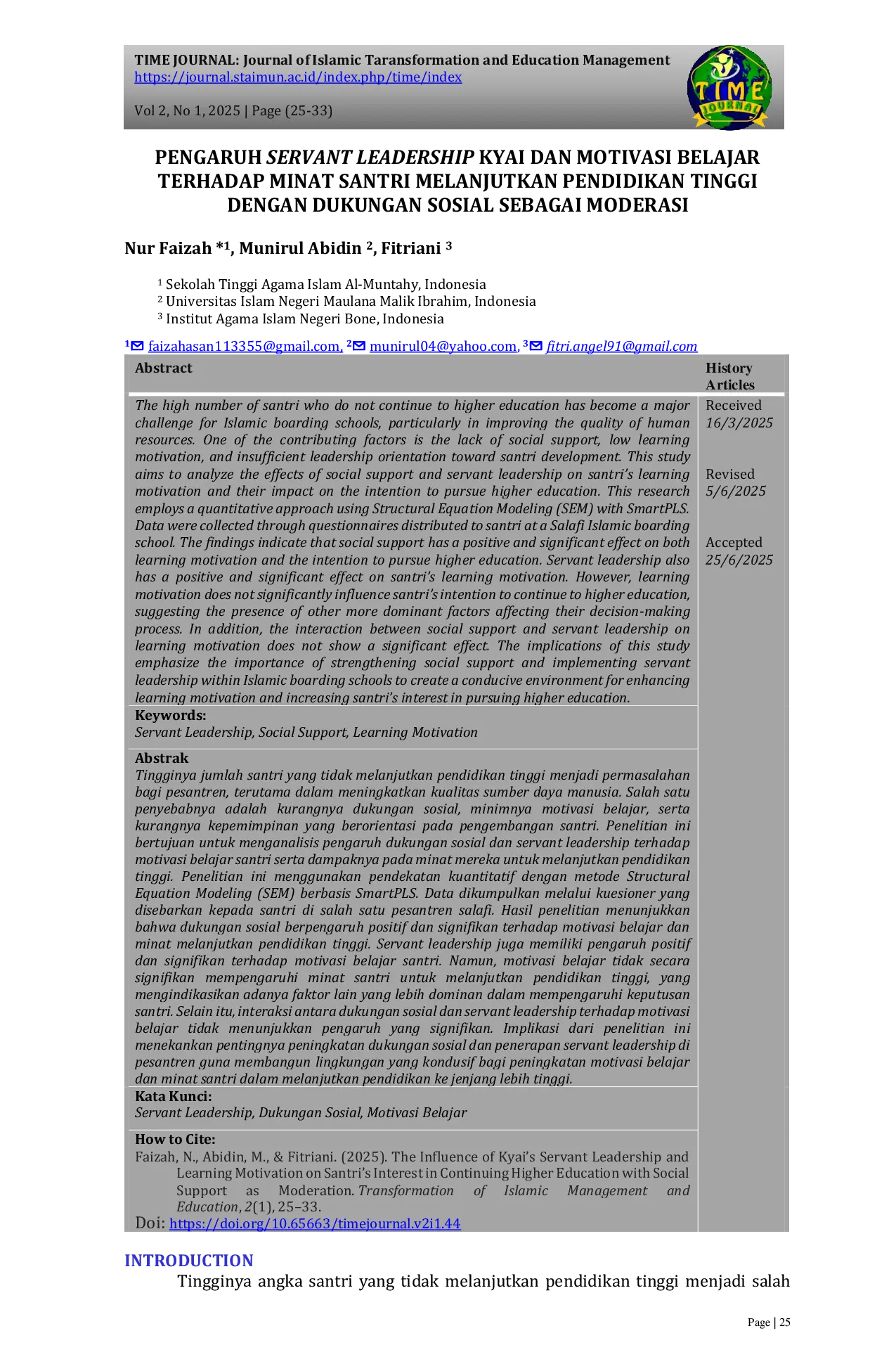
STAIMUNSTAIMUN Demikian pula, interaksi antara dukungan sosial dan servant leadership terhadap motivasi belajar tidak memberikan pengaruh yang signifikan, dengan nilaiDemikian pula, interaksi antara dukungan sosial dan servant leadership terhadap motivasi belajar tidak memberikan pengaruh yang signifikan, dengan nilai

STAIMUNSTAIMUN Berdasarkan hasil penelitian, dapat disimpulkan bahwa kebijakan pengelolaan sarana dan prasarana di MTs Negeri 2 Palembang berjalan dengan cukup sistematisBerdasarkan hasil penelitian, dapat disimpulkan bahwa kebijakan pengelolaan sarana dan prasarana di MTs Negeri 2 Palembang berjalan dengan cukup sistematis

UMPRUMPR The study concludes that the future of alternative treatment for secondary school students struggling with substance abuse lies in integrating evidence-basedThe study concludes that the future of alternative treatment for secondary school students struggling with substance abuse lies in integrating evidence-based