UBUB
The Journal of Experimental Life ScienceThe Journal of Experimental Life ScienceRheumatoid arthritis (RA) is an autoimmune disease that can cause progressive damage to the joints of patients. The number of patients is expected to increase, along with the exact cause of this disease remains unknown. However, there are several risk factors associated with RA, including dysbiosis. The purpose of this study was to characterize the composition of intestinal microbiota in the RA and control groups through fecal analysis and reveal the association of microbiota composition with RA disease in Indonesia, especially Malang. Fecal samples were obtained from RA patients and controls. Fecal analysis was carried out through several stages, namely the calculation of total bacterial colonies, isolation and characterization of anaerobic bacteria, calculation of the Simpson diversity index, and DNA isolation. Analysis of bacterial composition profiles in fecal was carried out using 6 specific primer sets through PCR analysis. The results of the 16S rRNA PCR analysis showed different microbiota compositions between RA patients and controls. The number of Enterococcus bacterial group was lower in the control patients than the RA group, whereas the Lactobacillus bacteria decreased in RA patients. In addition, our study found that the existence of bacterial isolate 11 changed the composition of microbiota in RA patients, and the DNA band only appeared in Universal primers. The diversity of bacterial species can provide symbiotic and pathogenetic effects in RA patients.
This study found that Enterococcus was the bacterial group found in both the control and RA patients in Malang.The abundance of Enterococcus in RA patients was higher than in the control patients.The bacterial group in control patients was dominated by the Lactobacillus bacteria, which was not found in the RA patients.Further analysis is required to determine the bacterial group of isolate 11 in the RA patients.
Penelitian lebih lanjut perlu dilakukan untuk mengidentifikasi secara spesifik bakteri isolate 11 yang hanya ditemukan pada pasien RA, karena keberadaannya dapat menjadi penanda atau faktor penyebab perkembangan penyakit. Selain itu, studi komparatif yang lebih luas dengan melibatkan kelompok pasien RA dari berbagai daerah di Indonesia perlu dilakukan untuk memahami variasi komposisi mikrobiota usus dan hubungannya dengan karakteristik klinis penyakit. Terakhir, penelitian intervensi yang melibatkan pemberian probiotik atau prebiotik yang spesifik, dengan tujuan memodulasi komposisi mikrobiota usus dan mengurangi gejala RA, dapat memberikan wawasan baru mengenai potensi terapi berbasis mikrobiota untuk penyakit ini. Penelitian-penelitian ini diharapkan dapat memberikan pemahaman yang lebih mendalam mengenai peran mikrobiota usus dalam patogenesis RA dan membuka jalan bagi pengembangan strategi pencegahan dan pengobatan yang lebih efektif.
| File size | 473.44 KB |
| Pages | 10 |
| DMCA | Report |
Related /
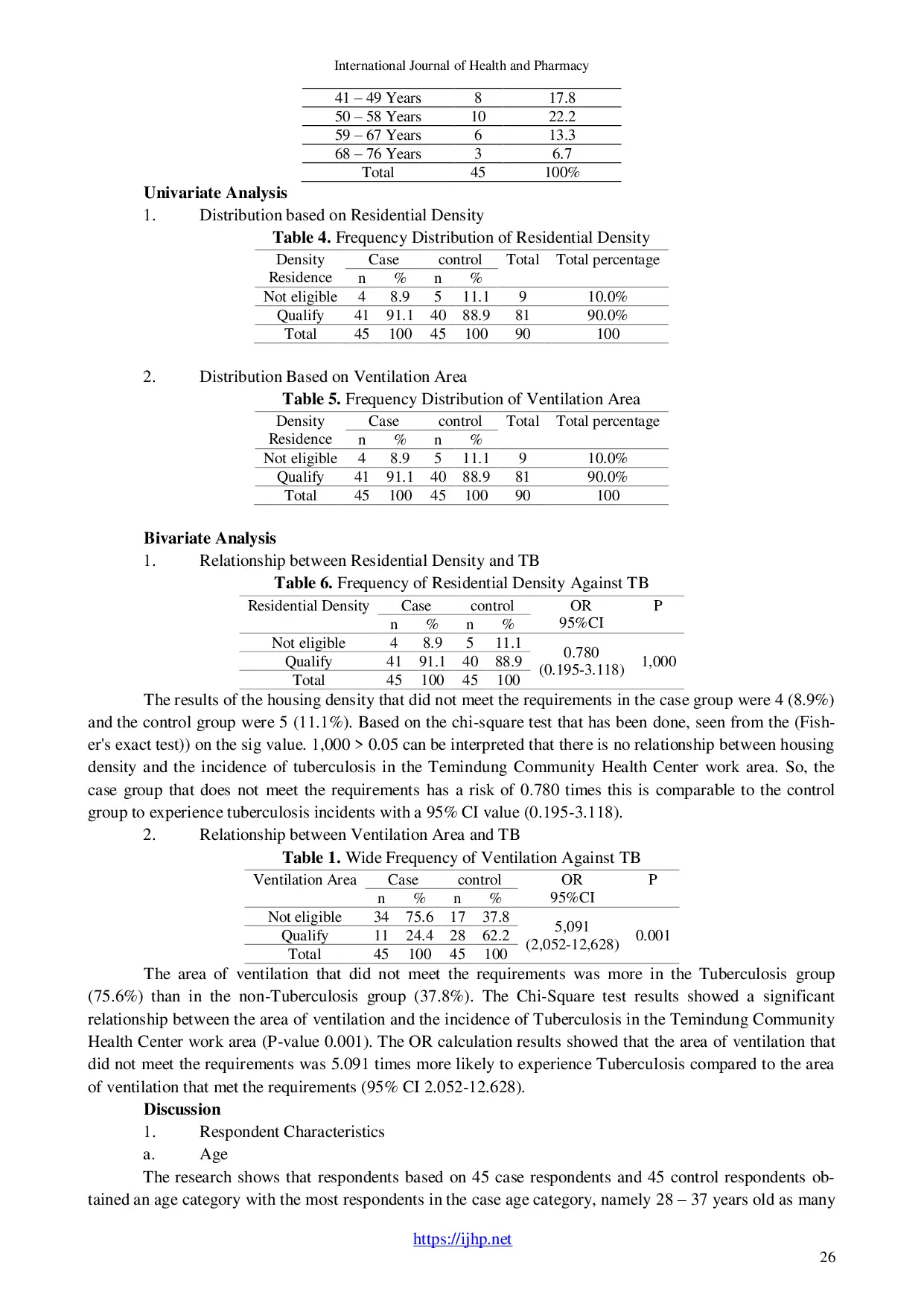
IJHPIJHP Penelitian ini bertujuan menganalisis hubungan antara densitas rumah dan luas ventilasi dengan insiden TB paru di area kerja Puskesmas Temindung, Samarinda.Penelitian ini bertujuan menganalisis hubungan antara densitas rumah dan luas ventilasi dengan insiden TB paru di area kerja Puskesmas Temindung, Samarinda.
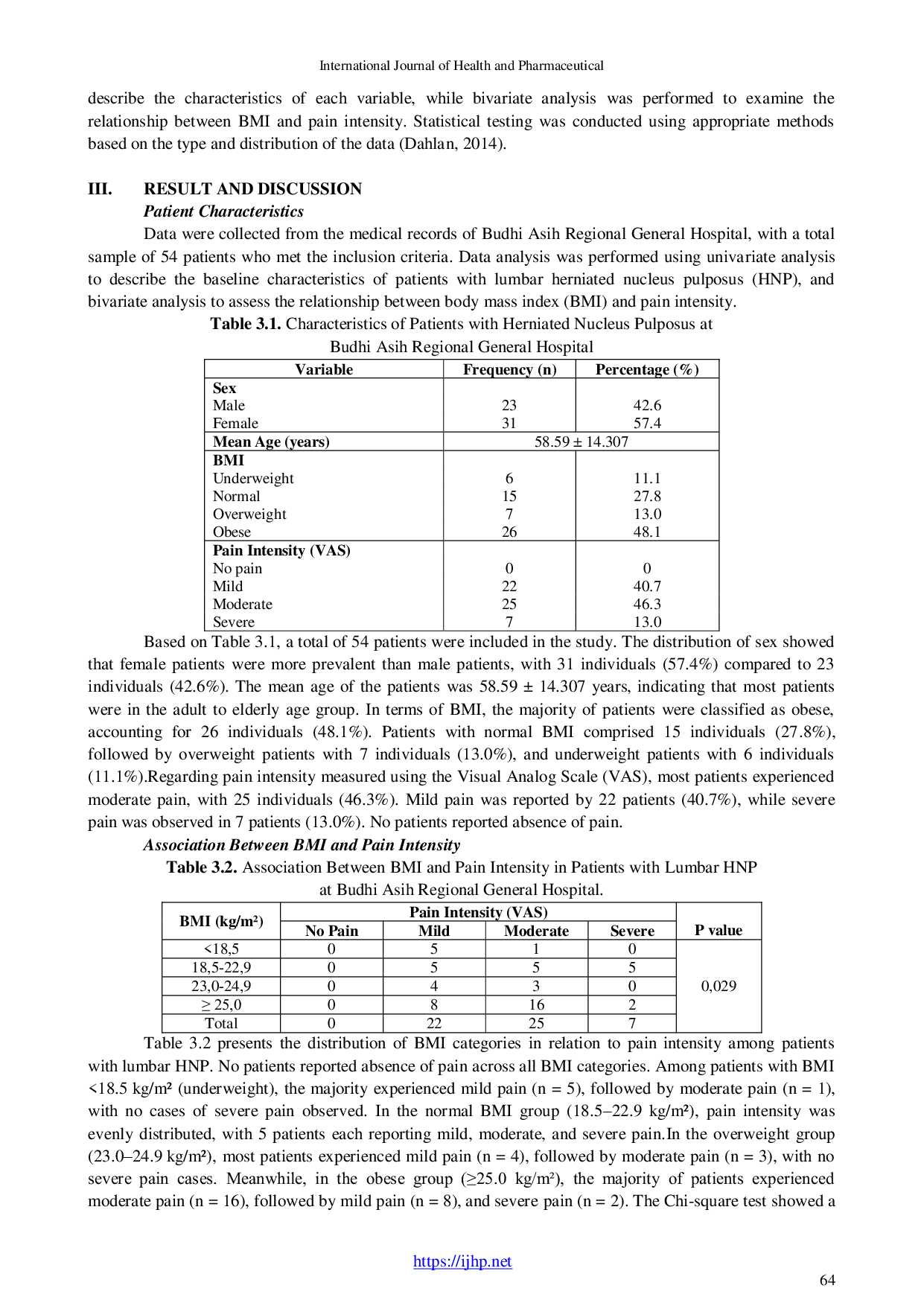
IJHPIJHP In conclusion, a significant relationship exists between BMI and pain intensity in lumbar HNP patients, and weight control through a healthy lifestyleIn conclusion, a significant relationship exists between BMI and pain intensity in lumbar HNP patients, and weight control through a healthy lifestyle
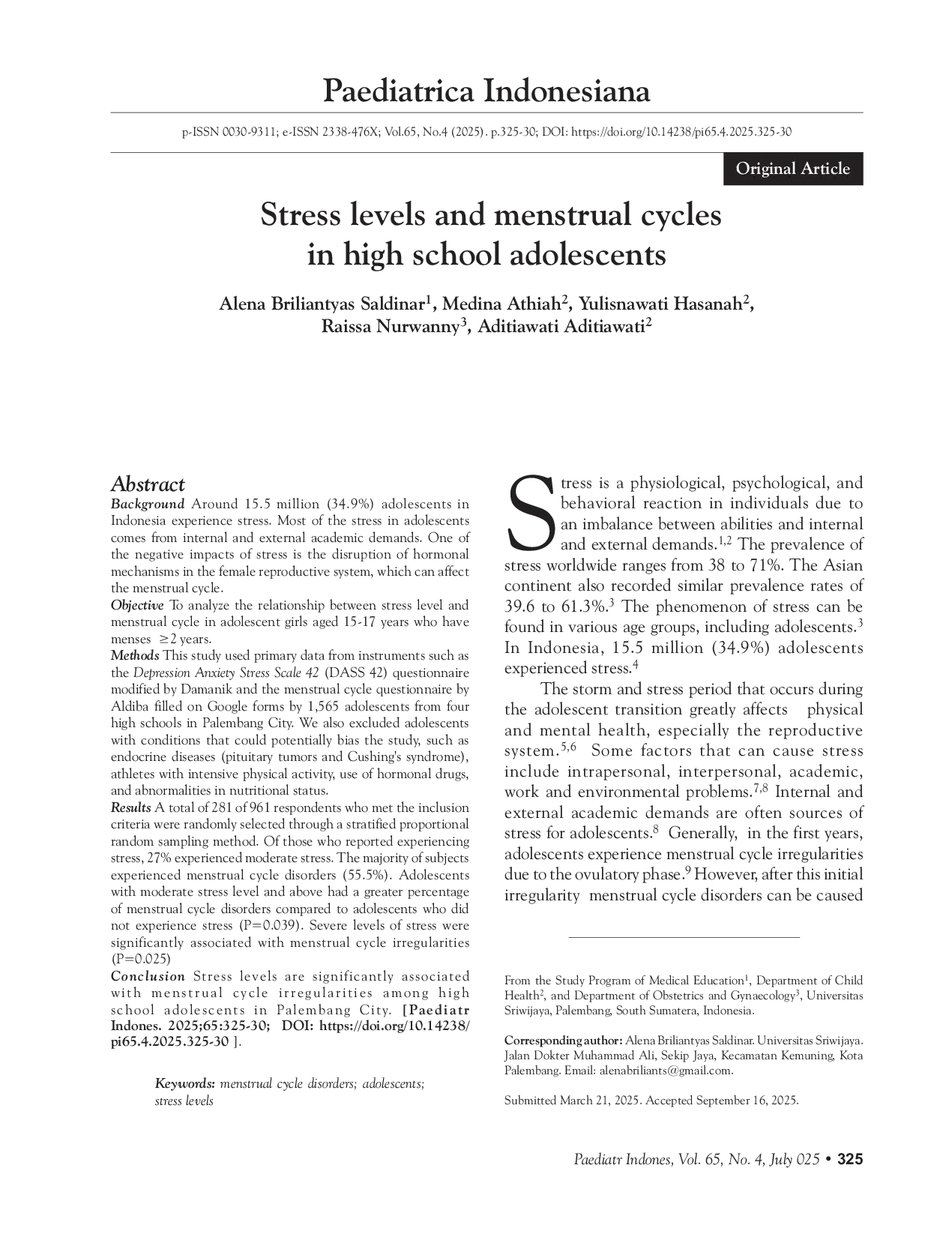
PAEDIATRICAINDONESIANAPAEDIATRICAINDONESIANA Mayoritas subjek mengalami gangguan siklus menstruasi (55,5%). Remaja dengan tingkat stres sedang dan di atasnya memiliki persentase gangguan siklus menstruasiMayoritas subjek mengalami gangguan siklus menstruasi (55,5%). Remaja dengan tingkat stres sedang dan di atasnya memiliki persentase gangguan siklus menstruasi
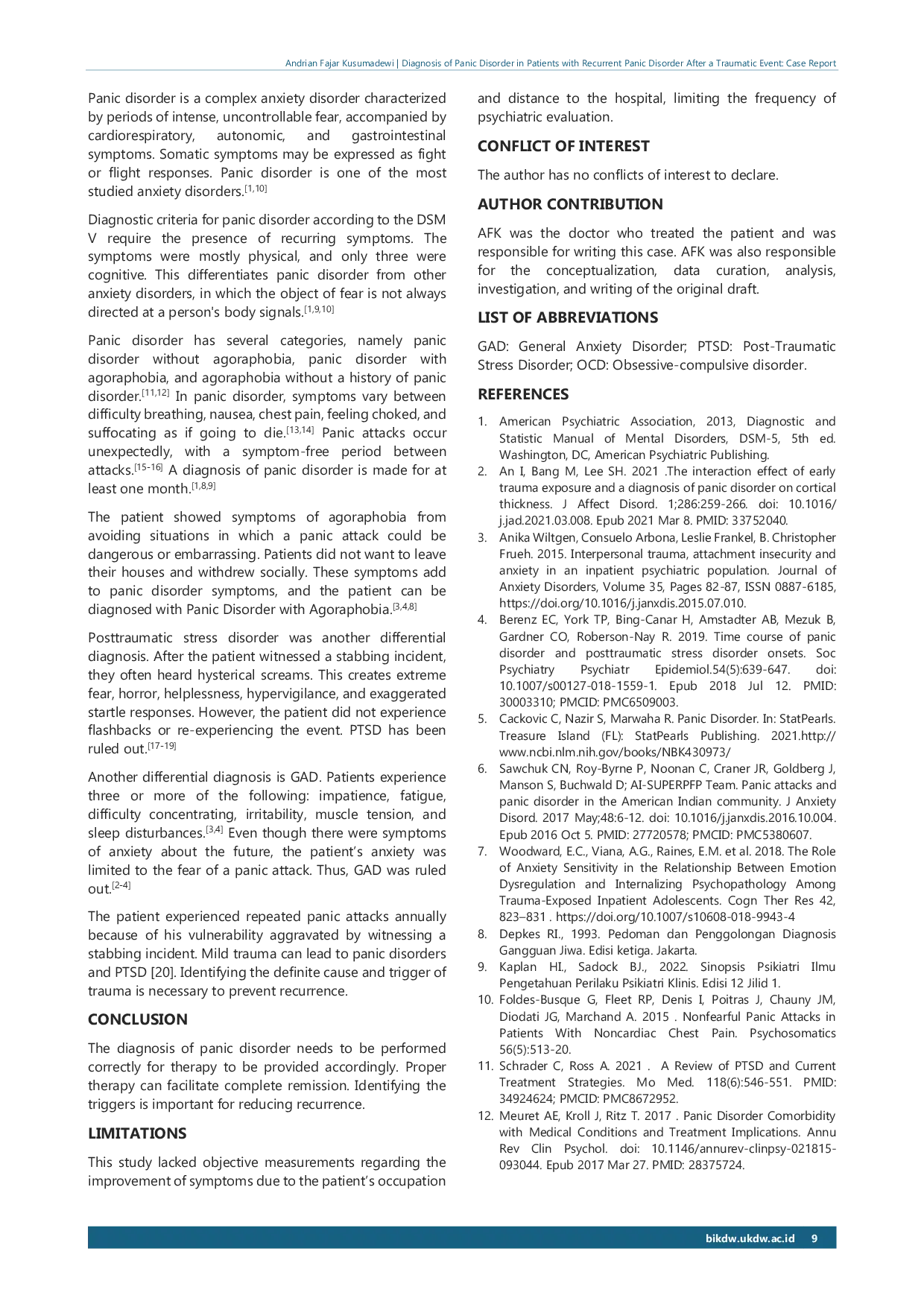
DWCUDWCU Gangguan panik yang muncul setelah trauma dianggap sebagai pengingat trauma, dengan sejarah trauma sebelumnya dan kerentanan yang dapat memicu insiden.Gangguan panik yang muncul setelah trauma dianggap sebagai pengingat trauma, dengan sejarah trauma sebelumnya dan kerentanan yang dapat memicu insiden.
MALAHAYATIMALAHAYATI Penelitian ini bertujuan untuk mengetahui faktor determinan terjadinya stunting pada balita di Kota Metro. Jenis penelitian adalah survei analitik menggunakanPenelitian ini bertujuan untuk mengetahui faktor determinan terjadinya stunting pada balita di Kota Metro. Jenis penelitian adalah survei analitik menggunakan
POLTEKKES PALEMBANGPOLTEKKES PALEMBANG Tujuan penelitian ini adalah untuk menentukan prevalensi penderita Tuberkulosis paru BTA Positif di Rumah Sakit Umum Daerah Cideres pada bulan Agustus-OktoberTujuan penelitian ini adalah untuk menentukan prevalensi penderita Tuberkulosis paru BTA Positif di Rumah Sakit Umum Daerah Cideres pada bulan Agustus-Oktober
LAMINTANGLAMINTANG Studi ini mengevaluasi dampak akses kesehatan terhadap tingkat mortalitas ibu dan anak di daerah pedesaan Kayin State, Myanmar, di mana disparitas layananStudi ini mengevaluasi dampak akses kesehatan terhadap tingkat mortalitas ibu dan anak di daerah pedesaan Kayin State, Myanmar, di mana disparitas layanan
LAMINTANGLAMINTANG Oleh karena itu, langkah strategis untuk mengatasi masalah ini adalah melalui pembinaan remaja dan kolaborasi dengan Kantor Urusan Agama. Dukungan danOleh karena itu, langkah strategis untuk mengatasi masalah ini adalah melalui pembinaan remaja dan kolaborasi dengan Kantor Urusan Agama. Dukungan dan
Useful /
IJHPIJHP Tuberculosis (TB) remains a significant global health problem, with Indonesia ranking second in the world for the highest number of cases. This study aimsTuberculosis (TB) remains a significant global health problem, with Indonesia ranking second in the world for the highest number of cases. This study aims
POLTEKKES PALEMBANGPOLTEKKES PALEMBANG Metode TCM lebih efektif dan efisien untuk pemeriksaan BCR-ABL dibandingkan metode PCR. Unit cost pemeriksaan dengan metode TCM lebih rendah, yaitu Rp2.Metode TCM lebih efektif dan efisien untuk pemeriksaan BCR-ABL dibandingkan metode PCR. Unit cost pemeriksaan dengan metode TCM lebih rendah, yaitu Rp2.
IJHPIJHP Pengumpulan data dilakukan melalui kuesioner efek samping dan kepatuhan minum obat yang telah diuji validitas dan reliabilitasnya, serta didukung dataPengumpulan data dilakukan melalui kuesioner efek samping dan kepatuhan minum obat yang telah diuji validitas dan reliabilitasnya, serta didukung data
IJHPIJHP Implementasi Laboratorium Hijau di rumah sakit menunjukkan kesiapan operasional teknis dan keselamatan kerja, namun masih memerlukan kebijakan strategisImplementasi Laboratorium Hijau di rumah sakit menunjukkan kesiapan operasional teknis dan keselamatan kerja, namun masih memerlukan kebijakan strategis