UMGUMG
Journal of English Teaching, Literature, and Applied LinguisticsJournal of English Teaching, Literature, and Applied LinguisticsThe rise of Artificial Intelligence (AI), especially ChatGPT, in language learning education raises debate among scholars. One of the issues discussed is students overdependency on ChatGPT. This study aims at investigating how higher education students regulate their learning process, specifically in their process of completing writing tasks using ChatGPT. Self-regulation is defined as proactive efforts initiated by learners in managing their learning process. This study employed mixed method involving 28 students who took paragraph expository writing class. The data were gathered by distributing questionnaires and conducting FGD. The results of this study showed that students regulate their writing process through several strategies, such as goal setting, self-monitoring, and self-evaluation. The findings of this study provide suggestions to equip EFL students with self-regulated learning skills to help them navigate their learning process in the digital era. Moreover, ChatGPT could be an alternative digital tool which could support the shift of the education process to become more student-centered.
This study demonstrates that EFL learners regulate their learning and writing process, particularly when utilizing ChatGPT, through strategies like goal setting, self-monitoring, and self-evaluation.The participants employed ChatGPT as a tool to aid their writing process, seeking assistance with outlines, suggestions, and references.To ensure information accuracy, participants cross-checked information with other sources, indicating they did not solely rely on ChatGPTs suggestions.Ultimately, the study underscores the importance of equipping students with self-regulated learning skills to navigate the evolving landscape of technology-enhanced education.
Further research should investigate the long-term effects of ChatGPT integration on students intrinsic motivation and independent learning habits, moving beyond immediate task completion to assess sustained engagement. Additionally, studies could explore the effectiveness of different pedagogical approaches designed to foster critical evaluation skills specifically in the context of AI-generated content, ensuring students can discern reliable information. Finally, research is needed to examine how ChatGPT can be adapted to support diverse learning styles and address the unique needs of students with varying levels of digital literacy, promoting equitable access to the benefits of AI in education. These investigations, building upon the current studys findings, will contribute to a more nuanced understanding of how to effectively leverage AI tools like ChatGPT to enhance EFL learning and prepare students for success in a rapidly changing world.
| File size | 249.67 KB |
| Pages | 6 |
| DMCA | Report |
Related /

POLIMEDIAPOLIMEDIA Pada tahapan fungsi manajemen tahap pengawasan, kegiatan yang dilakukan oleh kepala sekolah, wakil kepala sekolah dan Tim TI adalah memantau jalannya pelaksanaanPada tahapan fungsi manajemen tahap pengawasan, kegiatan yang dilakukan oleh kepala sekolah, wakil kepala sekolah dan Tim TI adalah memantau jalannya pelaksanaan

BIMABERILMUBIMABERILMU Hal ini menunjukkan bahwa keterampilan dekoding saja tidak cukup untuk pemahaman. pemahaman bahasa dan keterlibatan strategis juga diperlukan. Modul yangHal ini menunjukkan bahwa keterampilan dekoding saja tidak cukup untuk pemahaman. pemahaman bahasa dan keterlibatan strategis juga diperlukan. Modul yang

UIN SGDUIN SGD Berdasarkan hasil penelitian, dapat disimpulkan bahwa strategi integrasi model Numbered Heads Together (NHT) dengan media audio-visual terbukti efektifBerdasarkan hasil penelitian, dapat disimpulkan bahwa strategi integrasi model Numbered Heads Together (NHT) dengan media audio-visual terbukti efektif

NURISNURIS Kajian literatur ini menegaskan bahwa kesehatan mental santri dalam lingkungan pendidikan berasrama merupakan isu penting yang perlu mendapat perhatianKajian literatur ini menegaskan bahwa kesehatan mental santri dalam lingkungan pendidikan berasrama merupakan isu penting yang perlu mendapat perhatian

NURISNURIS Hasil penelitian menunjukkan bahwa tokoh utama Nisa mengalami perasaan bersalah yang mendalam, dengan 10 data yang mendukung. Tokoh Rani memiliki 7 dataHasil penelitian menunjukkan bahwa tokoh utama Nisa mengalami perasaan bersalah yang mendalam, dengan 10 data yang mendukung. Tokoh Rani memiliki 7 data

NURISNURIS Namun pada jaman sekarang sudah jarang anak buruh petani garam yang meneruskan usaha garam, sehingga memilih bekerja di sektor lain. Adapun beberapa strategiNamun pada jaman sekarang sudah jarang anak buruh petani garam yang meneruskan usaha garam, sehingga memilih bekerja di sektor lain. Adapun beberapa strategi
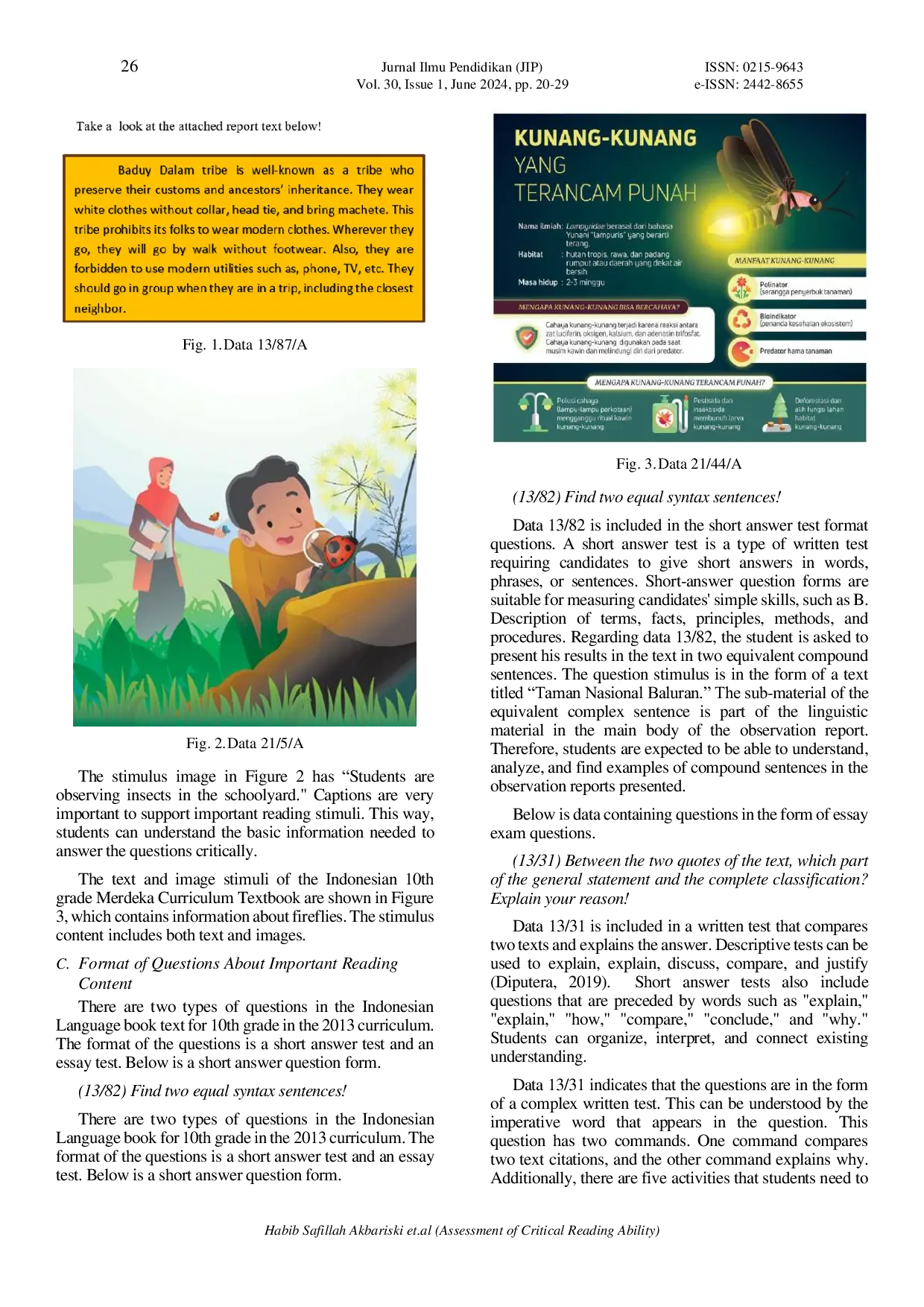
UMUM The data of this study includes the level, stimulation level, and format of reading comprehension questions in the Indonesian textbook for the 10th gradeThe data of this study includes the level, stimulation level, and format of reading comprehension questions in the Indonesian textbook for the 10th grade
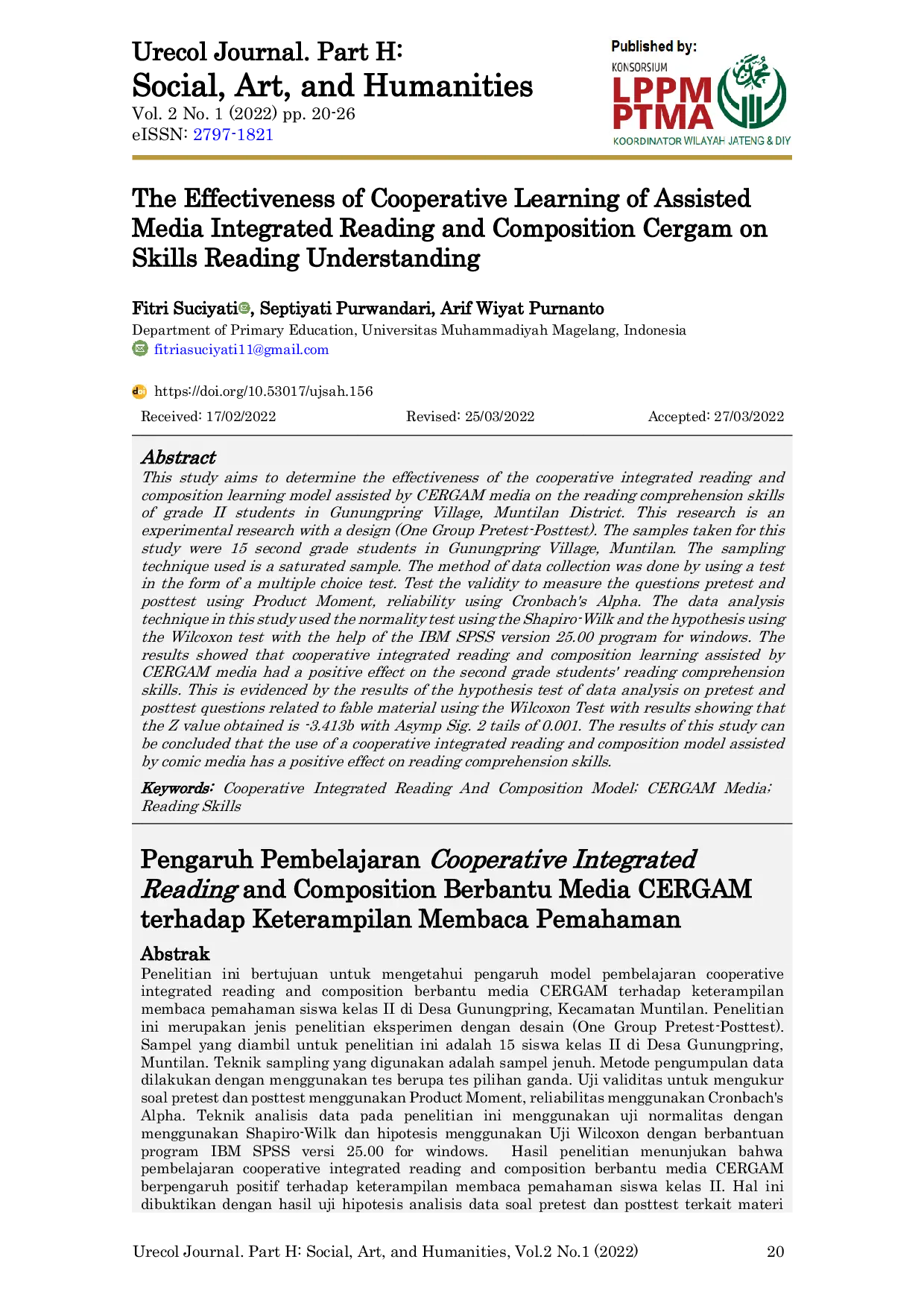
URECOLURECOL This study aims to determine the effectiveness of the cooperative integrated reading and composition learning model assisted by CERGAM media on the readingThis study aims to determine the effectiveness of the cooperative integrated reading and composition learning model assisted by CERGAM media on the reading
Useful /

UMGUMG Data from 23 student performances reveal that learners do not merely adopt Western norms. Instead, they perform a hybrid identity, using English as a toolData from 23 student performances reveal that learners do not merely adopt Western norms. Instead, they perform a hybrid identity, using English as a tool

UMGUMG Buku cerita digital berilustrasi semakin banyak digunakan sebagai sumber belajar untuk mendukung akuisisi bahasa kedua (SLA) oleh pembelajar muda denganBuku cerita digital berilustrasi semakin banyak digunakan sebagai sumber belajar untuk mendukung akuisisi bahasa kedua (SLA) oleh pembelajar muda dengan

BIMABERILMUBIMABERILMU Kajian ini diharapkan dapat memberikan kontribusi teoritis bagi pengembangan studi seni pertunjukan dan budaya visual dalam ranah Ilmu Budaya. BerdasarkanKajian ini diharapkan dapat memberikan kontribusi teoritis bagi pengembangan studi seni pertunjukan dan budaya visual dalam ranah Ilmu Budaya. Berdasarkan

ICJAMBIICJAMBI Namun, hasil observasi klub pertama di Surya Basketball Kelurahan Jajag, dan klub kedua di Satwika Basketball Club Kecamatan Genteng, Kabupaten BanyuwangiNamun, hasil observasi klub pertama di Surya Basketball Kelurahan Jajag, dan klub kedua di Satwika Basketball Club Kecamatan Genteng, Kabupaten Banyuwangi