ITNYITNY
KURVATEKKURVATEKStakeholders are groups or individuals who can influence or be influenced by the achievement of organizational goals. Stakeholder management is identified as the process by which the project team manages stakeholder needs and ensures their goals are achieved. The purpose of this study is to examine factors that influence stakeholder management on trust in construction projects that have an impact on project success. The research method used is a quantitative method with a total of 124 respondents in contracting companies in the Yogyakarta Special Region. The analytical method used is multiple linear regression analysis with the help of a computer program data processing tool SPSS 25.0. The results of the research on the factors that influence stakeholder management on trust in construction projects are prescriptive stakeholders management (X1), intuitive trust (X2), competence trust (X4), honesty (X5), integrity trust (X3), and communication (X6). The result of the analysis states that the most dominant variable which significantly influences the prescriptive stakeholder management (X1), hence it is important for stakeholders mapping, identification, classification, and monitoring from the start of the project.
Based on the results of the research conducted in the Special Region of Yogyakarta, it can be concluded that all trust factors affect stakeholder management in construction projects, including decisive stakeholders, intuitive trust, integrity trust, competence trust, honesty, and communication.The most dominant factor influencing stakeholder management is decisive stakeholder management (X1).Therefore, it is important for the project team to take actions such as mapping, identification, classification, and monitoring of stakeholders interests from the outset of the project to ensure project objectives are achieved.
Penelitian lebih lanjut perlu dilakukan untuk memahami bagaimana tingkat pengalaman dan usia responden memengaruhi kepercayaan dalam pengelolaan proyek konstruksi. Selain itu, penting untuk meneliti hubungan dan pengaruh variabel yang lebih luas, seperti kepemimpinan, serta memperluas cakupan penelitian ke berbagai provinsi di Indonesia untuk mendapatkan gambaran yang lebih komprehensif. Penelitian di masa depan juga dapat mengeksplorasi dampak pengelolaan pemangku kepentingan terhadap kualitas hasil proyek, yang dapat memberikan wawasan berharga bagi praktisi industri. Mengingat kesulitan dalam mengumpulkan responden, metode penelitian kualitatif atau pendekatan daring dapat dipertimbangkan untuk meningkatkan partisipasi dan memperkaya data yang diperoleh. Dengan demikian, penelitian-penelitian lanjutan ini diharapkan dapat memberikan kontribusi signifikan terhadap pengembangan teori dan praktik pengelolaan proyek konstruksi yang lebih efektif dan berkelanjutan, serta meningkatkan keberhasilan proyek secara keseluruhan.
- Critical features for project stakeholder management: a systematic literature review | International... inderscienceonline.com/doi/abs/10.1504/IJASS.2012.051130Critical features for project stakeholder management a systematic literature review International inderscienceonline doi abs 10 1504 IJASS 2012 051130
- Managing for Stakeholders: The Role of Stakeholder-Based Management in Project Success | Rajablu | Asian... doi.org/10.5539/ass.v11n3p111Managing for Stakeholders The Role of Stakeholder Based Management in Project Success Rajablu Asian doi 10 5539 ass v11n3p111
| File size | 198.13 KB |
| Pages | 6 |
| DMCA | Report |
Related /
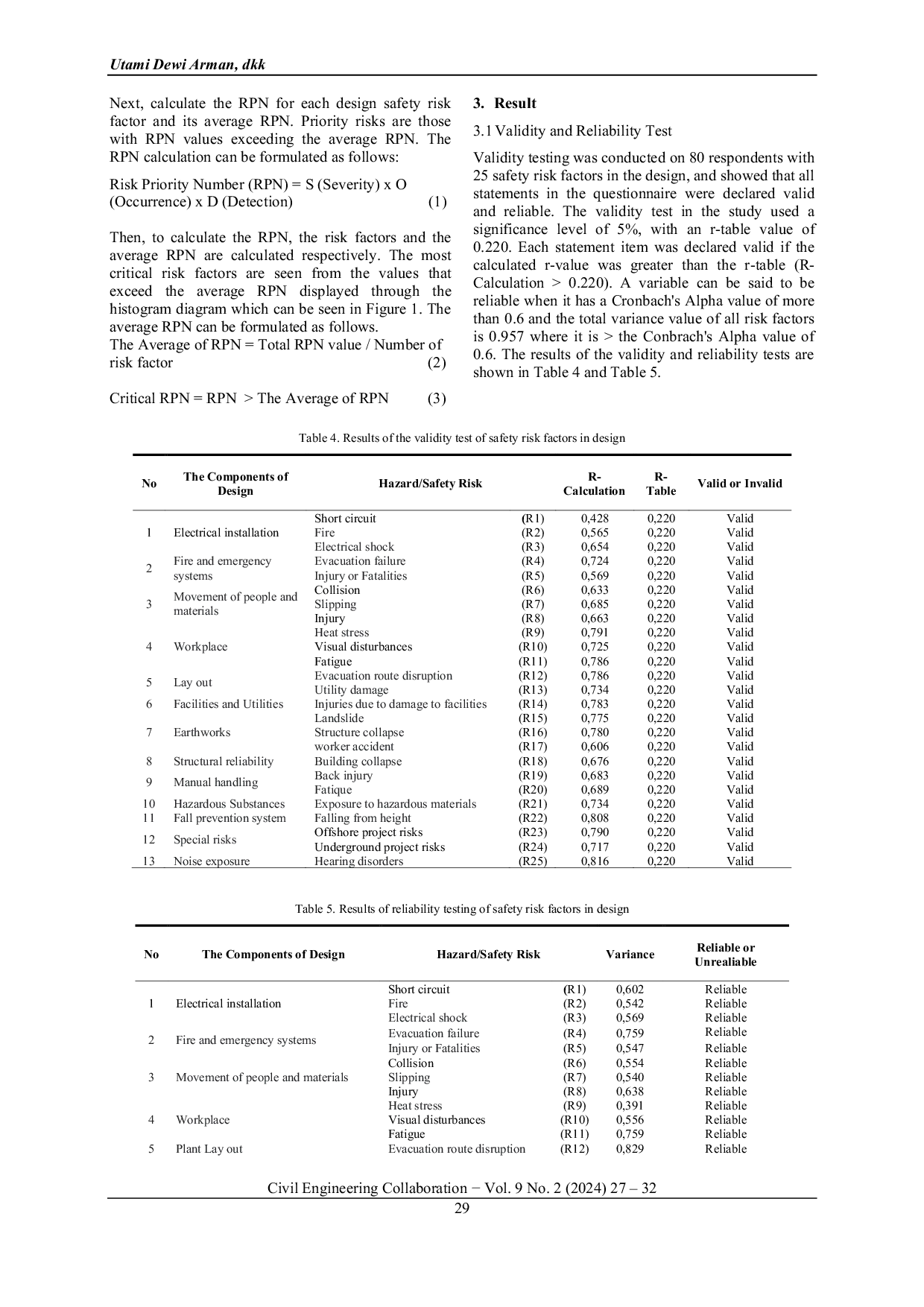
JCIVIL UPIYPTKJCIVIL UPIYPTK 4; fatique due to manual handling with an RPN value of 28. 3 and slipping due to movement of people and materials with an RPN value of 27. 9. Based on4; fatique due to manual handling with an RPN value of 28. 3 and slipping due to movement of people and materials with an RPN value of 27. 9. Based on

BAJANGJOURNALBAJANGJOURNAL Temuan ini mendukung teori Resource-Based View (RBV) dan model Job Demands-Resources (JD-R), yang menunjukkan bahwa sumber daya tak berwujud dapat dikonversiTemuan ini mendukung teori Resource-Based View (RBV) dan model Job Demands-Resources (JD-R), yang menunjukkan bahwa sumber daya tak berwujud dapat dikonversi
TRISAKTITRISAKTI Pendekatan kualitatif digunakan, dengan data dikumpulkan melalui wawancara mendalam, observasi lapangan, dan analisis dokumen proyek terpilih. Temuan menunjukkanPendekatan kualitatif digunakan, dengan data dikumpulkan melalui wawancara mendalam, observasi lapangan, dan analisis dokumen proyek terpilih. Temuan menunjukkan

ITATSITATS Proses konstruksi platform Qatargas dikelola oleh Project X, yang berlokasi di fasilitas fabrikasi di Batam, Indonesia, berdasarkan kontrak yang mencakupProses konstruksi platform Qatargas dikelola oleh Project X, yang berlokasi di fasilitas fabrikasi di Batam, Indonesia, berdasarkan kontrak yang mencakup
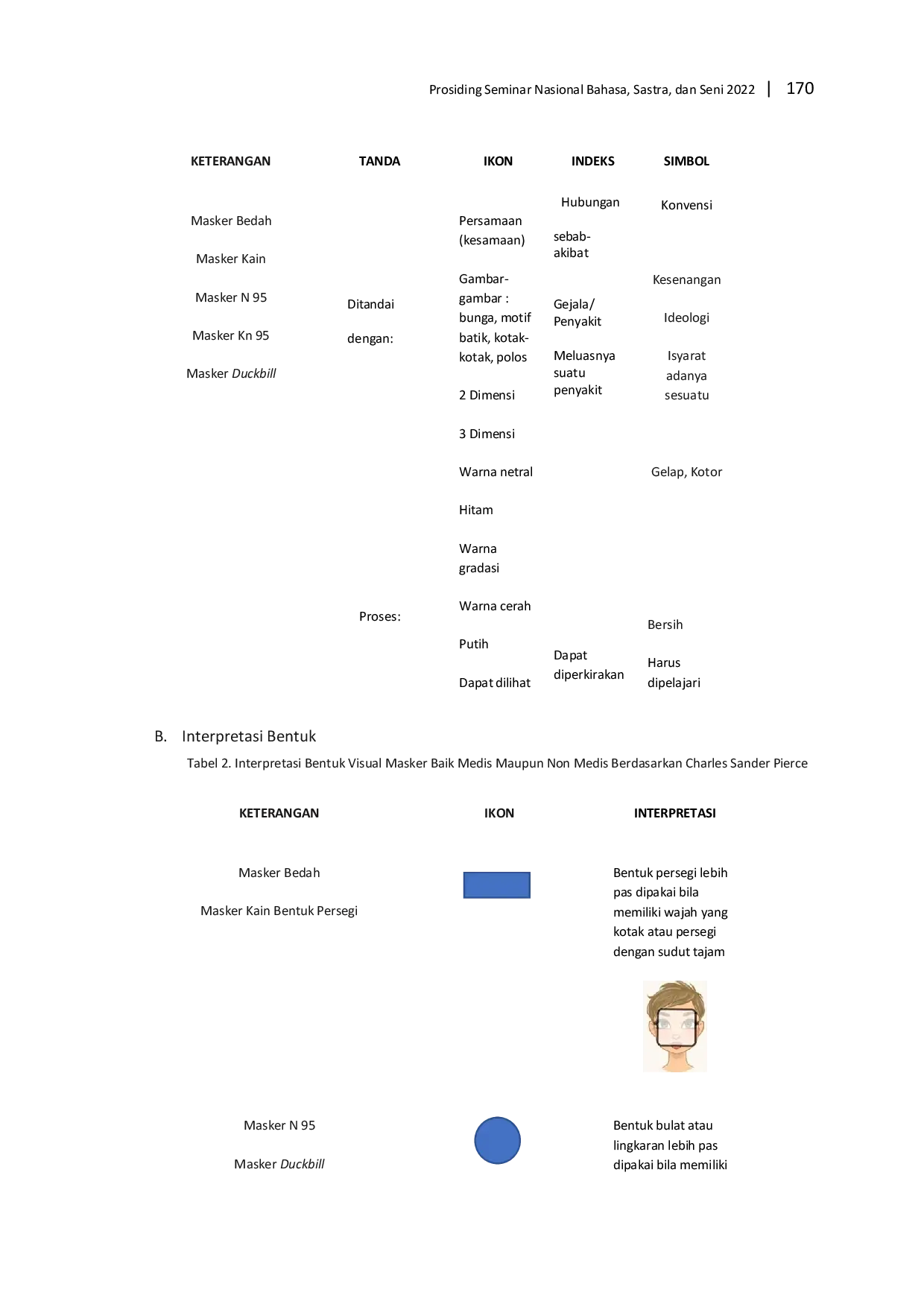
UNJUNJ Virus Corona menyebar dan menginfeksi orang lain melalui droplet yang dikeluarkan dari mulut dan hidung penderita, serta dapat terjadi saat batuk atauVirus Corona menyebar dan menginfeksi orang lain melalui droplet yang dikeluarkan dari mulut dan hidung penderita, serta dapat terjadi saat batuk atau
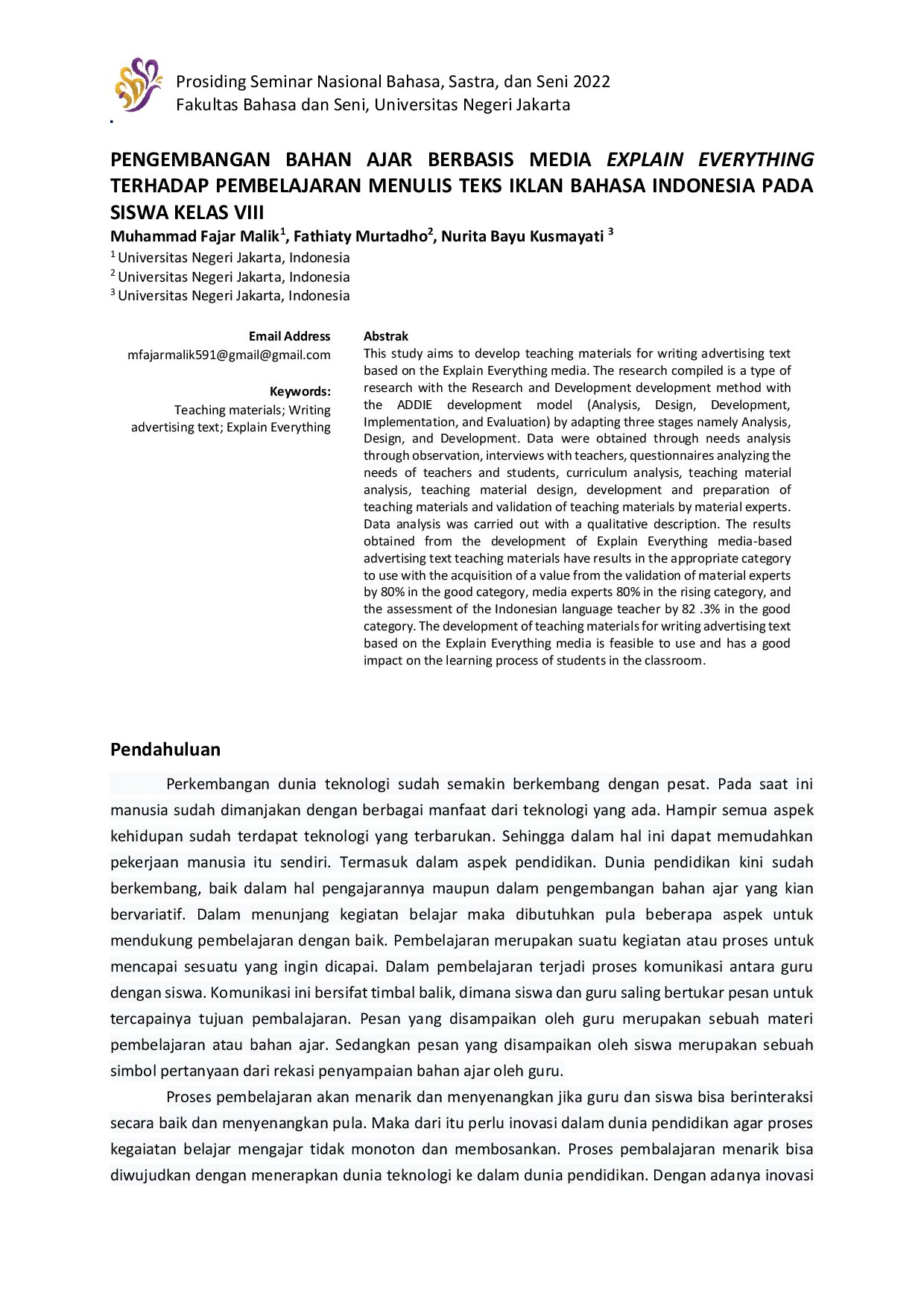
UNJUNJ Hasil validasi dan penilaian dari ahli materi, ahli media, dan guru bahasa Indonesia terhadap bahan ajar teks iklan berbasis media Explain Everything menunjukkanHasil validasi dan penilaian dari ahli materi, ahli media, dan guru bahasa Indonesia terhadap bahan ajar teks iklan berbasis media Explain Everything menunjukkan
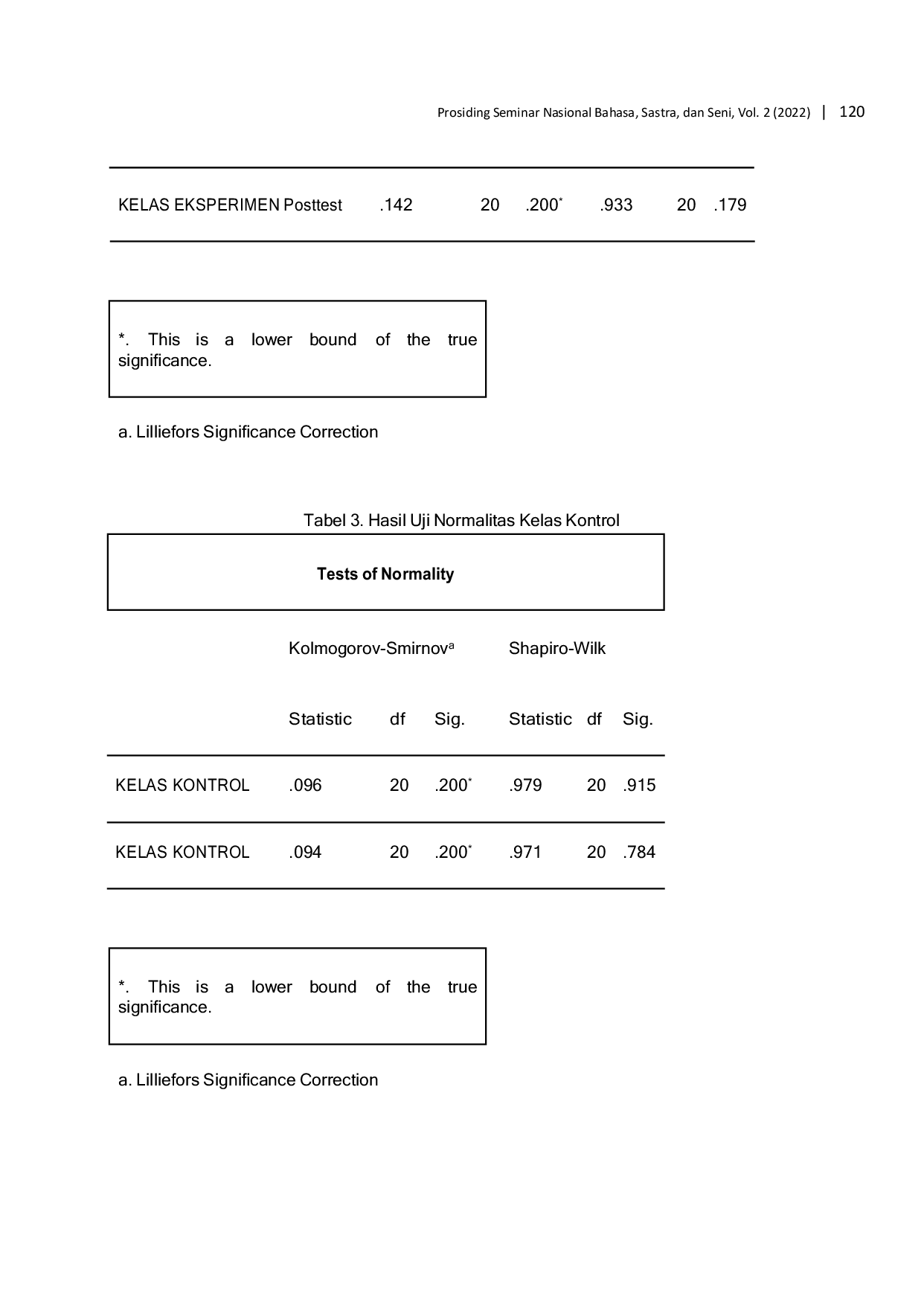
UNJUNJ Penelitian ini bertujuan untuk mengetahui pengaruh model pembelajaran berbasis proyek dengan media video podcast terhadap kemampuan menulis teks laporanPenelitian ini bertujuan untuk mengetahui pengaruh model pembelajaran berbasis proyek dengan media video podcast terhadap kemampuan menulis teks laporan

UNJUNJ 8 dan 4. 8 untuk materi pembelajaran teks tanggapan. Berdasarkan hasil penelitian, dapat disimpulkan bahwa proses pembelajaran dengan memberikan perlakuan8 dan 4. 8 untuk materi pembelajaran teks tanggapan. Berdasarkan hasil penelitian, dapat disimpulkan bahwa proses pembelajaran dengan memberikan perlakuan
Useful /

ITNYITNY This means that every 1% increase in Total Moisture results in a decrease in calorific value of 71.343 kcal/kg and likewise every 1% increase in Ash valueThis means that every 1% increase in Total Moisture results in a decrease in calorific value of 71.343 kcal/kg and likewise every 1% increase in Ash value

UNBUNB Jambu kristal merupakan salah satu buah favorit di Indonesia karena daging buahnya yang renyah dan buah yang minim biji. Jambu kristal memiliki kandunganJambu kristal merupakan salah satu buah favorit di Indonesia karena daging buahnya yang renyah dan buah yang minim biji. Jambu kristal memiliki kandungan

UNBUNB Kulit buah manggis yang kaya dengan kandungan senyawa fenol/polifenol, epikatekin, antosianin, tanin, dan xanthone, yang hingga saat ini sudah mulai banyakKulit buah manggis yang kaya dengan kandungan senyawa fenol/polifenol, epikatekin, antosianin, tanin, dan xanthone, yang hingga saat ini sudah mulai banyak
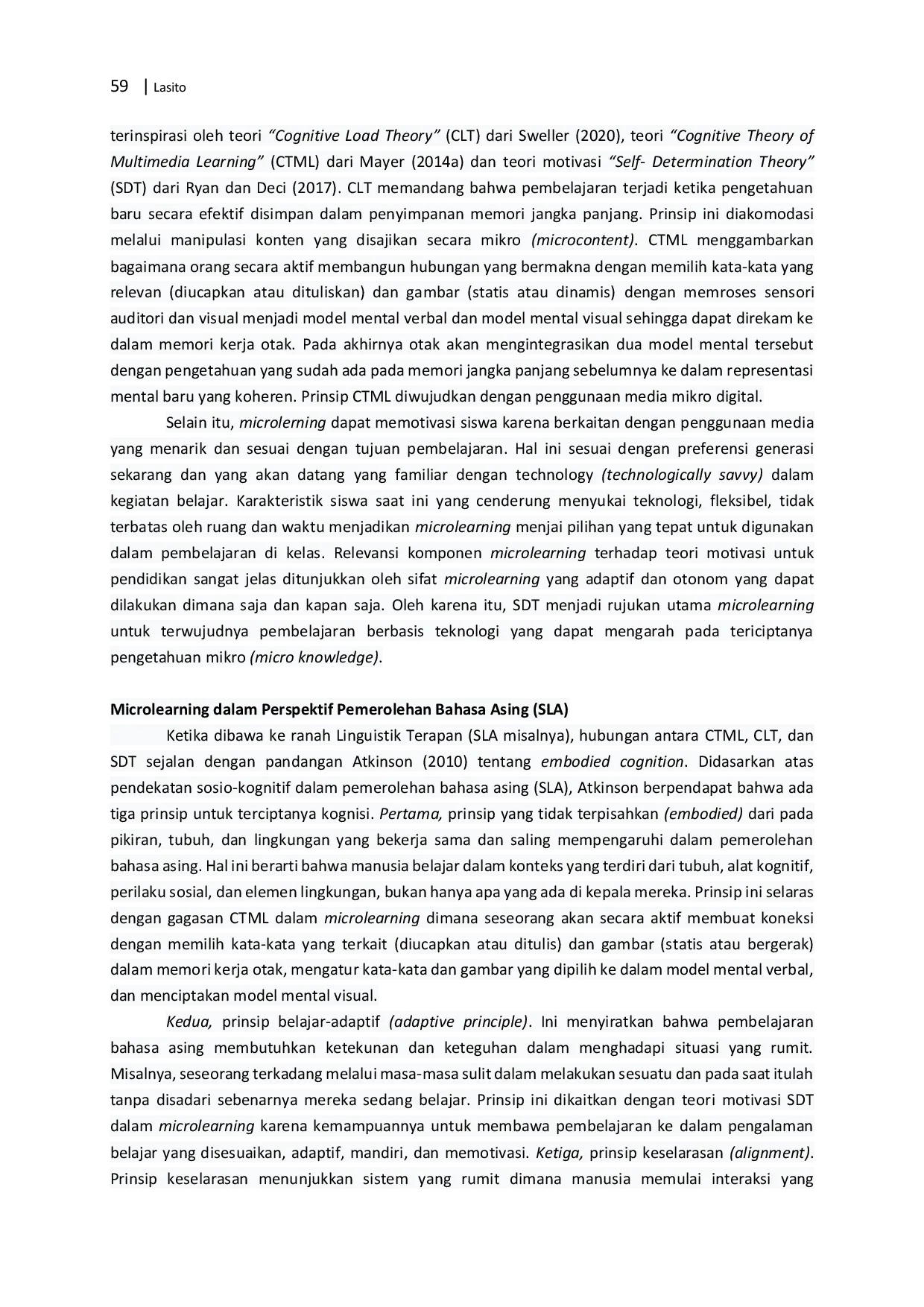
UNJUNJ Penelitian ini menegaskan bahwa microlearning dibangun atas premis teori-teori kuat yaitu CLT, CTML, dan SDT, serta memiliki potensi besar dalam berbagaiPenelitian ini menegaskan bahwa microlearning dibangun atas premis teori-teori kuat yaitu CLT, CTML, dan SDT, serta memiliki potensi besar dalam berbagai