STAINUSANTARASTAINUSANTARA
Jurnal Ikhtibar NusantaraJurnal Ikhtibar NusantaraThe urgency to reform the Islamic Religious Education (PAI) curriculum stems from a widening gap between its normative-dogmatic orientation and the global demand for inclusive, humanistic education. Although Islamic teachings emphasize compassion, justice, and respect for human dignity, these values are not yet systematically embedded in current curriculum structures. Previous studies have examined humanistic-religious education in limited scopes, but few have explored its philosophical foundations and global relevance. This study investigates how humanistic-religious values can be philosophically integrated into the PAI curriculum to meet global educational needs. Employing a qualitative method with a normative-philosophical approach, data were gathered through literature review and document analysis of curriculum texts and scholarly works. The data were analyzed using thematic reduction, categorization, and synthesis. The study offers a significant contribution by proposing a curriculum framework that balances spiritual and social dimensions, rooted in Islamic ethics and responsive to multicultural realities. It recommends a conceptual shift in curriculum design, teacher training in transformative pedagogy, and policy support for embedding universal human values into religious education. These findings enrich the discourse on global Islamic education and provide a foundation for future empirical research and curriculum innovation.
The current Islamic Religious Education (PAI) curriculum has not fully addressed the needs of global education due to the minimal integration of humanist-religious values.The curriculum is dominated by cognitive and normative approaches, lacking the development of empathetic and tolerant character.A paradigm shift is needed, moving from a dogmatic approach towards a value-based transformative approach supported by curriculum policy and teacher training to shape students who are both religious and humanistic, as well as globally competent.
Further research should focus on empirical testing of a humanist-religious based PAI curriculum model within formal education contexts. Investigating the practical challenges and opportunities of implementing such a curriculum across diverse educational levels and regions is crucial. Additionally, studies should explore the effectiveness of different teacher training programs in fostering transformative pedagogy and the integration of humanist values. Finally, research is needed to assess the long-term impact of a humanist-religious curriculum on students character development, social responsibility, and global citizenship skills, considering the evolving needs of a rapidly changing world. These investigations will contribute to a more nuanced understanding of how to effectively integrate humanist values into Islamic education, ultimately shaping a generation equipped to navigate the complexities of the 21st century and contribute to a more just and peaceful global society.
| File size | 309.21 KB |
| Pages | 14 |
| DMCA | Report |
Related /
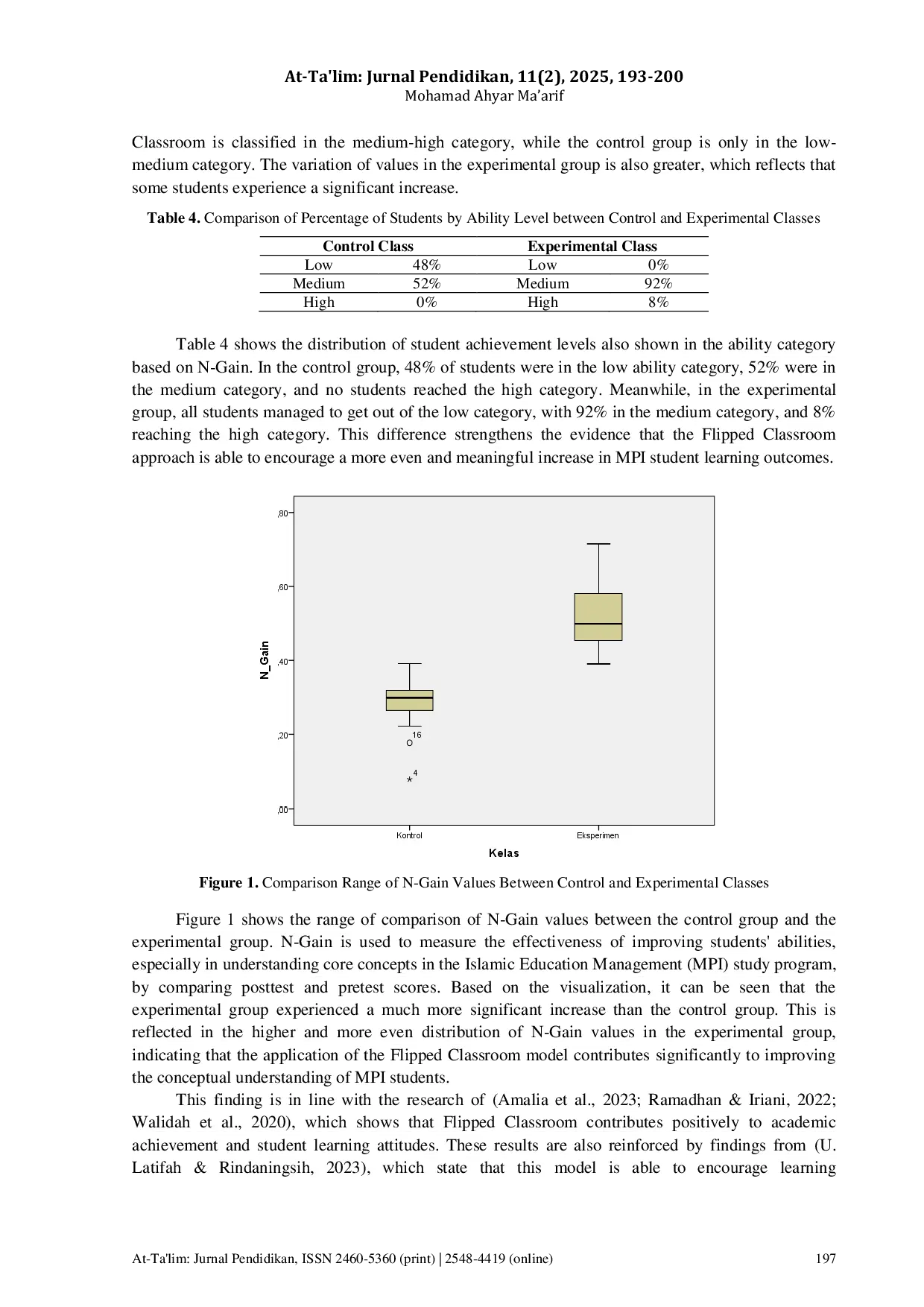
UNZAHUNZAH Hasil ini mengonfirmasi bahwa Flipped Classroom efektif dalam konteks pembelajaran MPI yang menuntut pendekatan reflektif, independen, dan berbasis teknologi.Hasil ini mengonfirmasi bahwa Flipped Classroom efektif dalam konteks pembelajaran MPI yang menuntut pendekatan reflektif, independen, dan berbasis teknologi.

STISASABANGSTISASABANG Sementara itu, faktor penghambat meliputi pengaruh lingkungan pergaulan siswa, kurangnya perhatian orang tua, dan perkembangan teknologi yang tidak terkontrol.Sementara itu, faktor penghambat meliputi pengaruh lingkungan pergaulan siswa, kurangnya perhatian orang tua, dan perkembangan teknologi yang tidak terkontrol.
UINMYBATUSANGKARUINMYBATUSANGKAR Stimulasi neuroedukasi spesifik-bakat, melalui model MP-TBN, terbukti efektif meningkatkan kemampuan membaca Al-Quran siswa, ditunjukkan dengan peningkatanStimulasi neuroedukasi spesifik-bakat, melalui model MP-TBN, terbukti efektif meningkatkan kemampuan membaca Al-Quran siswa, ditunjukkan dengan peningkatan

MGEDUKASIAMGEDUKASIA The research is a Class Action Research carried out in class V-A SD Negeri Lamsayuen, Ingin Jaya District, Aceh Besar Regency, for the 2024/2025 schoolThe research is a Class Action Research carried out in class V-A SD Negeri Lamsayuen, Ingin Jaya District, Aceh Besar Regency, for the 2024/2025 school

MGEDUKASIAMGEDUKASIA The background of this research is the low learning outcomes of grade III students of SD Negeri Lhok Keutapang who have not met the Minimum CompletenessThe background of this research is the low learning outcomes of grade III students of SD Negeri Lhok Keutapang who have not met the Minimum Completeness
UMSUUMSU Kesimpulan ini menunjukkan bahwa ada potensi untuk mengembangkan kurikulum pendidikan Islam yang lebih adaptif, kontekstual, dan transformatif, yang dapatKesimpulan ini menunjukkan bahwa ada potensi untuk mengembangkan kurikulum pendidikan Islam yang lebih adaptif, kontekstual, dan transformatif, yang dapat

UNISMUHUNISMUH Jenis penelitian yang digunakan adalah kualitatif dengan menggunakan metode deskriptif. Sumber data utama yang dianalisis adalah komponen isi dari modulJenis penelitian yang digunakan adalah kualitatif dengan menggunakan metode deskriptif. Sumber data utama yang dianalisis adalah komponen isi dari modul

CAHAYA ICCAHAYA IC Hasil penelitian ini dapat digunakan sebagai referensi bagi pendidik untuk menentukan strategi yang tepat guna meningkatkan pemahaman siswa tentang momentumHasil penelitian ini dapat digunakan sebagai referensi bagi pendidik untuk menentukan strategi yang tepat guna meningkatkan pemahaman siswa tentang momentum
Useful /

STIAAMUNTAISTIAAMUNTAI 0 Statistik For Windows. Hasil dari penelitian menyatakan bahwa Terdapat pengaruh positif dan signifikan antara kompetensi terhadap kinerja pegawai pada0 Statistik For Windows. Hasil dari penelitian menyatakan bahwa Terdapat pengaruh positif dan signifikan antara kompetensi terhadap kinerja pegawai pada

UNDARISUNDARIS uji determinasi, 5. uji t, 6. uji F. Dari hasil penelitian dapat disimpulkan bahwa variabel stress kerja, job insecurity, dan lingkungan kerja secara parsialuji determinasi, 5. uji t, 6. uji F. Dari hasil penelitian dapat disimpulkan bahwa variabel stress kerja, job insecurity, dan lingkungan kerja secara parsial

UNDARISUNDARIS Ketiga variabel tersebut secara bersama-sama juga berpengaruh sangat kuat terhadap volume penjualan, mampu menjelaskan sebesar 86,5% variasi dalam volumeKetiga variabel tersebut secara bersama-sama juga berpengaruh sangat kuat terhadap volume penjualan, mampu menjelaskan sebesar 86,5% variasi dalam volume

UNDARISUNDARIS Secara simultan Punishment Kerja, Koordinasi Kerja dan Lingkungan Kerja berpengaruh terhadap Produktivitas Kerja Karyawan Pada Bagian Departemen SewingSecara simultan Punishment Kerja, Koordinasi Kerja dan Lingkungan Kerja berpengaruh terhadap Produktivitas Kerja Karyawan Pada Bagian Departemen Sewing