STAINUSANTARASTAINUSANTARA
Jurnal Ikhtibar NusantaraJurnal Ikhtibar NusantaraThis integrative literature review aims to reconstruct a Design Thinking (DT)-based learning model for moral education (akhlak) tailored to Generation Z in the digital age. The study systematically analyses 25 primary sources (scientific journals, proceedings, dissertations) published between 2016 and 2025. The findings reveal a significant gap between conventional normative teaching methods and the characteristics of Gen Z as digital natives, requiring a contextual and participatory learning paradigm. The analysis identifies Design Thinking as a powerful and philosophically aligned solution. DTs human-centered, iterative stages (Empathize, Define, Ideate, Prototype, Test) show deep convergence with Islamic moral concepts, such as at-taāthuf (compassion) and at-tajribah (experimentation). The synthesis results in a proposed conceptual model that integrates the DT mindset, Gen Zs digital-native traits, and the objectives of Islamic moral education. The reconstructed model shifts learning from passive transmission to an active, experiential process where students explore real-world moral dilemmas, collaboratively prototype behavioral solutions, and engage in continuous reflection. This study provides a theoretical foundation and operational framework for educators and curriculum developers to design more relevant, impactful, and adaptive moral education for the 21st century.
The study concludes that a paradigmatic shift is needed in moral education, adopting a human-centered and iterative mindset from Design Thinking to address the gap between normative knowledge and actual behavior in the digital age of Generation Z.This reconstruction aligns philosophically with Islamic education, with DT principles mirroring Islamic values like compassion and experimentation.The proposed model offers a relevant and effective approach to equip students with 21st-century skills and foster character development in a rapidly changing world.
Based on the identified gaps and limitations, future research should explore the practical implementation of the proposed DT-based moral education model in diverse educational settings, examining its effectiveness in fostering empathy and ethical reasoning among Generation Z students. Furthermore, research is needed to investigate how this model can be adapted to address specific moral challenges prevalent in the digital landscape, such as cyberbullying and misinformation. Finally, studies should focus on developing and validating assessment tools that measure not only cognitive understanding of moral principles but also behavioral changes and character development resulting from the implementation of this innovative learning approach, ensuring a holistic evaluation of its impact on students moral compass and real-world decision-making abilities. These investigations will contribute to a more nuanced understanding of how to effectively cultivate moral character in the digital age, empowering the next generation to navigate complex ethical dilemmas with wisdom and integrity.
- Design Thinking, a Novel Approach for an Effective and Improved Educational System–A Review - International... ijpdll.com/article/design-thinking-a-novel-approach-for-an-effective-and-improved-educational-system-a-review-12010Design Thinking a Novel Approach for an Effective and Improved Educational SystemAeA Review International ijpdll article design thinking a novel approach for an effective and improved educational system a review 12010
- Pengembangan Materi Akhlak untuk Generasi Z di MAN 1 Ketapang | Equilibrium: Jurnal Pendidikan. pengembangan... journal.unismuh.ac.id/index.php/equilibrium/article/view/16586Pengembangan Materi Akhlak untuk Generasi Z di MAN 1 Ketapang Equilibrium Jurnal Pendidikan pengembangan journal unismuh ac index php equilibrium article view 16586
| File size | 409.03 KB |
| Pages | 14 |
| DMCA | Report |
Related /

SAINTISPUBSAINTISPUB Together, these approaches improve conceptual understanding, creativity, and motivation. The study concludes that integrating these three approaches withinTogether, these approaches improve conceptual understanding, creativity, and motivation. The study concludes that integrating these three approaches within
SAINTISPUBSAINTISPUB Data was collected through observations, interviews, and questionnaires involving students and teachers as respondents. The data analysis techniques usedData was collected through observations, interviews, and questionnaires involving students and teachers as respondents. The data analysis techniques used

WIDYAAGAPEWIDYAAGAPE In general, many people always associate womens issues with patriarchal culture whose assumptions are oppressive and unfair to women. Women are often seenIn general, many people always associate womens issues with patriarchal culture whose assumptions are oppressive and unfair to women. Women are often seen

UINMYBATUSANGKARUINMYBATUSANGKAR Penerapan model Neuroeducation-Based Tahfizh Learning Model (MP-TBN) yang mencakup stimulasi kognitif, emosional, sensorik, dan spiritual terbukti signifikanPenerapan model Neuroeducation-Based Tahfizh Learning Model (MP-TBN) yang mencakup stimulasi kognitif, emosional, sensorik, dan spiritual terbukti signifikan

KEMENDAGRIKEMENDAGRI Socioeconomic factors and unhealthy dietary patterns further exacerbate these conditions. Sustainable nutrition education in schools, implemented throughSocioeconomic factors and unhealthy dietary patterns further exacerbate these conditions. Sustainable nutrition education in schools, implemented through

PUBLIKASIINDONESIAPUBLIKASIINDONESIA Penelitian ini menggunakan desain kuasi‑eksperimental dengan satu kelompok eksperimen yang mendapatkan kegiatan ice‑breaking dan satu kelompok kontrol,Penelitian ini menggunakan desain kuasi‑eksperimental dengan satu kelompok eksperimen yang mendapatkan kegiatan ice‑breaking dan satu kelompok kontrol,

AFEKSIAFEKSI Hasil penelitian menunjukkan proses pembelajaran dengan model PBL tampak memotivasi siswa. Berdasarkan Uji-T Berpasangan, terdapat peningkatan dari pretestHasil penelitian menunjukkan proses pembelajaran dengan model PBL tampak memotivasi siswa. Berdasarkan Uji-T Berpasangan, terdapat peningkatan dari pretest

AFEKSIAFEKSI Pengumpulan data dilakukan dengan tes, observasi, dan dokumentasi. Analisis data yang digunakan adalah deskriptif dan inferensial dengan uji-t. Hasil penelitianPengumpulan data dilakukan dengan tes, observasi, dan dokumentasi. Analisis data yang digunakan adalah deskriptif dan inferensial dengan uji-t. Hasil penelitian
Useful /
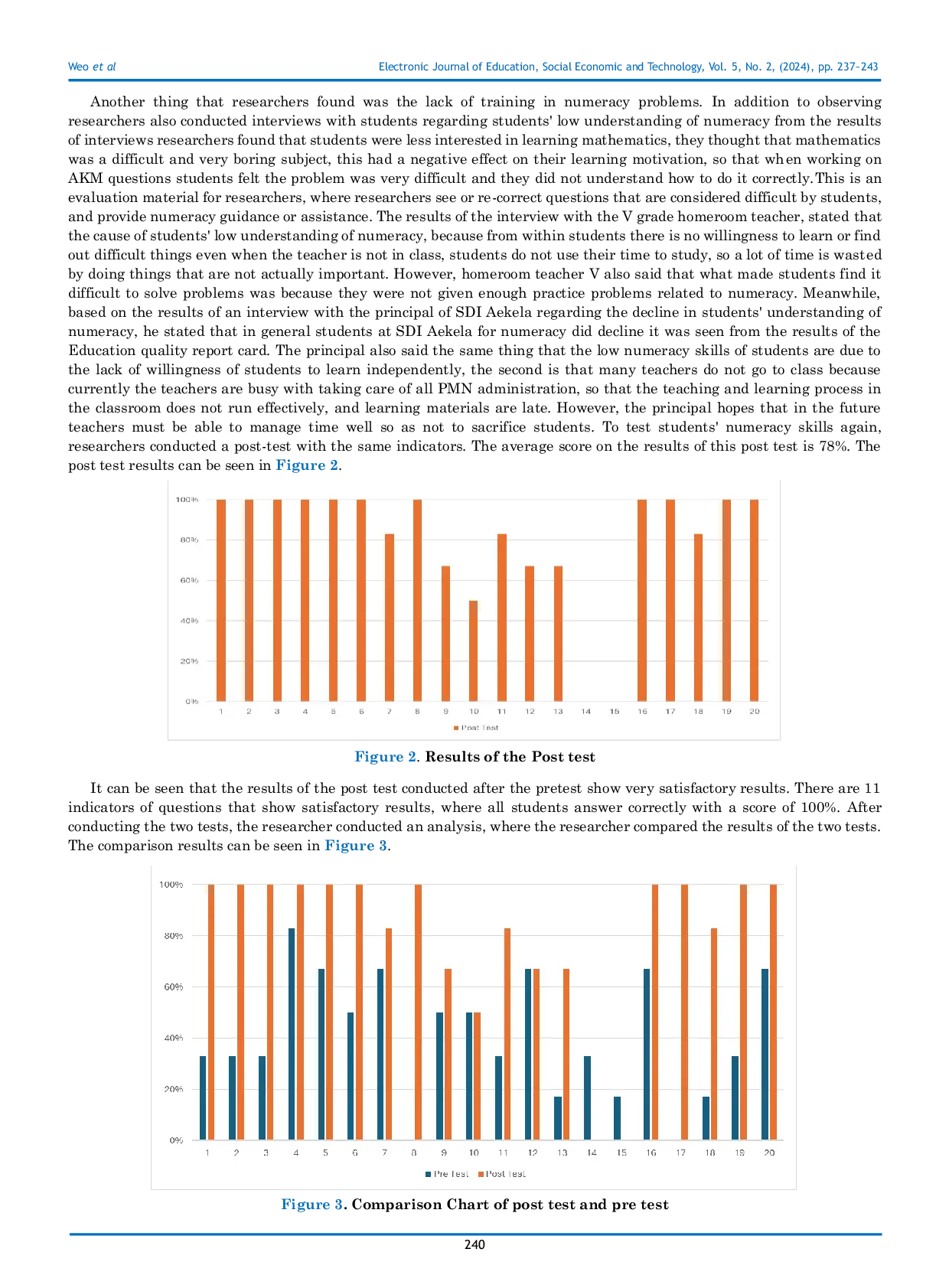
SAINTISPUBSAINTISPUB The average pre-test score obtained is 41%. While the average score on the post test results is 78%. The description of the score is obtained from 20 indicators.The average pre-test score obtained is 41%. While the average score on the post test results is 78%. The description of the score is obtained from 20 indicators.

SAINTISPUBSAINTISPUB Dari penjelasan mereka, peneliti menyimpulkan bahwa mereka menghormati pahlawan perempuan Aceh dan memiliki persepsi positif terhadap mereka. Tidak adaDari penjelasan mereka, peneliti menyimpulkan bahwa mereka menghormati pahlawan perempuan Aceh dan memiliki persepsi positif terhadap mereka. Tidak ada
SAINTISPUBSAINTISPUB Temuan ini memiliki implikasi dalam merancang intervensi yang secara bersamaan menargetkan elemen psikologis dan kontekstual untuk meningkatkan kemampuanTemuan ini memiliki implikasi dalam merancang intervensi yang secara bersamaan menargetkan elemen psikologis dan kontekstual untuk meningkatkan kemampuan

KEMENDAGRIKEMENDAGRI Pada saat ini, pencapaian lebih mencerminkan kepatuhan administratif terhadap kebijakan nasional dibandingkan optimalisasi penggunaan SPBE dalam praktikPada saat ini, pencapaian lebih mencerminkan kepatuhan administratif terhadap kebijakan nasional dibandingkan optimalisasi penggunaan SPBE dalam praktik