UMSUMS
Law and JusticeLaw and JusticeDomestic violence against women is an extraordinary crime against humanity. The number of victims of violence is women, who are always an outlet for perpetrators to commit crimes. Moreover, the fact that often occurs in reporting cases of domestic violence is that the types of violence that often occur are physical and household neglect, with economic causes and infidelity being the most significant causes. In addition, every year, violence against women in the household occurs erratically. The research method used in this research is empirical juridical, namely, judiciously reviewing the laws, regulations, and prohibitions regarding domestic violence. Empirically, seeing the reality that is around is not by the law on the Elimination of Domestic Violence. In addition, literature studies were conducted using books and journals. The result of the research is that the role of the victim in the occurrence of the Crime of Violence against Women in the Household often occurs by looking at the circumstances or situations of the victim who consciously or unconsciously has done something that provoked the perpetrator to commit a crime. In addition, the case occurs not because of the perpetrator alone but because the victim also took part in being the cause, but not entirely because it returns to the perpetrator how the perpetrator holds his anger not to commit violence against his partner. Therefore, it was the role of the victim through verbal violence or prior debate that led to the violent case that happened to him so that the victim does not realize that what he did was the trigger for the case of domestic violence.
The role of the victim often contributes to domestic violence incidents, with verbal arguments or debates potentially provoking perpetrators.While victims may unknowingly trigger violence, the perpetrator ultimately bears legal responsibility for their actions.Therefore, socialization efforts should focus not only on preventing perpetrators but also on educating victims about actions that could escalate into violence, ensuring they understand their role in de-escalating potentially harmful situations.
Further research should investigate the effectiveness of current socialization programs in addressing victim behavior as a contributing factor to domestic violence, exploring whether these programs adequately equip victims with strategies for de-escalation and self-protection. Additionally, studies could examine the psychological factors that contribute to both perpetrators violent responses and victims provocative behaviors, aiming to develop targeted interventions for both parties. Finally, research is needed to assess the impact of legal frameworks that currently treat domestic violence as a complaint offense, considering whether alternative approaches, such as mandatory reporting in cases of severe harm, could enhance victim protection and accountability for perpetrators. These investigations should consider the unique socio-cultural context of Merauke Regency and other regions in Indonesia experiencing similar challenges, ensuring that recommendations are culturally sensitive and practically feasible for implementation by local authorities and community organizations. The goal is to move beyond simply addressing the consequences of domestic violence and towards preventing it through a more comprehensive understanding of the complex interplay between victims, perpetrators, and the surrounding environment.
| File size | 283.23 KB |
| Pages | 16 |
| DMCA | Report |
Related /

ESC IDESC ID 72). The coefficient of determination (R²) of 0. 594 indicates that these three variables explain 59. 4% of the variation in employee performance. This72). The coefficient of determination (R²) of 0. 594 indicates that these three variables explain 59. 4% of the variation in employee performance. This

KAMPUSMELAYUKAMPUSMELAYU Strategies such as regulatory adaptation, education programs, ethical governance frameworks, and multi-sector collaboration are essential to maximize theStrategies such as regulatory adaptation, education programs, ethical governance frameworks, and multi-sector collaboration are essential to maximize the

OJS INDONESIAOJS INDONESIA The food industry in particular recorded very positive developments and contributed significantly to the countrys economic growth. Bread is one of theThe food industry in particular recorded very positive developments and contributed significantly to the countrys economic growth. Bread is one of the

MSTI INDONESIAMSTI INDONESIA Data was collected through questionnaires and interviews, analyzed using SPSS26. The results indicate a positive and statistically significant impact ofData was collected through questionnaires and interviews, analyzed using SPSS26. The results indicate a positive and statistically significant impact of
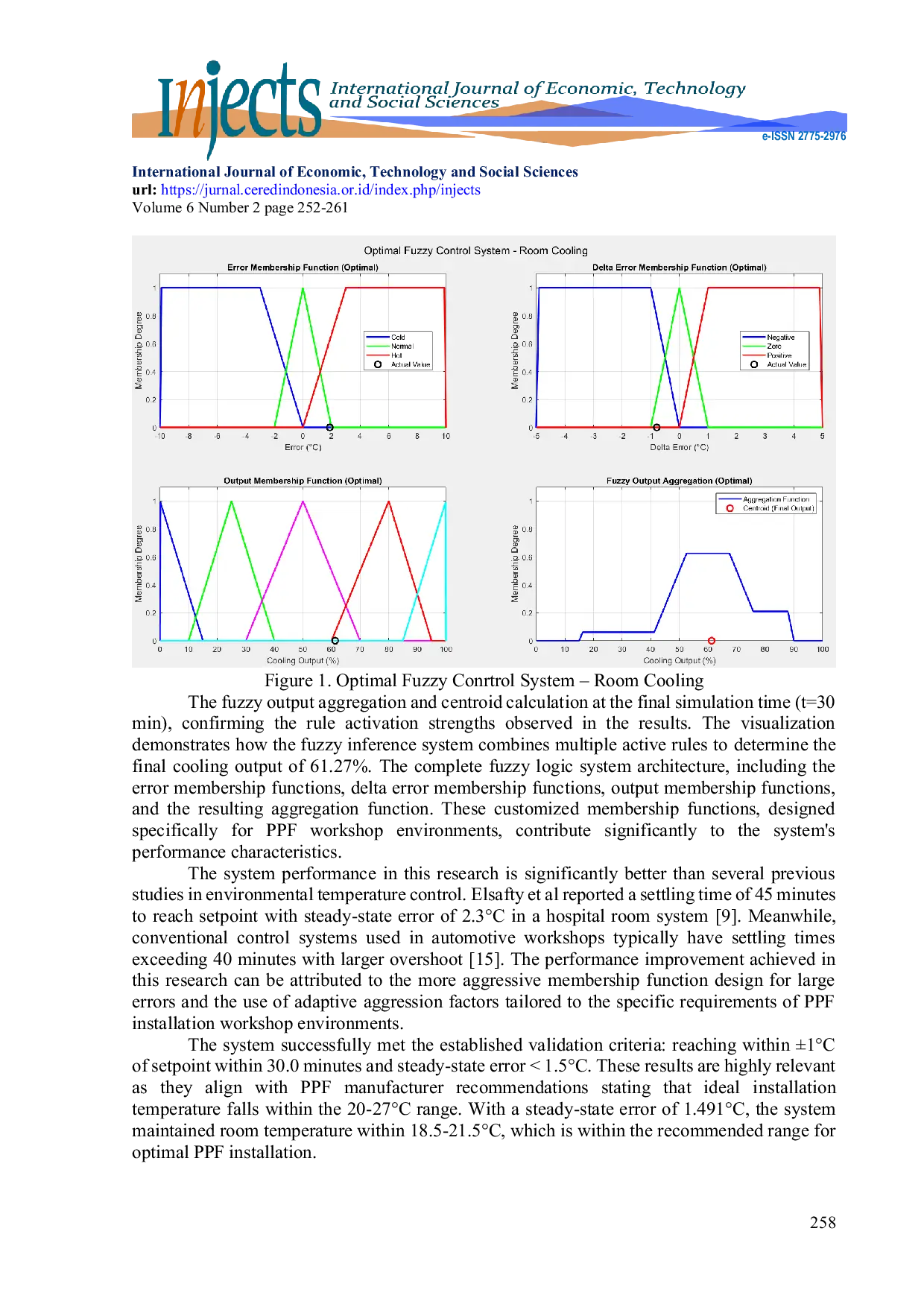
CEREDINDONESIACEREDINDONESIA The research concludes that modified fuzzy logic control strategies effectively enhance system performance for specific PPF workshop applications. TheThe research concludes that modified fuzzy logic control strategies effectively enhance system performance for specific PPF workshop applications. The

NEWINERANEWINERA People in various regions, including Humbang Hasundutan Regency, have used these plant parts for various purposes, such as handicraft raw materials, food,People in various regions, including Humbang Hasundutan Regency, have used these plant parts for various purposes, such as handicraft raw materials, food,

ALFARABIALFARABI The research method uses a quantitative approach with a quasi-experimental design of the pretest-posttest control group design type. The study populationThe research method uses a quantitative approach with a quasi-experimental design of the pretest-posttest control group design type. The study population

STIE MUTTAQIENSTIE MUTTAQIEN One of the important factors in the success of a company in achieving its vision and mission is the quality of Human Resources (HR). The purpose of thisOne of the important factors in the success of a company in achieving its vision and mission is the quality of Human Resources (HR). The purpose of this
Useful /

UMSUMS Selain itu, perjanjian ini dapat menimbulkan kerugian bagi semua pihak yang terlibat, termasuk warga negara asing yang kehilangan haknya dan warga negaraSelain itu, perjanjian ini dapat menimbulkan kerugian bagi semua pihak yang terlibat, termasuk warga negara asing yang kehilangan haknya dan warga negara

UMSUMS Hasil penelitian menunjukkan bahwa pada sudut 30°, didapatkan hasil suhu panel sekitar 43,60°C pada Iterasi ke-13, dengan penurunan suhu sekitar 3,13%.Hasil penelitian menunjukkan bahwa pada sudut 30°, didapatkan hasil suhu panel sekitar 43,60°C pada Iterasi ke-13, dengan penurunan suhu sekitar 3,13%.
UMSUMS Namun, hak-hak ini tidak mutlak dan seringkali dibatasi oleh kepentingan sosial dan nasional. Artikel ini mengkaji keseimbangan yang rumit antara demokrasiNamun, hak-hak ini tidak mutlak dan seringkali dibatasi oleh kepentingan sosial dan nasional. Artikel ini mengkaji keseimbangan yang rumit antara demokrasi

STAIMASWONOGIRISTAIMASWONOGIRI Sehingga di perlukan pengabdian berupa pendampingan masyarakat agar dampak pandemi Covid-19 dapat ditanggulangi dengan baik. Metode pengabdian dengan pendekatanSehingga di perlukan pengabdian berupa pendampingan masyarakat agar dampak pandemi Covid-19 dapat ditanggulangi dengan baik. Metode pengabdian dengan pendekatan