WESTSCIENCE PRESSWESTSCIENCE PRESS
West Science Law and Human RightsWest Science Law and Human RightsIn this age of digitalization, phishing has become a crime that is close to human life. In phishing crimes, the perpetrators identity is mostly unknown or anonymous. The perpetrators identity is the primary key for processing a lawsuit in court. Victims who dont know the real identity of the phisher will not be able to file a lawsuit for compensation. This study aims to determine the legal protection the state provides to phishing victims, especially in terms of compensation. This research uses a juridical-normative method with data collection through a literature study. Law No. 1 of 2024 on the Second Amendment to Law No. 11 of 2008 regarding Electronic Information and Transactions (ITE Law), Law No. 27 of 2022 regarding Personal Data Protection (PDP Law), and other constitutional regulations are the primary legal materials in this research. The secondary legal materials are relevant research results, journals, and books. Based on the research conducted, it has been shown that its necessary to establish the real identity of the perpetrator who can be responsible for compensating the victims of phishing. The difficulty of finding phishers who can hide their real identities and digital footprints are the main obstacle to compensating phishing victims.
The study concludes that while Indonesian law provides criminal sanctions for phishing, it lacks specific provisions for victim compensation.Establishing the perpetrators identity remains a significant challenge in pursuing legal recourse.Strengthening cybersecurity measures, improving perpetrator tracking capabilities, and enacting laws specifically addressing compensation for cybercrime victims are crucial steps to enhance legal protection for those affected by phishing.
Future research should explore the feasibility of establishing a dedicated fund, potentially financed by financial institutions, to provide immediate financial assistance to phishing victims while legal proceedings are underway. Furthermore, investigation is needed into the development of standardized protocols for banks and financial institutions to proactively identify and mitigate phishing risks, coupled with clear guidelines on their liability in cases of successful phishing attacks. Finally, a comparative study analyzing international best practices in cybercrime victim compensation could inform the development of more effective legal frameworks in Indonesia, particularly focusing on mechanisms for identifying and recovering assets from anonymous perpetrators.
- Penerapan Hukum Terhadap Tindak Pidana Doxing di Indonesia | JURNAL HUKUM PELITA. penerapan doxing jurnal... doi.org/10.37366/jh.v5i1.2670Penerapan Hukum Terhadap Tindak Pidana Doxing di Indonesia JURNAL HUKUM PELITA penerapan doxing jurnal doi 10 37366 jh v5i1 2670
- PEMIDANAAN CYBERCRIME DALAM PERSPEKTIF HUKUM PIDANA POSITIF | Laksana | Jurnal Hukum. pemidanaan cybercrime... doi.org/10.26532/jh.v35i1.11044PEMIDANAAN CYBERCRIME DALAM PERSPEKTIF HUKUM PIDANA POSITIF Laksana Jurnal Hukum pemidanaan cybercrime doi 10 26532 jh v35i1 11044
- REGULASI PENYIMPANGAN ARTIFICIAL INTELLIGENCE PADA TINDAK PIDANA MALWARE BERDASARKAN UNDANG-UDANG REPUBLIK... jurnal.uns.ac.id/recidive/article/view/47400REGULASI PENYIMPANGAN ARTIFICIAL INTELLIGENCE PADA TINDAK PIDANA MALWARE BERDASARKAN UNDANG UDANG REPUBLIK jurnal uns ac recidive article view 47400
- Perlindungan Hukum Terhadap Penerima Pinjaman Dalam Penyelenggaraan Financial Technology Berbasis Peer... journals.usm.ac.id/index.php/julr/article/view/2268Perlindungan Hukum Terhadap Penerima Pinjaman Dalam Penyelenggaraan Financial Technology Berbasis Peer journals usm ac index php julr article view 2268
| File size | 395.66 KB |
| Pages | 11 |
| DMCA | Report |
Related /
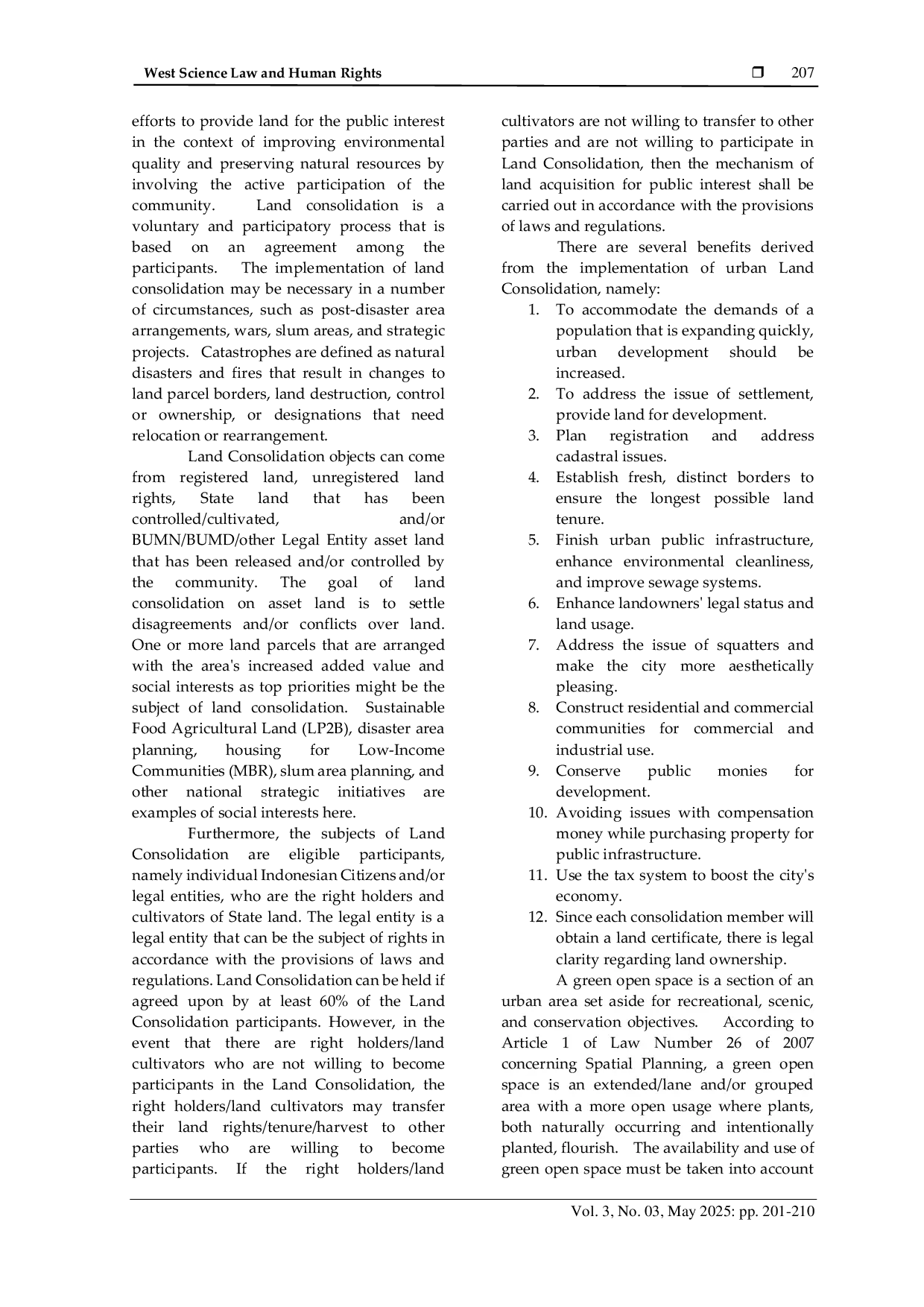
WESTSCIENCE PRESSWESTSCIENCE PRESS Finding out how land consolidation is being used in Indonesia to provide land for the development of green open spaces, as well as the difficulties facedFinding out how land consolidation is being used in Indonesia to provide land for the development of green open spaces, as well as the difficulties faced
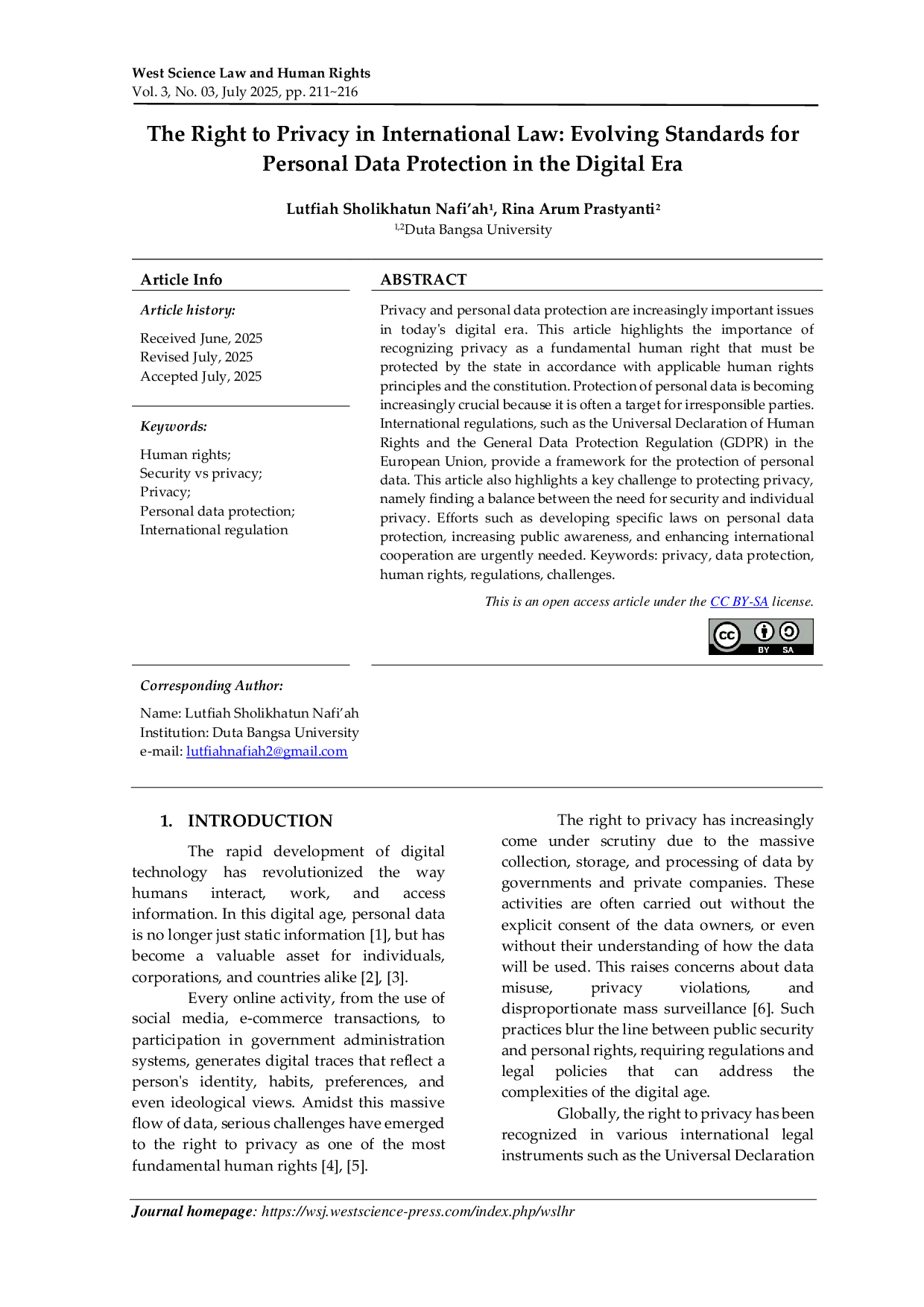
WESTSCIENCE PRESSWESTSCIENCE PRESS Regulasi internasional, seperti Deklarasi Universal Hak Asasi Manusia dan Peraturan Umum Perlindungan Data (GDPR) di Uni Eropa, memberikan kerangka kerjaRegulasi internasional, seperti Deklarasi Universal Hak Asasi Manusia dan Peraturan Umum Perlindungan Data (GDPR) di Uni Eropa, memberikan kerangka kerja

WESTSCIENCE PRESSWESTSCIENCE PRESS Kepolisian berperan sebagai penegak hukum yang bertugas mengatur, mengawal, mengawasi, dan melakukan patroli lalu lintas. Infrastruktur lalu lintas sepertiKepolisian berperan sebagai penegak hukum yang bertugas mengatur, mengawal, mengawasi, dan melakukan patroli lalu lintas. Infrastruktur lalu lintas seperti

WESTSCIENCE PRESSWESTSCIENCE PRESS Secara normatif, ketentuan ini menjadi dasar kuat bagi sistem hukum Indonesia untuk menerapkan prinsip kesetaraan dan non-diskriminasi. Namun dalam praktiknya,Secara normatif, ketentuan ini menjadi dasar kuat bagi sistem hukum Indonesia untuk menerapkan prinsip kesetaraan dan non-diskriminasi. Namun dalam praktiknya,

WESTSCIENCE PRESSWESTSCIENCE PRESS Illegal mining continues to thrive in various regions, causing severe environmental damage such as deforestation, water pollution, and soil erosion. TheIllegal mining continues to thrive in various regions, causing severe environmental damage such as deforestation, water pollution, and soil erosion. The

WESTSCIENCE PRESSWESTSCIENCE PRESS Penelitian ini menyoroti peran revolusioner Kecerdasan Artifisial dan Analitik Data Besar dalam memutus jaringan narkoba di Indonesia. Integrasi teknologiPenelitian ini menyoroti peran revolusioner Kecerdasan Artifisial dan Analitik Data Besar dalam memutus jaringan narkoba di Indonesia. Integrasi teknologi

WESTSCIENCE PRESSWESTSCIENCE PRESS 4 Tahun 2009, UU Lingkungan Hidup No. 32 Tahun 2009, dan KUHP. Kertas kerja ini menyoroti kelemahan dalam sistem hukum, seperti penegakan hukum yang lemah,4 Tahun 2009, UU Lingkungan Hidup No. 32 Tahun 2009, dan KUHP. Kertas kerja ini menyoroti kelemahan dalam sistem hukum, seperti penegakan hukum yang lemah,
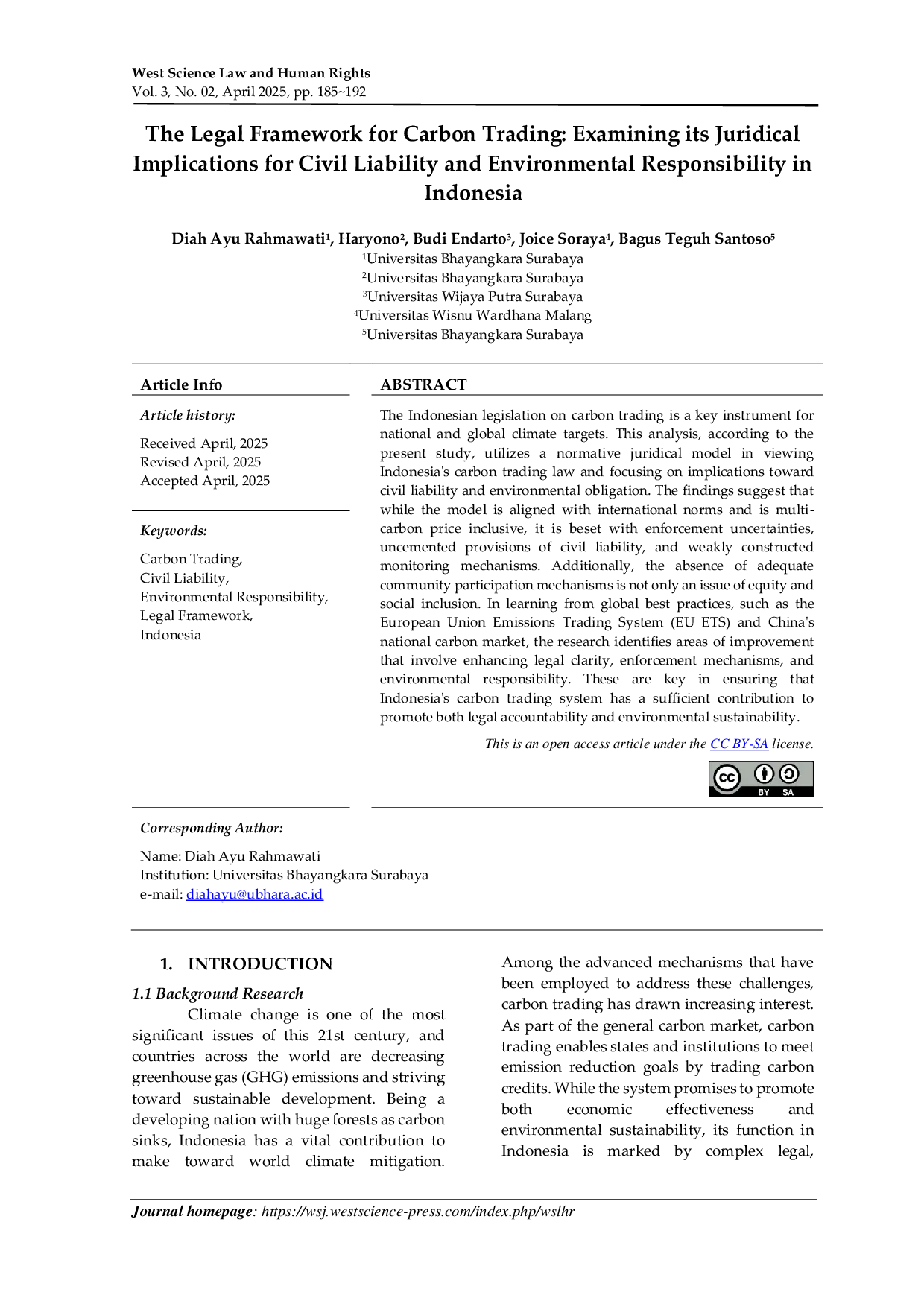
WESTSCIENCE PRESSWESTSCIENCE PRESS The Indonesian legislation on carbon trading is a key instrument for national and global climate targets. This analysis, according to the present study,The Indonesian legislation on carbon trading is a key instrument for national and global climate targets. This analysis, according to the present study,
Useful /

WESTSCIENCE PRESSWESTSCIENCE PRESS Data processing is done by descriptive analytical method. Land with HGB status can be upgraded to Property Rights by applying for an increase in rights.Data processing is done by descriptive analytical method. Land with HGB status can be upgraded to Property Rights by applying for an increase in rights.
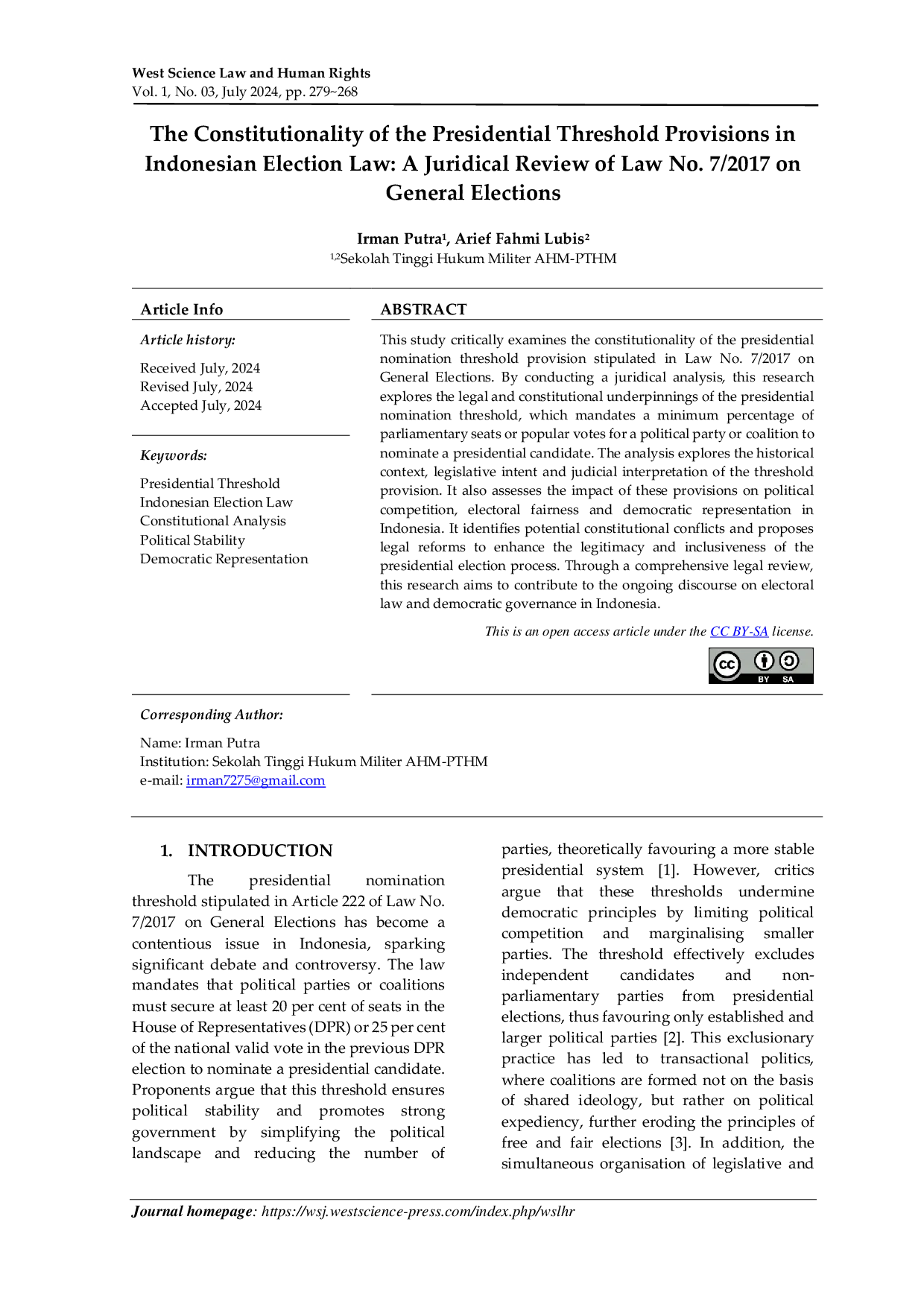
WESTSCIENCE PRESSWESTSCIENCE PRESS Penelitian ini mengidentifikasi potensi konflik konstitusional dan mengusulkan reformasi hukum untuk meningkatkan legitimasi dan inklusivitas proses pemilihanPenelitian ini mengidentifikasi potensi konflik konstitusional dan mengusulkan reformasi hukum untuk meningkatkan legitimasi dan inklusivitas proses pemilihan

WESTSCIENCE PRESSWESTSCIENCE PRESS Hasilnya menunjukkan kemajuan signifikan dalam tindakan legislatif, tetapi juga menekankan hambatan yang terus berlangsung dalam pelaksanaan, seperti ambiguitasHasilnya menunjukkan kemajuan signifikan dalam tindakan legislatif, tetapi juga menekankan hambatan yang terus berlangsung dalam pelaksanaan, seperti ambiguitas

UNNESUNNES Penelitian ini bertujuan untuk mengetahui hubungan antara komitmen organisasi dan Perilaku Kewarganegaraan Organisasional (OCB). Dengan menggunakan pendekatanPenelitian ini bertujuan untuk mengetahui hubungan antara komitmen organisasi dan Perilaku Kewarganegaraan Organisasional (OCB). Dengan menggunakan pendekatan