IAESCOREIAESCORE
International Journal of Electrical and Computer Engineering (IJECE)International Journal of Electrical and Computer Engineering (IJECE)The majority of insulation system failures in electrical grids are caused by partial discharge (PD) activity. Continuous PD activity gradually degrades the quality of insulation, potentially resulting in total breakdown. This study investigates PD activity in high-density polyethylene (HDPE) insulation, detected through the observation and measurement of PD charge using the CIGRE Method II electrode system. The objective is to analyze PD behavior in HDPE cable insulation containing cavity-type defects under alternating current (AC) and direct current (DC). The samples consist of three layers of HDPE sheets, each 1 mm thick, with an artificial circular cavity of 1 cm in diameter embedded in the middle layer. This configuration enables detailed analysis of insulation damage and degradation. The results show that HDPE performs better under DC voltage compared to AC. This is evidenced by the average PD inception voltage (Vin) under DC conditions reaching 15.5 kV, higher than the 11.8 kV observed under AC, as well as a significantly longer PD inception time (Tin) under DC conditions. Although the PD charge magnitude is nearly the same under both voltage types, the higher voltage required to trigger PD under DC indicates that HDPE exhibits superior insulation resistance to DC voltage.
This study concludes that HDPE exhibits superior performance under DC voltage compared to AC voltage in terms of partial discharge (PD) characteristics.Specifically, the PD inception voltage (Vin) is higher under DC conditions (15.5 kV) than under AC conditions (11.8 kV), and the PD inception time (Tin) is significantly longer under DC.These findings demonstrate that HDPE possesses greater insulation resistance to DC voltage, making it a suitable material for applications involving DC power transmission.
Further research should investigate the long-term effects of continuous PD activity on HDPE insulation under both AC and DC voltages, focusing on the degradation mechanisms and the correlation between PD characteristics and insulation lifespan. Additionally, exploring the influence of different cavity sizes and shapes on PD behavior in HDPE could provide valuable insights for optimizing insulation design and improving reliability. Finally, a comparative study of PD characteristics in HDPE with other commonly used polymer insulation materials, such as XLPE, under various operating conditions would help identify the most suitable materials for specific high-voltage applications and enhance the overall performance of electrical power systems. These investigations should consider the impact of temperature, humidity, and other environmental factors on PD activity to provide a comprehensive understanding of insulation degradation processes.
| File size | 726.29 KB |
| Pages | 9 |
| DMCA | Report |
Related /
UNIBAUNIBA Sampel dalam penelitian ini adalah pelajar kelas XII SMA Kristen Basic Batam Tahun 2023 sebanyak 57 orang. Pengambilan Sampel menggunakan Teknik totalSampel dalam penelitian ini adalah pelajar kelas XII SMA Kristen Basic Batam Tahun 2023 sebanyak 57 orang. Pengambilan Sampel menggunakan Teknik total
UNIBAUNIBA Kecelakaan lalu lintas adalah salah satu penyebab kematian utama di negara berkembang, dan insiden ini terus meningkat seiring dengan pertumbuhan populasiKecelakaan lalu lintas adalah salah satu penyebab kematian utama di negara berkembang, dan insiden ini terus meningkat seiring dengan pertumbuhan populasi
UNIBAUNIBA Populasi dalam penelitian ini adalah pasien yang datang ke poli bedah RSUD Raja Ahmad Tabib dari tahun 2019 ke tahun 2022 yang berjumlah 6. 549 pasien.Populasi dalam penelitian ini adalah pasien yang datang ke poli bedah RSUD Raja Ahmad Tabib dari tahun 2019 ke tahun 2022 yang berjumlah 6. 549 pasien.
UNIBAUNIBA Bayi usia 6-11 bulan memperoleh asupan gizi dari MP-ASI dan ASI. Tujuan penelitian ini adalah untuk mengetahui hubungan pemberian MP-ASI dengan statusBayi usia 6-11 bulan memperoleh asupan gizi dari MP-ASI dan ASI. Tujuan penelitian ini adalah untuk mengetahui hubungan pemberian MP-ASI dengan status
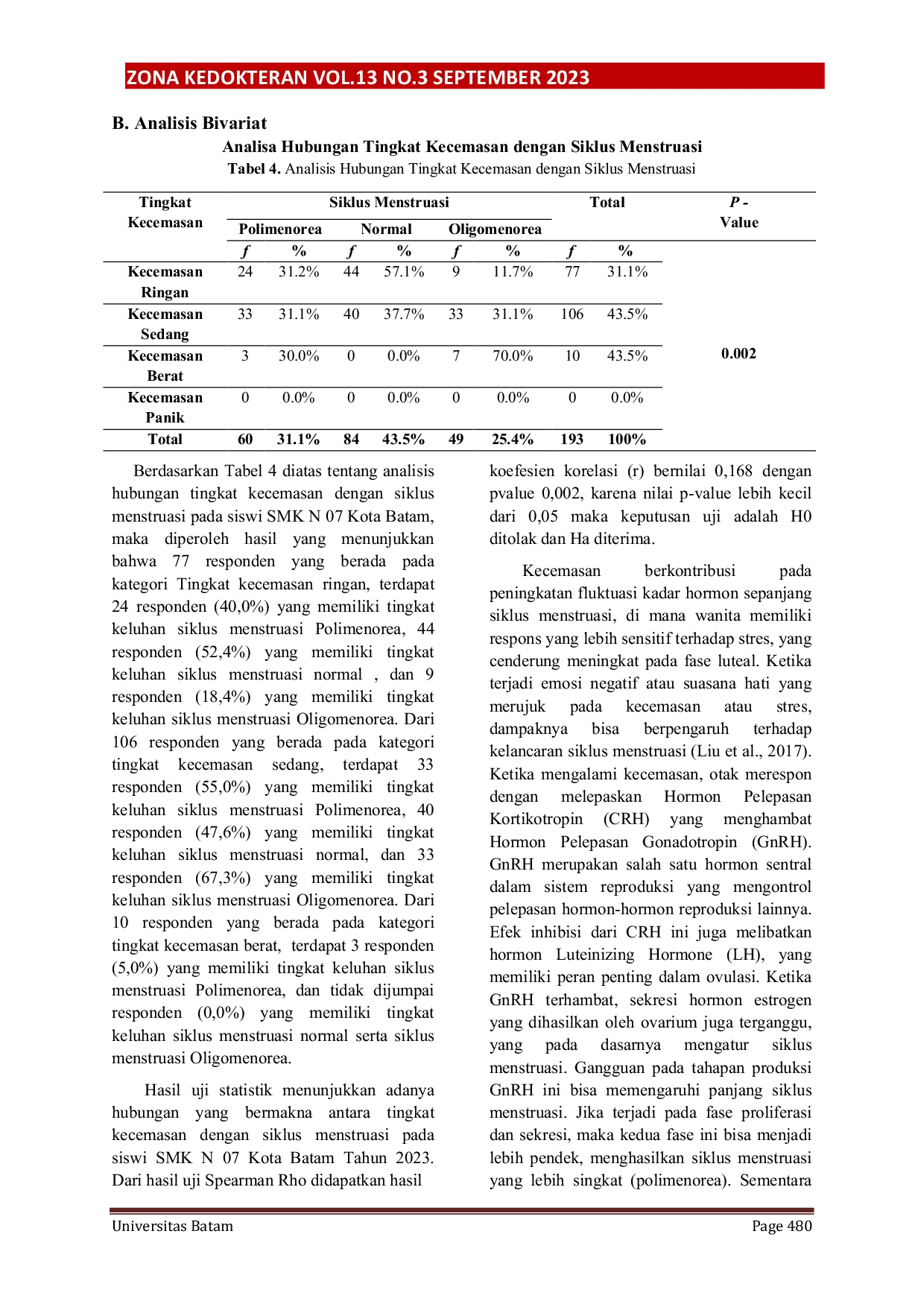
UNIBAUNIBA Kesimpulan: Berdasarkan hasil penelitian ini dapat disimpulkan adanya hubungan yang bermakna antara Tingkat Kecemasan dengan Siklus Menstruasi pada SiswiKesimpulan: Berdasarkan hasil penelitian ini dapat disimpulkan adanya hubungan yang bermakna antara Tingkat Kecemasan dengan Siklus Menstruasi pada Siswi
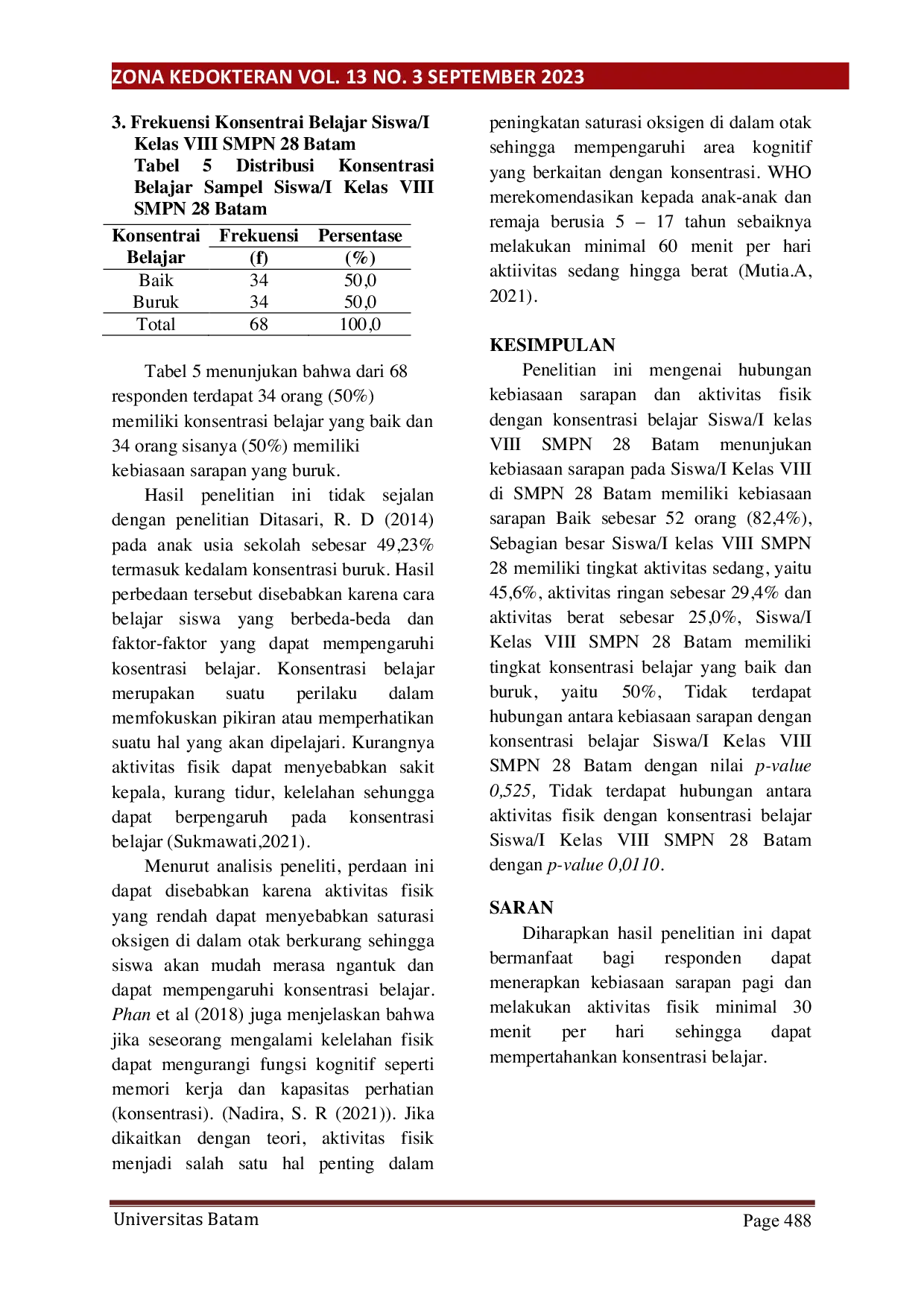
UNIBAUNIBA Konsentrasi belajar dipengaruhi oleh dua faktor, yaitu internal dan eksternal. Kebiasaan sarapan dan aktivitas fisik termasuk ke dalam faktor internalKonsentrasi belajar dipengaruhi oleh dua faktor, yaitu internal dan eksternal. Kebiasaan sarapan dan aktivitas fisik termasuk ke dalam faktor internal
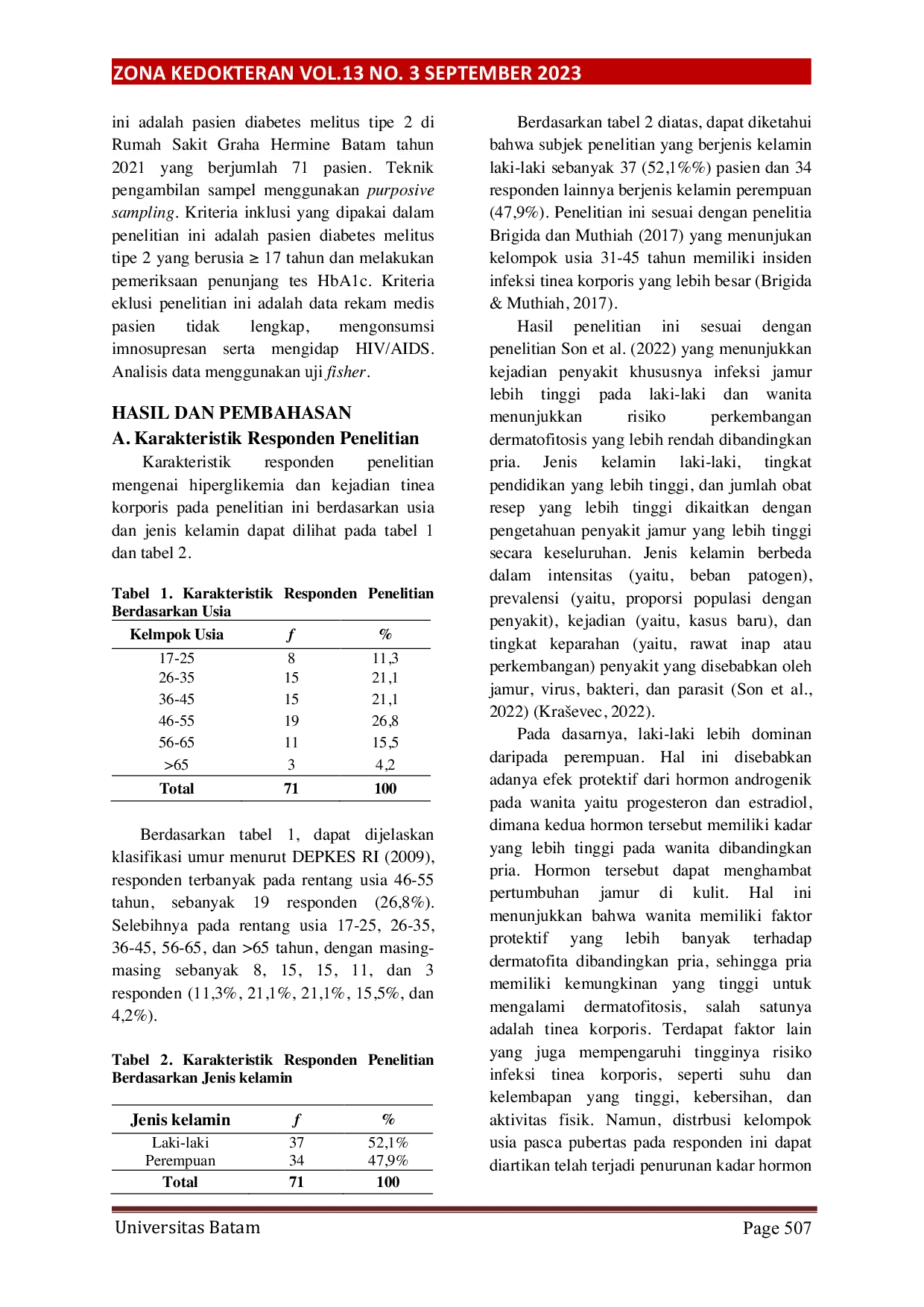
UNIBAUNIBA Analisis data dilakukan dengan uji statistik Fisher. Hasil: Rata-rata usia responden penelitian adalah pada kelompok 46-55 tahun dan berdasarkan jenisAnalisis data dilakukan dengan uji statistik Fisher. Hasil: Rata-rata usia responden penelitian adalah pada kelompok 46-55 tahun dan berdasarkan jenis
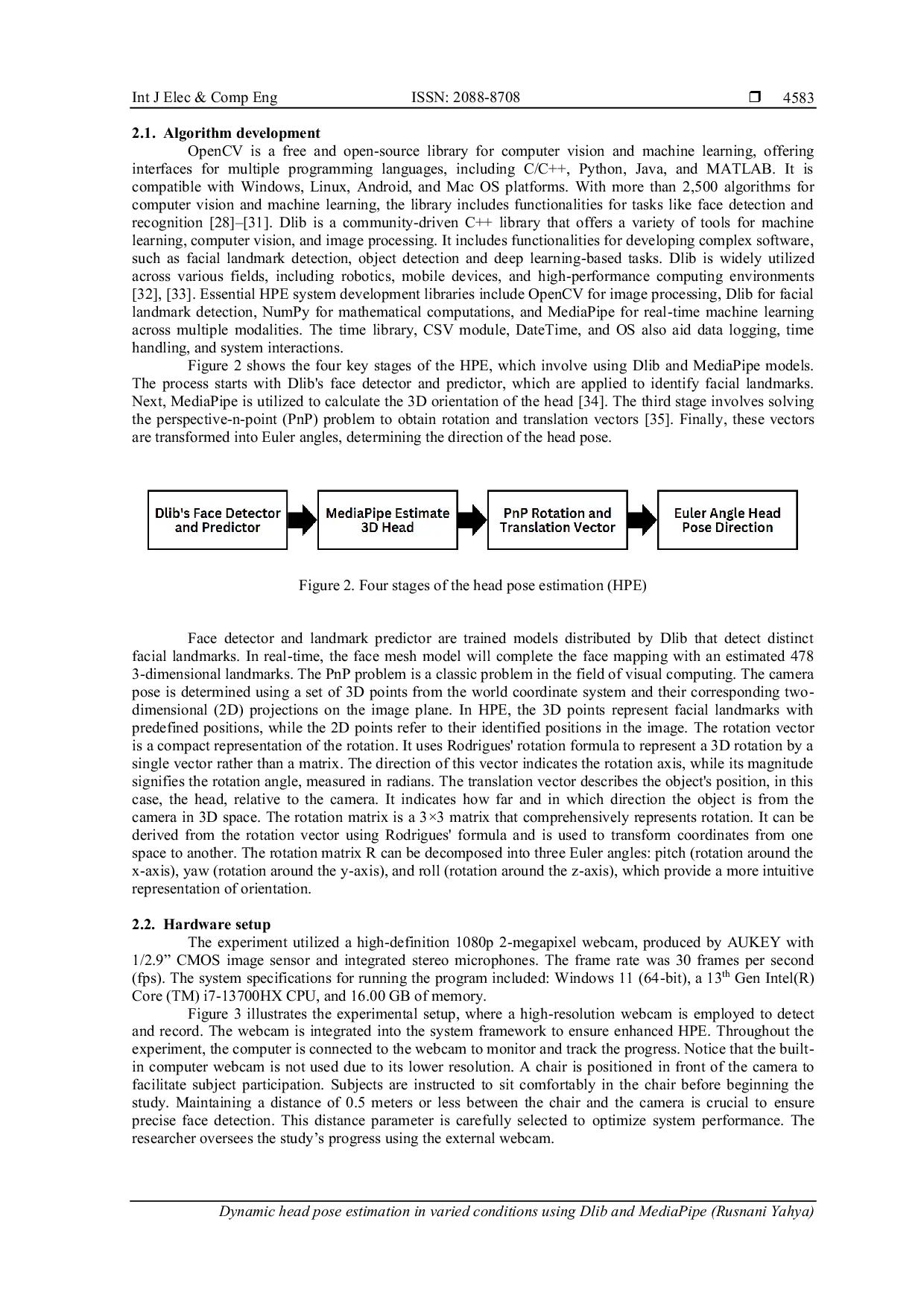
IAESCOREIAESCORE Temuan ini memiliki implikasi signifikan untuk interaksi manusia-komputer, teknologi bantu, serta pengaturan pendidikan atau terapi, dan menyarankan pengembanganTemuan ini memiliki implikasi signifikan untuk interaksi manusia-komputer, teknologi bantu, serta pengaturan pendidikan atau terapi, dan menyarankan pengembangan
Useful /
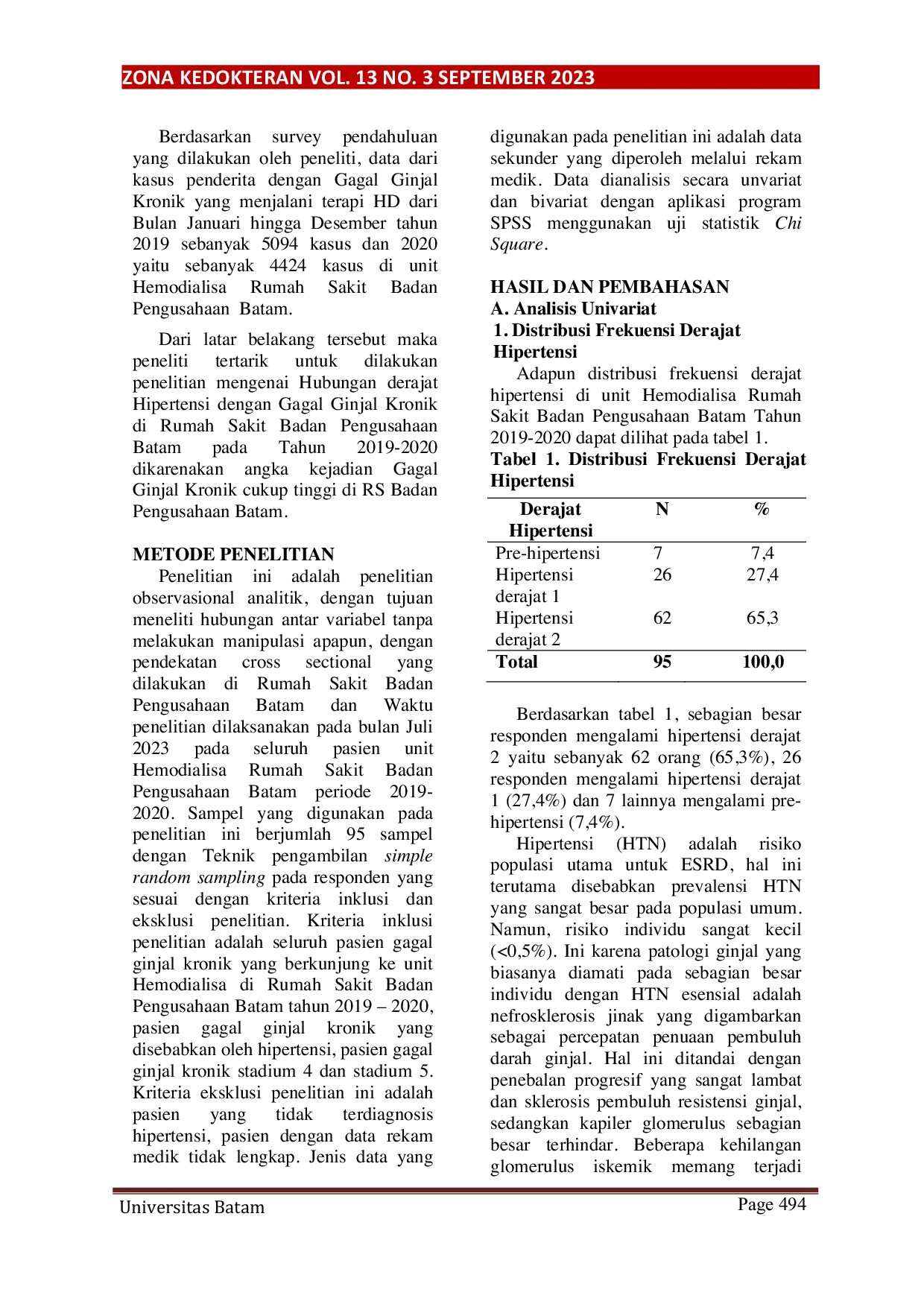
UNIBAUNIBA Faktor risiko gagal ginjal kronik dari hipertensi 3,2 kali lebih besar. Penelitian bertujuan untuk mengetahui hubungan derajat hipertensi dengan stadiumFaktor risiko gagal ginjal kronik dari hipertensi 3,2 kali lebih besar. Penelitian bertujuan untuk mengetahui hubungan derajat hipertensi dengan stadium

IAESCOREIAESCORE The simulation results generated through MATLAB programming demonstrate the UPQCs effectiveness in enhancing system performance. The findings reveal thatThe simulation results generated through MATLAB programming demonstrate the UPQCs effectiveness in enhancing system performance. The findings reveal that
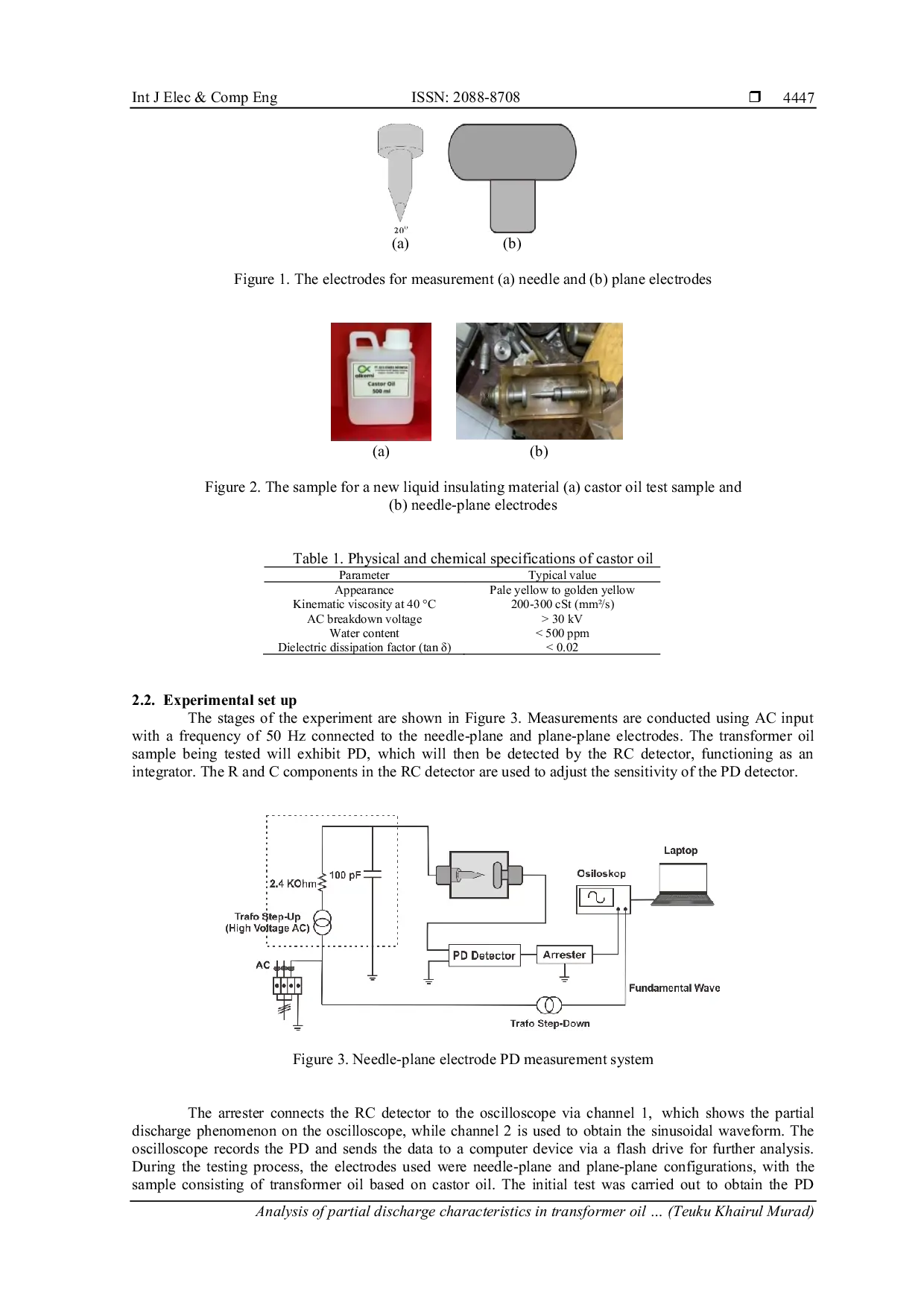
IAESCOREIAESCORE Meskipun banyak penelitian telah dilakukan mengenai PD pada isolasi cair, sebagian besar hanya berfokus pada karakterisasi PD dalam kondisi tertentu tanpaMeskipun banyak penelitian telah dilakukan mengenai PD pada isolasi cair, sebagian besar hanya berfokus pada karakterisasi PD dalam kondisi tertentu tanpa

LENTERADUALENTERADUA Analisis sentimen dengan metode NBC dapat digunakan untuk mengklasifikasi ujaran kebencian dalam tweet dengan hashtag pilpres 2019. Hasil akurasi terbaikAnalisis sentimen dengan metode NBC dapat digunakan untuk mengklasifikasi ujaran kebencian dalam tweet dengan hashtag pilpres 2019. Hasil akurasi terbaik