IJBLEIJBLE
International Journal of Business, Law, and EducationInternational Journal of Business, Law, and EducationFreedom of expression constitutes a constitutionally protected right under the 1945 Constitution of the Republic of Indonesia. Nevertheless, its implementation continues to encounter significant challenges, particularly due to the existence of vague criminal provisions that generate legal uncertainty and create the risk of criminalizing legitimate expressions. This issue became central to the judicial review of Articles 14 and 15 of Law Number 1 of 1946 concerning Criminal Law Regulations, culminating in Constitutional Court Decision Number 78/PUU-XXI/2023. This study aims to examine the Constitutional Courts legal reasoning and to analyze the juridical implications of the decision for the protection of freedom of expression in Indonesia. Employing normative legal research, this study applies statutory, conceptual, and case approaches. The analysis is conducted qualitatively on primary, secondary, and tertiary legal materials. The findings indicate that the Court emphasized that any restriction on freedom of expression must meet the requirements of clarity, precision, and proportionality. The Court held that ambiguous criminal norms violate the principles of legal certainty (lex certa) and constitutional protection of rights. Consequently, the Court declared the contested provisions unconstitutional and legally non-binding. The decision establishes a constitutional benchmark for assessing other restrictive criminal norms, including those contained in the new Criminal Code and the amended Electronic Information and Transactions (EIT) Law. Thus, the ruling reinforces constitutional safeguards for freedom of expression and provides normative guidance for legislators and law enforcement authorities in formulating and implementing criminal law policies.
Constitutional Court Decision Number 78/PUU-XXI/2023 affirms that criminal norms restricting freedom of expression must not be vague, upholding the principles of legal certainty and constitutional guarantees.The decision establishes constitutional standards for limiting freedom of expression, emphasizing legality, legitimate purpose, necessity, and proportionality.The ruling has significant juridical implications for criminal law enforcement, requiring the discontinuation of prosecutions based on the annulled provisions and potentially enabling restorative measures.
Penelitian lebih lanjut perlu dilakukan untuk mengkaji efektivitas implementasi putusan Mahkamah Konstitusi dalam praktik penegakan hukum, khususnya terkait dengan interpretasi pasal-pasal karet dalam KUHP baru dan UU ITE yang direvisi. Selain itu, studi komparatif dapat dilakukan dengan negara-negara lain yang memiliki sistem hukum serupa untuk mengidentifikasi praktik terbaik dalam melindungi kebebasan berekspresi tanpa mengorbankan ketertiban umum. Terakhir, penelitian perlu dilakukan untuk mengeksplorasi dampak putusan ini terhadap partisipasi publik dalam diskusi politik dan potensi penurunan efek mendinginkan (chilling effect) terhadap aktivisme sipil dan jurnalisme investigasi, dengan mempertimbangkan dinamika media sosial dan platform digital lainnya.
| File size | 340.15 KB |
| Pages | 12 |
| DMCA | Report |
Related /

UNISMUHUNISMUH Penerapan sistem e-auction di KPKNL Madiun meningkatkan akuntabilitas lelang BMN melalui transparansi informasi, efisiensi proses, dan digital traceability.Penerapan sistem e-auction di KPKNL Madiun meningkatkan akuntabilitas lelang BMN melalui transparansi informasi, efisiensi proses, dan digital traceability.

POLIMEDIAPOLIMEDIA Intinya penelitian ini akan melihat bagaimana peranan Komisi Penyiaran Indonesia dalam proses pengawasan siaran di Indonesia. Untuk mendapatkan informasiIntinya penelitian ini akan melihat bagaimana peranan Komisi Penyiaran Indonesia dalam proses pengawasan siaran di Indonesia. Untuk mendapatkan informasi

UPN VeteranUPN Veteran Laboratorium Manajemen Industri dan Statistik (IMSL) di UPN “Veteran Jawa Timur tidak memiliki fasilitas e‑learning, sehingga proses praktikum menjadiLaboratorium Manajemen Industri dan Statistik (IMSL) di UPN “Veteran Jawa Timur tidak memiliki fasilitas e‑learning, sehingga proses praktikum menjadi

STKIP PESSELSTKIP PESSEL Dalam hal ini penulis menyoroti pentingnya evaluasi berkelanjutan dan penyempurnaan kebijakan agar pelaksanaannya tidak menghambat hak masyarakat untukDalam hal ini penulis menyoroti pentingnya evaluasi berkelanjutan dan penyempurnaan kebijakan agar pelaksanaannya tidak menghambat hak masyarakat untuk

OJSOJS Rogers (1954), kreativitas akan berkembang optimal apabila individu merasa diterima, dihargai, dan bebas mengekspresikan diri tanpa tekanan. Metode yangRogers (1954), kreativitas akan berkembang optimal apabila individu merasa diterima, dihargai, dan bebas mengekspresikan diri tanpa tekanan. Metode yang

STKIP PESSELSTKIP PESSEL Teknologi digital berpotensi besar untuk meningkatkan kualitas kepemimpinan nasional jika diterapkan secara tepat. Pemerintah perlu memastikan transformasiTeknologi digital berpotensi besar untuk meningkatkan kualitas kepemimpinan nasional jika diterapkan secara tepat. Pemerintah perlu memastikan transformasi

STEKOMSTEKOM Penelitian ini bertujuan untuk merancang antarmuka pengguna untuk aplikasi penjadwalan media sosial berbasis web menggunakan metode Rapid Application DevelopmentPenelitian ini bertujuan untuk merancang antarmuka pengguna untuk aplikasi penjadwalan media sosial berbasis web menggunakan metode Rapid Application Development

STAIMUTTAQIENSTAIMUTTAQIEN Penelitian ini menggunakan metode kualitatif dengan pendekatan studi literatur untuk mengkaji implikasi nilai-nilai Islam dalam menghadapi tantangan teknologiPenelitian ini menggunakan metode kualitatif dengan pendekatan studi literatur untuk mengkaji implikasi nilai-nilai Islam dalam menghadapi tantangan teknologi
Useful /

STIFARSTIFAR Penggunaan cefazolin secara intravena pada 72 pasien dianggap tepat dan sesuai dengan regulasi Kemenkes 2021.metode ATC/DDD menunjukkan cefazolin memilikiPenggunaan cefazolin secara intravena pada 72 pasien dianggap tepat dan sesuai dengan regulasi Kemenkes 2021.metode ATC/DDD menunjukkan cefazolin memiliki
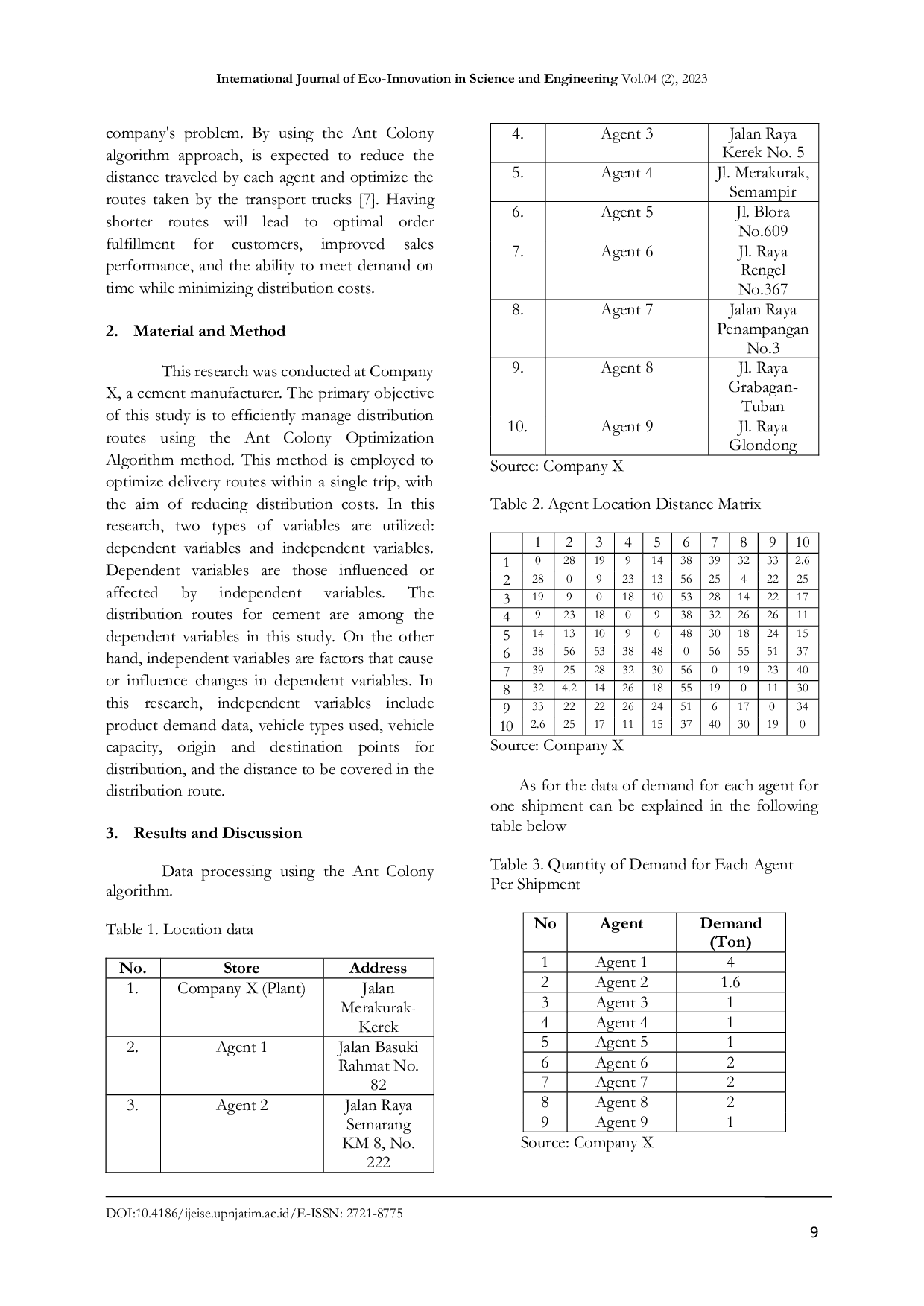
UPN VeteranUPN Veteran Perusahaan disarankan untuk menerapkan hasil pencarian rute yang diusulkan menggunakan algoritma Ant Colony Optimization berdasarkan kriteria jarak minimumPerusahaan disarankan untuk menerapkan hasil pencarian rute yang diusulkan menggunakan algoritma Ant Colony Optimization berdasarkan kriteria jarak minimum

POLTEKKES JAKARTA 3POLTEKKES JAKARTA 3 Kejang demam merupakan kondisi yang umum terjadi pada anak usia 3-5 tahun. Peningkatan suhu tubuh secara mendadak menjadi salah satu penyebab kejang. PeranKejang demam merupakan kondisi yang umum terjadi pada anak usia 3-5 tahun. Peningkatan suhu tubuh secara mendadak menjadi salah satu penyebab kejang. Peran

STKIP PESSELSTKIP PESSEL Teknik pengumpulan data dilakukan melalui wawancara mendalam, observasi partisipatif, dan studi dokumentasi terhadap kepala sekolah, guru, dan komite sekolah.Teknik pengumpulan data dilakukan melalui wawancara mendalam, observasi partisipatif, dan studi dokumentasi terhadap kepala sekolah, guru, dan komite sekolah.