UNIRA MALANGUNIRA MALANG
AL-WIJDÃN Journal of Islamic Education StudiesAL-WIJDÃN Journal of Islamic Education StudiesTeachers lack of understanding of the HOTS assessment concept and how to integrate it into learning assessment is a crucial problem that needs to be resolved. This research reveals the HOTS-based PAI learning assessment implementation at SMK Muhammadiyah 5 Jember. The aim is to explore and evaluate the effectiveness of using HOTS in assessing Islamic religious education (PAI) learning at this institution. Using a qualitative phenomenology-type approach involving observation, interviews, and document study. The research results show that 1). The formulation of learning objectives uses learning achievement (CP) references developed in learning objectives with high-level thinking indicators. 2). Assessment instruments are carried out by student competencies. 3). Use of a problem-based learning model (Problem-Based Learning) which was developed with several types of innovative learning strategies. 4) Creative tasks can improve high-level thinking skills as demonstrated by the behavior of appreciating explanations, being able to interpret actual problems, and generating new ideas by thinking critically and creatively.
The research demonstrates that PAI teachers at SMK Muhammadiyah 5 Jember are implementing HOTS-based assessments, integrating higher-order thinking skills into learning objectives and utilizing diverse assessment techniques.The implementation of problem-based learning and creative assignments enhances students critical thinking and problem-solving abilities.This approach fosters student independence and prepares them for real-world challenges, contributing to the development of 21st-century skills.
Further research should investigate the long-term impact of HOTS-based assessments on students critical thinking skills and their application in real-life situations beyond the classroom. Additionally, studies could explore the effectiveness of different types of creative assignments in fostering specific higher-order thinking skills, such as analysis, evaluation, and creation. Finally, research is needed to develop and evaluate professional development programs for PAI teachers to enhance their understanding and implementation of HOTS-based assessment strategies, ensuring consistent and effective application across diverse learning contexts and student needs. These investigations will contribute to a more comprehensive understanding of how to cultivate critical thinking skills in Islamic religious education and prepare students for success in a rapidly changing world.
| File size | 942.87 KB |
| Pages | 20 |
| DMCA | Report |
Related /
MAHESA INSTITUTEMAHESA INSTITUTE Pada saat yang sama, perluasan literasi dasar yang dihasilkan melalui Volksschool memperluas akses ke teks administratif dan bahan bacaan modern, sehinggaPada saat yang sama, perluasan literasi dasar yang dihasilkan melalui Volksschool memperluas akses ke teks administratif dan bahan bacaan modern, sehingga

UNZAHUNZAH Setelah mendapatkan gambaran ini, môdel pembelajaran yang menghasilkan sikap disiplin siswa diungkapkan. Pembelajaran yang memiliki dampak terhadap disiplinSetelah mendapatkan gambaran ini, môdel pembelajaran yang menghasilkan sikap disiplin siswa diungkapkan. Pembelajaran yang memiliki dampak terhadap disiplin

ACADEMICAREVIEWACADEMICAREVIEW To analyze the improvement of student achievement at SMP Negeri 1 Rantau Selamat. The research method used is qualitative research of the field researchTo analyze the improvement of student achievement at SMP Negeri 1 Rantau Selamat. The research method used is qualitative research of the field research

STAIMTASTAIMTA Pendekatan ini juga mencerminkan penerapan teori pendidikan seperti konstruktivisme, pembelajaran pengalaman, dan behaviorisme secara kontekstual. SecaraPendekatan ini juga mencerminkan penerapan teori pendidikan seperti konstruktivisme, pembelajaran pengalaman, dan behaviorisme secara kontekstual. Secara

ACADEMICAREVIEWACADEMICAREVIEW Kompetensi pedagogis guru PAI di SMA Negeri 1 dan 2 Rantau Selamat terbukti efektif dalam meningkatkan partisipasi dan pemahaman siswa melalui perencanaanKompetensi pedagogis guru PAI di SMA Negeri 1 dan 2 Rantau Selamat terbukti efektif dalam meningkatkan partisipasi dan pemahaman siswa melalui perencanaan
UMSUUMSU Tujuan studi ini adalah untuk menganalisis implementasi strategi pembelajaran aktif serta mengidentifikasi hambatan-hambatan yang muncul dalam penerapannya.Tujuan studi ini adalah untuk menganalisis implementasi strategi pembelajaran aktif serta mengidentifikasi hambatan-hambatan yang muncul dalam penerapannya.
UMSUUMSU Sedangkan Pendekatan dalam penelitian menggunakan pendekatan kualitatif. Adapun subjek dalam penelitian ini guru Pendidikan Agama Islam dan peserta didikSedangkan Pendekatan dalam penelitian menggunakan pendekatan kualitatif. Adapun subjek dalam penelitian ini guru Pendidikan Agama Islam dan peserta didik
UNIRA MALANGUNIRA MALANG Kedua: relevansi konsep kesetaraan gender dalam fikih perempuan menurut Husein Muhammad dengan tujuan pendidikan agama Islam ialah terdapat (a) dimensiKedua: relevansi konsep kesetaraan gender dalam fikih perempuan menurut Husein Muhammad dengan tujuan pendidikan agama Islam ialah terdapat (a) dimensi
Useful /
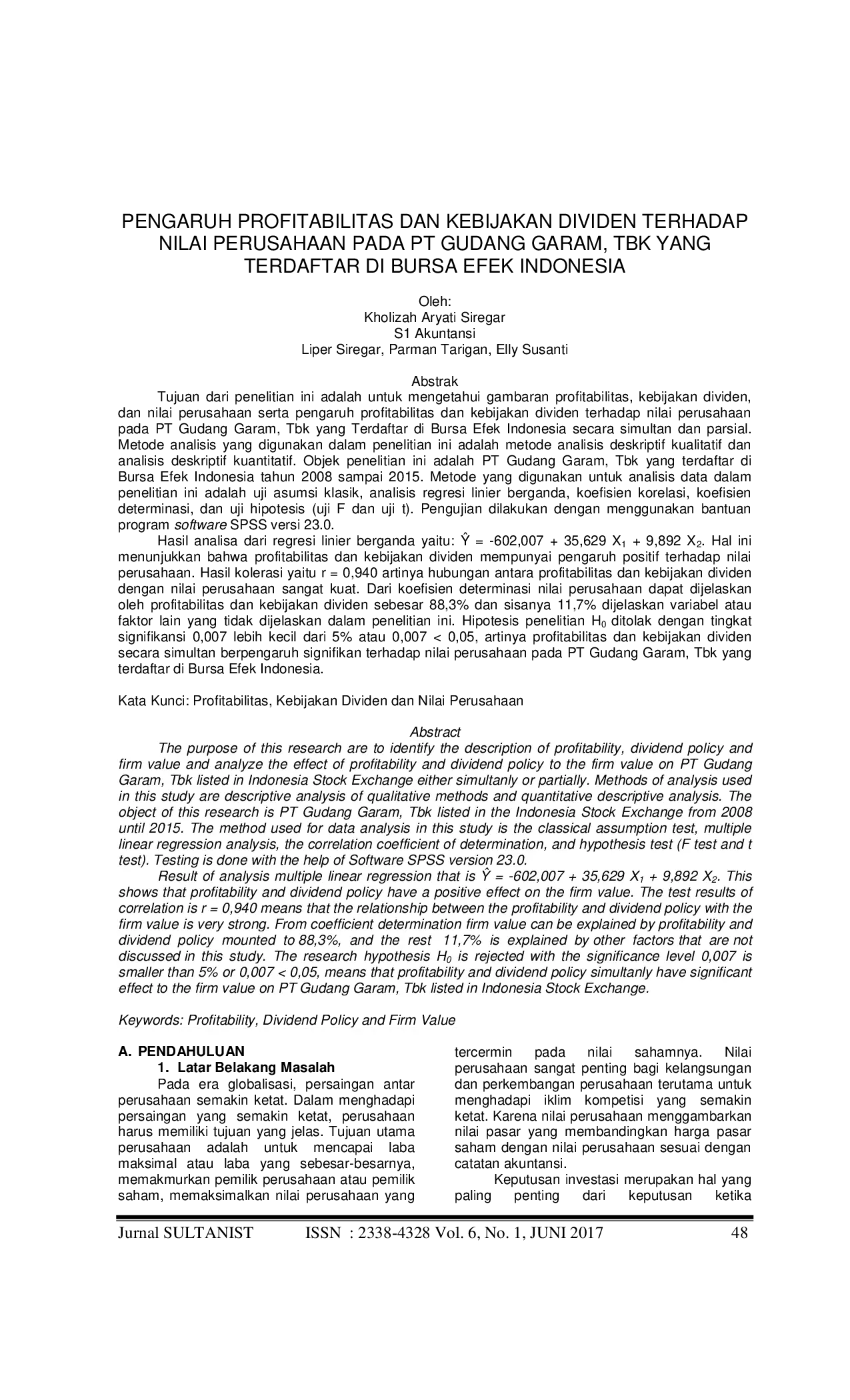
SULTANISTSULTANIST Tujuan dari penelitian ini adalah untuk mengetahui gambaran profitabilitas, kebijakan dividen, dan nilai perusahaan serta pengaruh profitabilitas dan kebijakanTujuan dari penelitian ini adalah untuk mengetahui gambaran profitabilitas, kebijakan dividen, dan nilai perusahaan serta pengaruh profitabilitas dan kebijakan

UNZAHUNZAH Jenis penelitian ini adalah penelitian kualitatif yang bersumber dari teori yang ada dan jurnal penelitian sebelumnya yang relevan dengan variabel dalamJenis penelitian ini adalah penelitian kualitatif yang bersumber dari teori yang ada dan jurnal penelitian sebelumnya yang relevan dengan variabel dalam

UNZAHUNZAH Manajemen humas muncul sebagai solusi menghadapi krisis pada 1906 melalui pendekatan Public Relations. Ivy Lee dianggap sebagai pelopor humas modern. ManajemenManajemen humas muncul sebagai solusi menghadapi krisis pada 1906 melalui pendekatan Public Relations. Ivy Lee dianggap sebagai pelopor humas modern. Manajemen
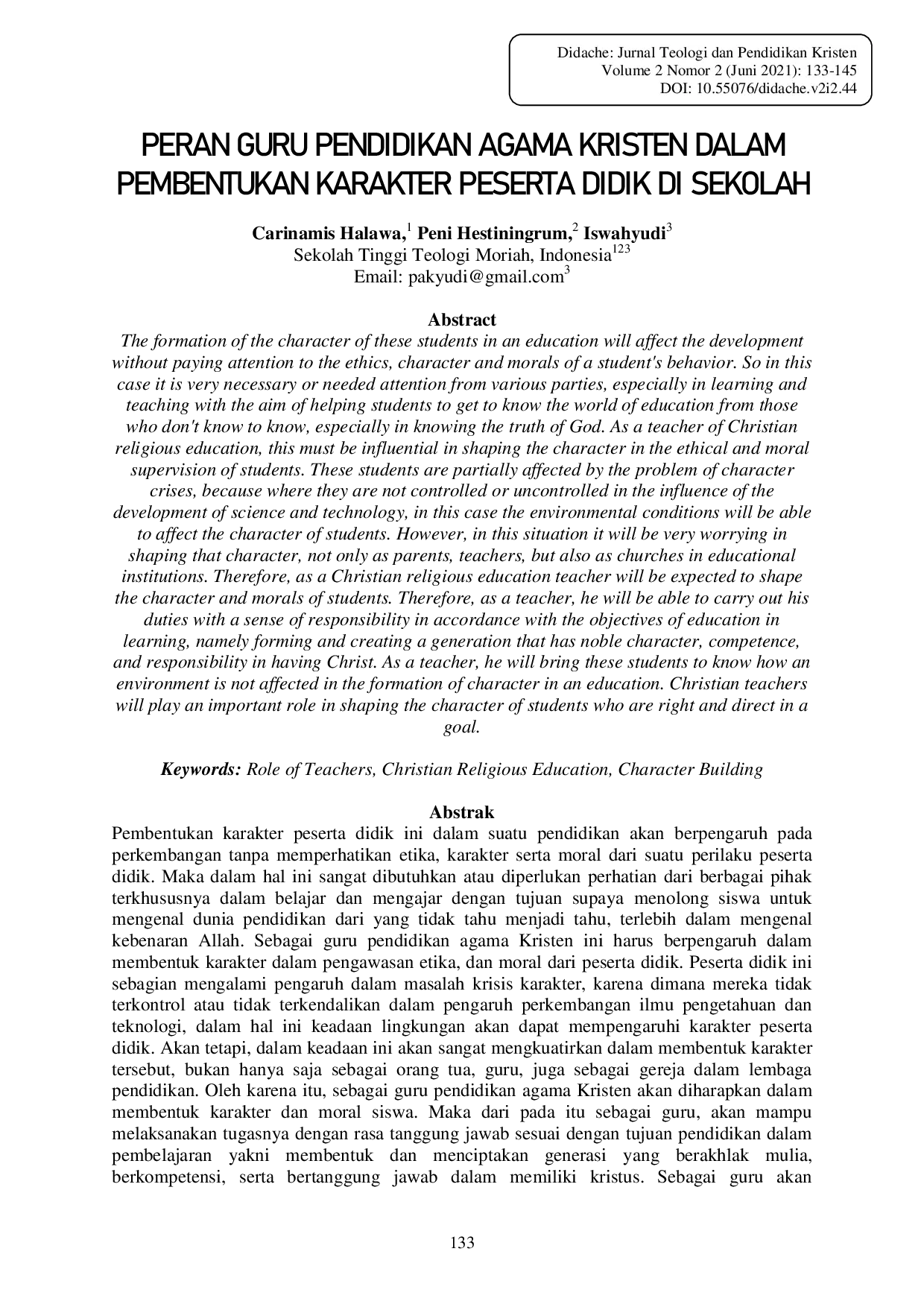
MORIAHMORIAH Peran guru pendidikan agama Kristen membentuk karakter peserta didik yang positif lewat karakter religius, jujur, toleransi, disiplin, cinta tanah air,Peran guru pendidikan agama Kristen membentuk karakter peserta didik yang positif lewat karakter religius, jujur, toleransi, disiplin, cinta tanah air,