ERAPUBLIKASIERAPUBLIKASI
Legtimacy: Journal Of Law and Islamic LawLegtimacy: Journal Of Law and Islamic LawThe contemporary rise of intentional childfree unions has sparked scholarly debate on the compatibility of spouse-driven reproductive decisions with Islamic legal objectives. This study examines the phenomenon of childfree marriage through the theoretical lens of Maqāṣid al-Sharīʿah as articulated by al-Ṣāṭibī, focusing on the protection of progeny (ḥifẓ al-nasl) among the five foundational objectives. Employing a qualitative literature review of Indonesian and international sources, this article maps the socio-cultural factors economic considerations, career priorities, health constraints, and ethical concerns that motivate couples to forgo parenthood. It then assesses how these motivations align or conflict with the sharīʿahs hierarchical categories of necessities (darūriyyāt), needs (ḥājiyyāt), and refinements (taḥsīniyyāt). A critical analysis of classical and contemporary Islamic juridical opinions on contraception, azl (coitus interruptus), and permanent sterilization elucidates the juristic reasoning that permits or prohibits reproductive control measures. The study further explores Fatwa decisions by the Indonesian Ulema Council (MUI) from 1979 to 2012, highlighting shifts in permissibility under exigent circumstances. Findings reveal that while temporary child spacing aligns with secondary objectives (ḥājiyyāt) when safeguarding maternal health, permanent childfree choices conflict with primary objectives (darūriyyāt) unless justified by compelling necessity. The article concludes by proposing a nuanced legal framework that upholds spousal autonomy and welfare while preserving the maqāṣids commitment to lineage continuity. Recommendations call for dynamic fiqh responses that balance individual rights with communal interests in sustaining Muslim ummah growth.
This study confirms the increasing trend of childfree lifestyles in Indonesia, driven by socio-economic shifts and global discourse.From the perspective of Maqāṣid al-Sharīʿah, permanent childfree status, particularly through sterilization, deviates from the objective of preserving progeny and is generally discouraged, while delaying childbirth for medical reasons is permissible.The study highlights the need for religious institutions and policymakers to strengthen guidance on Islamic family principles, emphasizing the balance between reproductive rights and responsibilities.
Further research should explore the nuanced motivations behind the childfree choice among Indonesian couples through field studies and in-depth interviews, providing empirical data to inform policy. Religious institutions should develop and disseminate comprehensive guidance on Islamic family planning, integrating the principles of Maqāṣid al-Sharīʿah to address contemporary reproductive challenges. Policymakers should prioritize the creation of supportive family policies, including affordable childcare, flexible work arrangements, and financial assistance, to empower couples to make informed reproductive decisions aligned with their values and circumstances, while also considering the long-term implications for population growth and societal well-being. These initiatives should aim to foster a balanced approach that respects individual autonomy, upholds Islamic principles, and promotes the sustainability of the Muslim community.
- Analisis Fenomena Childfree di Era Gen Z terhadap Syariat dan Realitas Modern | Karakter : Jurnal Riset... ejournal.aripafi.or.id/index.php/Karakter/article/view/526Analisis Fenomena Childfree di Era Gen Z terhadap Syariat dan Realitas Modern Karakter Jurnal Riset ejournal aripafi index php Karakter article view 526
- Mandatory Wills for Adultery Children, Analysis of the Compilation of Islamic Law from the Perspective... najahaofficial.id/najahajournal/index.php/IJLS/article/view/4Mandatory Wills for Adultery Children Analysis of the Compilation of Islamic Law from the Perspective najahaofficial najahajournal index php IJLS article view 4
- Measuring attitudes towards voluntary childlessness: Indicators in European comparative surveys | PLOS... journals.plos.org/plosone/article?id=10.1371/journal.pone.0319081Measuring attitudes towards voluntary childlessness Indicators in European comparative surveys PLOS journals plos plosone article id 10 1371 journal pone 0319081
- Understanding The Rise of Childfree Marriage: Avoiding Toxic Family, Being Happy and Well Without Children... doi.org/10.29240/jhi.v10i1.9984Understanding The Rise of Childfree Marriage Avoiding Toxic Family Being Happy and Well Without Children doi 10 29240 jhi v10i1 9984
| File size | 482.96 KB |
| Pages | 11 |
| DMCA | Report |
Related /

DOKICTIDOKICTI Selain itu, praktik menyimpang daring memiliki potensi yang signifikan untuk terjadi karena ambigu identitas dan absennya batas geografis yang jelas, yangSelain itu, praktik menyimpang daring memiliki potensi yang signifikan untuk terjadi karena ambigu identitas dan absennya batas geografis yang jelas, yang
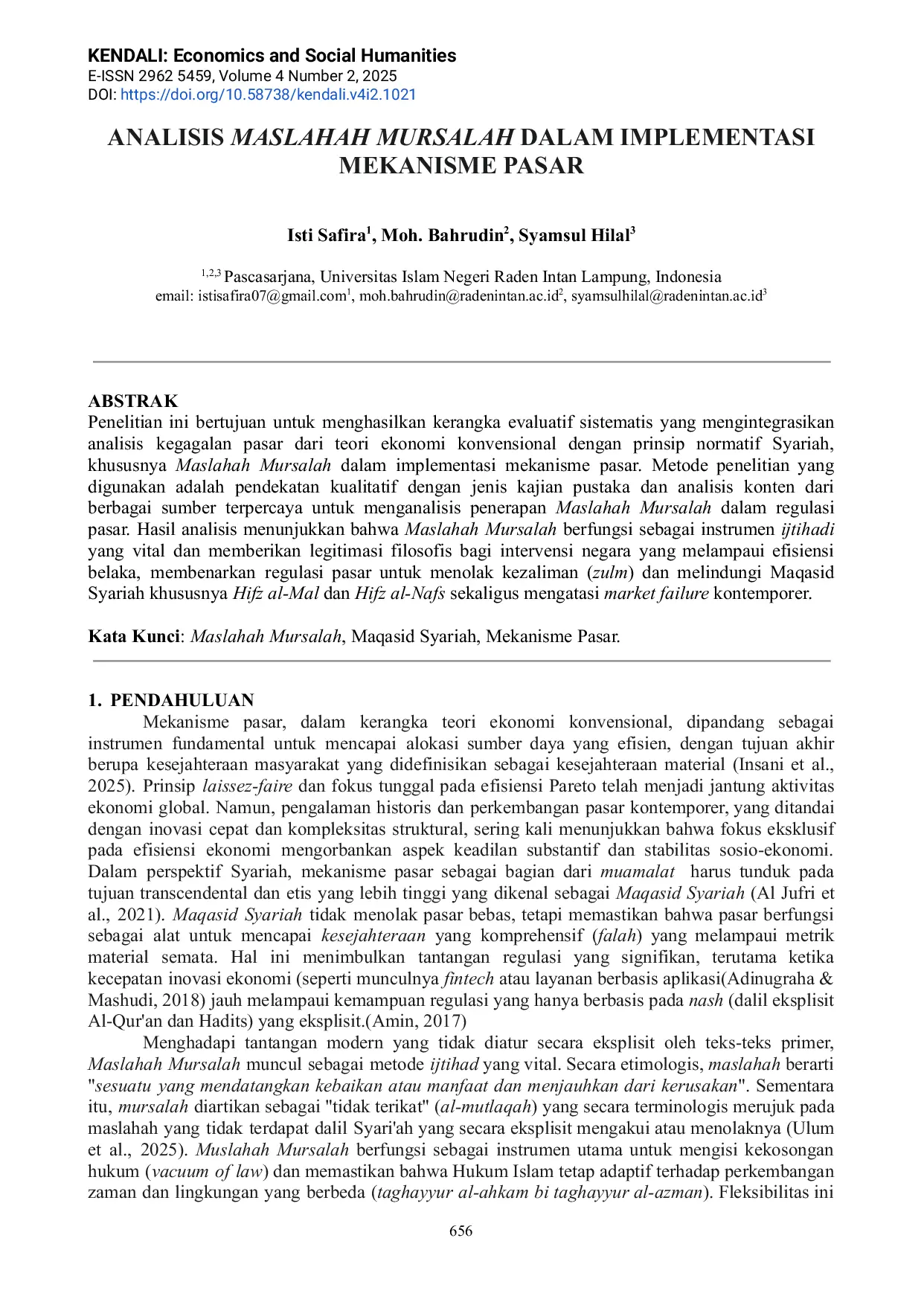
ASIANPUBLISHERASIANPUBLISHER Prinsip ini memberikan legitimasi Syariah bagi intervensi negara dalam mencegah kezaliman ekonomi seperti monopoli dan penimbunan, serta melindungi MaqasidPrinsip ini memberikan legitimasi Syariah bagi intervensi negara dalam mencegah kezaliman ekonomi seperti monopoli dan penimbunan, serta melindungi Maqasid

UM SURABAYAUM SURABAYA ketidakterpenuhinya hal‑hal tersebut mendorong istri memilih perceraian. Dalam kerangka maqasid, perceraian dapat menjadi instrumen penyelamatan diriketidakterpenuhinya hal‑hal tersebut mendorong istri memilih perceraian. Dalam kerangka maqasid, perceraian dapat menjadi instrumen penyelamatan diri

IAIN CURUPIAIN CURUP Secara praktis, penelitian ini menekankan kebutuhan mendesak untuk strategi hukum adaptif, seperti integrasi inovatif maslahah mursalah (kepentingan umumSecara praktis, penelitian ini menekankan kebutuhan mendesak untuk strategi hukum adaptif, seperti integrasi inovatif maslahah mursalah (kepentingan umum

IUQIBOGORIUQIBOGOR Namun, masih terdapat tantangan seperti pengelolaan limbah yang belum optimal dan kerentanan ekosistem akibat aktivitas wisata. CBT juga memperkuat identitasNamun, masih terdapat tantangan seperti pengelolaan limbah yang belum optimal dan kerentanan ekosistem akibat aktivitas wisata. CBT juga memperkuat identitas
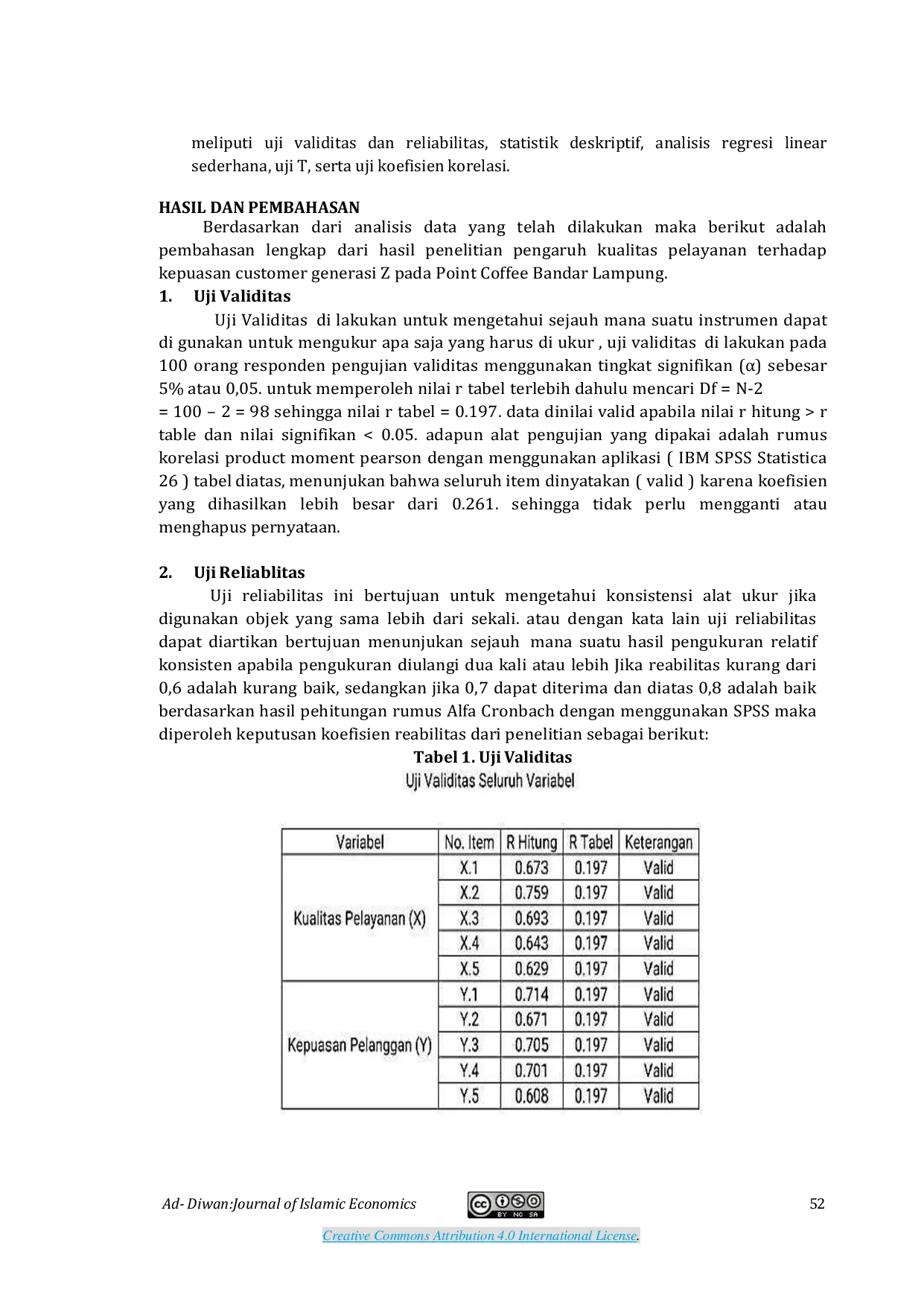
IUQIBOGORIUQIBOGOR Kontribusi kualitas pelayanan terhadap kepuasan pelanggan mencapai 48,3%, sedangkan sisanya dipengaruhi oleh faktor lain yang tidak diteliti dalam penelitianKontribusi kualitas pelayanan terhadap kepuasan pelanggan mencapai 48,3%, sedangkan sisanya dipengaruhi oleh faktor lain yang tidak diteliti dalam penelitian

IUQIBOGORIUQIBOGOR Metode penelitian ini menggunakan pendekatan deskriptif dengan metode kualitatif karena memungkinkan peneliti menggali informasi secara mendalam tentangMetode penelitian ini menggunakan pendekatan deskriptif dengan metode kualitatif karena memungkinkan peneliti menggali informasi secara mendalam tentang

IUQIBOGORIUQIBOGOR Keberhasilan tersebut dipengaruhi oleh kesiapan infrastruktur teknologi, literasi digital nasabah, keamanan transaksi, serta dukungan manajerial yang selarasKeberhasilan tersebut dipengaruhi oleh kesiapan infrastruktur teknologi, literasi digital nasabah, keamanan transaksi, serta dukungan manajerial yang selaras
Useful /

PELITABANGSAPELITABANGSA Hasil penelitian menunjukkan bahwa cara guru berkomunikasi secara signifikan mempengaruhi peningkatan keterampilan sosial siswa, seperti bekerja sama,Hasil penelitian menunjukkan bahwa cara guru berkomunikasi secara signifikan mempengaruhi peningkatan keterampilan sosial siswa, seperti bekerja sama,
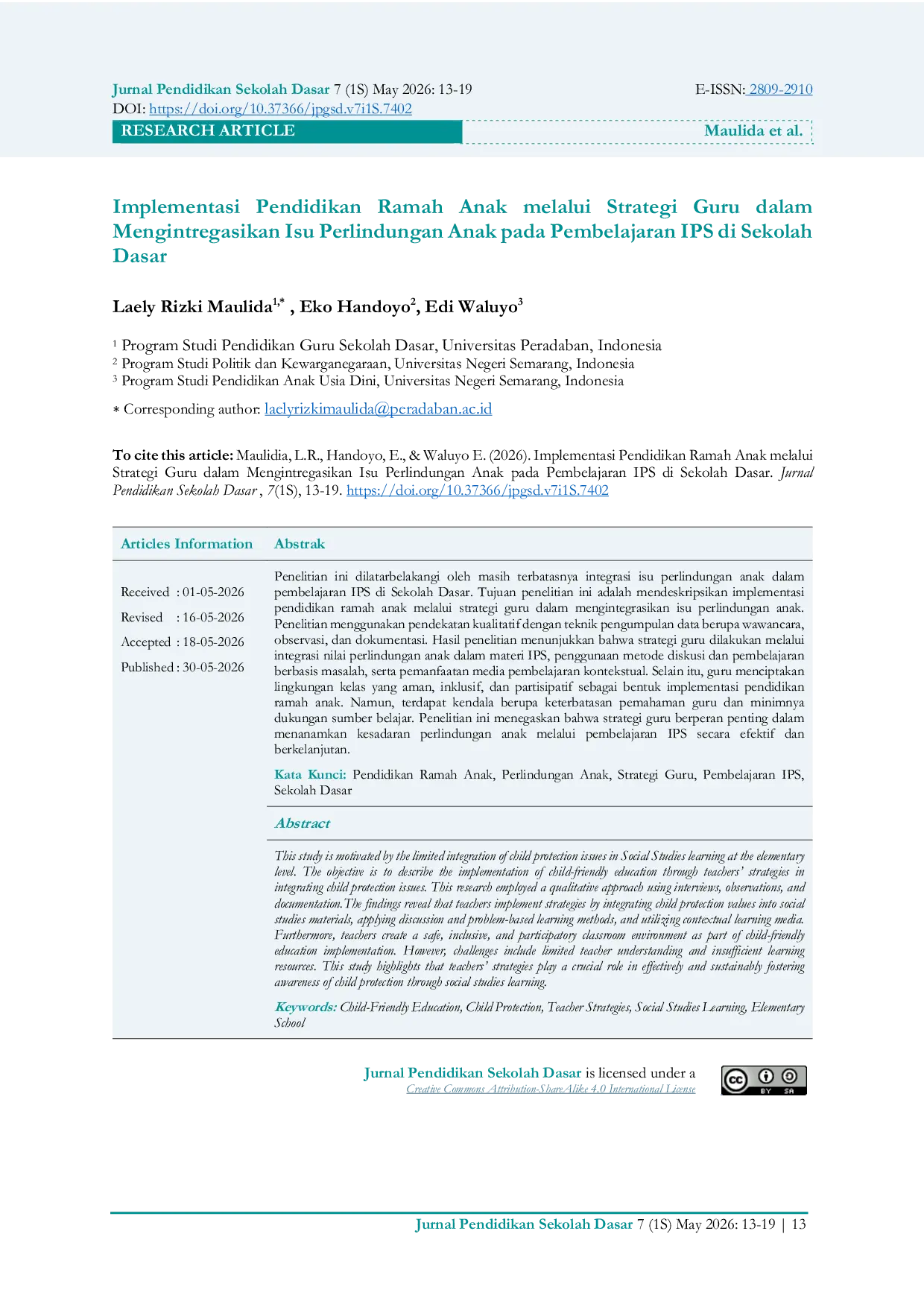
PELITABANGSAPELITABANGSA Penelitian ini dilatarbelakangi oleh masih terbatasnya integrasi isu perlindungan anak dalam pembelajaran IPS di Sekolah Dasar. Tujuan penelitian ini adalahPenelitian ini dilatarbelakangi oleh masih terbatasnya integrasi isu perlindungan anak dalam pembelajaran IPS di Sekolah Dasar. Tujuan penelitian ini adalah
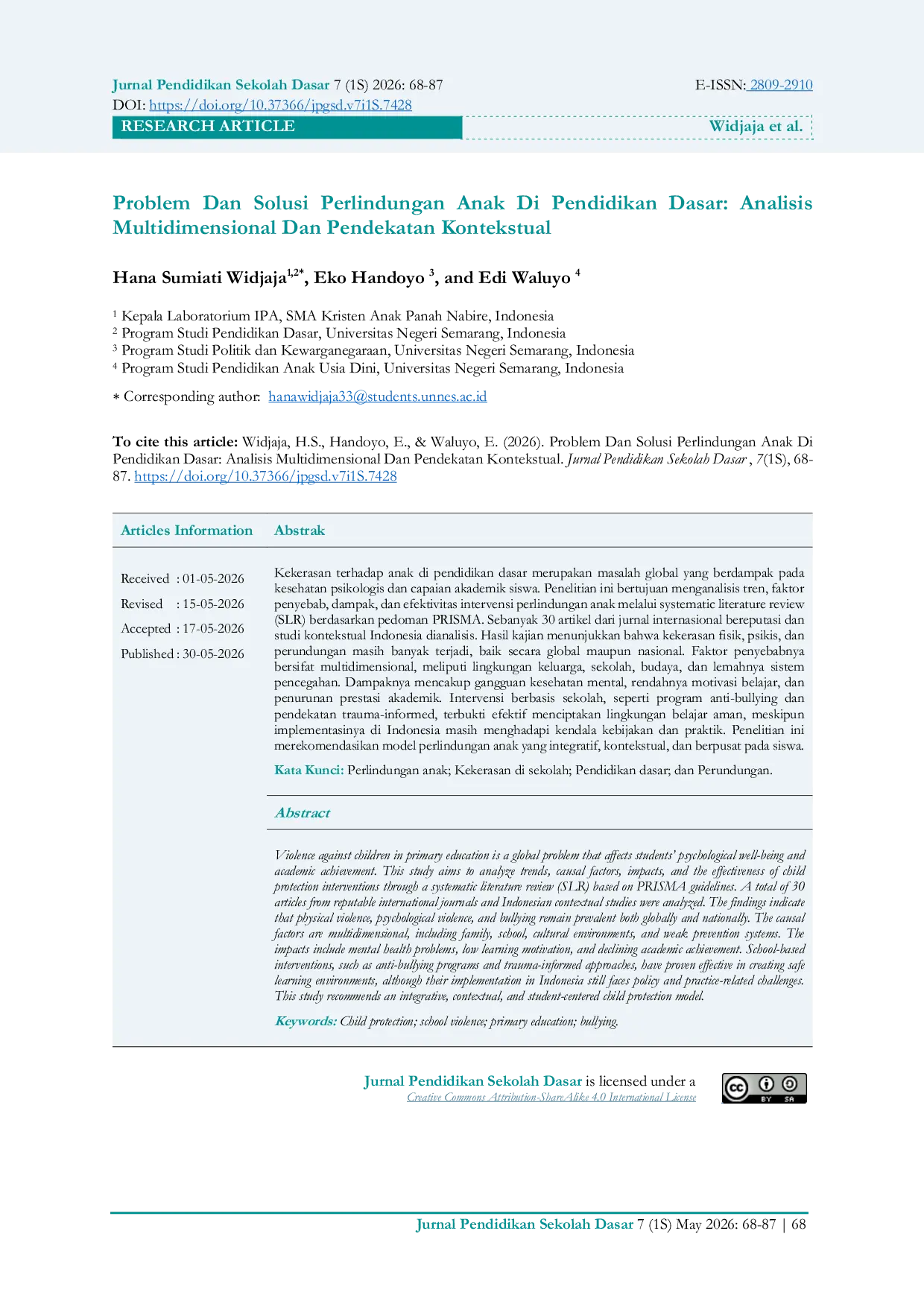
PELITABANGSAPELITABANGSA Kekerasan terhadap anak di pendidikan dasar merupakan masalah global yang berdampak pada kesehatan psikologis dan capaian akademik siswa. Penelitian iniKekerasan terhadap anak di pendidikan dasar merupakan masalah global yang berdampak pada kesehatan psikologis dan capaian akademik siswa. Penelitian ini
IUQIBOGORIUQIBOGOR Berdasarkan hasil penelitian, dana bergulir terbukti berpengaruh secara parsial dalam mengurangi kemiskinan dan meningkatkan penyerapan tenaga kerja. HalBerdasarkan hasil penelitian, dana bergulir terbukti berpengaruh secara parsial dalam mengurangi kemiskinan dan meningkatkan penyerapan tenaga kerja. Hal