UNIBUNIB
Journal of Applied Linguistics and LiteratureJournal of Applied Linguistics and LiteratureThe effect of COVID-19 outbreak to education is in form of a shift of classroom-based instructions to online technology-based practices. To respond to the needs of technology-based instructional activities, this study developed interactive multimedia utilizing online technology-based platforms featuring Moodle and Thinglink to enhance students comprehension in listening. This is a Research and Development involving fifty-three students of English literature study program in a state university in North Sumatera as object of the study. This study applies the ADDIE model to develop interactive multimedia learning. Purposive sampling was used to collect the samples for analysis. Tests, questionnaires, and interviews were designed and employed to collect the data. Material and media experts carried out the validation of the product. The paired samples t-test and independent samples t-test were utilized for data analysis. The outcomes are interactive multimedia using Moodle and ThingLink, complete with its tutorials, practices, and tests to listening comprehension. Interactive multimedia featuring Moodle and ThingLink was deemed practical to use and effectively increased the students listening comprehension according to the results of the material and media experts validation and student response questionnaires.
This research produces interactive multimedia for learning listening comprehension courses.The developed interactive multimedia using student-centered learning methods involves students bringing up some characteristics, such as responsibility, creativity, initiative, honesty, and motivation in learning.The steps carried out in this research have proven the benefits of applying Moodle and Thinglink in Listening class in the EFL context, demonstrating its effectiveness in improving students listening skill.
Further research could investigate the long-term effects of using this interactive multimedia on students listening comprehension skills beyond the immediate study period. Additionally, exploring the adaptability of this multimedia approach to different learning contexts, such as varying class sizes or diverse student backgrounds, would be valuable. Finally, future studies could focus on integrating artificial intelligence (AI) features into the multimedia to provide personalized feedback and adaptive learning experiences, potentially enhancing student engagement and learning outcomes. These investigations will contribute to a more comprehensive understanding of how technology can be effectively leveraged to improve listening comprehension skills in English language education, ultimately preparing students for success in a globalized world.
- Digital literacy of preservice science teacher - IOPscience. digital literacy preservice science teacher... doi.org/10.1088/1742-6596/1157/2/022058Digital literacy of preservice science teacher IOPscience digital literacy preservice science teacher doi 10 1088 1742 6596 1157 2 022058
- Engineering students’ readiness for online learning amidst the COVID-19 pandemic: Scale validation... researchsquare.com/article/rs-374991/v1Engineering studentsAo readiness for online learning amidst the COVID 19 pandemic Scale validation researchsquare article rs 374991 v1
- Journal of Applied Linguistics and Literature. developing interactive multimedia enhancing students listening... ejournal.unib.ac.id/joall/article/view/30158Journal of Applied Linguistics and Literature developing interactive multimedia enhancing students listening ejournal unib ac joall article view 30158
| File size | 412.13 KB |
| Pages | 17 |
| DMCA | Report |
Related /

JURNALSTUDITINDAKANJURNALSTUDITINDAKAN It is recommended that MAS DDI Polewali Mandar continue to incorporate these strategies to enhance religious education. Penelitian ini menyimpulkan bahwaIt is recommended that MAS DDI Polewali Mandar continue to incorporate these strategies to enhance religious education. Penelitian ini menyimpulkan bahwa
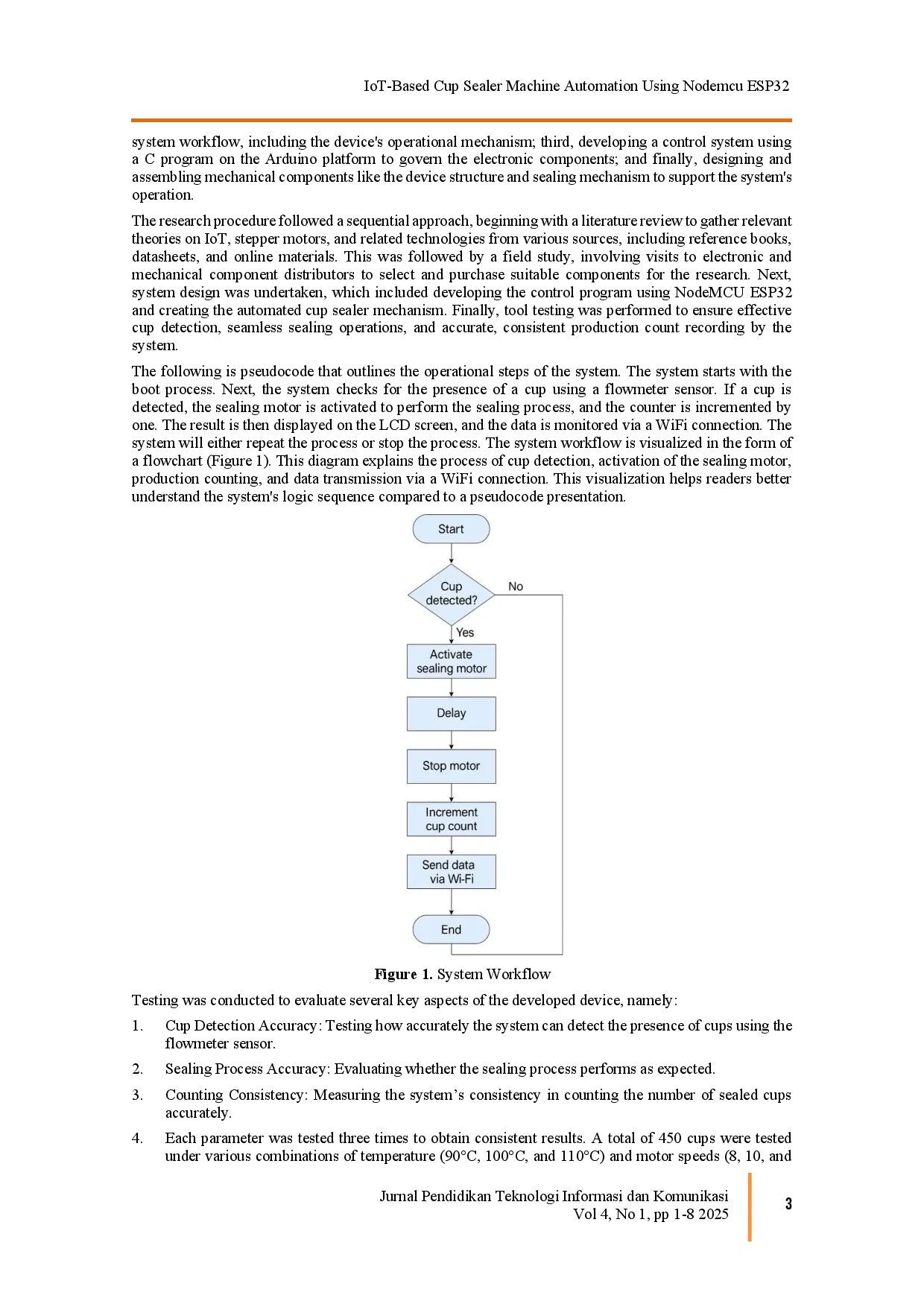
1001TUTORIAL1001TUTORIAL Conventional cup sealing machines often face limitations in speed and precision, necessitating technology-based solutions. This study aims to design andConventional cup sealing machines often face limitations in speed and precision, necessitating technology-based solutions. This study aims to design and

1001TUTORIAL1001TUTORIAL Kesimpulan: Meskipun kesederhanaannya, algoritma Naive Bayes terbukti menjadi alat yang efektif untuk skrining awal mahasiswa yang berisiko mengalami depresi,Kesimpulan: Meskipun kesederhanaannya, algoritma Naive Bayes terbukti menjadi alat yang efektif untuk skrining awal mahasiswa yang berisiko mengalami depresi,
1001TUTORIAL1001TUTORIAL Penelitian ini menyimpulkan bahwa pendidik perlu dibekali dengan bantuan untuk mengembangkan sumber daya dan materi pembelajaran daring yang interaktifPenelitian ini menyimpulkan bahwa pendidik perlu dibekali dengan bantuan untuk mengembangkan sumber daya dan materi pembelajaran daring yang interaktif
1001TUTORIAL1001TUTORIAL Oleh karena itu, diperlukan pengembangan media pembelajaran inovatif dan interaktif untuk meningkatkan prestasi belajar siswa. Tujuan dan ruang lingkupOleh karena itu, diperlukan pengembangan media pembelajaran inovatif dan interaktif untuk meningkatkan prestasi belajar siswa. Tujuan dan ruang lingkup
UNIBUNIB Penggunaan metode kasus dalam mata kuliah Program Studi Bahasa Inggris bertujuan mengembangkan keterampilan abad ke-21 mahasiswa. Hasil penelitian menunjukkanPenggunaan metode kasus dalam mata kuliah Program Studi Bahasa Inggris bertujuan mengembangkan keterampilan abad ke-21 mahasiswa. Hasil penelitian menunjukkan

UNESAUNESA The results of this study indicate that using the STEAM-integrated PBL model improves students creative thinking. In addition, STEAM learning, teachers,The results of this study indicate that using the STEAM-integrated PBL model improves students creative thinking. In addition, STEAM learning, teachers,

IIMSIIMS Penelitian tindakan kelas ini menyimpulkan bahwa penggunaan media kartu kata efektif meningkatkan keterampilan membaca permulaan siswa kelas 1 SD. KondisiPenelitian tindakan kelas ini menyimpulkan bahwa penggunaan media kartu kata efektif meningkatkan keterampilan membaca permulaan siswa kelas 1 SD. Kondisi
Useful /
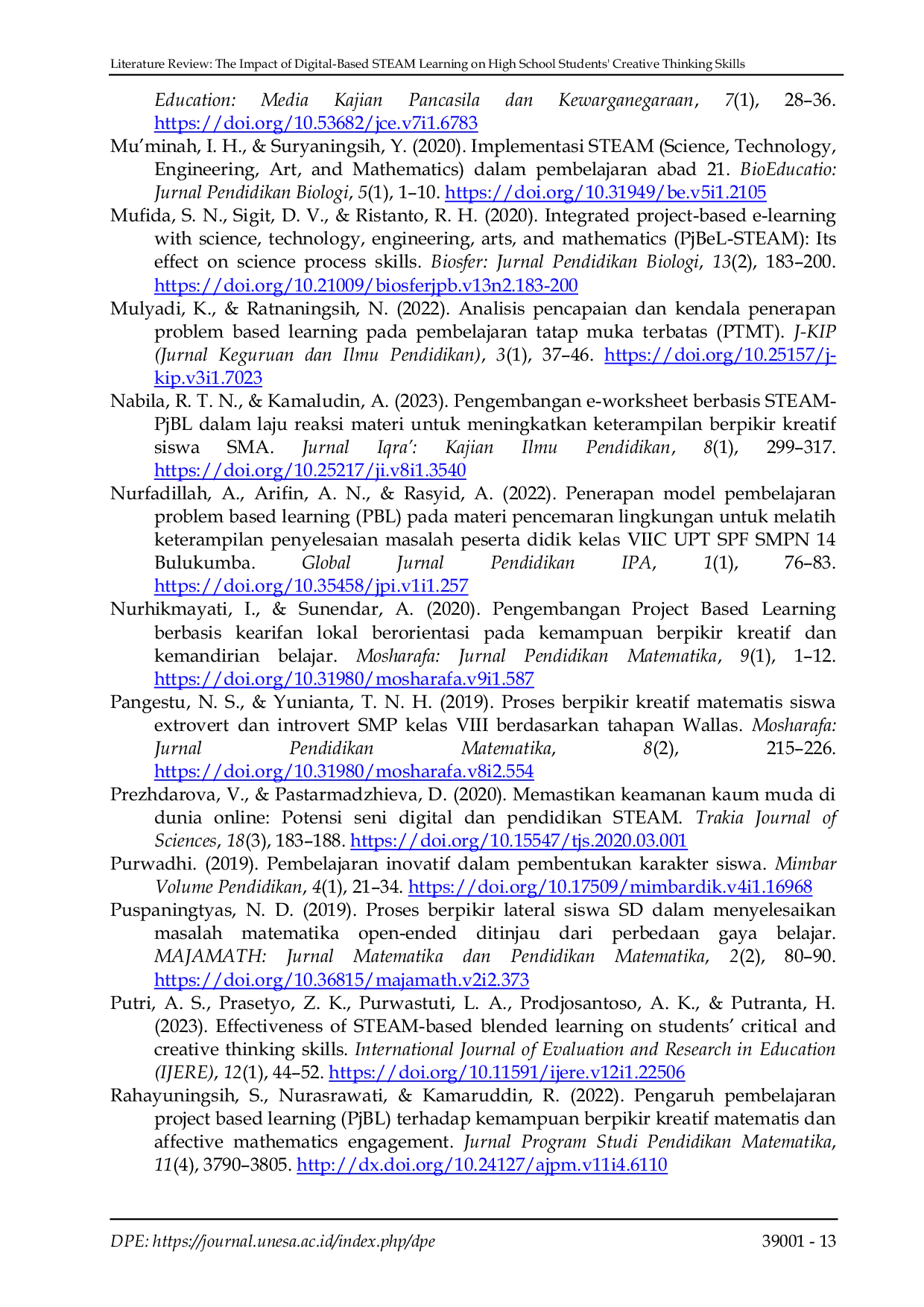
UNESAUNESA Pemilihan artikel difokuskan pada yang relevan dengan pembelajaran STEAM dan berpikir kreatif, diikuti oleh analisis mendalam terhadap tema dan temuan.Pemilihan artikel difokuskan pada yang relevan dengan pembelajaran STEAM dan berpikir kreatif, diikuti oleh analisis mendalam terhadap tema dan temuan.
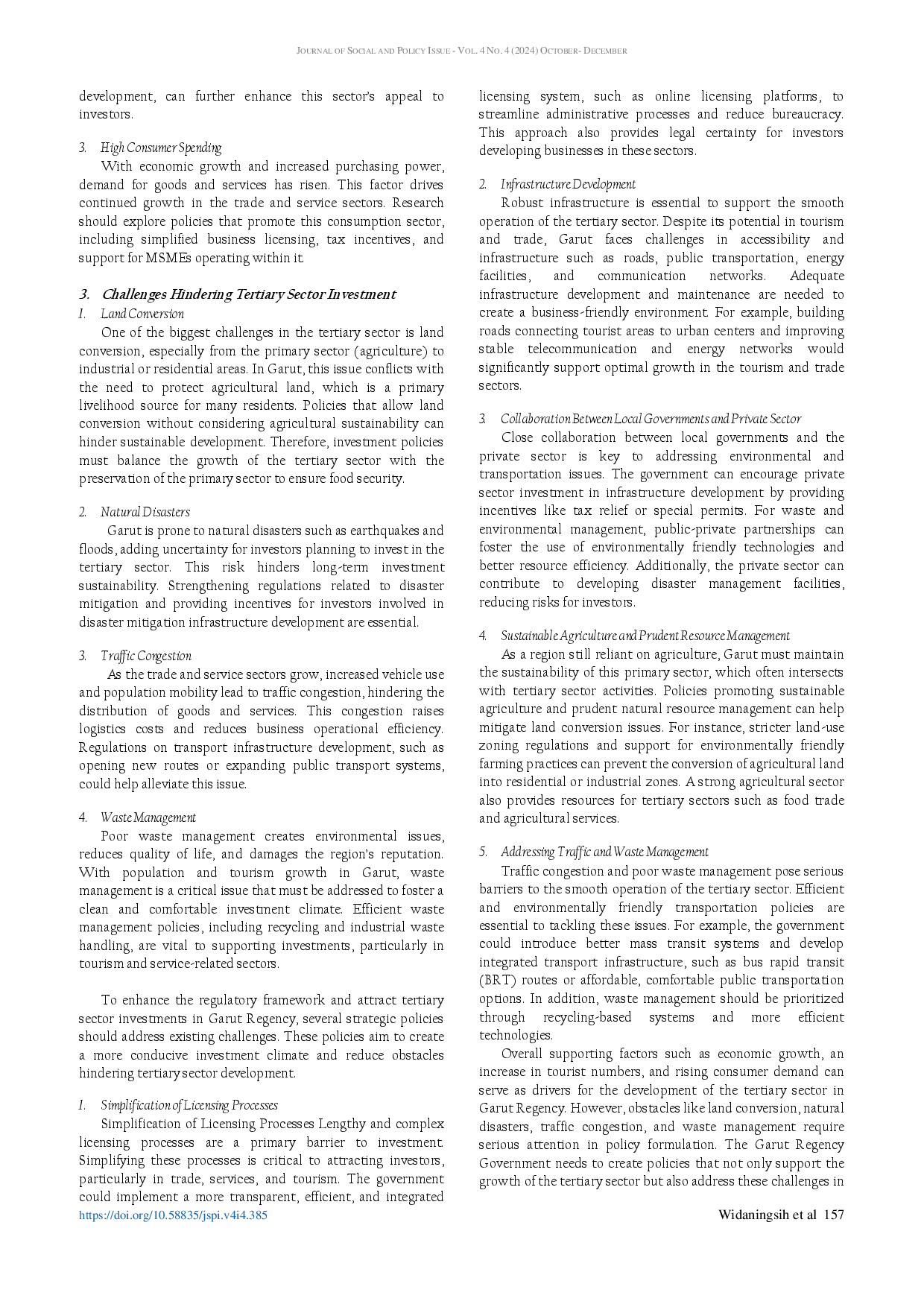
PENCERAHPENCERAH Hasil penelitian menunjukkan bahwa meskipun Kabupaten Garut memiliki potensi besar pada sektor tersier, implementasi kebijakan investasi masih suboptimal.Hasil penelitian menunjukkan bahwa meskipun Kabupaten Garut memiliki potensi besar pada sektor tersier, implementasi kebijakan investasi masih suboptimal.
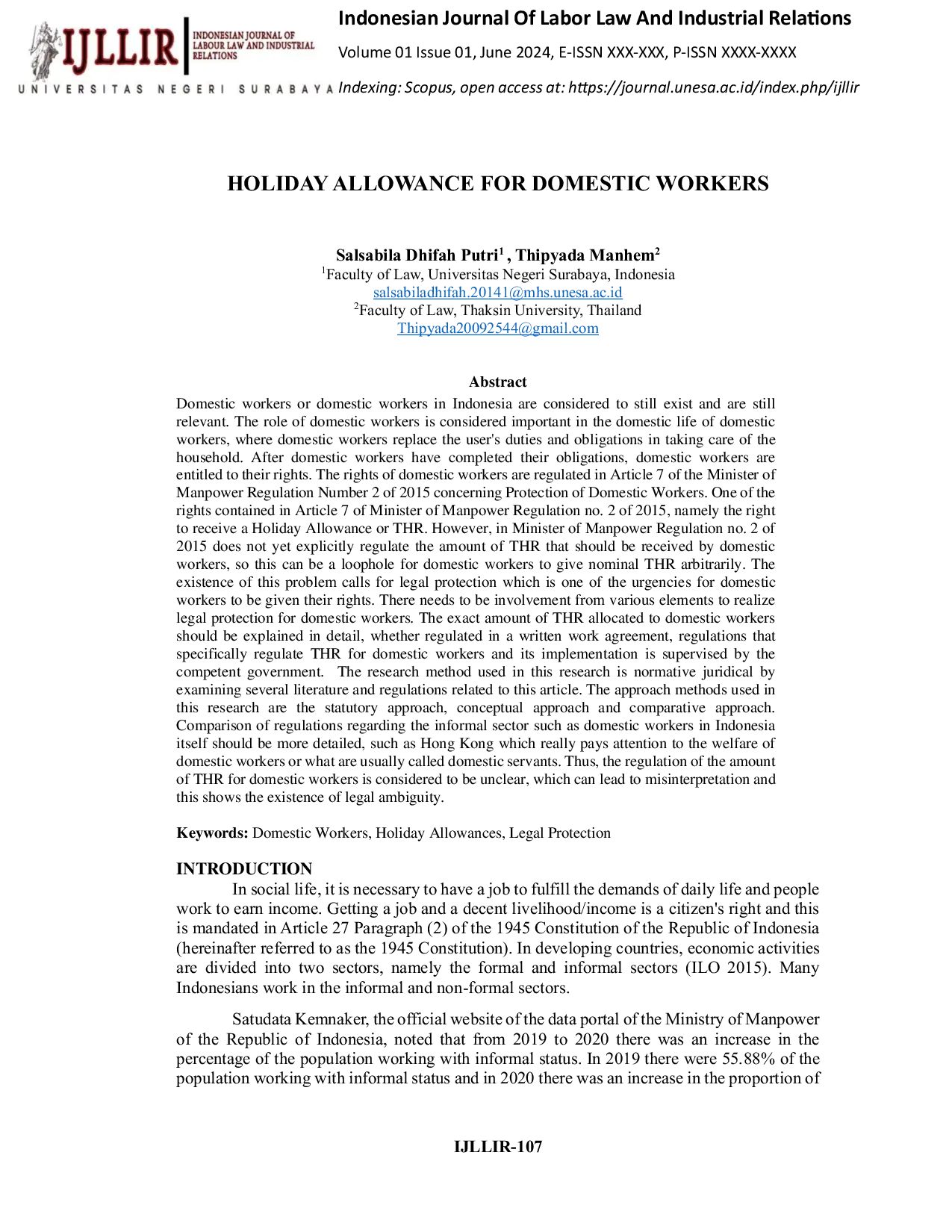
UNESAUNESA This research aims to highlight the need for legal protection and a more detailed regulation of THR for domestic workers, drawing comparisons with countriesThis research aims to highlight the need for legal protection and a more detailed regulation of THR for domestic workers, drawing comparisons with countries
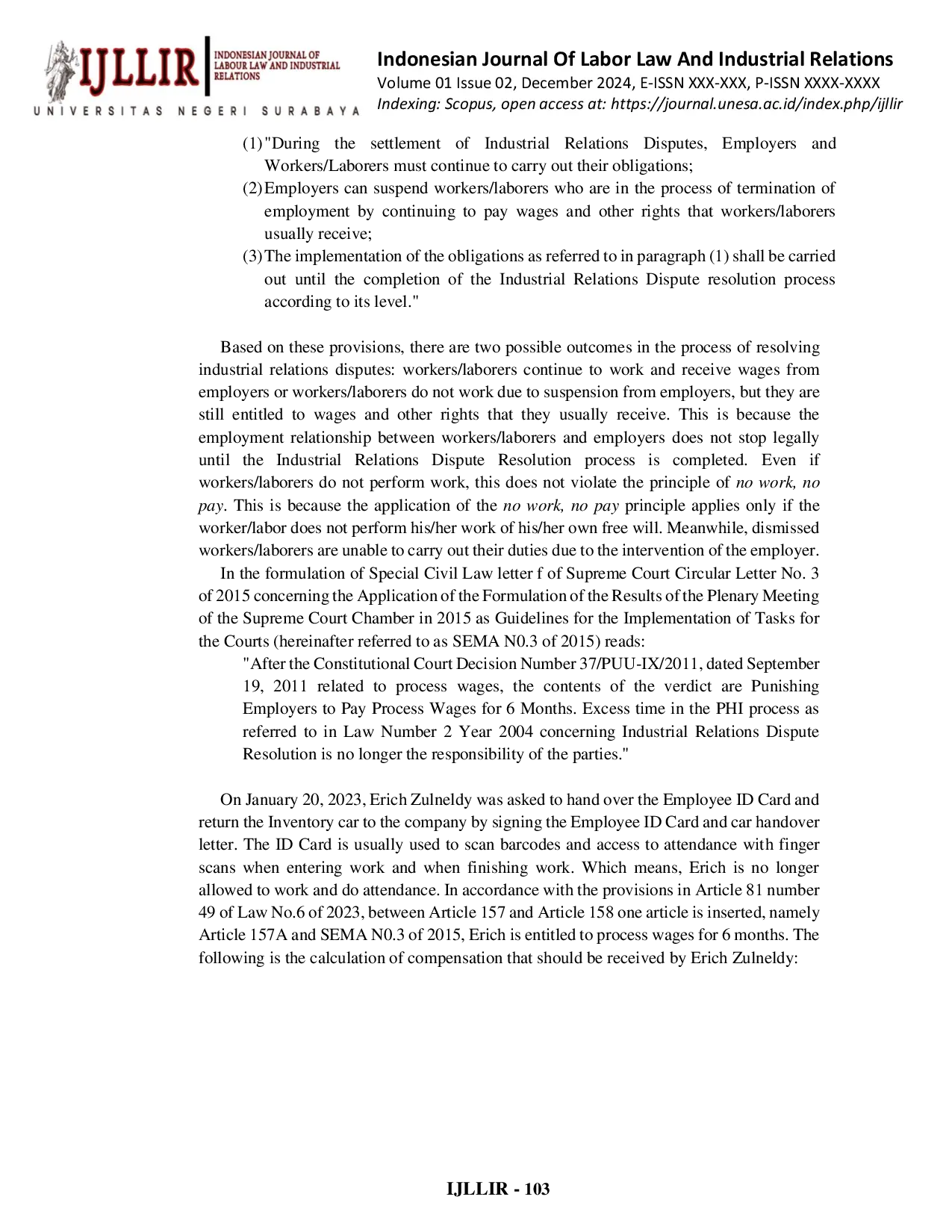
UNESAUNESA Pemutusan Hubungan Kerja dapat terjadi karena beberapa alasan, antara lain: pengunduran diri, kesalahan pekerja/buruh atau kesalahan pengusaha. Dalam peraturanPemutusan Hubungan Kerja dapat terjadi karena beberapa alasan, antara lain: pengunduran diri, kesalahan pekerja/buruh atau kesalahan pengusaha. Dalam peraturan