JOURNAL GEHUJOURNAL GEHU
Journal of General Education and HumanitiesJournal of General Education and HumanitiesThe purpose of this study was to see the effectiveness of students learning motivation on learning outcomes using the reciprocal teaching-learning model. The method used in this research is quantitative. In this study, the instruments used are questionnaires and tests, where the independent and dependent variables will use a questionnaire, and learning outcomes will be measured using tests. Based on the objectives of the research and discussion, the following conclusions are obtained: student motivation in learning by using the reciprocal teaching-learning model on students learning motivation. The students motivation to learn mathematics in class VIII C received an average score of 74.84% for all indicators in the good category. On the learning outcomes of students in the experimental class, the average value of the class was 82.22, while in the control class, the average score is 69.13. This shows that using reciprocal teaching-learning models can motivate students to learn and ultimately lead to improved learning outcomes.
Based on the research objectives and discussion, it can be concluded that the application of the reciprocal teaching-learning model effectively improves students learning motivation.Students in class VIII C demonstrated a good level of motivation, achieving an average score of 74.Furthermore, the experimental class exhibited higher learning outcomes with an average score of 82.22 compared to the control classs score of 69.13, indicating the positive impact of the reciprocal teaching-learning model.
Penelitian lebih lanjut dapat dilakukan untuk mengeksplorasi efektivitas model reciprocal teaching dalam konteks pembelajaran matematika pada tingkatan kelas yang berbeda, misalnya kelas VII atau IX, untuk melihat apakah hasilnya konsisten. Selain itu, penelitian dapat difokuskan pada identifikasi faktor-faktor spesifik dalam model reciprocal teaching yang paling berkontribusi terhadap peningkatan motivasi dan hasil belajar siswa, seperti peran interaksi antar siswa atau jenis pertanyaan yang diajukan. Terakhir, penelitian dapat menyelidiki bagaimana model reciprocal teaching dapat diadaptasi dan diintegrasikan dengan pendekatan pembelajaran lainnya, seperti pembelajaran berbasis proyek atau pembelajaran daring, untuk menciptakan pengalaman belajar yang lebih komprehensif dan menarik bagi siswa. Penelitian-penelitian ini diharapkan dapat memberikan wawasan yang lebih mendalam tentang potensi model reciprocal teaching dalam meningkatkan kualitas pembelajaran matematika dan mempersiapkan siswa untuk menghadapi tantangan abad ke-21.
- The effect of reciprocal teaching-learning model on the mastery of physics concepts and creativity of... doi.org/10.1088/1742-6596/2165/1/012011The effect of reciprocal teaching learning model on the mastery of physics concepts and creativity of doi 10 1088 1742 6596 2165 1 012011
- Reciprocal Teaching: Critical Reflection on Practice. | Kairaranga. reciprocal teaching critical reflection... doi.org/10.54322/kairaranga.v15i1.183Reciprocal Teaching Critical Reflection on Practice Kairaranga reciprocal teaching critical reflection doi 10 54322 kairaranga v15i1 183
- Learning to Think Mathematically: Problem Solving, Metacognition, and Sense Making in Mathematics (Reprint)... doi.org/10.1177/002205741619600202Learning to Think Mathematically Problem Solving Metacognition and Sense Making in Mathematics Reprint doi 10 1177 002205741619600202
| File size | 154.1 KB |
| Pages | 10 |
| DMCA | Report |
Related /

STAI ALISTAI ALI Sebagian besar guru belum sepenuhnya memanfaatkan media pembelajaran tersebut. Tujuan dari kegiatan pengabdian kepada masyarakat yaitu: (1) memperkenalkanSebagian besar guru belum sepenuhnya memanfaatkan media pembelajaran tersebut. Tujuan dari kegiatan pengabdian kepada masyarakat yaitu: (1) memperkenalkan

IAIN PONOROGOIAIN PONOROGO Nilai-nilai moderasi beragama yang ditanamkan pada diri siswa adalah nilai-nilai toleransi dan keadilan yang merupakan prinsip yang ditanamkan pada diriNilai-nilai moderasi beragama yang ditanamkan pada diri siswa adalah nilai-nilai toleransi dan keadilan yang merupakan prinsip yang ditanamkan pada diri

IAIN PONOROGOIAIN PONOROGO Selain itu, peningkatan signifikan dalam pemahaman mahasiswa terhadap moderasi beragama setelah menggunakan buku ajar ini juga tercatat. Peningkatan signifikanSelain itu, peningkatan signifikan dalam pemahaman mahasiswa terhadap moderasi beragama setelah menggunakan buku ajar ini juga tercatat. Peningkatan signifikan
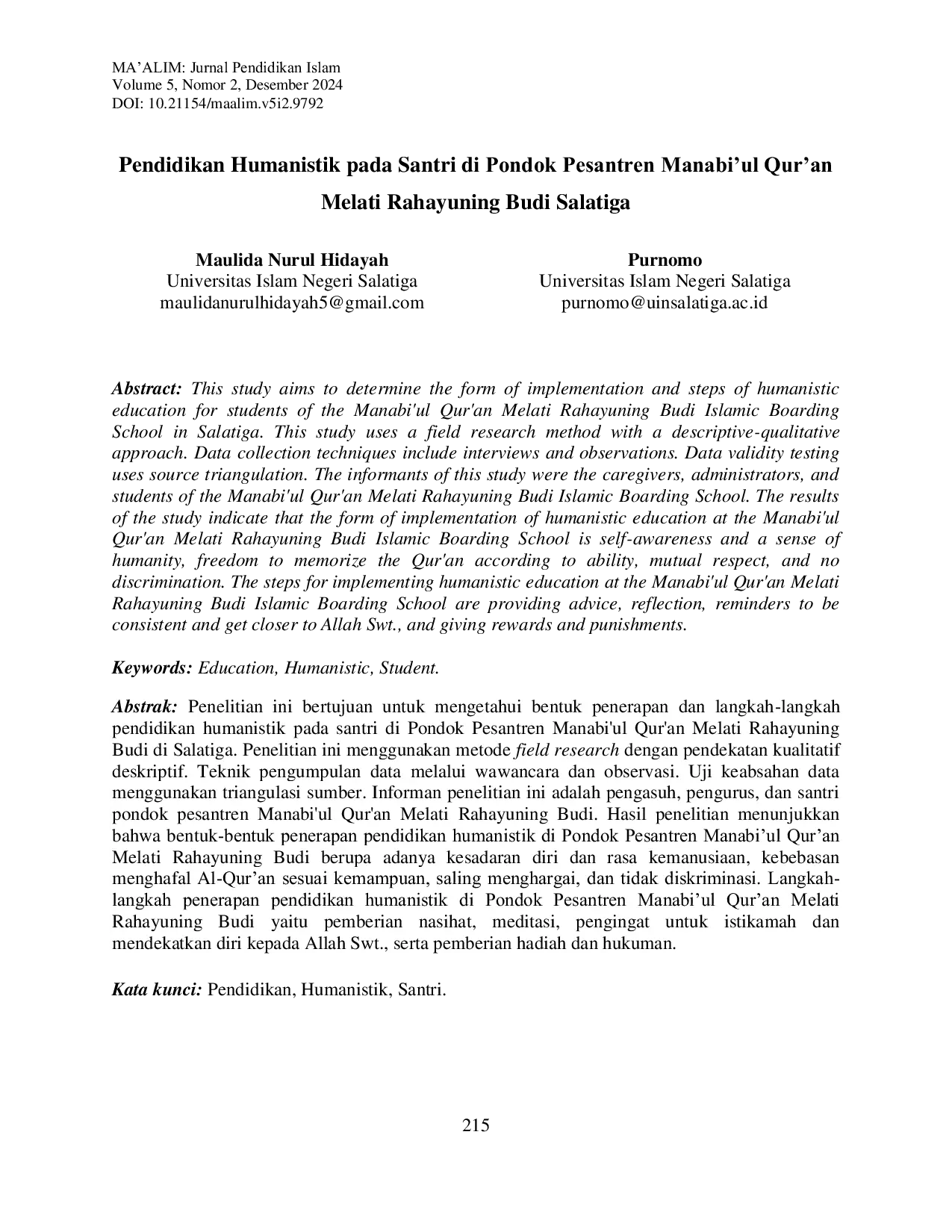
IAIN PONOROGOIAIN PONOROGO Hasil penelitian menunjukkan bahwa bentuk-bentuk penerapan pendidikan humanistik di Pondok Pesantren Manabiul Quran Melati Rahayuning Budi berupa adanyaHasil penelitian menunjukkan bahwa bentuk-bentuk penerapan pendidikan humanistik di Pondok Pesantren Manabiul Quran Melati Rahayuning Budi berupa adanya

IAIN PONOROGOIAIN PONOROGO Penelitian ini meninjau hubungan guru dan siswa melalui etika guru, pembelajaran kondusif, dan perspektif Imam Nawawi, menggunakan metode penelitian perpustakaan.Penelitian ini meninjau hubungan guru dan siswa melalui etika guru, pembelajaran kondusif, dan perspektif Imam Nawawi, menggunakan metode penelitian perpustakaan.

IAIN PONOROGOIAIN PONOROGO Demi mencapai pendidikan keluarga yang baik maka orang tua harus siap secara fisik dan psikologis, oleh karena itu hendaknya pasangan suami istri menikahDemi mencapai pendidikan keluarga yang baik maka orang tua harus siap secara fisik dan psikologis, oleh karena itu hendaknya pasangan suami istri menikah

IAIN PONOROGOIAIN PONOROGO Hasil penelitian ini menunjukkan bahwa setiap siswa sangat penting untuk mempelajari ilmu umum secara mendalam guna membentuk diri menjadi manusia yangHasil penelitian ini menunjukkan bahwa setiap siswa sangat penting untuk mempelajari ilmu umum secara mendalam guna membentuk diri menjadi manusia yang

IAIN PONOROGOIAIN PONOROGO Melalui pendidikan berbasis nilai-nilai Islam yang holistik, PAI diharapkan mampu mengintegrasikan teknologi dengan ajaran Islam, sehingga peserta didikMelalui pendidikan berbasis nilai-nilai Islam yang holistik, PAI diharapkan mampu mengintegrasikan teknologi dengan ajaran Islam, sehingga peserta didik
Useful /

GUNUNGSARIGUNUNGSARI Gangguan ini dapat menyebabkan komplikasi jangka panjang pada kesehatan, menurunkan daya tahan tubuh, serta meningkatkan angka morbiditas dan mortalitasGangguan ini dapat menyebabkan komplikasi jangka panjang pada kesehatan, menurunkan daya tahan tubuh, serta meningkatkan angka morbiditas dan mortalitas

PUBLIKASIINDONESIAPUBLIKASIINDONESIA Analisis EFAS mengungkap peluang dari tren wisata otentik dan dukungan pemerintah, serta ancaman dari persaingan global dan ketidakpastian kunjungan. DenganAnalisis EFAS mengungkap peluang dari tren wisata otentik dan dukungan pemerintah, serta ancaman dari persaingan global dan ketidakpastian kunjungan. Dengan

IAIN PONOROGOIAIN PONOROGO Penelitian ini menggunakan metode kepustakaan, di mana acuan utamanya adalah mencoba menggabungkan berbagai literatur yang kemudian dianalisis dengan analisisPenelitian ini menggunakan metode kepustakaan, di mana acuan utamanya adalah mencoba menggabungkan berbagai literatur yang kemudian dianalisis dengan analisis

IAIN PONOROGOIAIN PONOROGO Pesantren sebagai lembaga pendidikan tertua di Indonesia sampai sekarang masih tetap memberikan kontribusi penting di bidang sosial keagamaan. Pondok pesantrenPesantren sebagai lembaga pendidikan tertua di Indonesia sampai sekarang masih tetap memberikan kontribusi penting di bidang sosial keagamaan. Pondok pesantren