STIKESBUDILUHURCIMAHISTIKESBUDILUHURCIMAHI
JKBLJKBLFine motor skills are essential in early childhood development, supporting daily activities and school readiness. Brain gymnastics is a series of structured and simple movements involving coordination between the brain and body, designed to stimulate the nervous system and enhance motor development in a playful way. This study used a pre-experimental design with a one-group pretest-posttest approach. A total of 33 children aged 4–6 years were selected using purposive sampling. The Denver Developmental Screening Test (DDST) was used as the main instrument, completed through parent interviews and direct observation by the researcher before and after the brain gymnastics intervention. Data were analyzed using the Wilcoxon Signed-Rank Test. Before the intervention, 21 children (63.3%) showed delayed fine motor development. After the intervention, 30 children (90.9%) reached the normal developmental stage appropriate for their age. The Wilcoxon Signed-Rank Test revealed a significant difference with a p-value of 0.000 (p < 0.05), indicating a statistically significant improvement in fine motor skills. The results demonstrate that brain gymnastics effectively improves fine motor skills in children aged 4–6 years. Through engaging and coordinated movements, brain gymnastics stimulates neural pathways and supports optimal motor development. It can be applied as a fun and practical method of stimulation in early childhood education settings.
The study concludes that brain gymnastics is an effective early intervention strategy for enhancing fine motor development in preschoolers.A significant improvement in fine motor skills was observed after 12 sessions of brain gymnastics exercises, highlighting its potential as a low-cost and simple method.The findings support the integration of brain gymnastics into daily school routines and encourage parental involvement to ensure continuity at home.
Penelitian lebih lanjut perlu dilakukan untuk menguji efektivitas brain gymnastics dengan desain penelitian yang lebih ketat, seperti randomized controlled trials (RCTs), melibatkan kelompok kontrol, dan sampel yang lebih besar dan beragam. Selain itu, penelitian longitudinal diperlukan untuk memahami dampak jangka panjang dari intervensi brain gymnastics terhadap perkembangan motorik halus anak. Penelitian di masa depan juga dapat mengeksplorasi bagaimana brain gymnastics dapat disesuaikan dan dioptimalkan untuk anak-anak dengan kebutuhan khusus atau kondisi perkembangan tertentu, seperti anak-anak dengan gangguan koordinasi perkembangan atau autisme. Terakhir, studi kualitatif dapat dilakukan untuk menggali pengalaman dan persepsi guru dan orang tua mengenai implementasi brain gymnastics di lingkungan pendidikan dan rumah tangga, serta mengidentifikasi faktor-faktor yang memfasilitasi atau menghambat keberhasilan intervensi ini.
| File size | 281.93 KB |
| Pages | 7 |
| DMCA | Report |
Related /

PUBMEDIAPUBMEDIA Beberapa penelitian dengan desain intervensi juga menunjukkan bahwa edukasi berbasis TPB efektif dalam meningkatkan kontrol perilaku yang dirasakan, mengubahBeberapa penelitian dengan desain intervensi juga menunjukkan bahwa edukasi berbasis TPB efektif dalam meningkatkan kontrol perilaku yang dirasakan, mengubah

POLTEKKES PALEMBANGPOLTEKKES PALEMBANG Konsumsi fast food secara berlebihan dapat menyebabkan ketidakseimbangan energi dan penumpukan lemak tubuh. Selain itu, media sosial juga berperan dalamKonsumsi fast food secara berlebihan dapat menyebabkan ketidakseimbangan energi dan penumpukan lemak tubuh. Selain itu, media sosial juga berperan dalam

AIBPMAIBPM Analisis SWOT, Matriks IE, dan QSPM diterapkan untuk merumuskan arah strategis. Data primer dikumpulkan dari 90 petani-peternak yang mewakili jenis usahaAnalisis SWOT, Matriks IE, dan QSPM diterapkan untuk merumuskan arah strategis. Data primer dikumpulkan dari 90 petani-peternak yang mewakili jenis usaha

GEUTHEEINSTITUTEGEUTHEEINSTITUTE Bank Aceh Syariah menyalurkan pembiayaan kepada ASN melalui akad murabahah yang mewajibkan nasabah membayar cicilan sesuai kesepakatan. Namun, di BankBank Aceh Syariah menyalurkan pembiayaan kepada ASN melalui akad murabahah yang mewajibkan nasabah membayar cicilan sesuai kesepakatan. Namun, di Bank

GEUTHEEINSTITUTEGEUTHEEINSTITUTE Meskipun banyak penelitian menyoroti dampak konflik keluarga terhadap anak, masih sedikit yang secara khusus mengulas pola komunikasi dalam keluarga yangMeskipun banyak penelitian menyoroti dampak konflik keluarga terhadap anak, masih sedikit yang secara khusus mengulas pola komunikasi dalam keluarga yang

GEUTHEEINSTITUTEGEUTHEEINSTITUTE Data dikumpulkan melalui tes kemampuan berpikir kreatif dan dianalisis menggunakan uji Wilcoxon. Hasil uji menunjukkan bahwa nilai Whitung = 276 dan WtabelData dikumpulkan melalui tes kemampuan berpikir kreatif dan dianalisis menggunakan uji Wilcoxon. Hasil uji menunjukkan bahwa nilai Whitung = 276 dan Wtabel

UAIUAI Kegiatan edukasi bertema Go Green dilaksanakan di PYI Tebet, meliputi kegiatan belajar, menonton film WALL-E, dan melukis di tote bag sebagai penggantiKegiatan edukasi bertema Go Green dilaksanakan di PYI Tebet, meliputi kegiatan belajar, menonton film WALL-E, dan melukis di tote bag sebagai pengganti

UAIUAI Kegiatan ini dilaksanakan pada bulan Juni, tepatnya di hari Minggu tanggal 26 tahun 2022 secara offline melakukan kunjungan langsung ke mitra dengan melakukanKegiatan ini dilaksanakan pada bulan Juni, tepatnya di hari Minggu tanggal 26 tahun 2022 secara offline melakukan kunjungan langsung ke mitra dengan melakukan
Useful /

POLTEKKES PALEMBANGPOLTEKKES PALEMBANG Identifikasi senyawa melalui kromatografi lapis tipis mengungkapkan keberadaan flavonoid, saponin, dan limonoid sebagai kandidat bioaktif utama. HasilIdentifikasi senyawa melalui kromatografi lapis tipis mengungkapkan keberadaan flavonoid, saponin, dan limonoid sebagai kandidat bioaktif utama. Hasil

POLTEKKES PALEMBANGPOLTEKKES PALEMBANG Rumah sakit mengajukan klaim ke BPJS Kesehatan melalui sistem INA-CBGs yang memverifikasi klaim berdasarkan prosedur medis, kode, dan administrasi; namunRumah sakit mengajukan klaim ke BPJS Kesehatan melalui sistem INA-CBGs yang memverifikasi klaim berdasarkan prosedur medis, kode, dan administrasi; namun
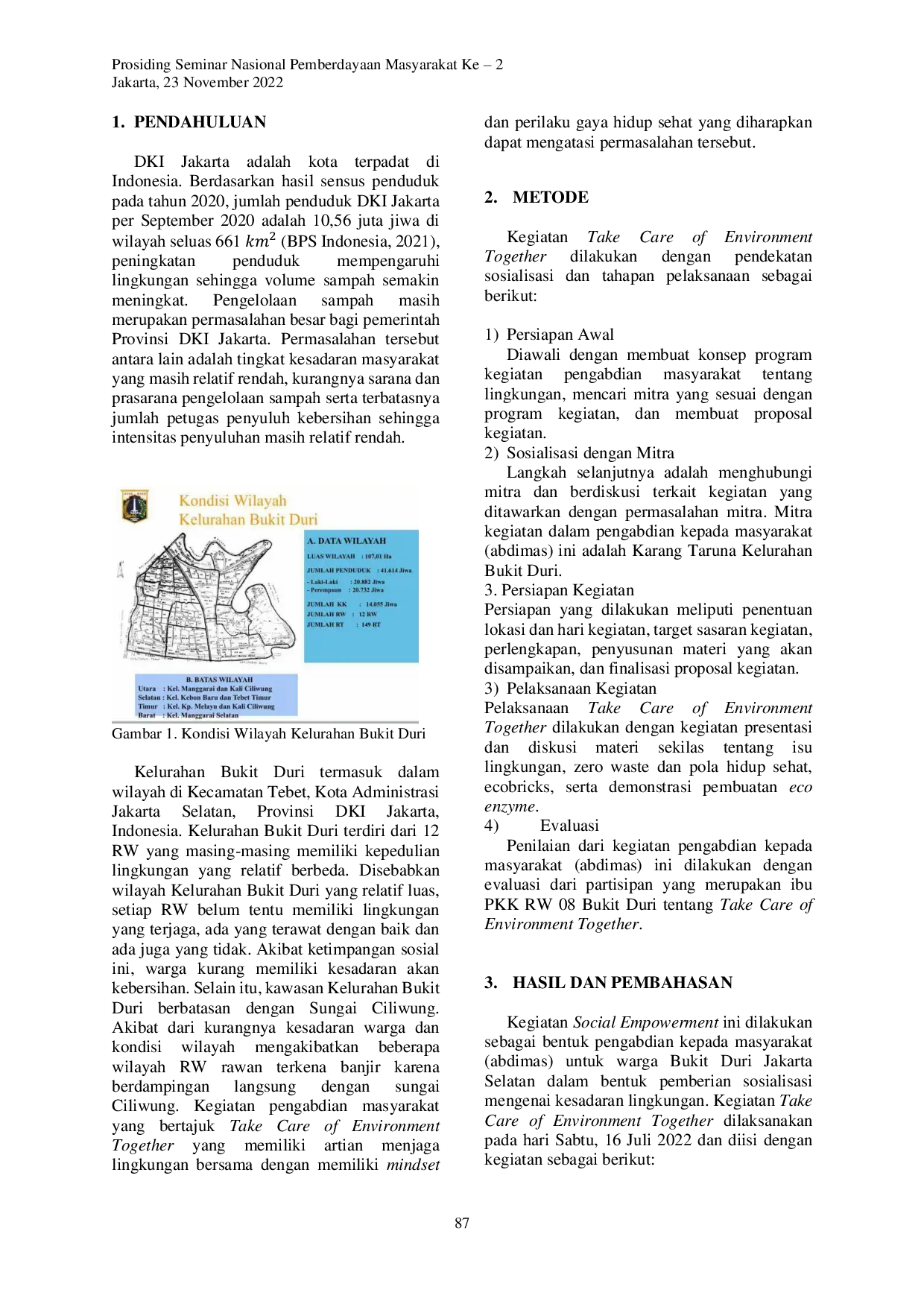
UAIUAI Pengabdian kepada masyarakat dengan kegiatan Take Care of Environment Together untuk warga Bukit Duri yang telah dilaksanakan di Aula RW 008 Bukit DuriPengabdian kepada masyarakat dengan kegiatan Take Care of Environment Together untuk warga Bukit Duri yang telah dilaksanakan di Aula RW 008 Bukit Duri

UAIUAI Seluruh kegiatan pengabdian kepada masyarakat penyuluhan penyebab dan bahaya kecacingan yang berlangsung di SDN Susukan Pagi 4 Ciracas, Jakarta Timur,Seluruh kegiatan pengabdian kepada masyarakat penyuluhan penyebab dan bahaya kecacingan yang berlangsung di SDN Susukan Pagi 4 Ciracas, Jakarta Timur,