STITPNSTITPN
MANAZHIMMANAZHIMThis study investigates the factors influencing university students motivation to use ChatGPT for learning, addressing a research gap in understanding how students perceive and adopt generative AI tools in academic contexts. Despite ChatGPTs growing presence in higher education and its potential to support autonomous and flexible learning, limited empirical research has examined the motivational factors driving its use. Specifically, the study evaluates the impact of four key variables—perceived ease of use, perceived usefulness, information seeking, and novelty—on students intention to use ChatGPT for learning activities. The research was conducted among 274 students from the Office Administration Education Study Program at Universitas Negeri Surabaya, selected through purposive sampling. Employing a quantitative approach, data were collected via a structured survey and analyzed using Structural Equation Modeling–Generalized Structured Component Analysis (SEM–GSCA). The findings reveal that all four variables exert a positive and significant influence on students intention to use ChatGPT, providing empirical support for both the Technology Acceptance Model (TAM) and Uses and Gratifications Theory (UGT). The study concludes that students perceptions of ChatGPTs ease of use, usefulness, novelty, and ability to fulfill information needs are critical drivers of their motivation to integrate the tool into their learning practices. Theoretical implications include advancing research on AI adoption in education, while practical implications encourage educators and institutions to promote responsible and effective use of AI tools like ChatGPT to support self-directed and adaptive learning.
The study demonstrates that students motivation to use ChatGPT is significantly influenced by their perceptions of its ease of use, usefulness, information-seeking capabilities, and novelty.These findings support both the Technology Acceptance Model (TAM) and Uses and Gratifications Theory (UGT) in the context of AI adoption in education.Therefore, educational institutions should consider integrating ChatGPT as a learning support tool, while providing guidance for its ethical and effective use.
Penelitian lebih lanjut perlu dilakukan untuk mengeksplorasi bagaimana faktor-faktor seperti literasi digital dan kepercayaan terhadap teknologi memengaruhi adopsi ChatGPT oleh mahasiswa. Selain itu, penting untuk meneliti dampak penggunaan ChatGPT terhadap hasil belajar mahasiswa secara lebih mendalam, termasuk kemampuan berpikir kritis dan pemecahan masalah. Penelitian di masa depan juga dapat menyelidiki efektivitas ChatGPT dalam berbagai disiplin ilmu dan konteks pembelajaran, serta mengembangkan model pembelajaran yang mengintegrasikan ChatGPT secara optimal untuk meningkatkan pengalaman belajar mahasiswa. Dengan demikian, pemahaman yang lebih komprehensif tentang potensi dan tantangan ChatGPT dalam pendidikan dapat diperoleh, sehingga dapat dirumuskan strategi yang tepat untuk memaksimalkan manfaatnya bagi mahasiswa dan lembaga pendidikan.
- 0. unveiling student motivations study chatgpt usage education shodhkosh journal visual performing arts... granthaalayahpublication.org/Arts-Journal/ShodhKosh/article/view/5030 unveiling student motivations study chatgpt usage education shodhkosh journal visual performing arts granthaalayahpublication Arts Journal ShodhKosh article view 503
- ResearchGate. researchgate content removed author sorry associated doi longer available join access millions... researchgate.net/doi/10.13140/RG.2.2.28162.61127ResearchGate researchgate content removed author sorry associated doi longer available join access millions researchgate doi 10 13140 RG 2 2 28162 61127
- Factors Influencing Students’ Motivation to Use ChatGPT for Learning: A TAM and UGT Approach |... doi.org/10.36088/manazhim.v7i2.5880Factors Influencing StudentsAo Motivation to Use ChatGPT for Learning A TAM and UGT Approach doi 10 36088 manazhim v7i2 5880
| File size | 382.38 KB |
| Pages | 12 |
| DMCA | Report |
Related /

STKIPPGRIBLSTKIPPGRIBL Kelima nilai tersebut tidak hanya berfungsi sebagai prinsip moral, tetapi juga menjadi kerangka kerja manajerial yang memandu pengambilan keputusan, penguatanKelima nilai tersebut tidak hanya berfungsi sebagai prinsip moral, tetapi juga menjadi kerangka kerja manajerial yang memandu pengambilan keputusan, penguatan
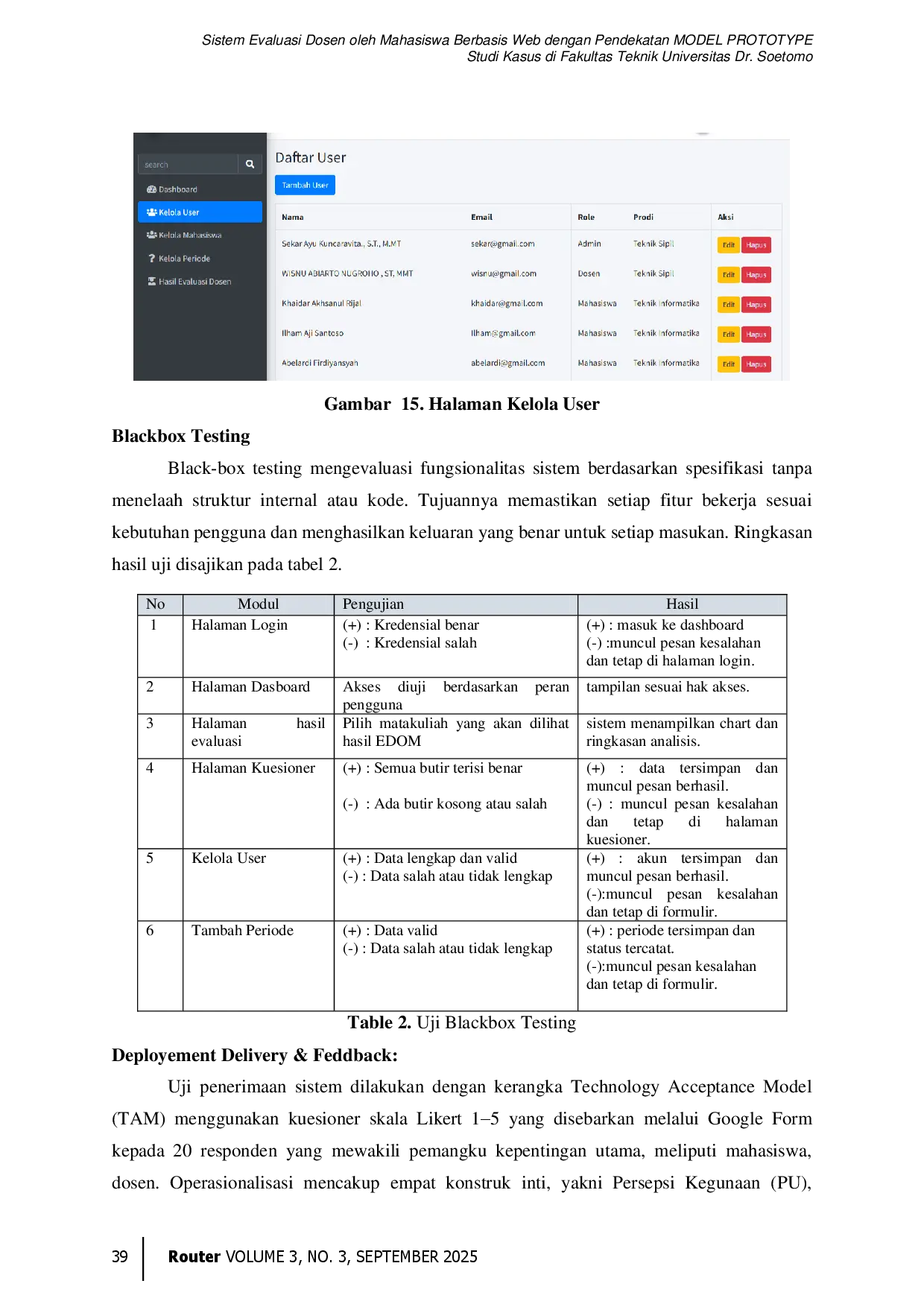
APTIIAPTII Sistem yang dihasilkan mencakup modul autentikasi dan otorisasi peran (Admin, GPM, Dosen, Mahasiswa), manajemen periode ganjil/genap, bank pertanyaan denganSistem yang dihasilkan mencakup modul autentikasi dan otorisasi peran (Admin, GPM, Dosen, Mahasiswa), manajemen periode ganjil/genap, bank pertanyaan dengan

STKIP SINGKAWANGSTKIP SINGKAWANG Integrated E‑Modules secara signifikan meningkatkan motivasi belajar dan Self‑Efficacy siswa, dengan kelompok eksperimental menunjukkan peningkatanIntegrated E‑Modules secara signifikan meningkatkan motivasi belajar dan Self‑Efficacy siswa, dengan kelompok eksperimental menunjukkan peningkatan

UNSURYAUNSURYA Analisis data dilakukan menggunakan uji regresi linier berganda, uji t, dan uji koefisien determinasi, didukung oleh IBM SPSS Statistics Version 25. VariabelAnalisis data dilakukan menggunakan uji regresi linier berganda, uji t, dan uji koefisien determinasi, didukung oleh IBM SPSS Statistics Version 25. Variabel

DINASTIPUBDINASTIPUB Oleh karena itu, perusahaan harus memperhatikan dan mempertahankan status kompensasi karyawan baik secara langsung maupun tidak langsung, serta mengelolaOleh karena itu, perusahaan harus memperhatikan dan mempertahankan status kompensasi karyawan baik secara langsung maupun tidak langsung, serta mengelola
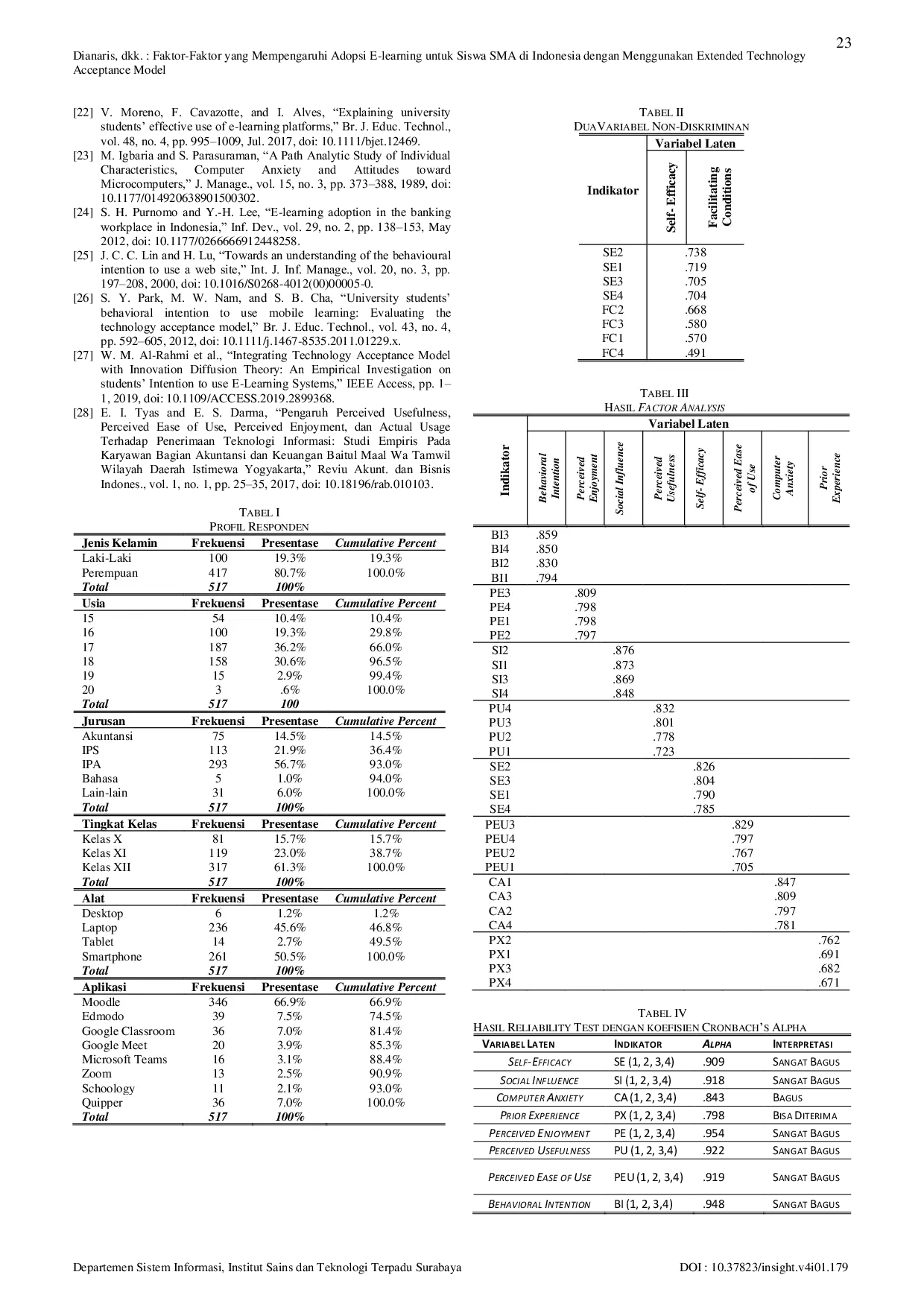
STTSSTTS Penelitian ini bertujuan untuk mencari faktor-faktor yang mempengaruhi adopsi E-learning di Indonesia, dengan menggunakan Extended Technology AcceptancePenelitian ini bertujuan untuk mencari faktor-faktor yang mempengaruhi adopsi E-learning di Indonesia, dengan menggunakan Extended Technology Acceptance

UBUB The data was collected from questionnaires distributed to 266 micro customers who received financing from Bank DKI. The survey discovered that perceivedThe data was collected from questionnaires distributed to 266 micro customers who received financing from Bank DKI. The survey discovered that perceived

IJBE RESEARCHIJBE RESEARCH UIKA berfokus sebagai universitas yang menghasilkan sarjana-sarjana menguasai ilmu multidisipliner dengan dasar nilai-nilai Islam yang kuat. Dalam mewujudkanUIKA berfokus sebagai universitas yang menghasilkan sarjana-sarjana menguasai ilmu multidisipliner dengan dasar nilai-nilai Islam yang kuat. Dalam mewujudkan
Useful /

UNSURYAUNSURYA Perbaikan PDKB di GI Jatirangon berhasil menurunkan suhu hotspot secara signifikan dan menghasilkan penghematan energi sebesar 694.440 kWh, sedangkanPerbaikan PDKB di GI Jatirangon berhasil menurunkan suhu hotspot secara signifikan dan menghasilkan penghematan energi sebesar 694.440 kWh, sedangkan

STKIP SINGKAWANGSTKIP SINGKAWANG Kesenjangan kritis meliputi tidak adanya model integratif yang menggabungkan ketiga variabel, kurangnya studi longitudinal (0%), dan penelitian kontekstualKesenjangan kritis meliputi tidak adanya model integratif yang menggabungkan ketiga variabel, kurangnya studi longitudinal (0%), dan penelitian kontekstual
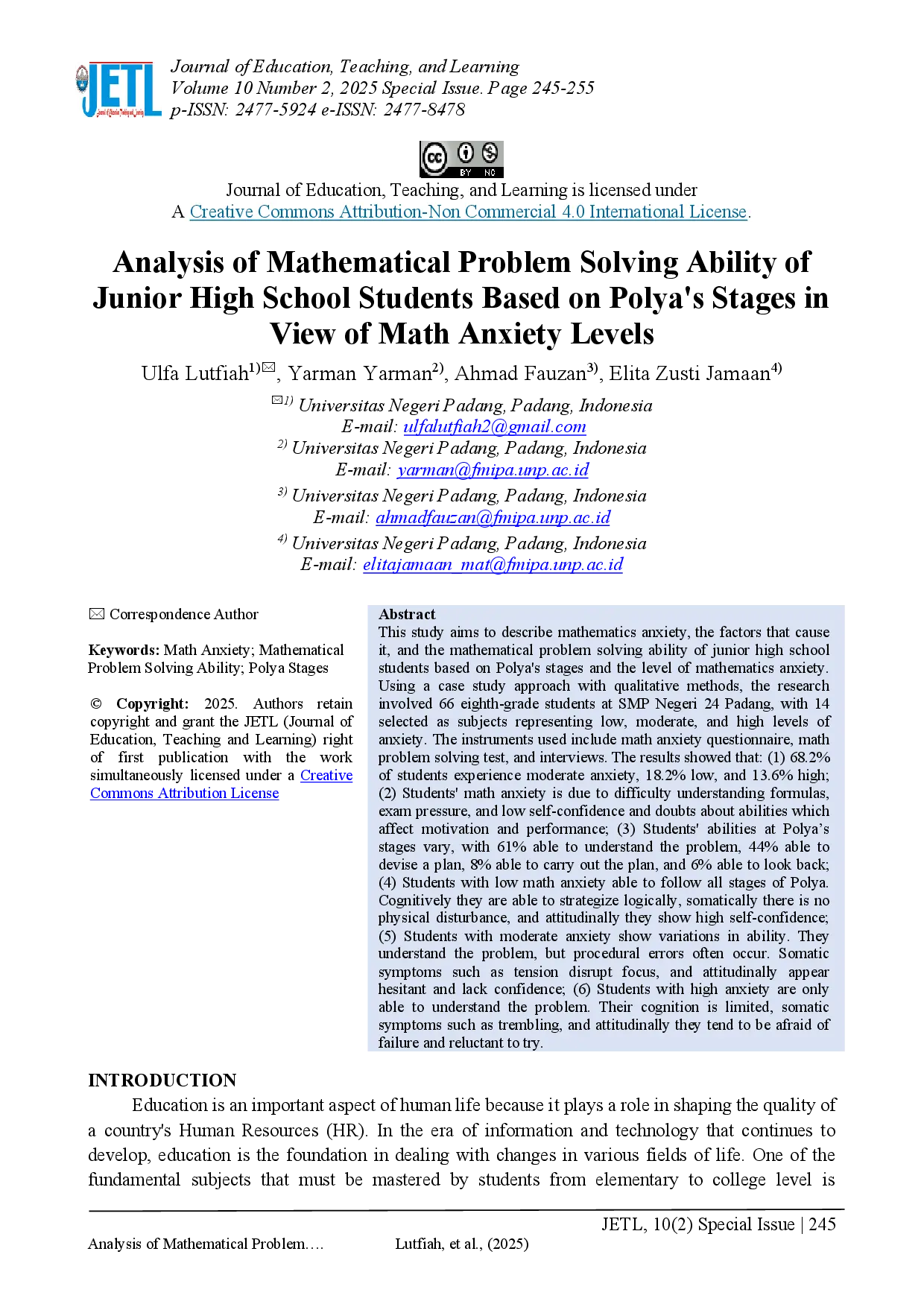
STKIP SINGKAWANGSTKIP SINGKAWANG Menggunakan pendekatan studi kasus dengan metode kualitatif, penelitian melibatkan 66 siswa kelas VIII di SMP Negeri 24 Padang, dengan 14 siswa terpilihMenggunakan pendekatan studi kasus dengan metode kualitatif, penelitian melibatkan 66 siswa kelas VIII di SMP Negeri 24 Padang, dengan 14 siswa terpilih

UMUM Penelitian ini bertujuan untuk mengetahui apakah model Think Talk Write meningkatkan kemampuan berpikir kritis siswa terkait materi bumi dan tata surya.Penelitian ini bertujuan untuk mengetahui apakah model Think Talk Write meningkatkan kemampuan berpikir kritis siswa terkait materi bumi dan tata surya.