AMSIRAMSIR
Jurnal Litigasi AmsirJurnal Litigasi AmsirSocial, economic, and cultural developments in Indonesia have significantly transformed family structures and relationships, particularly in the distribution of responsibilities between husbands and wives. Although Indonesian positive law primarily through Law No. 1 of 1974 on Marriage as amended by Law No. 16 of 2019, and the Compilation of Islamic Law (KHI) continues to affirm the husband as the head of the household and the wife as the homemaker, social realities indicate a shift toward more egalitarian family relations. The central issue of this study concerns how Indonesian family law accommodates social change and the transformation of gender roles without undermining the principles of justice and equality within the family. This research employs a normative legal approach combined with statutory and socio-legal perspectives, analyzed using a qualitative descriptive-analytical method. The findings reveal that Indonesian family law remains grounded in a patriarchal paradigm that positions men as dominant figures in the household. However, from a socio-legal and feminist legal perspective, there has been a noticeable shift in values and social practices toward gender equality in familial roles. This phenomenon has created a legal gap between normative frameworks and social realities, necessitating reinterpretation and reform of family law to ensure its responsiveness to substantive justice and gender equality principles. Therefore, family law in Indonesia should be reoriented toward an egalitarian and relational partnership paradigm that recognizes husbands and wives as equal legal subjects in rights, duties, and familial responsibilities.
Indonesian family law, as reflected in Law No.1 of 1974 on Marriage and the Compilation of Islamic Law (KHI), still exhibits a patriarchal orientation through the division of roles between husband and wife.However, social transformation within Indonesia has shifted gender roles towards more egalitarian relationships.Consequently, a legal gap exists between normative prescriptions and social reality, necessitating a reinterpretation of family law to ensure it functions as a tool for emancipation from patriarchal domination and upholds substantive justice and gender equality.
Penelitian lebih lanjut perlu dilakukan untuk mengkaji efektivitas implementasi prinsip-prinsip kesetaraan gender dalam putusan pengadilan terkait perceraian dan pembagian harta gono-gini, dengan fokus pada bagaimana hakim mempertimbangkan peran dan kontribusi masing-masing pihak dalam rumah tangga. Selain itu, studi komparatif mengenai pengaturan tanggung jawab suami istri di negara-negara dengan sistem hukum yang berbeda dapat memberikan wawasan berharga untuk reformasi hukum keluarga di Indonesia, khususnya dalam merumuskan definisi yang lebih inklusif mengenai peran dan tanggung jawab dalam keluarga modern. Terakhir, penelitian kualitatif mendalam yang melibatkan perspektif berbagai kelompok masyarakat, termasuk perempuan, laki-laki, dan kelompok minoritas, perlu dilakukan untuk memahami secara komprehensif dinamika kekuasaan dan negosiasi peran gender dalam konteks keluarga Indonesia, sehingga dapat merumuskan kebijakan hukum yang lebih responsif dan adil bagi semua anggota masyarakat.
| File size | 259.04 KB |
| Pages | 6 |
| DMCA | Report |
Related /

IAIN SUIAIN SU Secondary data were obtained from books, peer-reviewed journals, and official reports published within the last six years. The findings indicate that theSecondary data were obtained from books, peer-reviewed journals, and official reports published within the last six years. The findings indicate that the

IAIN LANGSAIAIN LANGSA Artikel ini mengkaji secara kritis apakah pemberian grasi kepada pelaku korupsi yang mengembalikan aset dapat dibenarkan dalam perspektif hukum Islam,Artikel ini mengkaji secara kritis apakah pemberian grasi kepada pelaku korupsi yang mengembalikan aset dapat dibenarkan dalam perspektif hukum Islam,

UINGUSDURUINGUSDUR Islamic law and social change are intertwined in a mutually beneficial way. There are a number of factors that influence the development of Islamic law,Islamic law and social change are intertwined in a mutually beneficial way. There are a number of factors that influence the development of Islamic law,

STAIN TDMSTAIN TDM Penelitian ini menggunakan metode kualitatif dengan pendekatan deskriptif, menggunakan observasi, wawancara, dan dokumentasi sebagai teknik pengumpulanPenelitian ini menggunakan metode kualitatif dengan pendekatan deskriptif, menggunakan observasi, wawancara, dan dokumentasi sebagai teknik pengumpulan
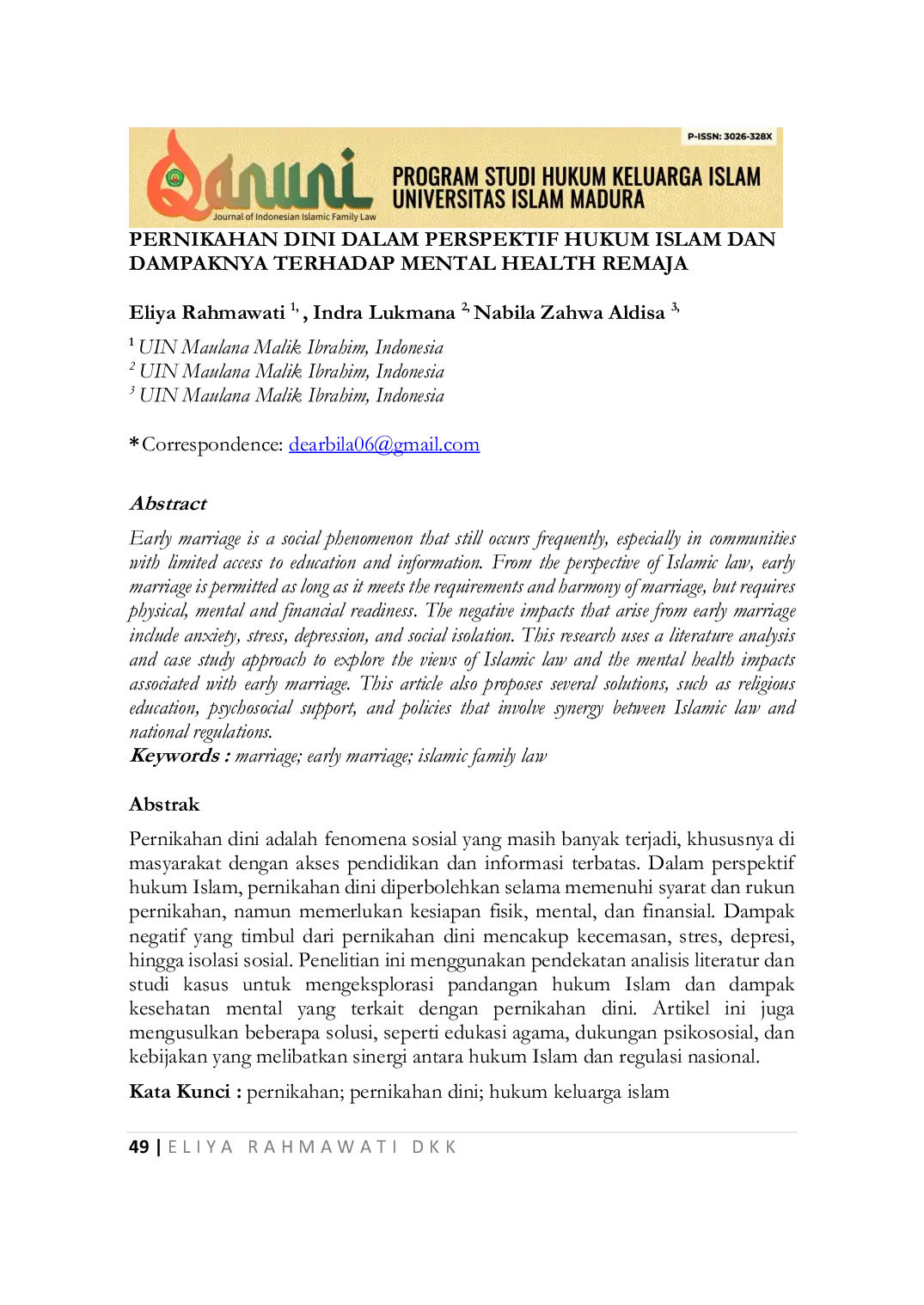
UIMUIM Penelitian ini menggunakan pendekatan analisis literatur dan studi kasus untuk mengeksplorasi pandangan hukum Islam dan dampak kesehatan mental yang terkaitPenelitian ini menggunakan pendekatan analisis literatur dan studi kasus untuk mengeksplorasi pandangan hukum Islam dan dampak kesehatan mental yang terkait

IAISAMBASIAISAMBAS Pemegang kekuasaan ini disebut Wali al-Faqih atau rahbas (Persia = pemimpin). Slogan tidak ada Timur, tidak ada Barat, yang dicetuskan oleh Khomaeni, sangatPemegang kekuasaan ini disebut Wali al-Faqih atau rahbas (Persia = pemimpin). Slogan tidak ada Timur, tidak ada Barat, yang dicetuskan oleh Khomaeni, sangat

STIBASTIBA Permasalahan yang diangkat dalam penelitian ini yaitu; Pertama, bagaimana jual beli mata uang menurut pandangan Islam. Kedua, bagaimana praktik jual beliPermasalahan yang diangkat dalam penelitian ini yaitu; Pertama, bagaimana jual beli mata uang menurut pandangan Islam. Kedua, bagaimana praktik jual beli

UNISSULAUNISSULA Defending the country is one form of patriotism; patriotism must be proven by practice as has been carried out by the Prophet Muhammad in personal andDefending the country is one form of patriotism; patriotism must be proven by practice as has been carried out by the Prophet Muhammad in personal and
Useful /

STAIN TDMSTAIN TDM Selain itu, rendahnya kesadaran hukum masyarakat dan taktik pelaku yang terus berkembang melalui teknologi memperumit proses penegakan hukum. Oleh karenaSelain itu, rendahnya kesadaran hukum masyarakat dan taktik pelaku yang terus berkembang melalui teknologi memperumit proses penegakan hukum. Oleh karena

STAIN TDMSTAIN TDM Sehubungan itu, kelayakan investasi NFT tidak dapat digeneralisasikan melainkan harus dievaluasi secara kontekstual untuk menjaga keadilan dan perlindunganSehubungan itu, kelayakan investasi NFT tidak dapat digeneralisasikan melainkan harus dievaluasi secara kontekstual untuk menjaga keadilan dan perlindungan
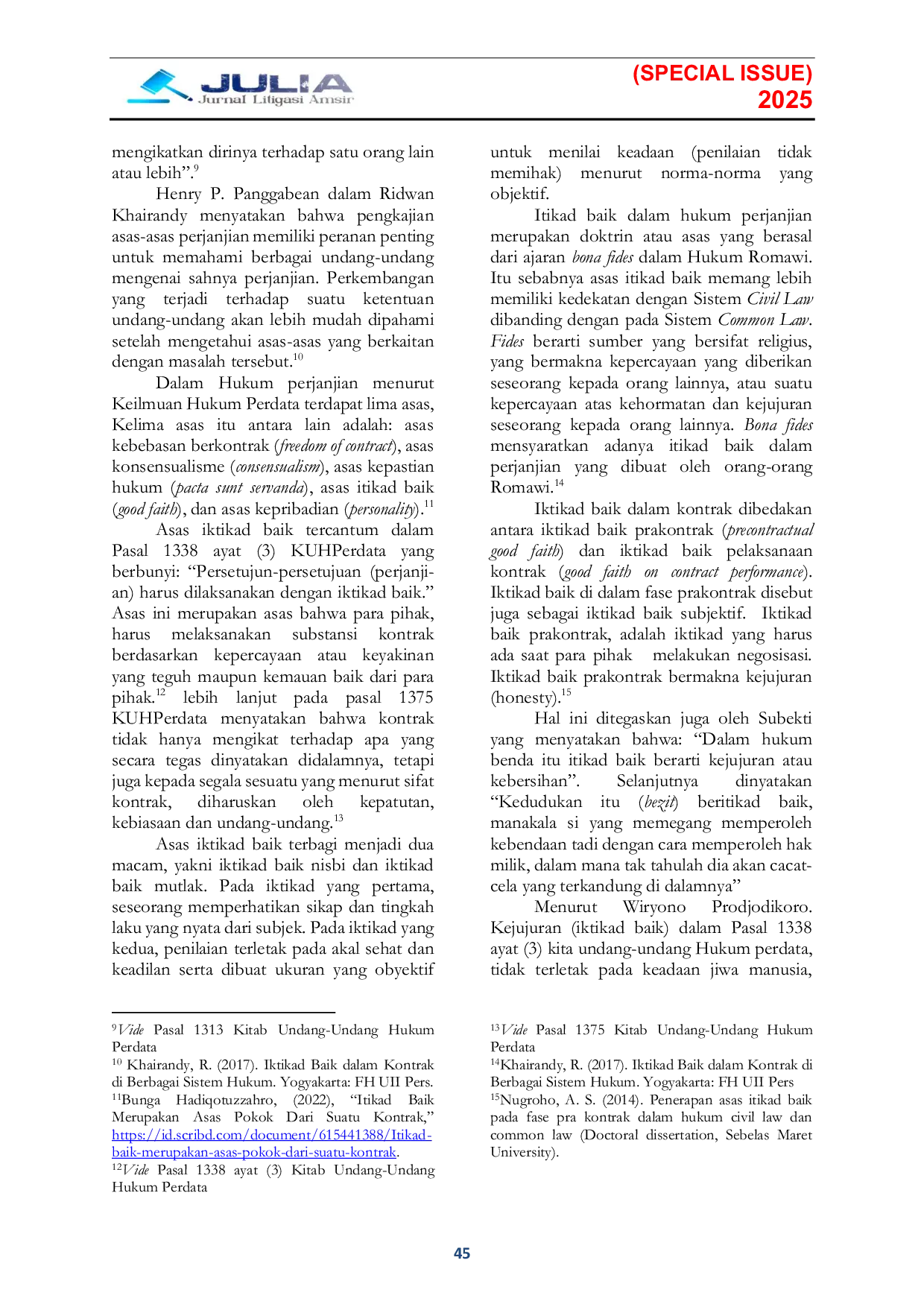
AMSIRAMSIR Good Faith Principle (Asas Iktikad Baik) dalam Hukum Perjanjian merupakan salah satu asas umum dalam hukum perjanjian, asas ini sendiri memiliki banyakGood Faith Principle (Asas Iktikad Baik) dalam Hukum Perjanjian merupakan salah satu asas umum dalam hukum perjanjian, asas ini sendiri memiliki banyak

AMSIRAMSIR Penelitian ini menggunakan pendekatan kualitatif dengan metode deskriptif-analitis melalui studi pustaka yang mengkaji berbagai literatur relevan mengenaiPenelitian ini menggunakan pendekatan kualitatif dengan metode deskriptif-analitis melalui studi pustaka yang mengkaji berbagai literatur relevan mengenai