IAIN PONOROGOIAIN PONOROGO
MA'ALIM: Jurnal Pendidikan IslamMA'ALIM: Jurnal Pendidikan IslamThis research aims to discuss the challenges of PAI teachers in teaching and inculcating Islamic religious values to students, and what efforts they made to maximize the process of inculcating Islamic values to students during the COVID-19 pandemic in Ponorogo Regency, East Java. A qualitative descriptive approach was used, while the data were collected through interviews and documentation. The results showed that: 1) among the challenges faced by PAI teachers in inculcating Islamic religious values in students were the ineffective process of inculcating values to students due to time and distance limitations as a result of the prohibition of holding offline classes, the unpreparedness of many parties such as teachers, students, and parents in facing the change during the COVID-19 pandemic, and technologys inability to replace the teachers role as values inculcator fully; 2) To maximize the process of inculcating Islamic religion values to students, the PAI teachers have tried to work together with parents and the community to take part in it so that the role and synergy of tri pusat pendidikan (three education centers), namely school, family and community education are truly revitalized.
The COVID-19 pandemic and physical distancing policies presented challenges to learning and the inculcation of Islamic religious values.PAI teachers faced difficulties due to limitations of time and distance, unpreparedness of stakeholders, and the inability of technology to fully replace the teachers role.Teachers responded by providing motivational learning materials and collaborating with parents and the community to strengthen the synergy between school, family, and community education.This collaborative approach aimed to ensure continued learning and the development of students values and character.
Further research could explore the specific online learning strategies most effective in fostering Islamic values among students during disruptions like pandemics. Additionally, studies could investigate the role of parental involvement in reinforcing religious education at home, particularly in the context of limited face-to-face interaction with schools. Finally, research is needed to examine how community-based initiatives can complement school and family efforts in cultivating Islamic values, creating a more holistic and resilient educational ecosystem for students facing unprecedented challenges. These investigations should consider the diverse socio-economic backgrounds of students and families to ensure equitable access to quality religious education and support, ultimately strengthening the moral and spiritual foundations of the next generation.
| File size | 430.89 KB |
| Pages | 15 |
| DMCA | Report |
Related /

UMMUBAUMMUBA The findings of the majority of studies confirm that character education not only shapes morality but also functions as an ecosystem strategy to strengthenThe findings of the majority of studies confirm that character education not only shapes morality but also functions as an ecosystem strategy to strengthen

UMMUBAUMMUBA Mahasiswa memerlukan bahan ajar yang tidak hanya memuat konsep-konsep kewarganegaraan, tetapi juga mampu menuntun mereka memahami realitas kehidupan digitalMahasiswa memerlukan bahan ajar yang tidak hanya memuat konsep-konsep kewarganegaraan, tetapi juga mampu menuntun mereka memahami realitas kehidupan digital

UMMUBAUMMUBA Penelitian ini merekomendasikan penggunaan teknologi digital berbasis gamifikasi untuk mata pelajaran lain guna menciptakan pembelajaran yang lebih interaktifPenelitian ini merekomendasikan penggunaan teknologi digital berbasis gamifikasi untuk mata pelajaran lain guna menciptakan pembelajaran yang lebih interaktif

UMMUBAUMMUBA Subjek penelitian ini, yaitu kepala sekolah, wali kelas, guru Pendidikan Agama Islam (PAI) dan Budi Pekerti, serta siswa di SMPN 14 Batang Hari. InstrumenSubjek penelitian ini, yaitu kepala sekolah, wali kelas, guru Pendidikan Agama Islam (PAI) dan Budi Pekerti, serta siswa di SMPN 14 Batang Hari. Instrumen

UMMUBAUMMUBA Analisis data meliputi uji normalitas (Lilliefors), homogenitas, dan uji hipotesis (uji t). Hasil analisis menunjukkan bahwa thitung (3,381) > ttabel (1,711),Analisis data meliputi uji normalitas (Lilliefors), homogenitas, dan uji hipotesis (uji t). Hasil analisis menunjukkan bahwa thitung (3,381) > ttabel (1,711),
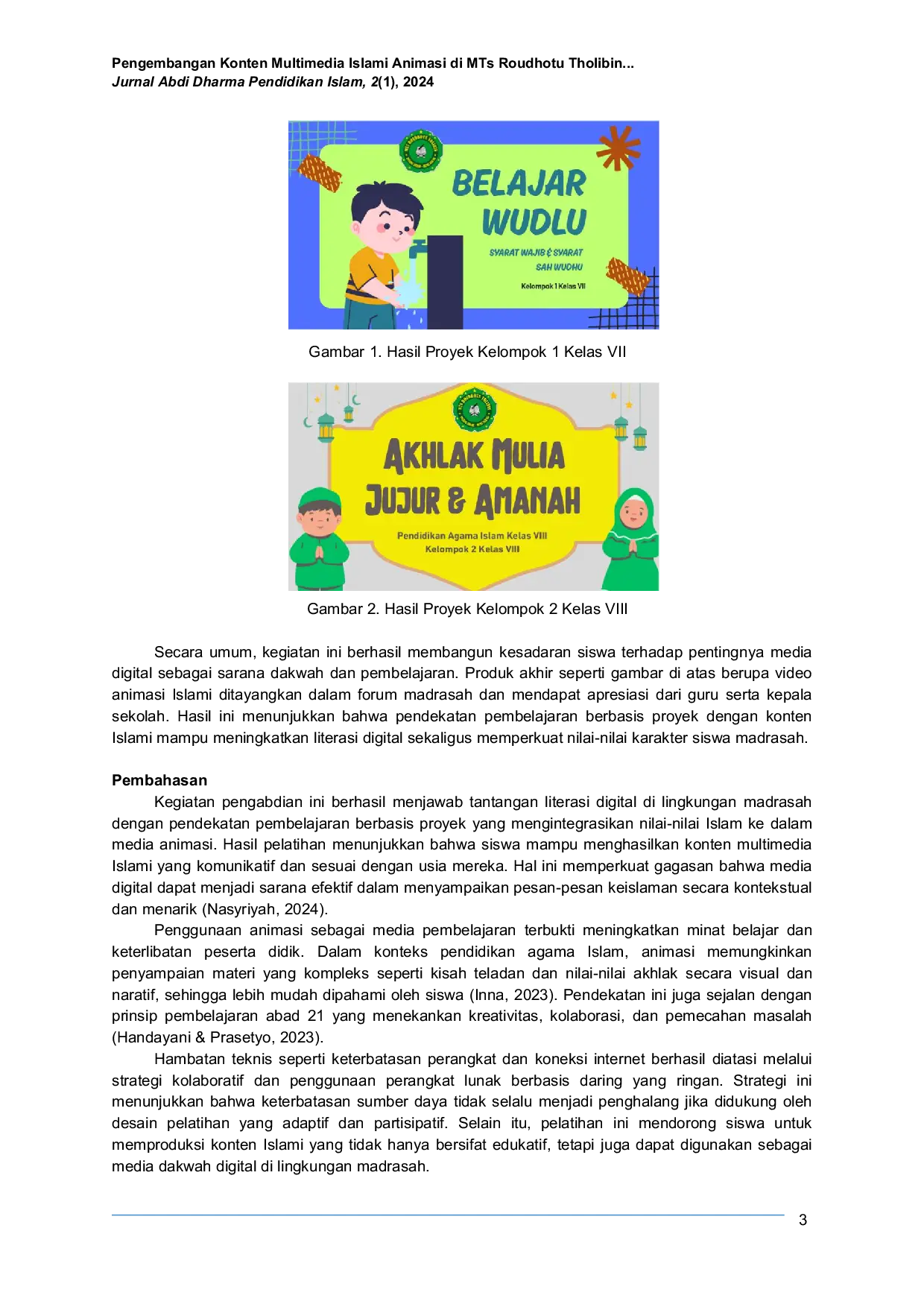
UNUHAUNUHA Pelatihan difokuskan pada pembuatan video animasi pendek yang mengangkat nilai-nilai akhlak, kisah teladan, dan pesan-pesan keislaman. Metode pelaksanaanPelatihan difokuskan pada pembuatan video animasi pendek yang mengangkat nilai-nilai akhlak, kisah teladan, dan pesan-pesan keislaman. Metode pelaksanaan

IMPERIUMINSTITUTEIMPERIUMINSTITUTE Budaya organisasi yang kuat dan positif tidak hanya membentuk identitas organisasi tetapi juga meningkatkan loyalitas dan komitmen anggota terhadap tujuanBudaya organisasi yang kuat dan positif tidak hanya membentuk identitas organisasi tetapi juga meningkatkan loyalitas dan komitmen anggota terhadap tujuan

SMARTPUBLISHERSMARTPUBLISHER Sistem bilangan riil memberikan dasar untuk menggambarkan nilai kontinu seperti harga barang dan pendapatan. Pertidaksamaan digunakan untuk menggambarkanSistem bilangan riil memberikan dasar untuk menggambarkan nilai kontinu seperti harga barang dan pendapatan. Pertidaksamaan digunakan untuk menggambarkan
Useful /

IJRETINAIJRETINA Deteksi dini dan pengelolaan multidisiplin sangat penting dalam mencegah kehilangan penglihatan yang tidak dapat diubah dan komplikasi sistemik. PemeriksaanDeteksi dini dan pengelolaan multidisiplin sangat penting dalam mencegah kehilangan penglihatan yang tidak dapat diubah dan komplikasi sistemik. Pemeriksaan

UMMUBAUMMUBA Bahasa Inggris memiliki peran penting dalam industri broadcasting, terutama dalam penguasaan perangkat lunak, istilah teknis, dan keterampilan komunikasiBahasa Inggris memiliki peran penting dalam industri broadcasting, terutama dalam penguasaan perangkat lunak, istilah teknis, dan keterampilan komunikasi

IJRETINAIJRETINA 99), with ResNet-152 and EfficientNet-B0 also performing well. Despite variations in specificity and PPV, AI shows promise for ROP screening. i-ROP DL99), with ResNet-152 and EfficientNet-B0 also performing well. Despite variations in specificity and PPV, AI shows promise for ROP screening. i-ROP DL

SMARTPUBLISHERSMARTPUBLISHER Bullying di sekolah merupakan salah satu masalah serius yang berdampak pada perkembangan psikologis dan akademik siswa. Penelitian ini bertujuan untukBullying di sekolah merupakan salah satu masalah serius yang berdampak pada perkembangan psikologis dan akademik siswa. Penelitian ini bertujuan untuk