UNMUNM
JURNAL NALAR PENDIDIKANJURNAL NALAR PENDIDIKANThis study is designed to develop a two-tier multiple-choice diagnostic assessment tool to identify students misconceptions in chemistry, particularly on the topics of conductive and non-conductive solutions, as well as reduction and oxidation processes. The development method follows the adapted framework of Wilson, Orindo, and Antonio, streamlined into three core phases: planning, feasibility assessment, and field testing. Validation was conducted through expert evaluation and the application of Rasch statistical analysis. The assessment tool demonstrated excellent content quality, with an Aiken score of 0.86, confirming its alignment with learning materials and the objective of enhancing students analytical skills. Field testing confirmed that the tool meets all Rasch measurement criteria, including unidimensionality, answer independence, parameter consistency, model fit, and item difficulty variation. The tool also exhibited strong measurement consistency, performing optimally in assessing students with intermediate ability levels. Thus, this instrument is deemed suitable for identifying conceptual errors in chemistry learning and serves as a guide for formulating effective instructional strategies.
The study successfully developed a two-tier multiple-choice diagnostic test instrument to identify students misconceptions in chemistry.Expert validation confirmed the instruments high content validity, and item analysis using the Rasch model fulfilled key psychometric assumptions.The instrument is most effective for students with moderate abilities, offering minimal measurement error and high reliability, making it a valuable tool for improving conceptual understanding in chemistry.
Future research should explore the effectiveness of this diagnostic test in diverse educational settings and with different student populations to assess its generalizability. Furthermore, studies could investigate the use of this diagnostic tool to inform personalized learning interventions tailored to address specific student misconceptions in chemistry, potentially utilizing adaptive learning technologies. Finally, researchers could expand the scope of the instrument to cover a broader range of chemistry topics and incorporate more complex item formats, such as open-ended questions or simulations, to provide a more comprehensive assessment of students conceptual understanding and reasoning skills, ultimately contributing to the development of more effective chemistry curricula and instructional practices. These investigations will require a minimum of 150 words to fully explore the potential benefits and challenges of implementing these research directions.
| File size | 461.83 KB |
| Pages | 8 |
| DMCA | Report |
Related /

IAIN KEDIRIIAIN KEDIRI Validasi terhadap tiga validator media dan tiga validator materi dilakukan untuk memastikan kualitas game. Kuesioner dan tes dikumpulkan dan dianalisisValidasi terhadap tiga validator media dan tiga validator materi dilakukan untuk memastikan kualitas game. Kuesioner dan tes dikumpulkan dan dianalisis

IAIN KEDIRIIAIN KEDIRI Kesimpulan menunjukkan bahwa penggunaan Articulate Storyline dalam kombinasi gamifikasi pada model kelas terbalik secara substansial meningkatkan keterlibatanKesimpulan menunjukkan bahwa penggunaan Articulate Storyline dalam kombinasi gamifikasi pada model kelas terbalik secara substansial meningkatkan keterlibatan

IAIN KEDIRIIAIN KEDIRI Data kuantitatif dikumpulkan melalui pre-test dan post-test (N = 24), sedangkan data kualitatif dikumpulkan melalui wawancara (N = 5) dan observasi. HasilData kuantitatif dikumpulkan melalui pre-test dan post-test (N = 24), sedangkan data kualitatif dikumpulkan melalui wawancara (N = 5) dan observasi. Hasil

IAIN KEDIRIIAIN KEDIRI Penelitian kualitatif ini dilakukan di kalangan mahasiswa dari Departemen Bahasa dan Sains di sebuah universitas Islam negeri di Tulungagung, Indonesia.Penelitian kualitatif ini dilakukan di kalangan mahasiswa dari Departemen Bahasa dan Sains di sebuah universitas Islam negeri di Tulungagung, Indonesia.
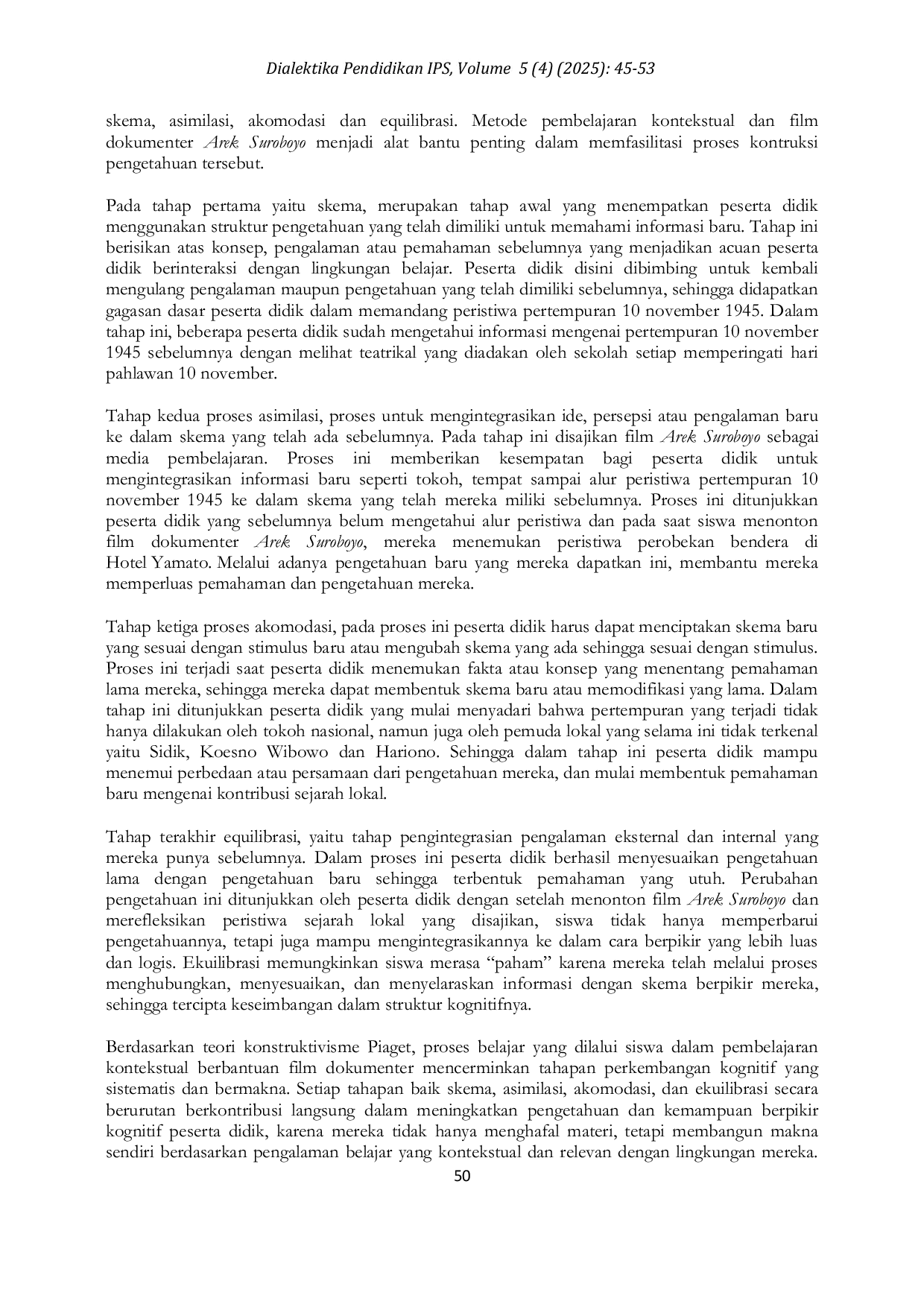
UNESAUNESA Media film dokumenter Arek Suroboyo terbukti memperkuat daya serap peserta didik terhadap materi sejarah lokal melalui penyajian visual yang kontekstualMedia film dokumenter Arek Suroboyo terbukti memperkuat daya serap peserta didik terhadap materi sejarah lokal melalui penyajian visual yang kontekstual

IAIN KEDIRIIAIN KEDIRI The study involved 22 senior high school students, an English teacher, and a lesson plan validator expert. The results from the development of InformationThe study involved 22 senior high school students, an English teacher, and a lesson plan validator expert. The results from the development of Information
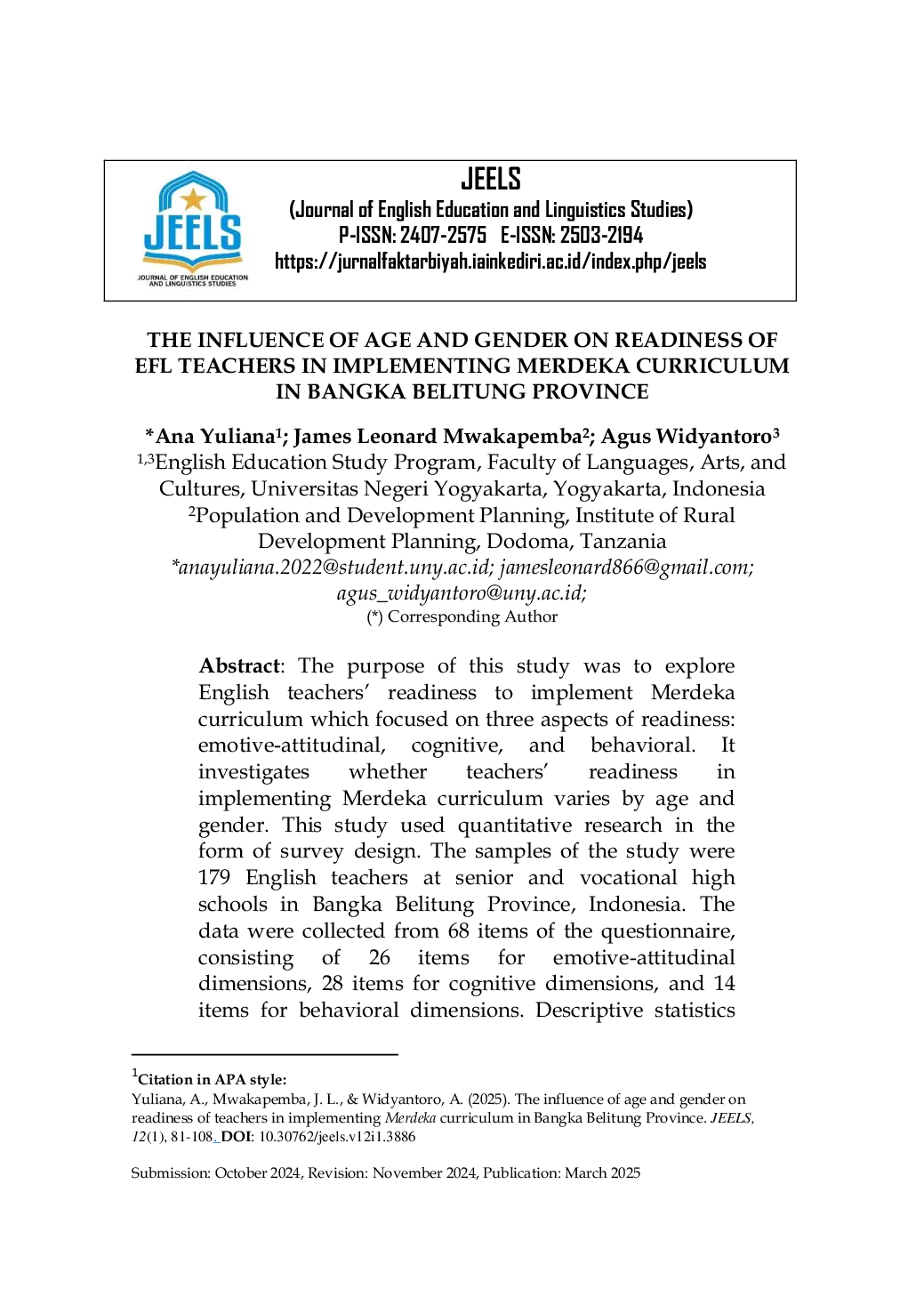
IAIN KEDIRIIAIN KEDIRI Teachers readiness in implementing Merdeka curriculum showed a statistically significant difference among different age groups of teachers. However, thereTeachers readiness in implementing Merdeka curriculum showed a statistically significant difference among different age groups of teachers. However, there
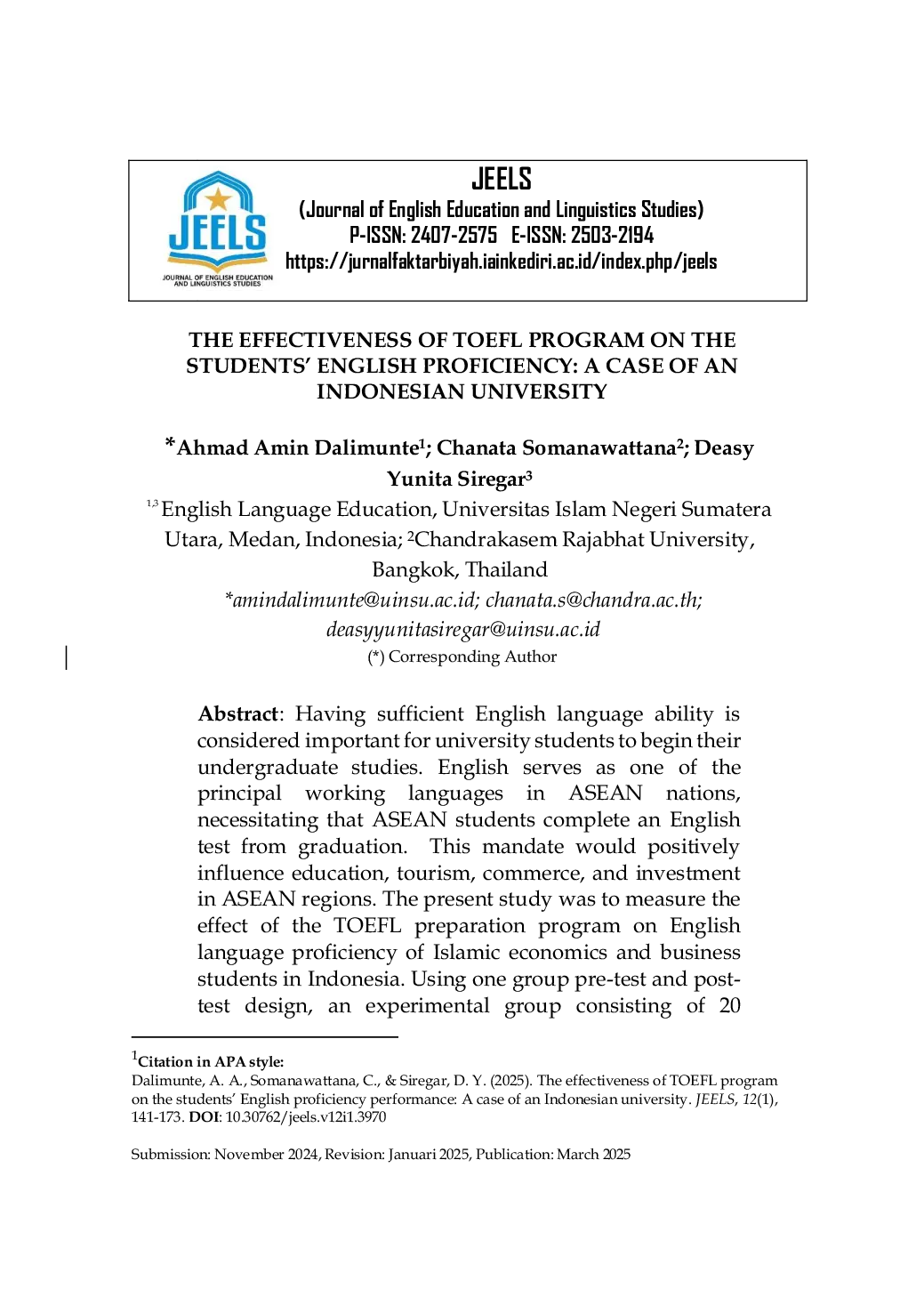
IAIN KEDIRIIAIN KEDIRI Program persiapan TOEFL menghasilkan peningkatan skor secara signifikan pada semua sub‑tes. Terbukti ada perbaikan dalam pemahaman mendengarkan, strukturProgram persiapan TOEFL menghasilkan peningkatan skor secara signifikan pada semua sub‑tes. Terbukti ada perbaikan dalam pemahaman mendengarkan, struktur
Useful /
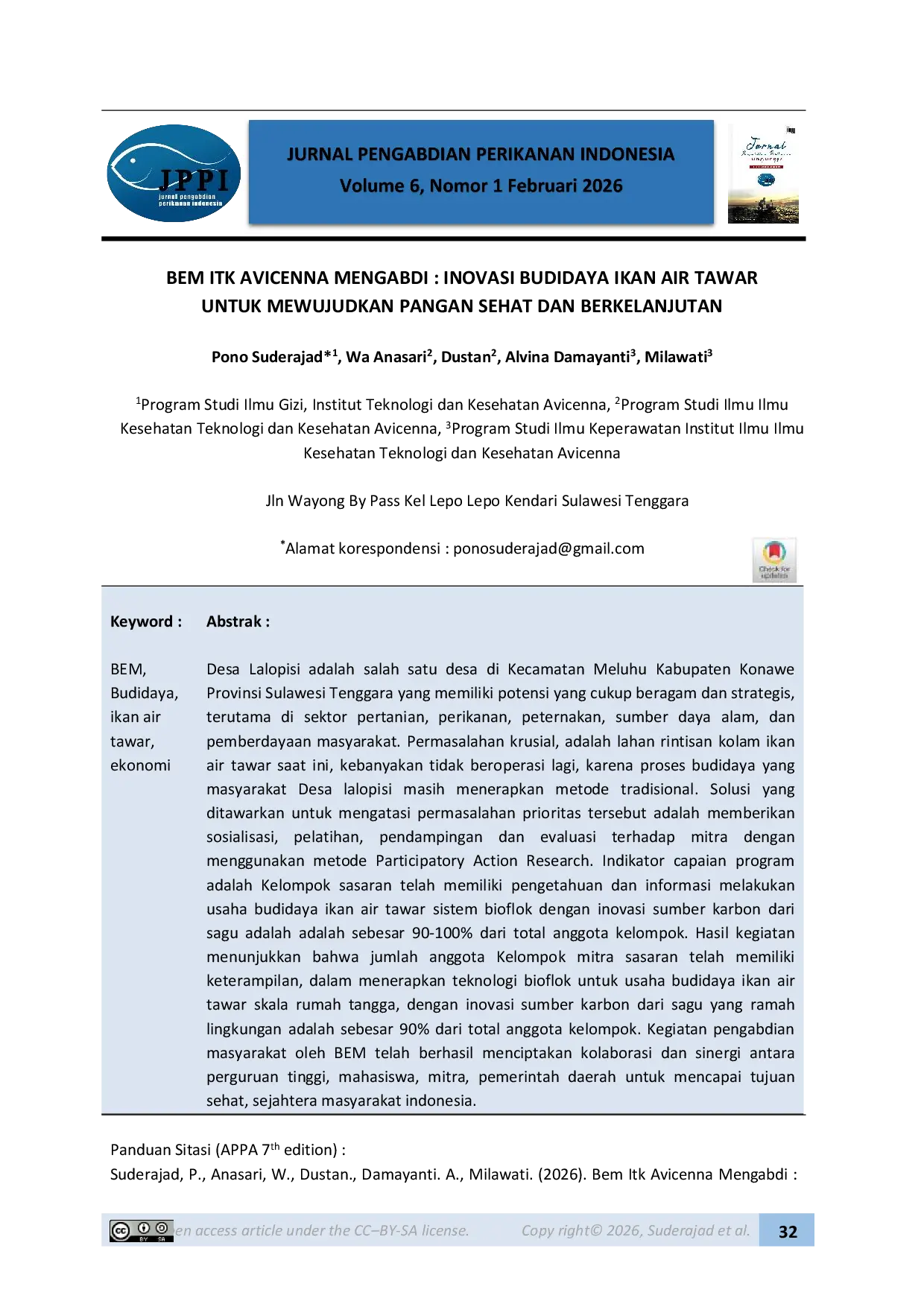
UNRAMUNRAM Solusi yang ditawarkan untuk mengatasi permasalahan tersebut adalah memberikan sosialisasi, pelatihan, pendampingan, dan evaluasi terhadap mitra denganSolusi yang ditawarkan untuk mengatasi permasalahan tersebut adalah memberikan sosialisasi, pelatihan, pendampingan, dan evaluasi terhadap mitra dengan
UNRAMUNRAM Kegiatan pengabdian ini bertujuan mendampingi masyarakat dalam penyediaan fragmen karang lokal sebagai sumber bibit transplantasi serta mentransfer teknologiKegiatan pengabdian ini bertujuan mendampingi masyarakat dalam penyediaan fragmen karang lokal sebagai sumber bibit transplantasi serta mentransfer teknologi
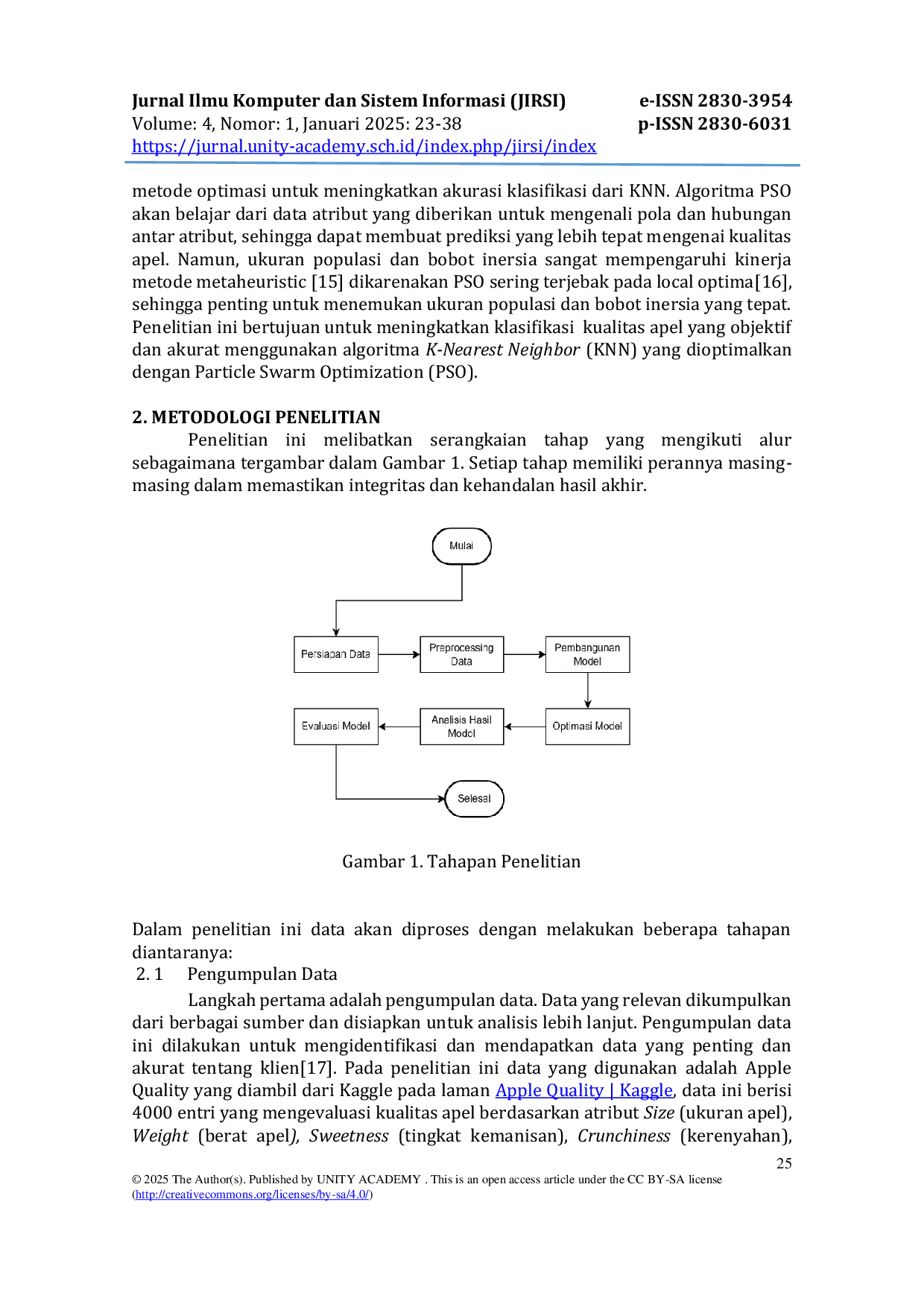
UNITY ACADEMYUNITY ACADEMY Hasil penelitian menunjukkan bahwa pengaturan ukuran populasi dan bobot inertia pada algoritma PSO berhasil mengoptimalkan kinerja KNN dalam klasifikasiHasil penelitian menunjukkan bahwa pengaturan ukuran populasi dan bobot inertia pada algoritma PSO berhasil mengoptimalkan kinerja KNN dalam klasifikasi
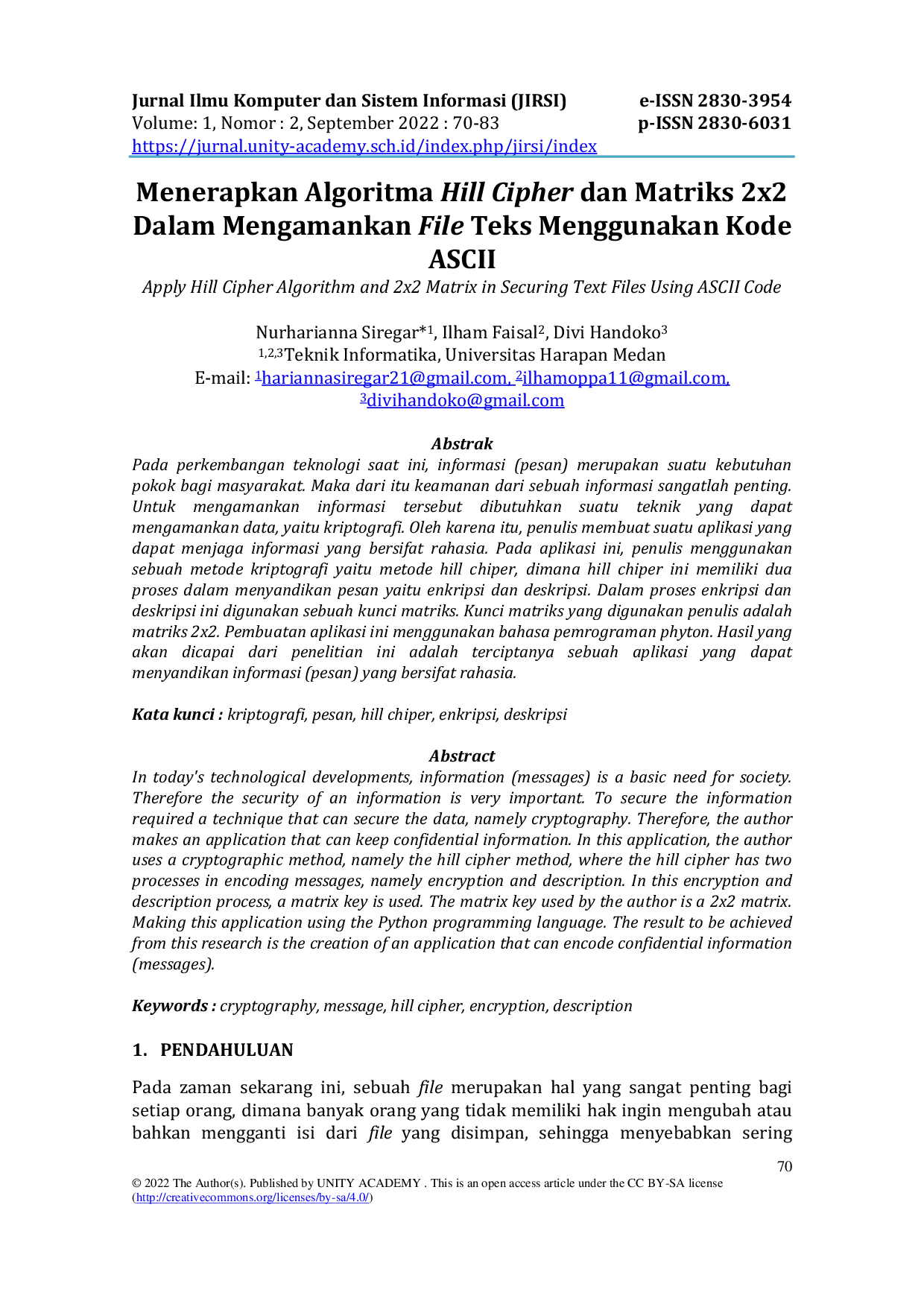
UNITY ACADEMYUNITY ACADEMY Oleh karena itu, penulis membuat suatu aplikasi yang dapat menjaga informasi yang bersifat rahasia. Pada aplikasi ini, penulis menggunakan sebuah metodeOleh karena itu, penulis membuat suatu aplikasi yang dapat menjaga informasi yang bersifat rahasia. Pada aplikasi ini, penulis menggunakan sebuah metode