JURNALFKIPUNTADJURNALFKIPUNTAD
Jurnal Akademika KimiaJurnal Akademika KimiaThis study aims to analyze students conceptions of reaction rate topics using the three-tier multi-representation test. Based on the characteristics of reaction rates concepts that involve the understanding of multiple representations, it is essential to analyze student conceptions that include multiple representations, namely macroscopic, microscopic, and symbolic. A three-tier diagnostic test can be done to assess students conceptions, with the questions given in the first tier presented with macroscopic, microscopic, or symbolic representations according to the characteristics of the concept in question. This research uses a descriptive quantitative method conducted at Madrasah Aliyah Negeri 2 in Palu City, Central Sulawesi. The subjects of this study were 50 students consisting of 28 female students and 22 male students. It was determined by random sampling technique. Instrumentation used a three-tier representation test with 15 multiple-choice questions. Validation of instruments showed that the questions were feasible and fell into the high category. The findings reveal that only 29 % of students know the concept, categorized as low. Additionally, 40 % of students were identified as having misconceptions, placing them within the medium category, while 31 % of students exhibited not knowing the concept, also classified in the medium category. Symbolic representation emerged as the most challenging representation for students, with 35 % failing to comprehend it, categorized as medium. Furthermore, among students with misconceptions, symbolic and macroscopic representations were the most problematic, collectively accounting for 34 %, also classified as medium. These results underscore the need for targeted instructional strategies to address specific areas of difficulty and improve overall conceptual understanding.
The study revealed that students understanding of reaction rate material is relatively low, with only 29% demonstrating a solid grasp of the concepts.A significant portion of students, 40%, exhibited misconceptions, indicating a need for targeted intervention.Furthermore, symbolic representation proved to be the most challenging for students, highlighting a gap in their ability to connect abstract symbols with concrete chemical phenomena.These findings emphasize the importance of employing instructional strategies that specifically address areas of difficulty and enhance students overall conceptual understanding of reaction rates.
Penelitian lebih lanjut dapat dilakukan untuk mengembangkan modul pembelajaran yang secara khusus menargetkan representasi simbolik dalam materi laju reaksi, dengan menggunakan analogi atau visualisasi yang lebih konkret untuk membantu siswa menjembatani kesenjangan antara simbol dan konsep. Selain itu, studi komparatif dapat dilakukan untuk membandingkan efektivitas berbagai pendekatan pembelajaran, seperti pembelajaran berbasis proyek atau pembelajaran kolaboratif, dalam mengatasi miskonsepsi siswa tentang laju reaksi dan representasi multi-level. Terakhir, penelitian kualitatif dapat dilakukan untuk menggali lebih dalam akar penyebab miskonsepsi siswa, dengan mewawancarai siswa dan guru untuk memahami bagaimana mereka menginterpretasikan konsep-konsep kunci dan mengidentifikasi hambatan-hambatan dalam proses pembelajaran. Penelitian-penelitian ini diharapkan dapat memberikan wawasan yang lebih komprehensif tentang bagaimana meningkatkan pemahaman siswa tentang laju reaksi dan representasi multi-level, serta mengembangkan strategi pembelajaran yang lebih efektif dan relevan.
| File size | 462.86 KB |
| Pages | 6 |
| DMCA | Report |
Related /
KHATECKHATEC Findings revealed a statistically significant difference in vocabulary development between the two groups, with the experimental group demonstrating substantiallyFindings revealed a statistically significant difference in vocabulary development between the two groups, with the experimental group demonstrating substantially

JURNALFKIPUNTADJURNALFKIPUNTAD 5 %, similarly, their critical thinking abilities also fell into the mild category with a rate of 48.33 %. Correlation analysis revealed a significant5 %, similarly, their critical thinking abilities also fell into the mild category with a rate of 48.33 %. Correlation analysis revealed a significant

JURNALFKIPUNTADJURNALFKIPUNTAD Data dalam penelitian ini diperoleh melalui tes kemampuan berpikir kritis siswa dalam bentuk esai dengan sebanyak lima butir soal. Tiga indikator berpikirData dalam penelitian ini diperoleh melalui tes kemampuan berpikir kritis siswa dalam bentuk esai dengan sebanyak lima butir soal. Tiga indikator berpikir

JURNALFKIPUNTADJURNALFKIPUNTAD Kadar nitrogen ditentukan menggunakan kolorimeter, kadar fosfor ditentukan menggunakan spektrofotometer UV-Vis, dan kadar kalium ditentukan menggunakanKadar nitrogen ditentukan menggunakan kolorimeter, kadar fosfor ditentukan menggunakan spektrofotometer UV-Vis, dan kadar kalium ditentukan menggunakan
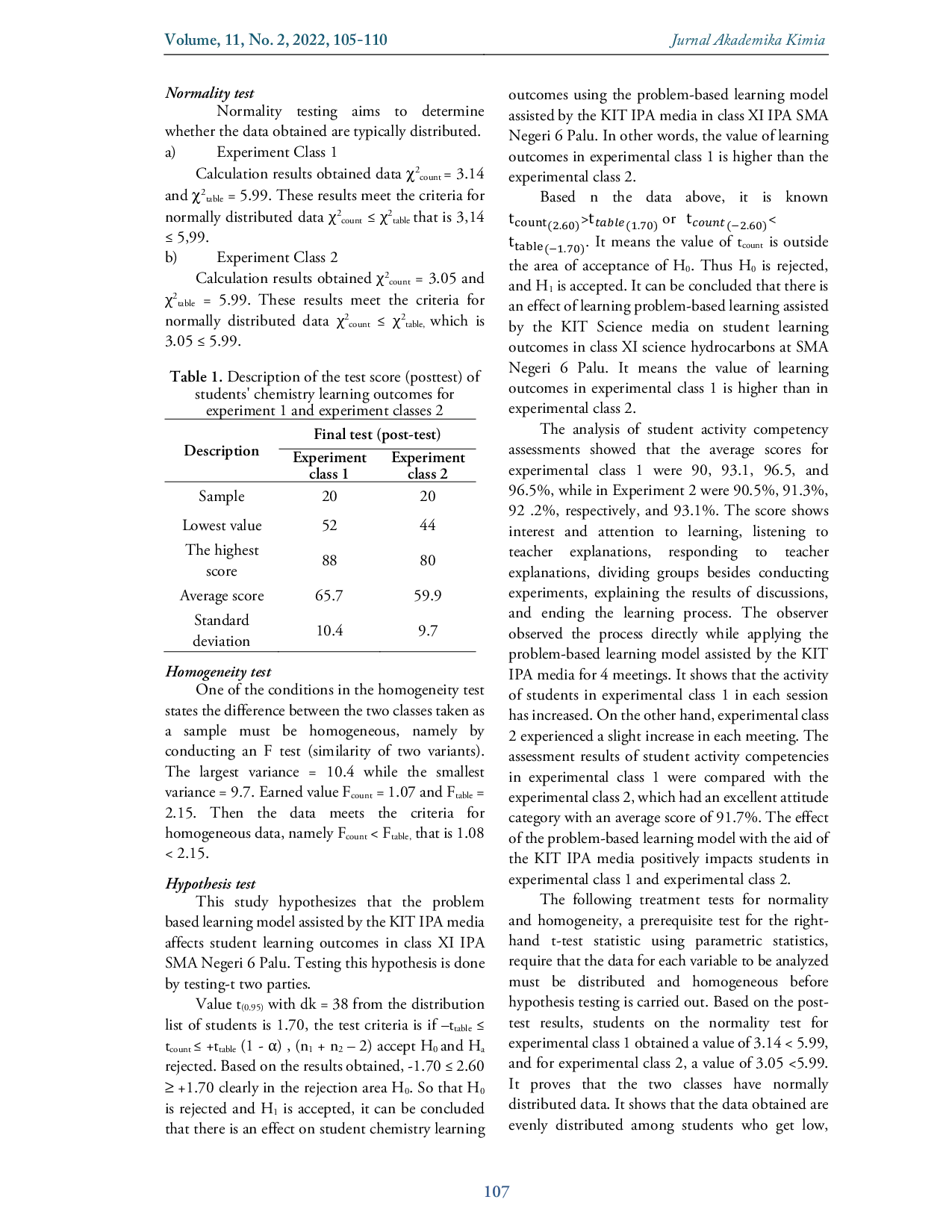
JURNALFKIPUNTADJURNALFKIPUNTAD Berdasarkan analisis data, terdapat pengaruh media Kit IPA terhadap hasil belajar kimia siswa pada materi hidrokarbon. Hasil uji statistik menunjukkanBerdasarkan analisis data, terdapat pengaruh media Kit IPA terhadap hasil belajar kimia siswa pada materi hidrokarbon. Hasil uji statistik menunjukkan
UNESAUNESA Kemajuan dunia digital dalam sektor pendidikan membawa perubahan besar pada pola komunikasi antara guru dan siswa. E-modul ini memuat materi pembelajaranKemajuan dunia digital dalam sektor pendidikan membawa perubahan besar pada pola komunikasi antara guru dan siswa. E-modul ini memuat materi pembelajaran

UNESAUNESA 3. 6 dengan mengikuti pengujian deskriptif, asumsi, dan korelasi. Hasil menunjukkan bahwa modal psikologis secara kuat memprediksi implementasi POAC, dengan3. 6 dengan mengikuti pengujian deskriptif, asumsi, dan korelasi. Hasil menunjukkan bahwa modal psikologis secara kuat memprediksi implementasi POAC, dengan

PUBMEDIAPUBMEDIA The research method used was a pre-experimental design with a pretest-posttest group. The research subjects were 10th-grade social studies students atThe research method used was a pre-experimental design with a pretest-posttest group. The research subjects were 10th-grade social studies students at
Useful /
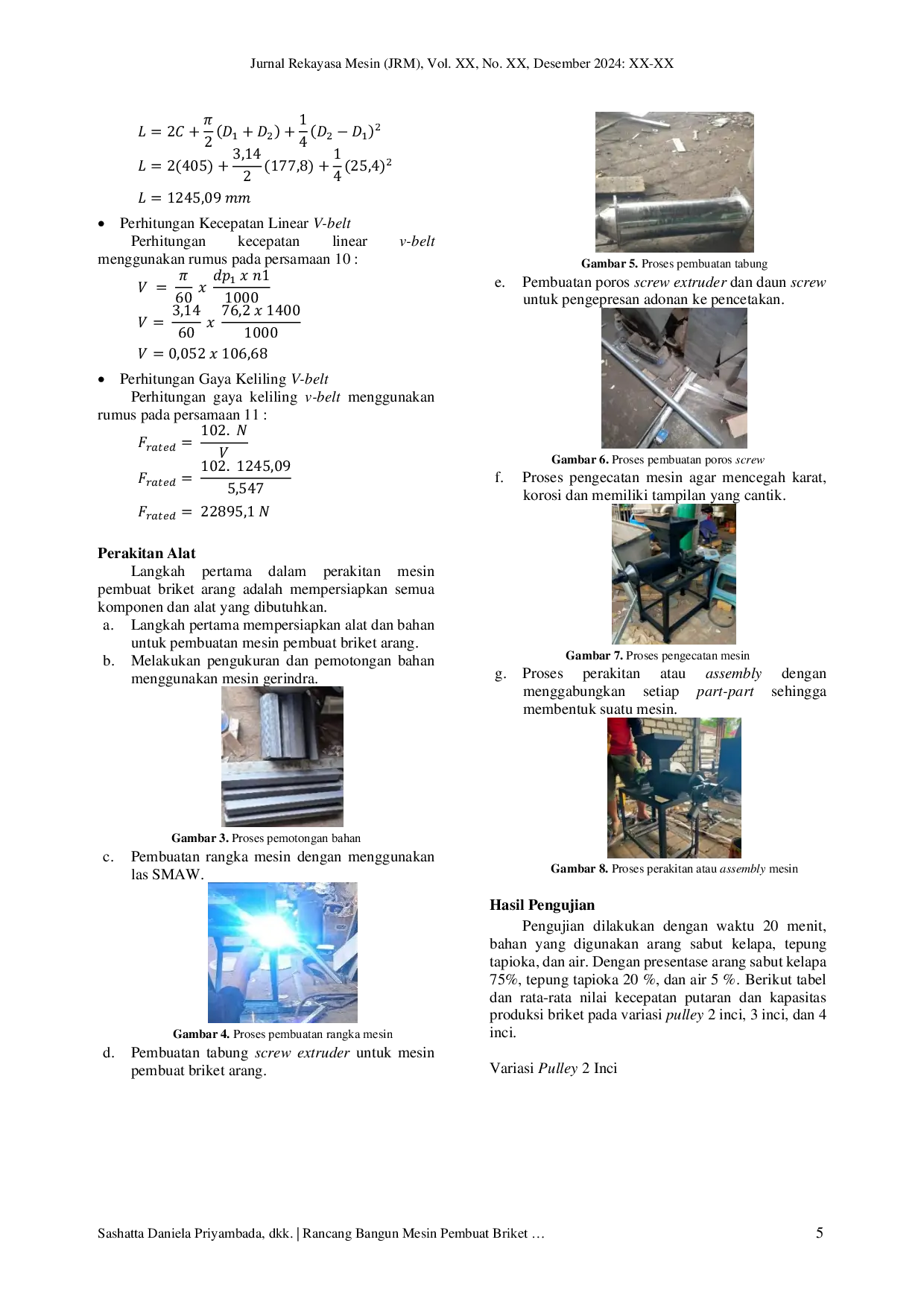
UNESAUNESA Metode penelitian yang digunakan adalah Research and Development (R&D). Hasil penelitian menunjukkan dimensi rangka 700 mm x 270 mm, panjang tabung extruderMetode penelitian yang digunakan adalah Research and Development (R&D). Hasil penelitian menunjukkan dimensi rangka 700 mm x 270 mm, panjang tabung extruder
UNESAUNESA Proses adaptive manufacturing mekanisme pipetting system menggunakan 3D printing FDM dimulai dengan desain CAD, diikuti pengolahan di UltiMaker Cura untukProses adaptive manufacturing mekanisme pipetting system menggunakan 3D printing FDM dimulai dengan desain CAD, diikuti pengolahan di UltiMaker Cura untuk

UNESAUNESA Hasil penelitian menunjukkan bahwa kecepatan pencetakan 100 mm/s adalah yang paling optimal, dengan durasi pencetakan 1 jam 41 menit, berat 38,65 gram,Hasil penelitian menunjukkan bahwa kecepatan pencetakan 100 mm/s adalah yang paling optimal, dengan durasi pencetakan 1 jam 41 menit, berat 38,65 gram,

WESTSCIENCE PRESSWESTSCIENCE PRESS Challenges such as copyright infringement, data security, and global competition for patents and trademarks necessitate strong and effective regulations.Challenges such as copyright infringement, data security, and global competition for patents and trademarks necessitate strong and effective regulations.