UNESAUNESA
Journal of Exercise Physiology and Health SciencesJournal of Exercise Physiology and Health SciencesThe present study investigated the effect of a four-week high-intensity interval training (HIIT) protocol on increasing cardiorespiratory and muscle endurance in futsal extracurricular activities. There were 40 students aged between 15-20 years with both sexes, who were randomly assigned to either an intervention or control group, which received their routine training schedule compared to the HIIT program, respectively. Cardiorespiratory endurance was quantified using a submaximal treadmill test to estimate VO2max, while muscular endurance was assessed with push-up and sit-up tests. Results indicated that the intervention group experienced significant improvements in VO2max (from 45.2 ± 4.1 to 50.3 ± 4.5 mL/kg/min, p < 0.001) and in both push-up (from 15.2 ± 3.4 to 22.5 ± 4.1 repetitions, p < 0.001) and sit-up tests (from 20.1 ± 4.2 to 28.3 ± 5.0 repetitions, p < 0.001). On the other hand, the control group showed no significant differences in any of the parameters evaluated. The findings suggest that a clearly structured HIIT program is effective in improving both cardiorespiratory and muscular endurance in futsal players and that it has immense potential as an effective training modality for attaining maximal athletic performance in sports involving intermittent high-intensity efforts. The results of this study are valuable for futsal as well as other sport categories trainers and coaches who wish to improve physical long-term consequences as well as characteristics of sportsmen. The physiological rationale of HIIT on endurance performance need to be explored through further studies.
The study demonstrates that a four-week interval training program significantly improves cardiorespiratory and muscle endurance among futsal extracurricular athletes.These findings suggest the necessity of incorporating high-intensity training methods within sports preparation programs for optimal performance outcomes in team sports like futsal.By implementing such training protocols, coaches can better prepare participants for competitive competition while fostering a culture of fitness and well-being within sports programs.
Penelitian lebih lanjut perlu dilakukan untuk menguji efektivitas program interval intensitas tinggi (HIIT) dalam jangka waktu yang lebih lama, melampaui empat minggu, guna memahami adaptasi berkelanjutan dan peningkatan kinerja pada pemain futsal. Selain itu, studi di masa depan dapat menyelidiki pengaruh HIIT terhadap karakteristik fisiologis spesifik yang relevan dengan futsal, seperti efisiensi gerakan dan kemampuan pengambilan keputusan di bawah tekanan, untuk mengoptimalkan protokol pelatihan. Terakhir, penelitian lebih lanjut harus mengeksplorasi potensi personalisasi program HIIT berdasarkan profil individu pemain, termasuk tingkat kebugaran awal, posisi bermain, dan karakteristik genetik, untuk memaksimalkan manfaat pelatihan dan meminimalkan risiko cedera, sehingga memberikan pendekatan pelatihan yang lebih tepat dan efektif bagi atlet futsal.
| File size | 936.65 KB |
| Pages | 7 |
| DMCA | Report |
Related /

SARI MUTIARASARI MUTIARA Sayur Fresh Teresia melalui berbagai platform. Hasil kegiatan menunjukkan pelaksanaan yang baik, mendapatkan perhatian positif dari masyarakat sekitar,Sayur Fresh Teresia melalui berbagai platform. Hasil kegiatan menunjukkan pelaksanaan yang baik, mendapatkan perhatian positif dari masyarakat sekitar,

SARI MUTIARASARI MUTIARA Hasil kegiatan menunjukkan bahwa mahasiswa menyadari pentingnya organisasi sebagai ruang pembinaan karakter yang efektif. Terdapat peningkatan pemahaman,Hasil kegiatan menunjukkan bahwa mahasiswa menyadari pentingnya organisasi sebagai ruang pembinaan karakter yang efektif. Terdapat peningkatan pemahaman,

SARI MUTIARASARI MUTIARA Human Immunodeficiency Virus atau disingkat HIV merupakan salah satu virus yang dapat menyerang ataupun menginfeksi sel darah putih yang menyebabkan kekebalanHuman Immunodeficiency Virus atau disingkat HIV merupakan salah satu virus yang dapat menyerang ataupun menginfeksi sel darah putih yang menyebabkan kekebalan
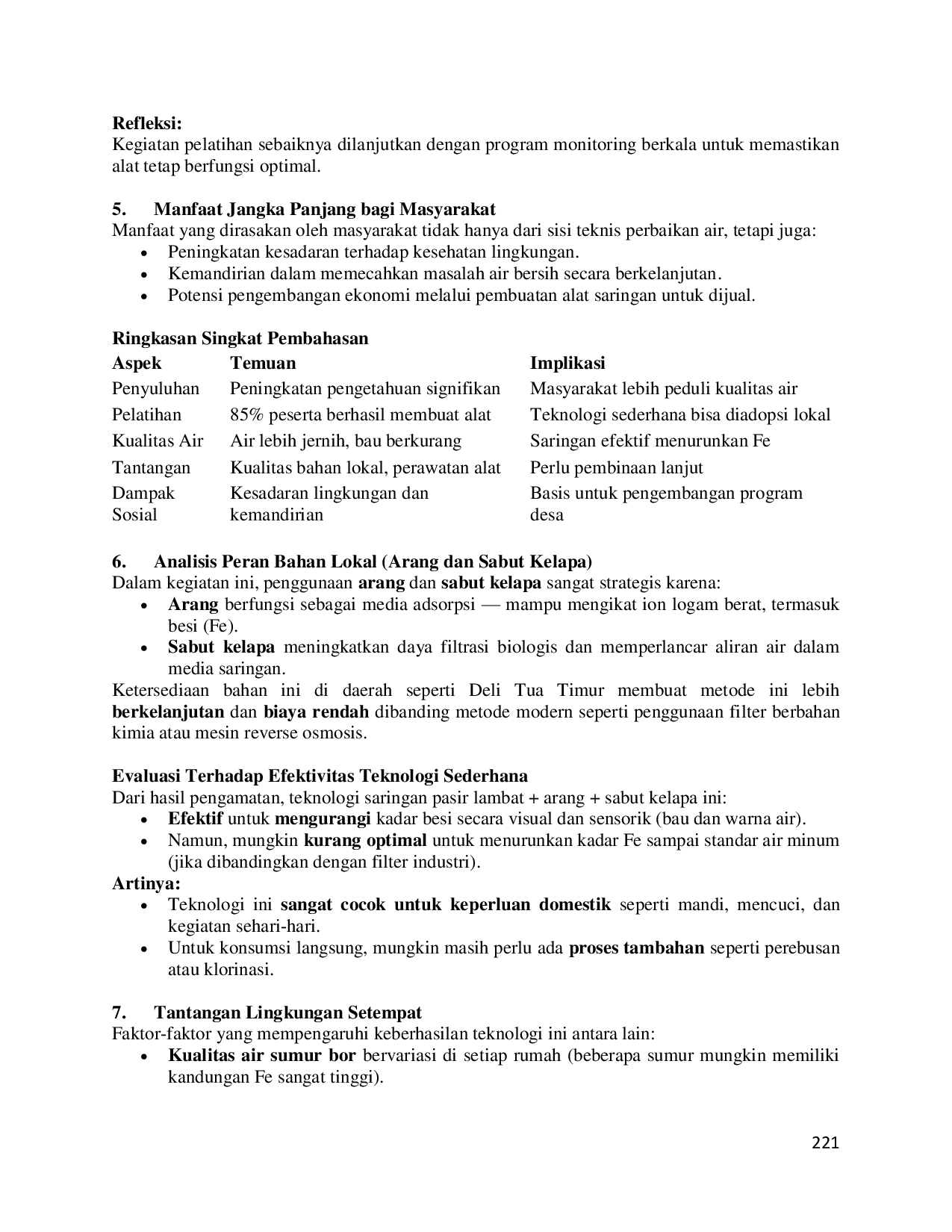
SARI MUTIARASARI MUTIARA Selain memberikan solusi teknis, kegiatan ini juga meningkatkan kesadaran lingkungan, mendorong kemandirian masyarakat, dan membuka potensi pengembanganSelain memberikan solusi teknis, kegiatan ini juga meningkatkan kesadaran lingkungan, mendorong kemandirian masyarakat, dan membuka potensi pengembangan

SARI MUTIARASARI MUTIARA Kegiatan ini tidak hanya meningkatkan pengetahuan, tetapi juga membangkitkan kesadaran dan rasa ingin tahu masyarakat terhadap DBD. Adanya peningkatanKegiatan ini tidak hanya meningkatkan pengetahuan, tetapi juga membangkitkan kesadaran dan rasa ingin tahu masyarakat terhadap DBD. Adanya peningkatan

SARI MUTIARASARI MUTIARA Jangkauan usia yang terpaut dekat menjadi salah satu keuntungan untuk menyediakan kebutuhan sandang yang beragam. Dari segi kebutuhan papan, panti asuhanJangkauan usia yang terpaut dekat menjadi salah satu keuntungan untuk menyediakan kebutuhan sandang yang beragam. Dari segi kebutuhan papan, panti asuhan

SARI MUTIARASARI MUTIARA Hasil kegiatan menunjukkan peningkatan pengetahuan peserta mengenai tanda-tanda bahaya seperti perdarahan, nyeri kepala hebat, pembengkakan wajah dan tangan,Hasil kegiatan menunjukkan peningkatan pengetahuan peserta mengenai tanda-tanda bahaya seperti perdarahan, nyeri kepala hebat, pembengkakan wajah dan tangan,

STIKESMEDISTRA INDONESIASTIKESMEDISTRA INDONESIA Artinya, remaja perempuan di MTs Al-Muhajirin Loa Janan menjadi lebih memahami dan lebih patuh dalam mengikuti anjuran konsumsi suplemen darah. Kesimpulan:Artinya, remaja perempuan di MTs Al-Muhajirin Loa Janan menjadi lebih memahami dan lebih patuh dalam mengikuti anjuran konsumsi suplemen darah. Kesimpulan:
Useful /

UNESAUNESA Jaringan Sensor Nirkabel (WSN) banyak digunakan dalam pemantauan dan pengumpulan data untuk berbagai aplikasi, tetapi menghadapi tantangan yang signifikanJaringan Sensor Nirkabel (WSN) banyak digunakan dalam pemantauan dan pengumpulan data untuk berbagai aplikasi, tetapi menghadapi tantangan yang signifikan

ITSNULAMPUNGITSNULAMPUNG Program ini mencakup penilaian kebutuhan, pelatihan pengetahuan dan keterampilan, pendampingan teknis, serta evaluasi dan monitoring untuk memastikan implementasiProgram ini mencakup penilaian kebutuhan, pelatihan pengetahuan dan keterampilan, pendampingan teknis, serta evaluasi dan monitoring untuk memastikan implementasi
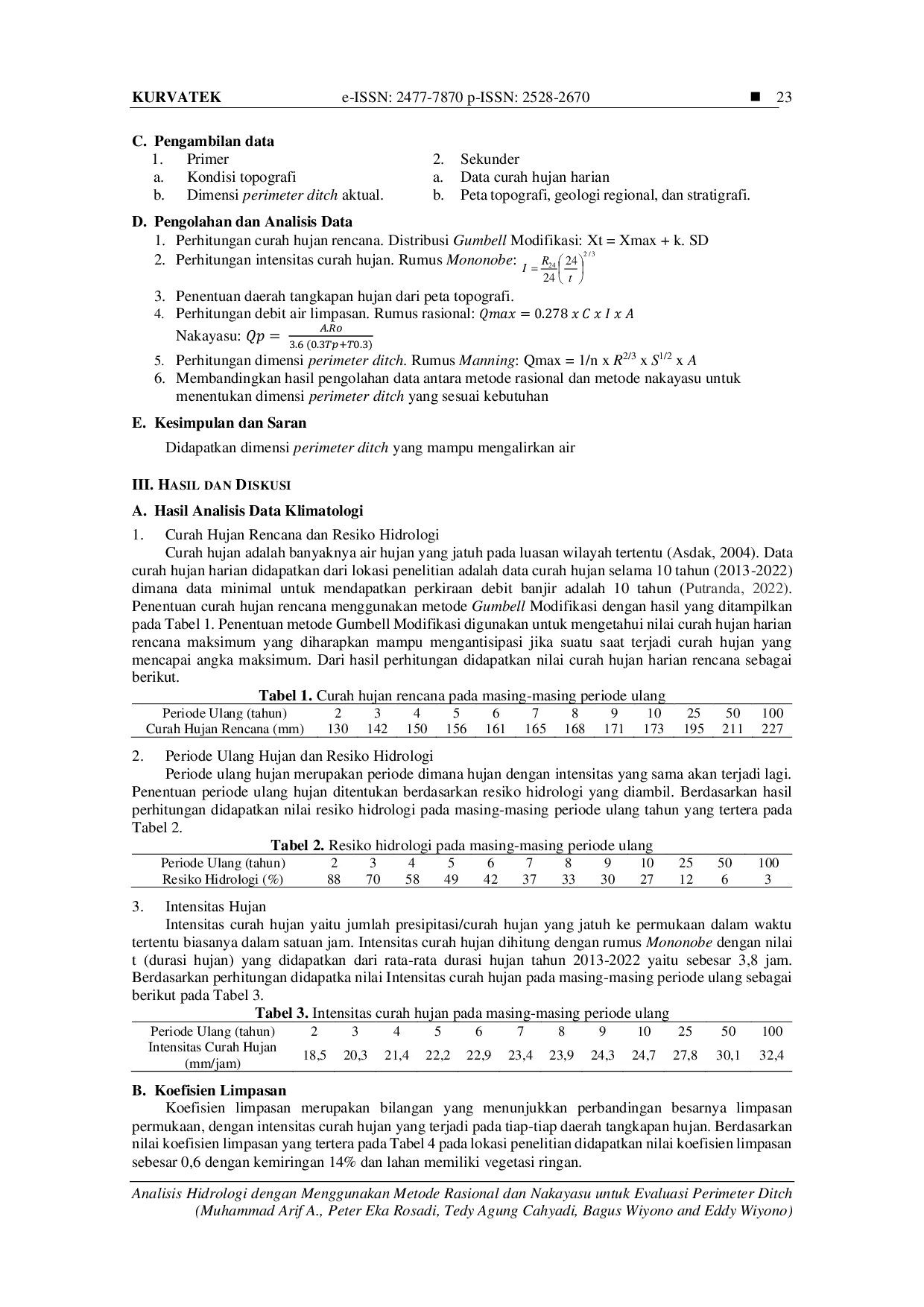
ITNYITNY Metode rasional dan Nakayasu digunakan untuk mengetahui nilai debit air limpasan. Hal ini penting untuk mencegah air limpasan masuk ke area penambangan.Metode rasional dan Nakayasu digunakan untuk mengetahui nilai debit air limpasan. Hal ini penting untuk mencegah air limpasan masuk ke area penambangan.

IIMSIIMS Kondisi awal menunjukkan rata-rata nilai siswa sebesar 59,4 dengan ketuntasan yang rendah, namun setelah penerapan media kartu kata, terjadi peningkatanKondisi awal menunjukkan rata-rata nilai siswa sebesar 59,4 dengan ketuntasan yang rendah, namun setelah penerapan media kartu kata, terjadi peningkatan