Tel-UTel-U
International Journal on Information and Communication Technology (IJoICT)International Journal on Information and Communication Technology (IJoICT)In Indonesia, dengue hemorrhagic fever (DHF) has become a serious community health concern due to fluctuating incidence rates influenced by several factors. It requires comprehensive control strategies to prevent the rise of the incidence. This study seeks to classify the future spread of DHF in Bandung City, accompanied by optimal factors that influence the increase in its spread. This study proposes using Decision Tree to predict a classification of DHF spread with implementation of spatial time-based feature expansion. The developed scenario is to build a target class with class prediction model based on the previous time period. From the developed scenario, the selected model has optimal performance to form a class prediction model in the future. The used classes itselves are formed by ranging the incidence rate (IR) into low, medium and high class. The data used includes spatial-temporal information such as population, education level, rainfall, temperature, and blood type from 2017 to 2021. The results obtained show that the performance of Decision Tree using time-based feature expansion is more than 90%, with visual predictions that help identify high risk areas. The contribution of this study is to inform the public and health institution regarding DHF spread for the future and influential factor so that the government can provide policies as early as possible to prevent DHF spread.
This research successfully predicted the spread of DHF in Bandung using a Decision Tree with time-based feature expansion, achieving accuracy levels exceeding 90%.The implementation of feature expansion from previous time periods proved effective in enhancing prediction accuracy.The findings contribute to informing public health initiatives and government policies for proactive DHF prevention.
Further research could investigate the integration of real-time environmental data, such as humidity and mosquito breeding site locations, to refine the prediction models and enhance their responsiveness to immediate conditions. Exploring the application of deep learning techniques, like recurrent neural networks (RNNs), alongside Decision Trees could potentially capture more complex temporal dependencies in DHF spread patterns, leading to improved forecasting accuracy. Additionally, a study focusing on the socio-economic factors influencing DHF vulnerability within specific sub-districts of Bandung could provide valuable insights for targeted intervention strategies, considering factors like housing quality, sanitation access, and community awareness levels. These investigations, building upon the current research, could contribute to a more comprehensive and effective approach to DHF control and prevention in Bandung and similar urban environments, ultimately reducing the burden of this significant public health concern. The combination of these approaches will provide a more holistic understanding of DHF dynamics and enable the development of more effective prevention and control strategies.
- Jurnal RESTI (Rekayasa Sistem dan Teknologi Informas)i. application na bayes classifier algorithm classify... jurnal.iaii.or.id/index.php/RESTI/article/view/4498Jurnal RESTI Rekayasa Sistem dan Teknologi Informas i application na bayes classifier algorithm classify jurnal iaii index php RESTI article view 4498
- Association of dengue disease severity and blood group: A systematic review and metaâanalysis... doi.org/10.1002/rmv.2147Association of dengue disease severity and blood group A systematic review and metayAAAaanalysis doi 10 1002 rmv 2147
| File size | 846.2 KB |
| Pages | 17 |
| DMCA | Report |
Related /

UIN SGDUIN SGD Hasil penelitian menunjukkan bahwa penyemaian awan menimbulkan ancaman kesehatan berupa kontaminasi air, kanker atau iritasi kulit, gangguan pernapasan,Hasil penelitian menunjukkan bahwa penyemaian awan menimbulkan ancaman kesehatan berupa kontaminasi air, kanker atau iritasi kulit, gangguan pernapasan,

UIN SGDUIN SGD Temuan ini menegaskan bahwa reformasi hukum saja tidak cukup tanpa diiringi transformasi budaya, mekanisme kelembagaan yang terintegrasi, dan keterlibatanTemuan ini menegaskan bahwa reformasi hukum saja tidak cukup tanpa diiringi transformasi budaya, mekanisme kelembagaan yang terintegrasi, dan keterlibatan
UIN SGDUIN SGD Penelitian ini menunjukkan bahwa pandangan budaya dan agama di Indonesia secara umum mengakui pentingnya melindungi anak, bahkan sejak dalam kandungan.Penelitian ini menunjukkan bahwa pandangan budaya dan agama di Indonesia secara umum mengakui pentingnya melindungi anak, bahkan sejak dalam kandungan.

UIN SGDUIN SGD Penelitian ini menggunakan pendekatan yuridis normatif dengan desain kualitatif, dengan unit analisis berupa Peraturan Daerah No. 1 Tahun 2020 dan peraturanPenelitian ini menggunakan pendekatan yuridis normatif dengan desain kualitatif, dengan unit analisis berupa Peraturan Daerah No. 1 Tahun 2020 dan peraturan

UIN SGDUIN SGD Sumber primer dari kedua pihak yang melangsungkan akad gadai-mengadai pohon kelapa. Sumber sekunder masyarakat setempat. Teknik pengambilan data melaluiSumber primer dari kedua pihak yang melangsungkan akad gadai-mengadai pohon kelapa. Sumber sekunder masyarakat setempat. Teknik pengambilan data melalui

UIN SGDUIN SGD Catatan bahwa keterlibatan spesialis asing akan berkontribusi pada pertimbangan dan penyelesaian sengketa perdata yang melibatkan orang asing dengan kualitasCatatan bahwa keterlibatan spesialis asing akan berkontribusi pada pertimbangan dan penyelesaian sengketa perdata yang melibatkan orang asing dengan kualitas

UIN SGDUIN SGD Land acquisition must be positioned not merely as an administrative instrument, but as a transformational strategy that ensures that national developmentLand acquisition must be positioned not merely as an administrative instrument, but as a transformational strategy that ensures that national development
UIN SGDUIN SGD Big Data dan Data Mining adalah metode yang digunakan untuk memprediksi kejahatan dan melakukan investigasi kriminal. Penggunaan Big Data dalam investigasiBig Data dan Data Mining adalah metode yang digunakan untuk memprediksi kejahatan dan melakukan investigasi kriminal. Penggunaan Big Data dalam investigasi
Useful /
MAYADANIMAYADANI Proyek kegiatan pengabdian ini bertujuan untuk meningkatkan literasi budaya dan keterampilan para guru sekolah dasar (SD) di Kecamatan Polokarto, KabupatenProyek kegiatan pengabdian ini bertujuan untuk meningkatkan literasi budaya dan keterampilan para guru sekolah dasar (SD) di Kecamatan Polokarto, Kabupaten

Tel-UTel-U Metode yang diusulkan menunjukkan kinerja yang lebih baik daripada teknologi yang ada. Berdasarkan eksperimen dan analisis yang telah didiskusikan danMetode yang diusulkan menunjukkan kinerja yang lebih baik daripada teknologi yang ada. Berdasarkan eksperimen dan analisis yang telah didiskusikan dan

Tel-UTel-U Moreover, the generated Gherkin includes fully detailed steps—Given, When Then—whereas prior studies, such as [11], lacked the “Then step. Additionally,Moreover, the generated Gherkin includes fully detailed steps—Given, When Then—whereas prior studies, such as [11], lacked the “Then step. Additionally,
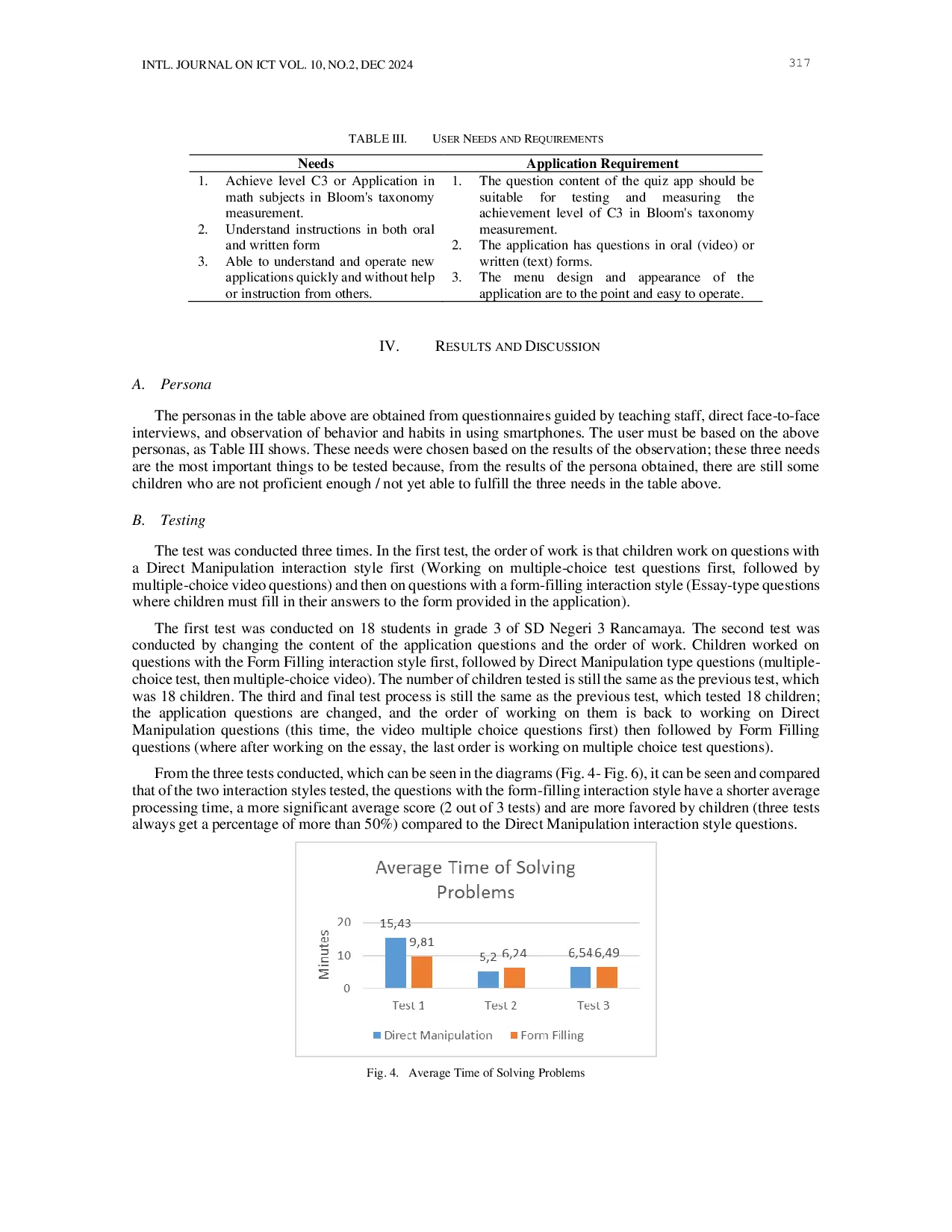
Tel-UTel-U Penelitian ini melibatkan 18 anak yang diuji dalam tiga tahap berbeda. Data yang dikumpulkan meliputi waktu pemrosesan, skor, dan preferensi pengguna.Penelitian ini melibatkan 18 anak yang diuji dalam tiga tahap berbeda. Data yang dikumpulkan meliputi waktu pemrosesan, skor, dan preferensi pengguna.