ABDIMASABDIMAS
Jurnal Abdimas PeradabanJurnal Abdimas PeradabanRural entrepreneurs face various constraints and challenges, such as limited access to capital, technology, and markets, which hinder the development of their businesses. The need for training and mentoring programs that can improve their skills and knowledge is urgent. Community-based programs that involve entrepreneurs and local communities in planning and implementation can be an effective solution. This study aims to develop and evaluate a community-based training and mentoring program for rural entrepreneurs. This study was conducted using a qualitative approach, using data from various relevant sources, such as research results and previous studies. The collected data were then processed to find significant results. The conclusion of this study shows that a participatory approach in training and mentoring programs is essential to ensure the relevance and effectiveness of the program. The curriculum that includes business management, marketing, and information technology has been proven to meet the specific needs of rural entrepreneurs. The role of competent facilitators and active community participation support the successful implementation of the program. Continuous evaluation using surveys, interviews, and observations ensures the program can be continuously improved and adjusted. The program has positive long-term impacts, including skills improvement, local economic development, and new job creation, as well as ensuring sustainability through partnerships and sustainable business models.
This study concludes that a participatory approach is crucial for the relevance and effectiveness of training and mentoring programs for rural entrepreneurs.A curriculum encompassing business management, marketing, and information technology effectively addresses their specific needs.Competent facilitators and active community participation are vital for successful program implementation.
Further research should investigate the long-term financial sustainability of these community-based programs, exploring innovative funding models beyond initial grants. Additionally, a comparative study examining the effectiveness of different mentoring approaches – such as peer-to-peer mentoring versus expert-led mentoring – could provide valuable insights for program optimization. Finally, research is needed to understand how to effectively integrate digital literacy training into these programs, specifically focusing on leveraging e-commerce platforms and social media for market access, to empower rural entrepreneurs in the evolving digital landscape. These investigations, building upon the current studys findings, will contribute to the development of more robust and impactful interventions for rural entrepreneurship development, fostering economic growth and resilience within these communities.
| File size | 483.03 KB |
| Pages | 13 |
| DMCA | Report |
Related /

IDID Keberlanjutan program memerlukan pendampingan berkelanjutan, akses permodalan, sertifikasi produk, dan perluasan pasar untuk menjamin dampak positif jangkaKeberlanjutan program memerlukan pendampingan berkelanjutan, akses permodalan, sertifikasi produk, dan perluasan pasar untuk menjamin dampak positif jangka

IDID Kegiatan ini memberikan dampak positif berupa meningkatnya pemahaman dan kemampuan ibu balita dalam pemenuhan gizi anak serta mendorong penerapan praktikKegiatan ini memberikan dampak positif berupa meningkatnya pemahaman dan kemampuan ibu balita dalam pemenuhan gizi anak serta mendorong penerapan praktik

IDID Kegiatan dilaksanakan di Oemah Jamur Tangerang, Kabupaten Tangerang, pada tanggal 12–14 Oktober 2025 dengan metode pelatihan berbasis demonstrasi danKegiatan dilaksanakan di Oemah Jamur Tangerang, Kabupaten Tangerang, pada tanggal 12–14 Oktober 2025 dengan metode pelatihan berbasis demonstrasi dan

UNDANAUNDANA 000 per unit, berdasarkan daya beli masyarakat setempat dan biaya produksi sederhana; (3) Promosi: masih terbatas pada promosi dari mulut ke mulut dan000 per unit, berdasarkan daya beli masyarakat setempat dan biaya produksi sederhana; (3) Promosi: masih terbatas pada promosi dari mulut ke mulut dan

UNWAHAUNWAHA Pendekatan Participatory Action Research (PAR) dan Service Learning (SL) efektif mendorong partisipasi aktif, menumbuhkan kemandirian ekonomi, serta memperkuatPendekatan Participatory Action Research (PAR) dan Service Learning (SL) efektif mendorong partisipasi aktif, menumbuhkan kemandirian ekonomi, serta memperkuat
POMPOM Hal tersebut telah menjadi permasalahan kompleks karena kaitan yang erat dengan sosial ekonomi masyarakat setempat. Pendekatan represif saja terbukti tidakHal tersebut telah menjadi permasalahan kompleks karena kaitan yang erat dengan sosial ekonomi masyarakat setempat. Pendekatan represif saja terbukti tidak

USMUSM Hal ini menandakan adanya respon positif dari peserta didik mengenai akibat kenakalan remaja. Dengan adanya program pengabdian ini, diharapkan pesertaHal ini menandakan adanya respon positif dari peserta didik mengenai akibat kenakalan remaja. Dengan adanya program pengabdian ini, diharapkan peserta

AKSAQILAJURNALAKSAQILAJURNAL Sehubungan dengan tuntutan kearah profesionalisme tenaga pendidik dan kependidikan, maka semakin dirasakannya desakan untuk peningkatan mutu pendidikanSehubungan dengan tuntutan kearah profesionalisme tenaga pendidik dan kependidikan, maka semakin dirasakannya desakan untuk peningkatan mutu pendidikan
Useful /

USMUSM Namun, terdapat beberapa tantangan yang dihadapi, seperti keterbatasan infrastruktur di daerah terpencil dan adaptasi petani terhadap teknologi baru.meskipunNamun, terdapat beberapa tantangan yang dihadapi, seperti keterbatasan infrastruktur di daerah terpencil dan adaptasi petani terhadap teknologi baru.meskipun
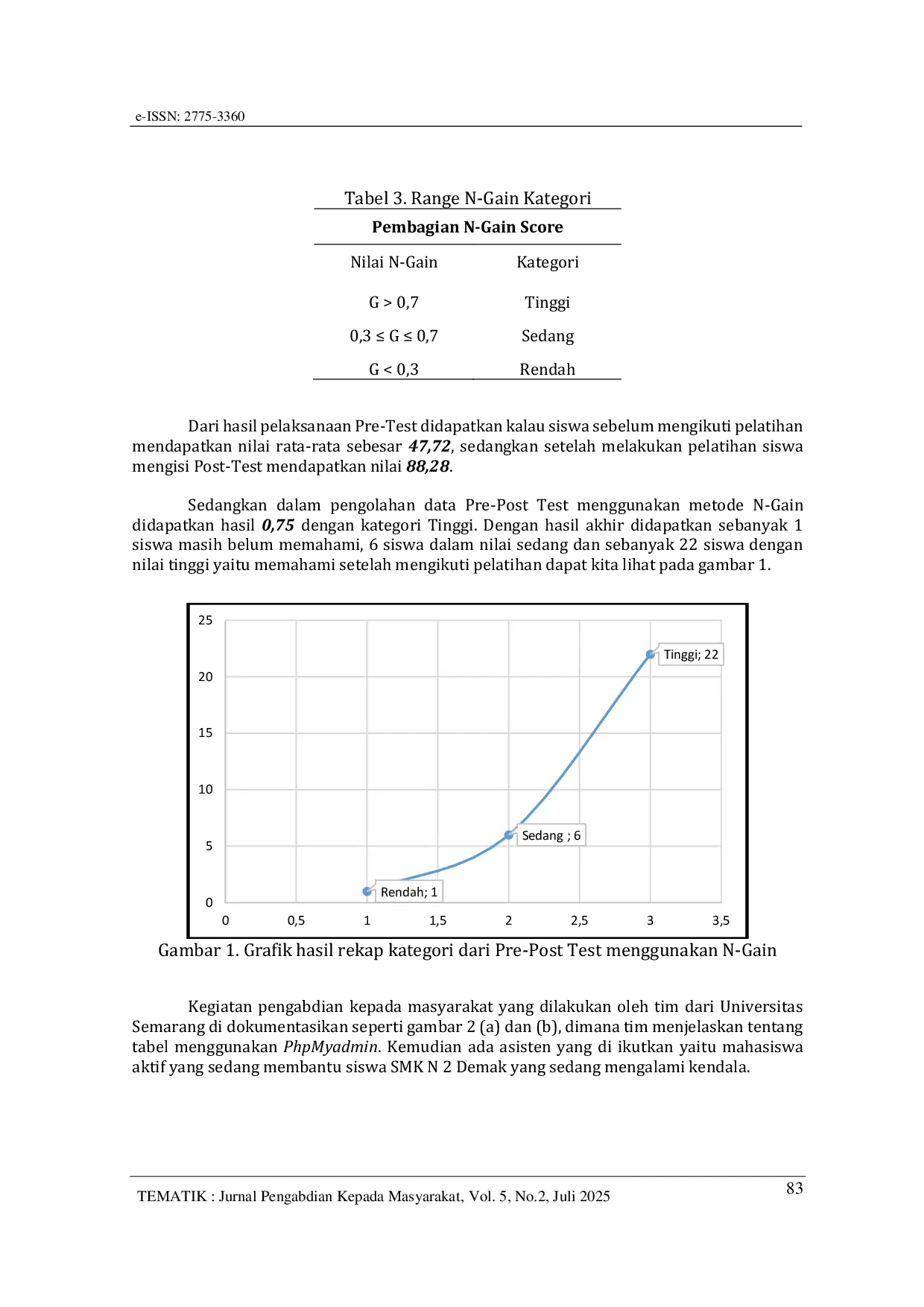
USMUSM Pelatihan PhpMyadmin di SMK Negeri 2 Demak berhasil meningkatkan pemahaman siswa terhadap pengolahan data sederhana. Terdapat peningkatan N‑Gain sebesarPelatihan PhpMyadmin di SMK Negeri 2 Demak berhasil meningkatkan pemahaman siswa terhadap pengolahan data sederhana. Terdapat peningkatan N‑Gain sebesar

UPBUPB Faktor-faktor seperti kurangnya akses terhadap makanan bergizi, rendahnya kualitas sanitasi, serta kurangnya pengetahuan orang tua menjadi penyebab utamaFaktor-faktor seperti kurangnya akses terhadap makanan bergizi, rendahnya kualitas sanitasi, serta kurangnya pengetahuan orang tua menjadi penyebab utama

UPBUPB Program ini melibatkan berbagai kegiatan, seperti sosialisasi, edukasi gizi, dan pelatihan untuk masyarakat dan keluarga, khususnya pada ibu hamil danProgram ini melibatkan berbagai kegiatan, seperti sosialisasi, edukasi gizi, dan pelatihan untuk masyarakat dan keluarga, khususnya pada ibu hamil dan