SULTANISTSULTANIST
SULTANIST: Jurnal Manajemen dan KeuanganSULTANIST: Jurnal Manajemen dan KeuanganThis study explores financial resilience strategies for integrated electricity service providers in navigating global turbulence, including regulatory pressures and energy transition, cyber threats, exchange rate volatility, and disruptions in primary energy supply chains. The analysis integrates the Risk Maturity Index (RMI) and Business Impact Analysis (BIA) based on ISO 22301 standards—commonly applied to operational aspects, but in this study extended to financial dimensions. The research employs a mixed approach: quantitative descriptive methods and qualitative inquiry through case studies, interviews, observations, document analysis, stress testing, risk heat mapping, and scenario sensitivity testing. The findings indicate that the company remains at a low level of risk maturity (RMI 2.4 – developing phase) and faces significant strategic risks in liquidity, tariff setting, infrastructure reliability, and cybersecurity. Applying financial BIA provides a clearer risk landscape, identifies crisis triggers, and formulates recovery strategies that enhance business continuity capabilities. The study recommends strengthening asset management, improving human resource capacity, and exploring financial instruments for risk mitigation. Overall, these findings contribute to the development of a comprehensive risk management model that is particularly relevant for strategic public service enterprises.
The study concludes that the integrated electricity company exhibits a low level of risk maturity and significant financial vulnerabilities.Key strategic risks include liquidity issues, tariff challenges, infrastructure reliability, and cybersecurity threats.Implementing a Business Impact Analysis (BIA) based on ISO 22301 standards is crucial for enhancing financial resilience and ensuring business continuity.
Further research should investigate the integration of artificial intelligence and machine learning techniques to enhance predictive risk modeling and early warning systems for electricity providers. Additionally, studies could explore the effectiveness of various financial instruments, such as green bonds and insurance products, in mitigating specific risks related to the energy transition and climate change. Finally, a comparative analysis of risk management practices across different electricity providers in various regulatory environments would provide valuable insights into best practices and potential areas for improvement, particularly focusing on the role of government policies and incentives in promoting resilience and sustainability within the energy sector. These investigations should consider the unique challenges faced by developing economies and the need for tailored risk management solutions that address local contexts and priorities, ultimately contributing to a more secure and reliable energy future.
| File size | 1.08 MB |
| Pages | 21 |
| DMCA | Report |
Related /
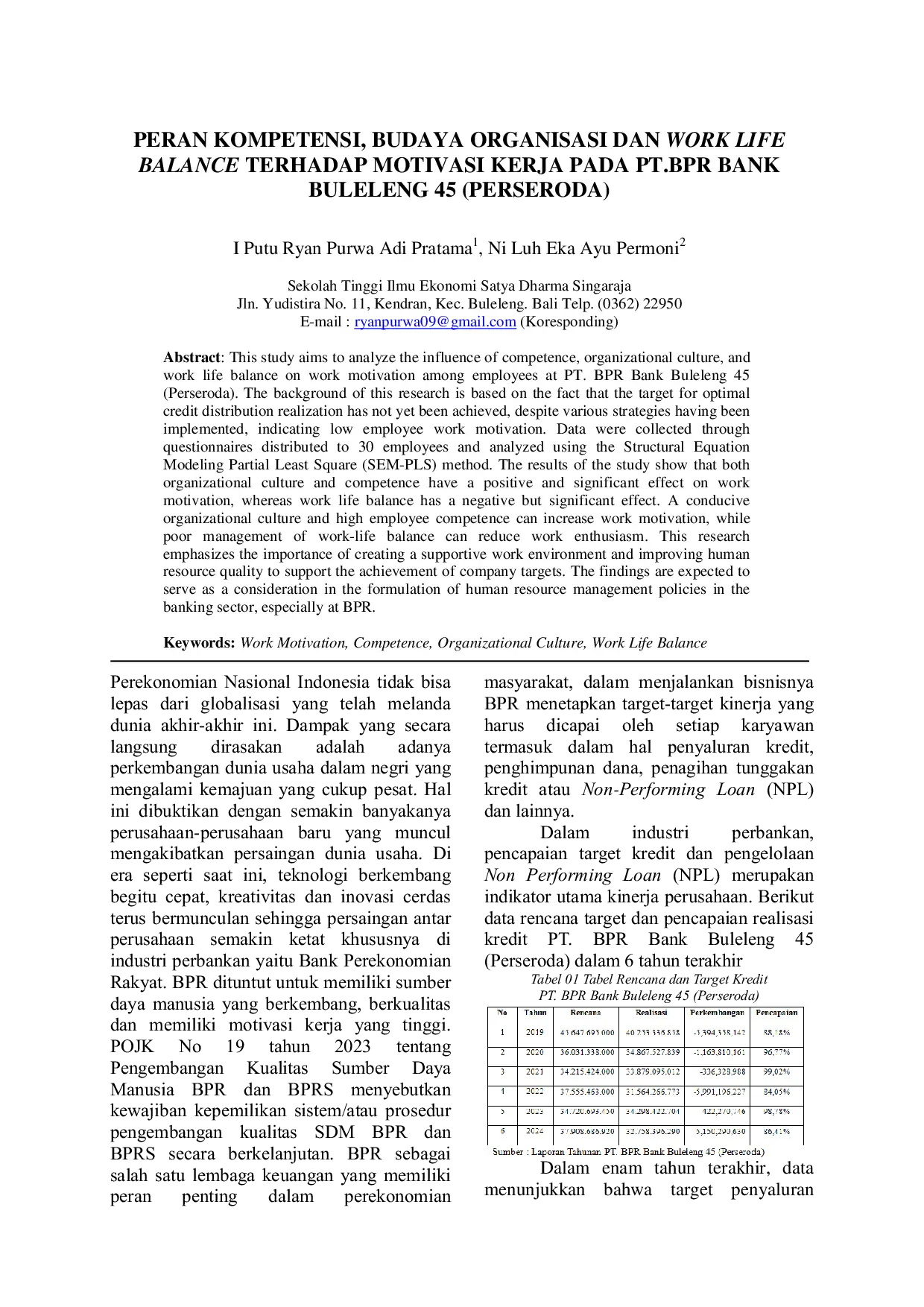
KOMPETIFKOMPETIF Data were collected through questionnaires distributed to 30 employees and analyzed using the Structural Equation Modeling Partial Least Square (SEM-PLS)Data were collected through questionnaires distributed to 30 employees and analyzed using the Structural Equation Modeling Partial Least Square (SEM-PLS)

UINMADURAUINMADURA Namun, masih terdapat peluang untuk peningkatan yang akan memungkinkan perusahaan tidak hanya memenuhi, tetapi juga melampaui standar penilaian industri.Namun, masih terdapat peluang untuk peningkatan yang akan memungkinkan perusahaan tidak hanya memenuhi, tetapi juga melampaui standar penilaian industri.

UINMADURAUINMADURA Penelitian ini menggunakan metode kuantitatif dengan data primer yang diambil melalui penyebaran kuesioner kepada 75 karyawan PT. Nada Surya Tunggal, kemudianPenelitian ini menggunakan metode kuantitatif dengan data primer yang diambil melalui penyebaran kuesioner kepada 75 karyawan PT. Nada Surya Tunggal, kemudian

UINMADURAUINMADURA Penerapan prinsip-prinsip tersebut meliputi prinsip kesatuan, keadilan, kehendak bebas, tanggung jawab, dan kebenaran. Hal ini berdampak positif terhadapPenerapan prinsip-prinsip tersebut meliputi prinsip kesatuan, keadilan, kehendak bebas, tanggung jawab, dan kebenaran. Hal ini berdampak positif terhadap

UINMADURAUINMADURA 0 menuntut pengembangan sumber daya manusia yang berpusat pada manusia dan berbasis teknologi untuk meningkatkan kualitas hidup. LAZ PERSADA Cabang Pamekasan0 menuntut pengembangan sumber daya manusia yang berpusat pada manusia dan berbasis teknologi untuk meningkatkan kualitas hidup. LAZ PERSADA Cabang Pamekasan

UINMADURAUINMADURA (6) Work engagement mampu memediasi pengaruh antara servant leadership terhadap kinerja karyawan bus trans Jawa Tengah. (7) Work engagement mampu memediasi(6) Work engagement mampu memediasi pengaruh antara servant leadership terhadap kinerja karyawan bus trans Jawa Tengah. (7) Work engagement mampu memediasi

UINMADURAUINMADURA Metode penelitian ini menggunakan metode kualitatif dengan pendekatan studi kasus. Adapun pengumpulan sumbernya dari data sekunder dan data primer yangMetode penelitian ini menggunakan metode kualitatif dengan pendekatan studi kasus. Adapun pengumpulan sumbernya dari data sekunder dan data primer yang

UINMADURAUINMADURA Selain itu, terdapat pula negara Asia yang pengelolaannya dikelola oleh negara, dikelola oleh swasta, atau dikelola oleh negara dan swasta secara bersamaan.Selain itu, terdapat pula negara Asia yang pengelolaannya dikelola oleh negara, dikelola oleh swasta, atau dikelola oleh negara dan swasta secara bersamaan.
Useful /
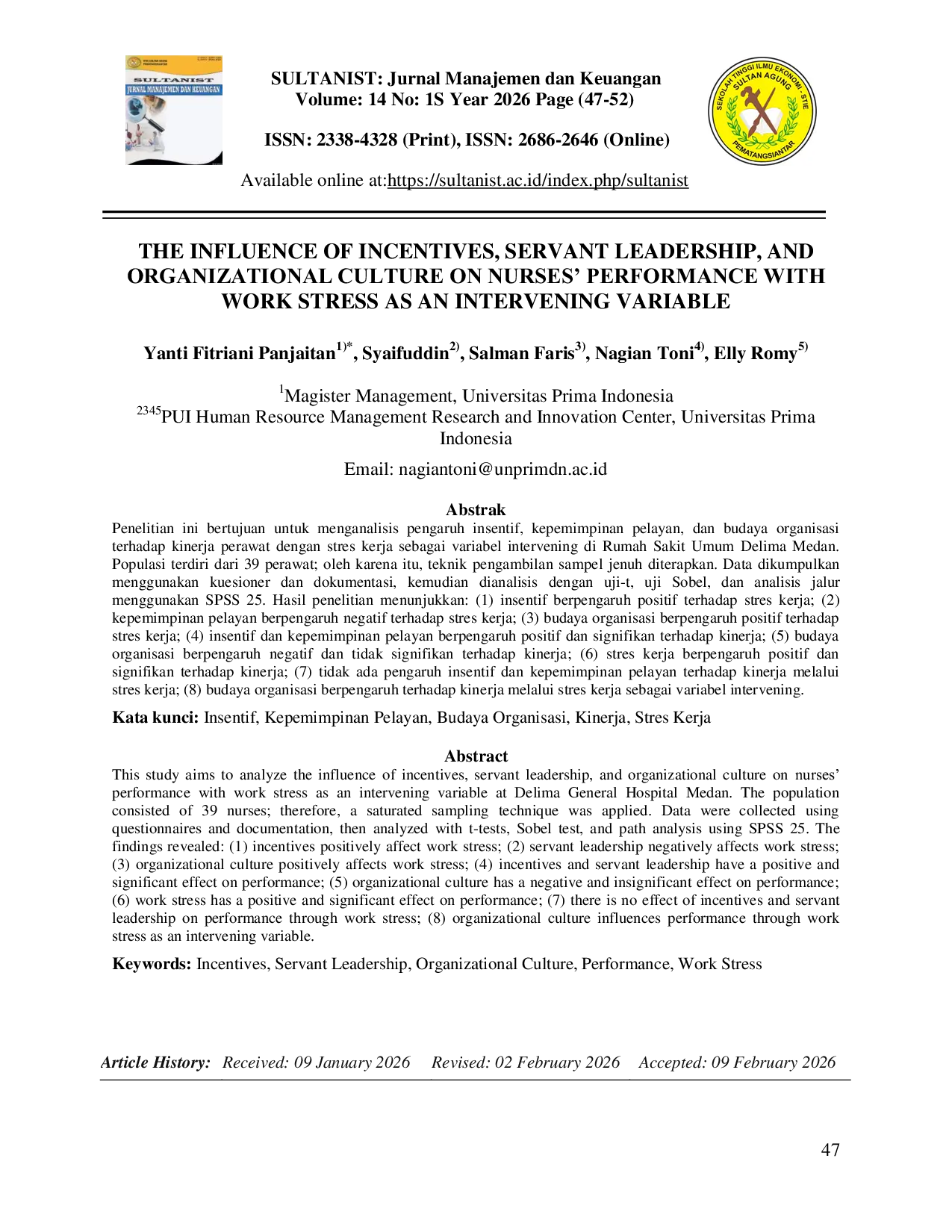
SULTANISTSULTANIST Servant leadership effectively reduces work stress and positively impacts performance. While organizational culture increases work stress, it does notServant leadership effectively reduces work stress and positively impacts performance. While organizational culture increases work stress, it does not

UNRAMUNRAM West Lombok adalah salah satu wilayah dengan populasi dan keragaman sosial budaya yang tinggi di Nusa Tenggara Barat. Data dari Pengadilan Agama Giri MenangWest Lombok adalah salah satu wilayah dengan populasi dan keragaman sosial budaya yang tinggi di Nusa Tenggara Barat. Data dari Pengadilan Agama Giri Menang
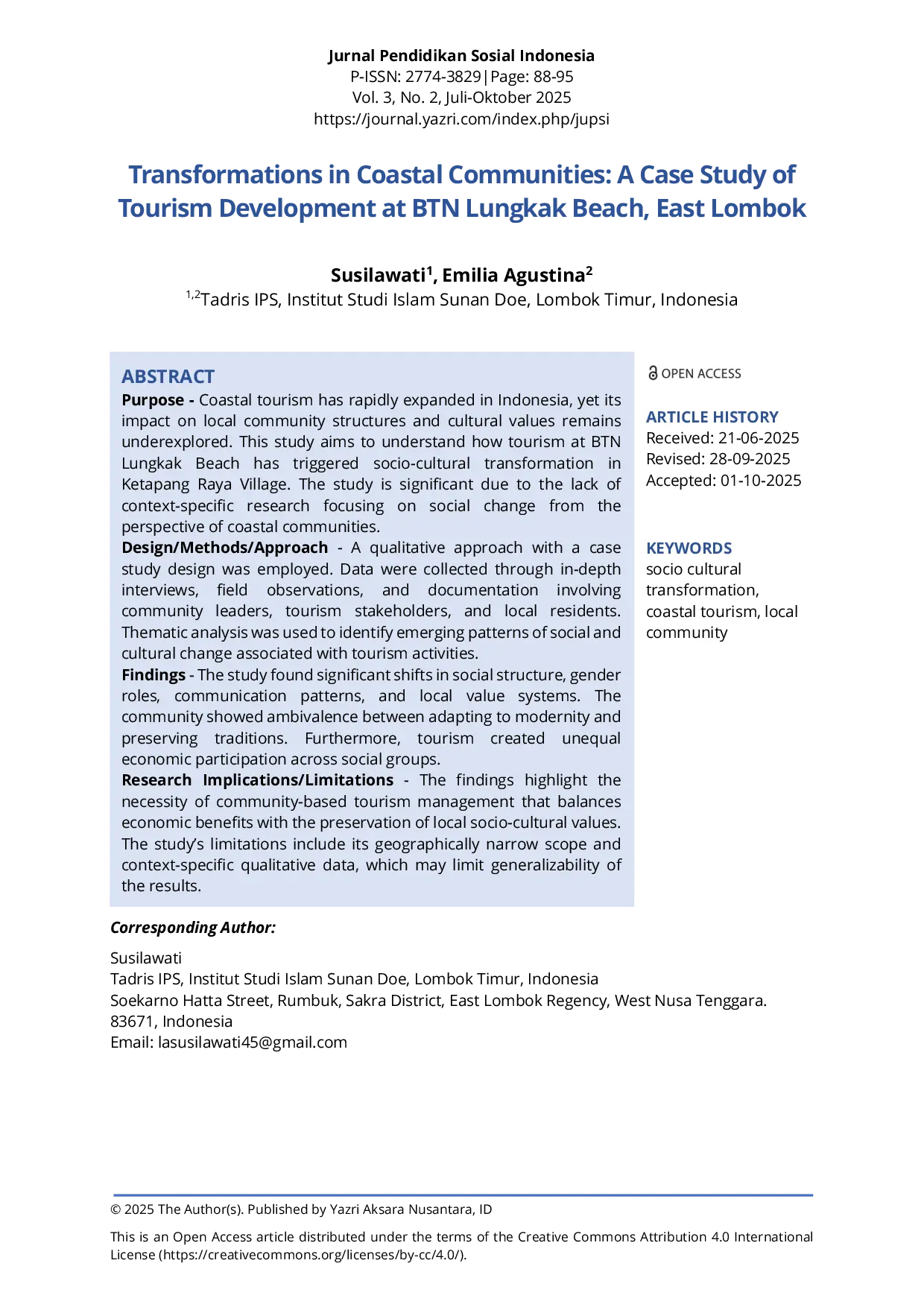
YAZRIYAZRI Data dikumpulkan melalui observasi lapangan, wawancara mendalam, dan dokumentasi yang melibatkan penduduk lokal, pemimpin komunitas, dan pemangku kepentinganData dikumpulkan melalui observasi lapangan, wawancara mendalam, dan dokumentasi yang melibatkan penduduk lokal, pemimpin komunitas, dan pemangku kepentingan
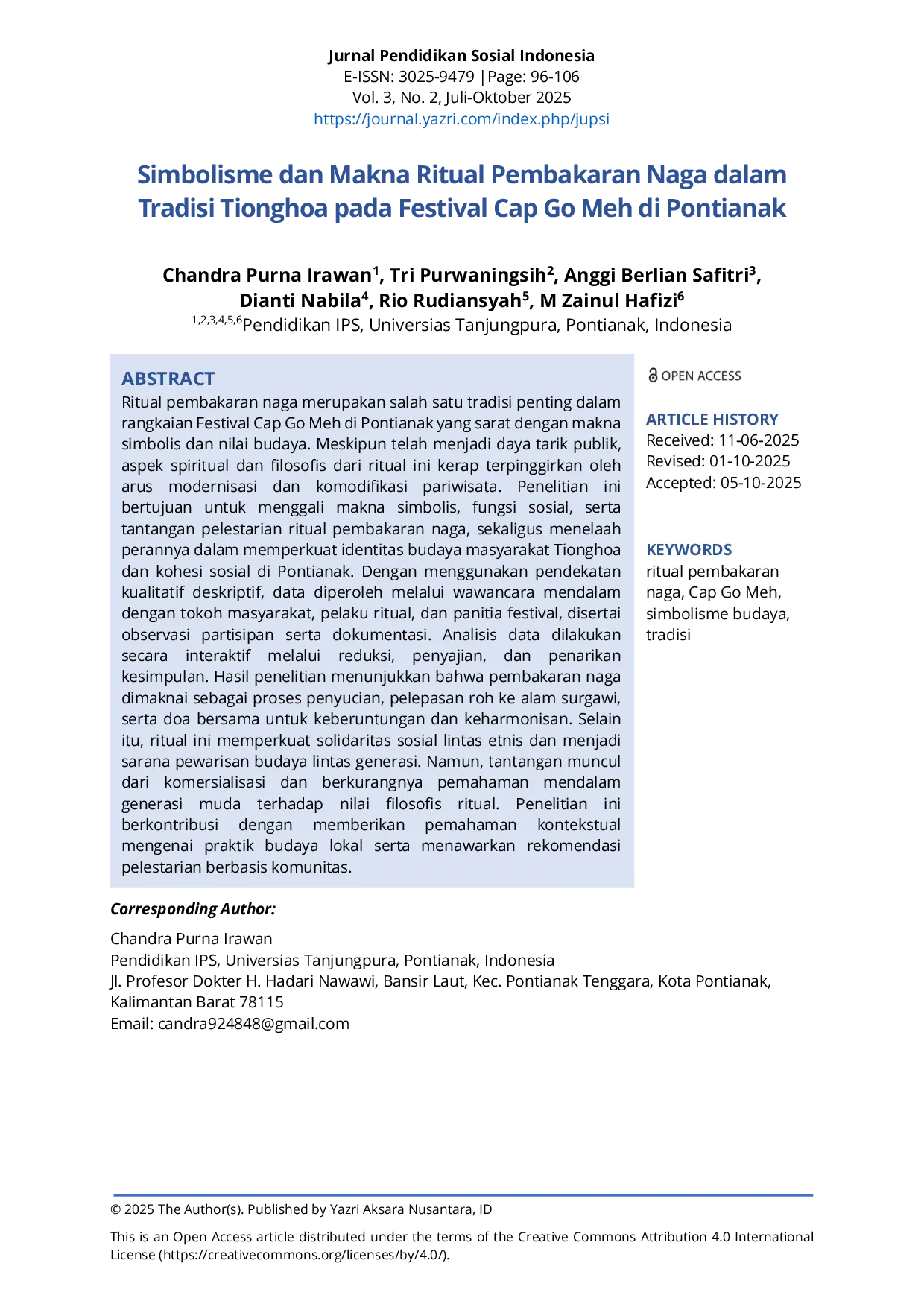
YAZRIYAZRI Dengan menggunakan pendekatan kualitatif deskriptif, data diperoleh melalui wawancara mendalam dengan tokoh masyarakat, pelaku ritual, dan panitia festival,Dengan menggunakan pendekatan kualitatif deskriptif, data diperoleh melalui wawancara mendalam dengan tokoh masyarakat, pelaku ritual, dan panitia festival,