JOURNAL GEHUJOURNAL GEHU
Journal of General Education and HumanitiesJournal of General Education and HumanitiesIn the learning process, students beliefs in their own abilities do not form spontaneously; instead, they develop through experiences shaped by classroom dynamics and the quality of pedagogical interaction. Low self-efficacy is often a major obstacle to economic learning, especially when students encounter material that requires conceptual analysis and numerical skills. To understand how such self-beliefs are constructed in real classroom contexts, this study explores students subjective experiences of interpreting an autonomy-supportive climate and how this climate strengthens their self-efficacy. The research employed a qualitative approach using an Interpretative Phenomenological Analysis (IPA) design and involved six grade XI social science students selected through purposive sampling. Data were collected through in-depth interviews, classroom observations, and documentation, and were analyzed following IPA procedures. The findings generated four key themes: (1) teacher-provided autonomy that fosters confidence through opportunities for student choice; (2) verbal encouragement that helps students interpret their abilities positively; (3) small mastery experiences that serve as internal validation of competence; and (4) a positive classroom atmosphere that provides psychological safety for active participation and exploration. These results emphasize that self-efficacy development is a socio-psychological process influenced by emotional states, interpersonal support, and meaningful learning experiences. The study highlights the importance of creating a learning climate responsive to students psychological needs as an effective pedagogical strategy for enhancing self-efficacy in economics learning.
The study concludes that the development of students self-efficacy in learning economics is a psychological process shaped by the dynamic interaction between personal factors and the classroom environment.Autonomy support, teacher verbal persuasion, small success experiences, and a positive classroom climate were found to play significant, complementary roles in strengthening students confidence.Teachers should focus on designing learning activities that not only prioritize academic achievement but also students psychological well-being.Ultimately, creating a conducive learning culture where students can become more resilient and confident is crucial for their academic success.
Berdasarkan temuan penelitian ini, beberapa saran penelitian lanjutan dapat diajukan. Pertama, penelitian lebih lanjut dapat dilakukan untuk menginvestigasi bagaimana efektivitas intervensi berbasis teori penentuan diri (self-determination theory) dalam meningkatkan self-efficacy siswa dalam konteks pembelajaran ekonomi yang lebih luas, dengan melibatkan sampel yang lebih besar dan menggunakan desain penelitian kuasi-eksperimen. Kedua, penelitian kualitatif mendalam dapat dilakukan untuk mengeksplorasi pengalaman guru dalam menerapkan strategi pembelajaran yang mendukung otonomi siswa, serta tantangan dan peluang yang dihadapi dalam proses tersebut. Ketiga, penelitian dapat difokuskan pada peran moderasi variabel kontekstual, seperti budaya sekolah dan karakteristik sosio-ekonomi siswa, terhadap hubungan antara iklim pembelajaran yang mendukung otonomi dan self-efficacy. Penelitian ini dapat menggunakan metode mixed-methods untuk mendapatkan pemahaman yang komprehensif tentang kompleksitas hubungan tersebut. Dengan demikian, penelitian lanjutan ini diharapkan dapat memberikan kontribusi signifikan terhadap pengembangan praktik pembelajaran ekonomi yang lebih efektif dan berpusat pada siswa, serta meningkatkan kualitas pendidikan secara keseluruhan.
- Can I teach these students? A case study of Vietnamese teachers’ self-efficacy in relation to teaching... doi.org/10.24093/awej/th.254Can I teach these students A case study of Vietnamese teachersAo self efficacy in relation to teaching doi 10 24093 awej th 254
- WITHDRAWN: Exploring the Impact of Ambidextrous Leadership on Innovative Behavior: The Mediating Role... doi.org/10.21203/rs.3.rs-7900378/v1WITHDRAWN Exploring the Impact of Ambidextrous Leadership on Innovative Behavior The Mediating Role doi 10 21203 rs 3 rs 7900378 v1
- PENGARUH SELF-EFFICACY TERHADAP HASIL BELAJAR EKONOMI SISWA SMA | Yulianto | Jurnal PIPSI (Jurnal Pendidikan... journal.stkipsingkawang.ac.id/index.php/JurnalPIPSI/article/view/1099PENGARUH SELF EFFICACY TERHADAP HASIL BELAJAR EKONOMI SISWA SMA Yulianto Jurnal PIPSI Jurnal Pendidikan journal stkipsingkawang ac index php JurnalPIPSI article view 1099
| File size | 647.2 KB |
| Pages | 18 |
| DMCA | Report |
Related /

JOURNAL GEHUJOURNAL GEHU Secara ekologis, praktik-praktik ini mempromosikan pengurangan limbah, pelestarian lingkungan, dan konservasi keanekaragaman hayati, sambil mendukung keberlanjutanSecara ekologis, praktik-praktik ini mempromosikan pengurangan limbah, pelestarian lingkungan, dan konservasi keanekaragaman hayati, sambil mendukung keberlanjutan

JOURNAL GEHUJOURNAL GEHU Namun, penelitian ini terbatas pada konteks regional tertentu dan implementasi jangka pendek, yang menunjukkan kebutuhan untuk investigasi yang lebih luasNamun, penelitian ini terbatas pada konteks regional tertentu dan implementasi jangka pendek, yang menunjukkan kebutuhan untuk investigasi yang lebih luas
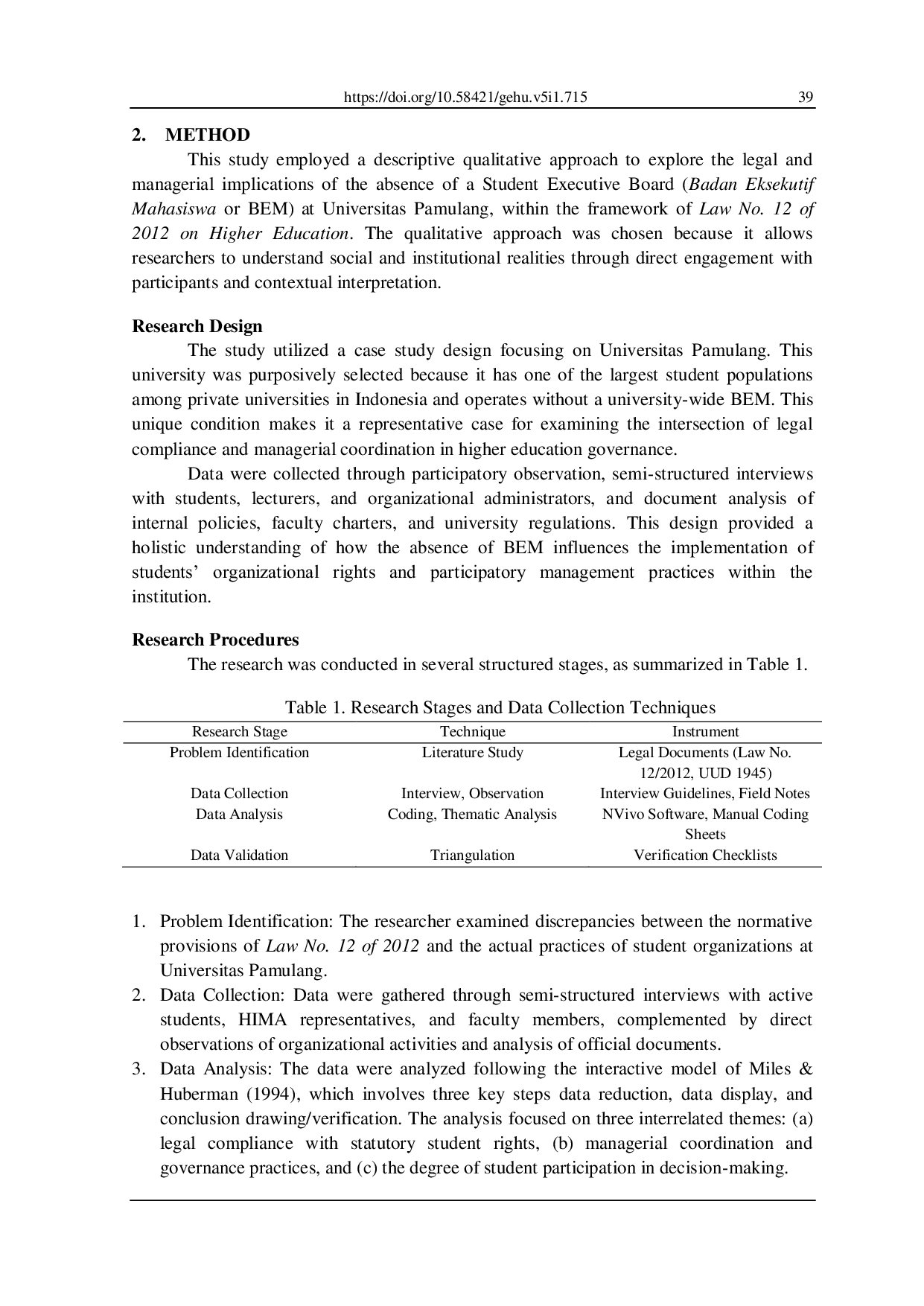
JOURNAL GEHUJOURNAL GEHU 12 Tahun 2012 tentang Pendidikan Tinggi, sehingga menghambat partisipasi demokratis mahasiswa dan melemahkan akuntabilitas organisasi. Kondisi tersebut 12 Tahun 2012 tentang Pendidikan Tinggi, sehingga menghambat partisipasi demokratis mahasiswa dan melemahkan akuntabilitas organisasi. Kondisi tersebut

JOURNAL GEHUJOURNAL GEHU Pendekatan normatif yuridis menelaah regulasi yang menjadi fondasi administrasi E‑Government, sedangkan pendekatan empiris mengamati penerapannya dalamPendekatan normatif yuridis menelaah regulasi yang menjadi fondasi administrasi E‑Government, sedangkan pendekatan empiris mengamati penerapannya dalam

JOURNAL GEHUJOURNAL GEHU Gerakan Literasi Sekolah telah terintegrasi secara sistematis dalam pembelajaran IPAS kelas empat melalui rutinitas membaca 15 menit, pojok baca, dan aktivitasGerakan Literasi Sekolah telah terintegrasi secara sistematis dalam pembelajaran IPAS kelas empat melalui rutinitas membaca 15 menit, pojok baca, dan aktivitas
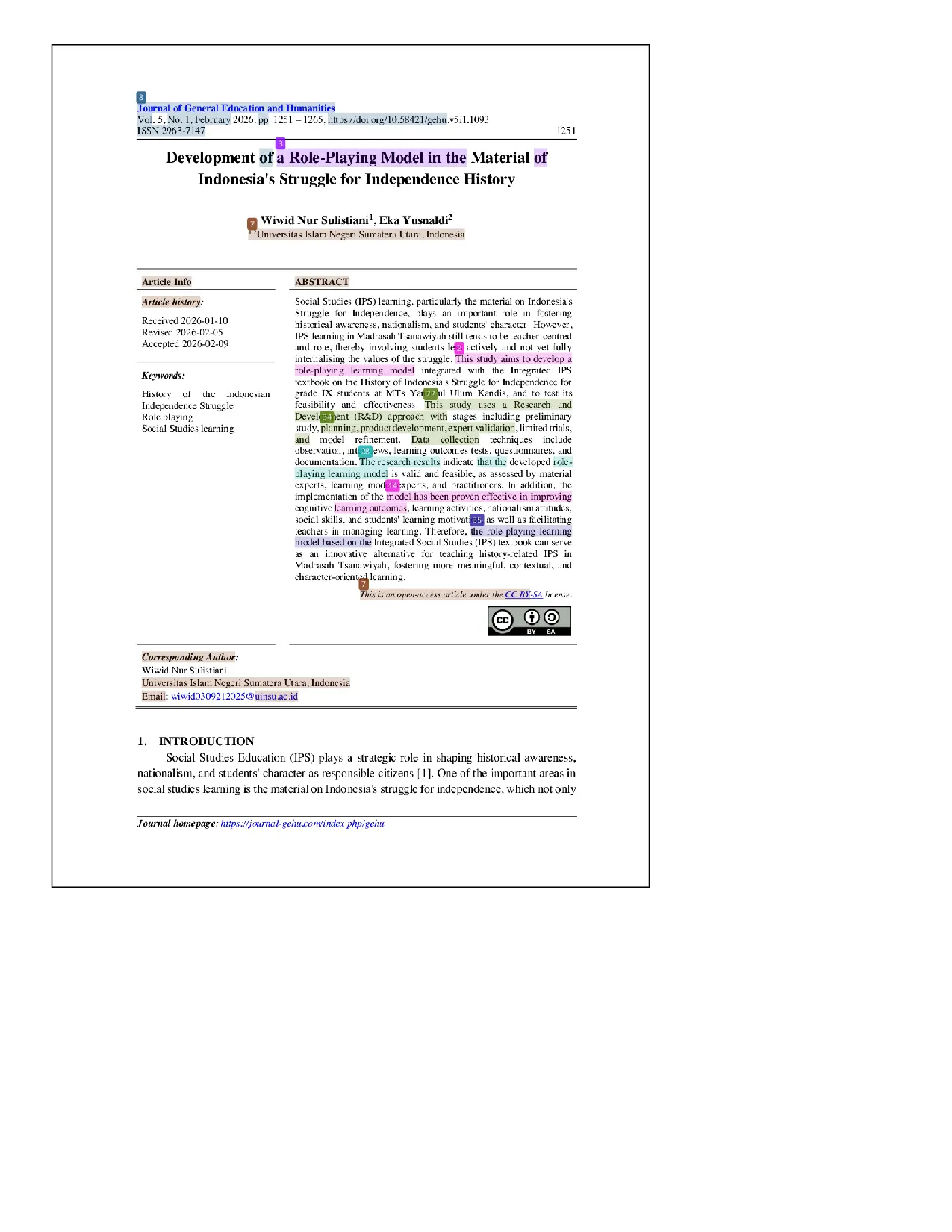
JOURNAL GEHUJOURNAL GEHU Metode penelitian yang digunakan adalah kuasi eksperimen dengan desain non-equivalent control group. Hasil penelitian menunjukkan bahwa terdapat peningkatanMetode penelitian yang digunakan adalah kuasi eksperimen dengan desain non-equivalent control group. Hasil penelitian menunjukkan bahwa terdapat peningkatan

STAINUPASTAINUPA Model Triad Bottleneck Capacity Trade‑Off menjelaskan mengapa integrasi kurikulum ganda yang secara struktural berhasil sering gagal secara operasional.Model Triad Bottleneck Capacity Trade‑Off menjelaskan mengapa integrasi kurikulum ganda yang secara struktural berhasil sering gagal secara operasional.
UMMUMM Penelitian lanjutan perlu mengevaluasi pengaruh model ini terhadap variabel seperti keterampilan proses sains, pemecahan masalah, berpikir kreatif, keterampilanPenelitian lanjutan perlu mengevaluasi pengaruh model ini terhadap variabel seperti keterampilan proses sains, pemecahan masalah, berpikir kreatif, keterampilan
Useful /

JOURNAL GEHUJOURNAL GEHU Selain itu, terdapat peluang pengembangan yang signifikan dalam mengintegrasikan inisiatif literasi digital, memperluas kemitraan lintas sektor, mereplikasiSelain itu, terdapat peluang pengembangan yang signifikan dalam mengintegrasikan inisiatif literasi digital, memperluas kemitraan lintas sektor, mereplikasi

JOURNAL GEHUJOURNAL GEHU Brand experience, yang mencakup dimensi sensori, afektif, intelektual, dan perilaku, merupakan faktor penting dalam mendorong pembelian berulang dan komitmenBrand experience, yang mencakup dimensi sensori, afektif, intelektual, dan perilaku, merupakan faktor penting dalam mendorong pembelian berulang dan komitmen

PENACCELERATIONPENACCELERATION Ekonomi halal merupakan sistem ekonomi yang mengintegrasikan prinsip-prinsip syariah dalam seluruh aspek kegiatan ekonomi, menekankan nilai-nilai sepertiEkonomi halal merupakan sistem ekonomi yang mengintegrasikan prinsip-prinsip syariah dalam seluruh aspek kegiatan ekonomi, menekankan nilai-nilai seperti
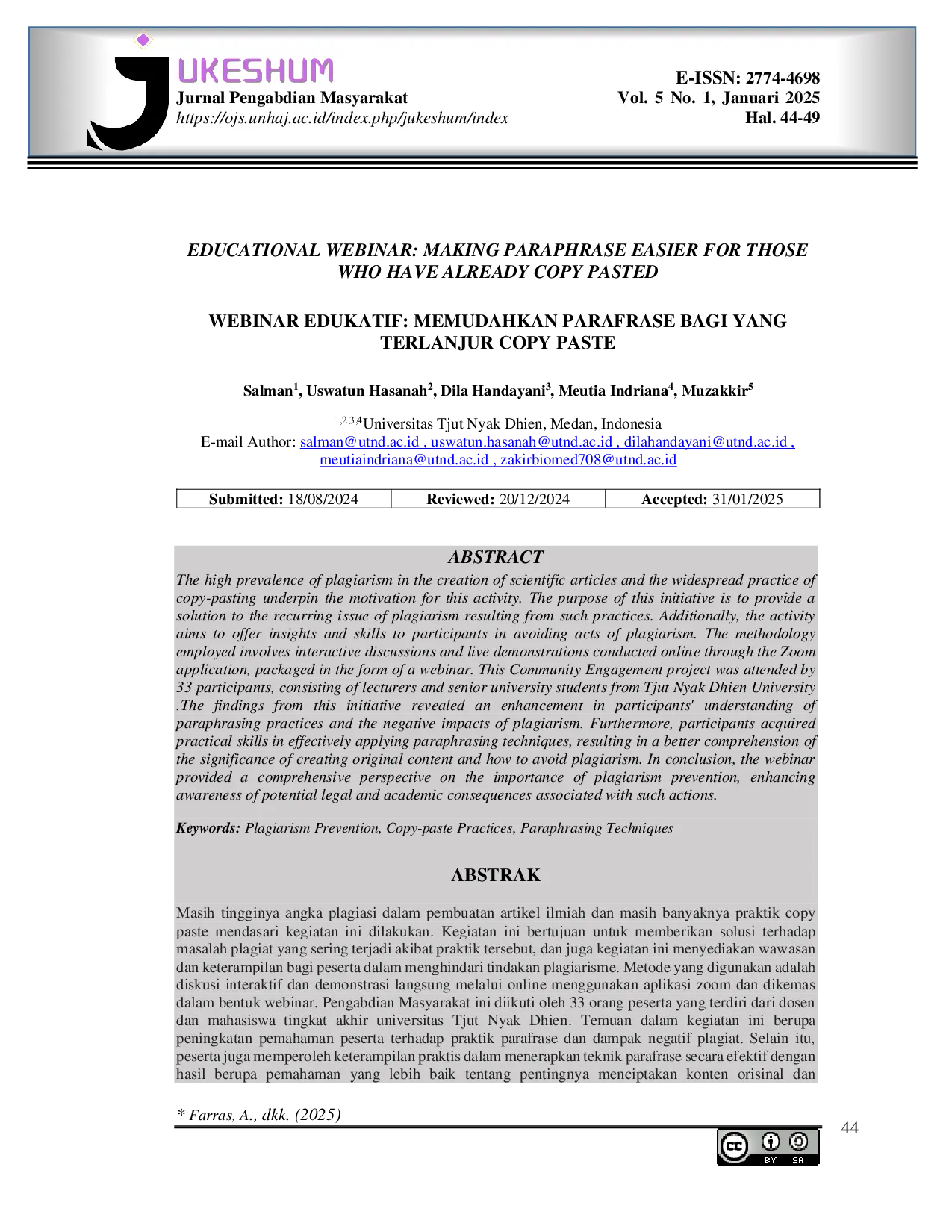
UNHAJUNHAJ Pelaksanaan webinar ini membawa dampak positif yang signifikan terhadap peserta. Pemahaman mereka terkait plagiasi dan teknik parafrase mengalami peningkatanPelaksanaan webinar ini membawa dampak positif yang signifikan terhadap peserta. Pemahaman mereka terkait plagiasi dan teknik parafrase mengalami peningkatan