STOK BINAGUNASTOK BINAGUNA
Journal Physical Health Recreation (JPHR)Journal Physical Health Recreation (JPHR)This classroom action research aims to improve soccer learning outcomes through the implementation of mini soccer games for ninth-grade students of Madani Private Junior High School in the 2025/2026 Academic Year (n=32). The research was conducted in two cycles, each of which included planning, action, observation, and reflection. The learning action used small-sided games (mini soccer) 5 vs. 5 on a modified field (±25×35 m) with simple rules (no offside, kick-in) and player rotation to ensure high student engagement. Data collection used activity observations and skill practice tests with a passing and dribbling performance rubric (technical indicators; scale 1–4 per indicator) which were converted to a score of 0–100 with a KKM reference of 75. The results of cycle I showed an average score of 68.75 with a completeness of 56.25%, where passing and dribbling were not optimal. Improvements in cycle II were made through emphasizing basic technique training before the game and providing clearer tactical instructions. The results increased to an average of 81.56 with a completion rate of 87.50%, accompanied by increased student motivation, engagement, and social interaction during learning. Thus, mini-soccer games are effective as a learning strategy to improve soccer learning outcomes in junior high school students.
The implementation of mini-soccer games in Physical Education learning for grade IX of Madani Private Middle School has proven to improve soccer learning outcomes.The average class score increased from 68.56 in Cycle II, and the percentage of learning completion increased from 56.These findings indicate that game modification through the mini-soccer format is effective in enriching student engagement, increasing opportunities to practice skills in a game context, and improving learning outcomes, especially in passing and dribbling.
Penelitian lanjutan dapat dilakukan dengan memperluas cakupan usia siswa, misalnya dengan menguji efektivitas mini-soccer pada siswa sekolah dasar atau sekolah menengah atas, untuk melihat apakah strategi ini tetap efektif di berbagai tingkat perkembangan. Selain itu, penelitian dapat difokuskan pada pengembangan variasi permainan mini-soccer yang lebih beragam, dengan mempertimbangkan faktor-faktor seperti ukuran lapangan, jumlah pemain, dan aturan permainan yang berbeda, untuk mengidentifikasi kombinasi optimal yang dapat memaksimalkan peningkatan keterampilan dan pemahaman taktis siswa. Terakhir, penelitian dapat menggali lebih dalam dampak psikologis dari mini-soccer, seperti peningkatan motivasi intrinsik, kepercayaan diri, dan kerjasama tim, melalui metode pengumpulan data kualitatif seperti wawancara atau observasi partisipan, untuk memberikan pemahaman yang lebih komprehensif tentang manfaat pembelajaran berbasis permainan.
- Small-sided games: An umbrella review of systematic reviews and meta-analyses | PLOS One. small sided... doi.org/10.1371/journal.pone.0247067Small sided games An umbrella review of systematic reviews and meta analyses PLOS One small sided doi 10 1371 journal pone 0247067
- Increasing Interest in Learning Mathematics Through the Technological Pedagogical and Content Knowledge... doi.org/10.22460/jpp.v4i1.27241Increasing Interest in Learning Mathematics Through the Technological Pedagogical and Content Knowledge doi 10 22460 jpp v4i1 27241
- The effects of small-sided soccer games on technical actions and skills: A systematic review. effects... doi.org/10.5114/hm.2020.93014The effects of small sided soccer games on technical actions and skills A systematic review effects doi 10 5114 hm 2020 93014
| File size | 532.12 KB |
| Pages | 14 |
| DMCA | Report |
Related /

JOURNAL GEHUJOURNAL GEHU Hasil ini menunjukkan perlunya pengembangan bahan ajar dan strategi pembelajaran inovatif untuk meningkatkan kemampuan berpikir kritis siswa. Studi iniHasil ini menunjukkan perlunya pengembangan bahan ajar dan strategi pembelajaran inovatif untuk meningkatkan kemampuan berpikir kritis siswa. Studi ini

JOURNAL GEHUJOURNAL GEHU Pendekatan normatif yuridis menelaah regulasi yang menjadi fondasi administrasi E‑Government, sedangkan pendekatan empiris mengamati penerapannya dalamPendekatan normatif yuridis menelaah regulasi yang menjadi fondasi administrasi E‑Government, sedangkan pendekatan empiris mengamati penerapannya dalam

JOURNAL GEHUJOURNAL GEHU Data were collected through in-depth interviews, participatory observation, and documentation analysis involving principals, teachers, and students. TheData were collected through in-depth interviews, participatory observation, and documentation analysis involving principals, teachers, and students. The
SYEKH NURJATISYEKH NURJATI Di samping itu, kemajuan teknologi digital juga menawarkan peluang untuk mengembangkan media pembelajaran yang lebih menarik dan interaktif. Oleh karenaDi samping itu, kemajuan teknologi digital juga menawarkan peluang untuk mengembangkan media pembelajaran yang lebih menarik dan interaktif. Oleh karena

YRPIPKUYRPIPKU Studi ini melibatkan dua belas ahli dari pemerintah, akademisi, sektor swasta, dan masyarakat setempat yang melakukan perbandingan berpasangan dari limaStudi ini melibatkan dua belas ahli dari pemerintah, akademisi, sektor swasta, dan masyarakat setempat yang melakukan perbandingan berpasangan dari lima

YRPIPKUYRPIPKU Pada pasar manufaktur yang dinamis saat ini, manajemen kualitas menjadi krusial untuk daya saing, efisiensi, dan kepuasan pelanggan. Penelitian ini menyajikanPada pasar manufaktur yang dinamis saat ini, manajemen kualitas menjadi krusial untuk daya saing, efisiensi, dan kepuasan pelanggan. Penelitian ini menyajikan
YRPIPKUYRPIPKU Implikasi teoretis mencakup kontribusi pada pemahaman transformasi digital dalam pariwisata, khususnya bagaimana teknologi imersif membentuk perilaku perjalanan.Implikasi teoretis mencakup kontribusi pada pemahaman transformasi digital dalam pariwisata, khususnya bagaimana teknologi imersif membentuk perilaku perjalanan.

UNDIKMAUNDIKMA The research participants consist of experts in the field of reproductive system materials, media experts, subject teachers, and grade eleven students,The research participants consist of experts in the field of reproductive system materials, media experts, subject teachers, and grade eleven students,
Useful /
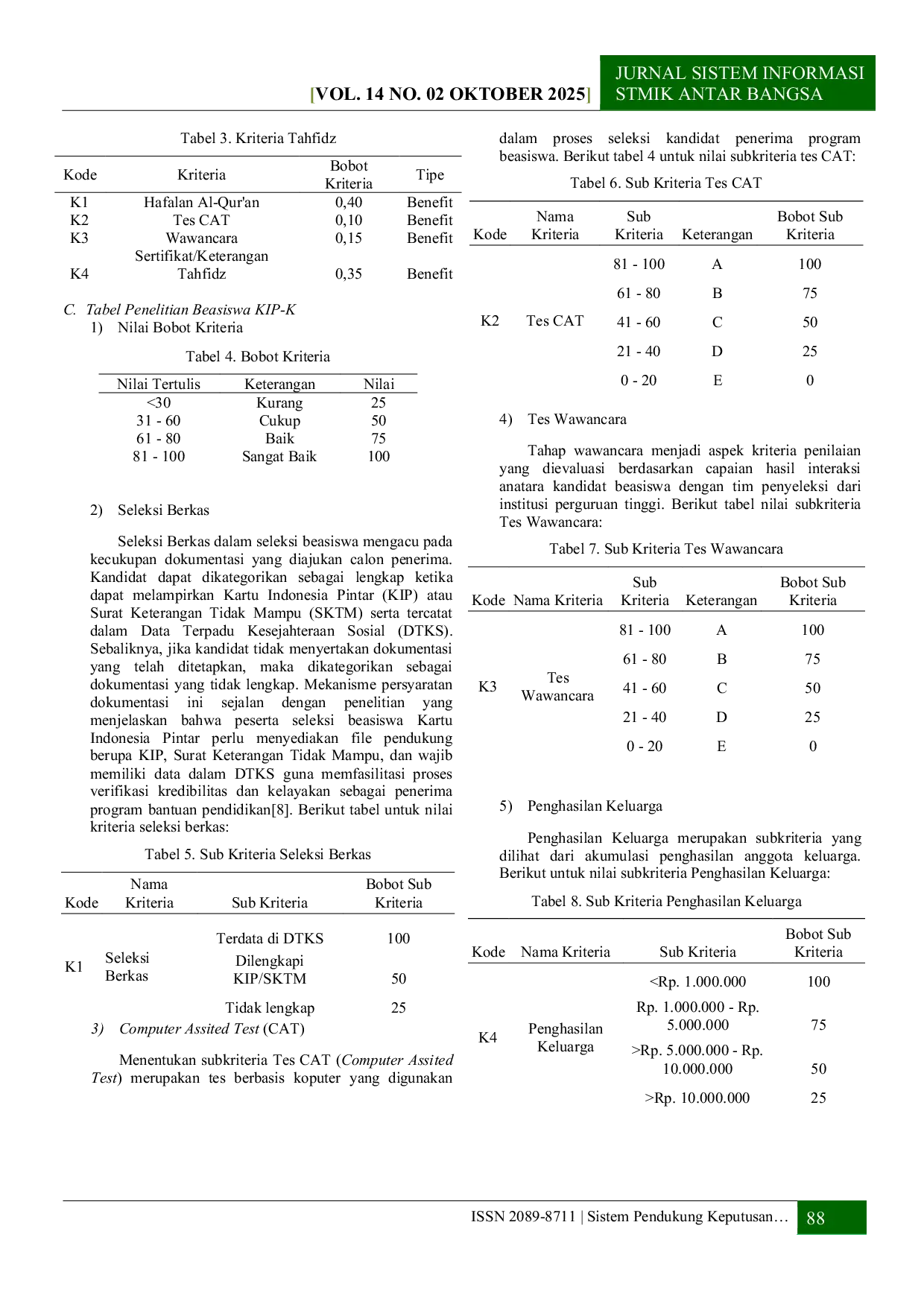
ANTARBANGSAANTARBANGSA Pengujian menggunakan metode black‑box dan verifikasi dengan perbandingan hasil seleksi manual menunjukkan bahwa sistem dapat menghitung dan merankingPengujian menggunakan metode black‑box dan verifikasi dengan perbandingan hasil seleksi manual menunjukkan bahwa sistem dapat menghitung dan meranking
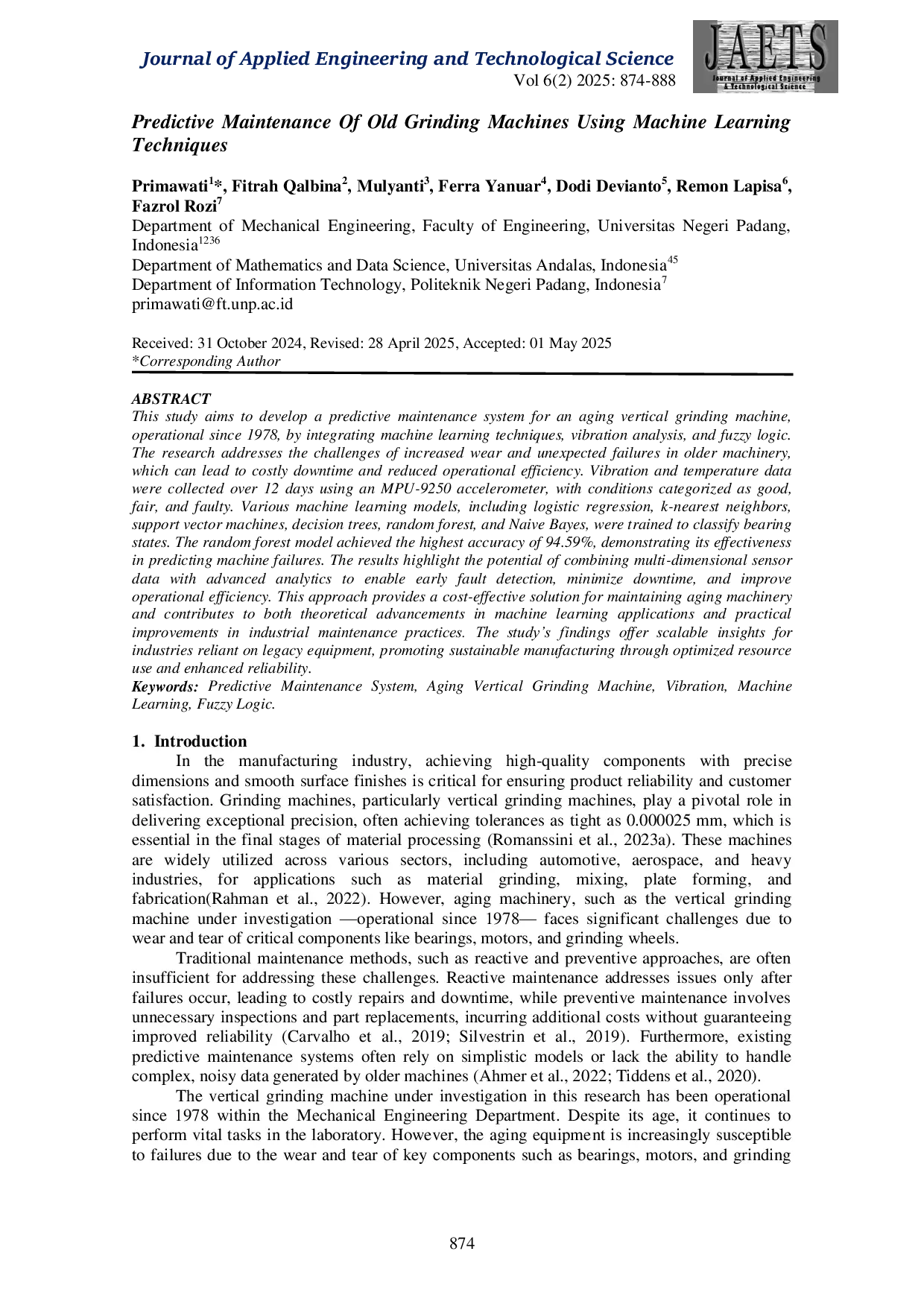
YRPIPKUYRPIPKU Data getaran dan suhu dikumpulkan selama 12 hari menggunakan akselerometer MPU-9250, dengan kondisi dikategorikan sebagai baik, sedang, dan rusak. BerbagaiData getaran dan suhu dikumpulkan selama 12 hari menggunakan akselerometer MPU-9250, dengan kondisi dikategorikan sebagai baik, sedang, dan rusak. Berbagai
YRPIPKUYRPIPKU Penelitian ini berhasil memprediksi nilai tukar USD terhadap IDR menggunakan algoritma Multilayer Perceptron (MLP) dengan Jaringan Saraf Tiruan (JST).Penelitian ini berhasil memprediksi nilai tukar USD terhadap IDR menggunakan algoritma Multilayer Perceptron (MLP) dengan Jaringan Saraf Tiruan (JST).

YRPIPKUYRPIPKU SEM‑EDX digunakan untuk mengkonfirmasi morfologi adsorben serta logam yang teradsorpsi pada permukaan PVA-CA. Kapasitas muat maksimum Cd(II) lebih tinggiSEM‑EDX digunakan untuk mengkonfirmasi morfologi adsorben serta logam yang teradsorpsi pada permukaan PVA-CA. Kapasitas muat maksimum Cd(II) lebih tinggi