IPINTERNASIONALIPINTERNASIONAL
International Journal of Community Service (IJCS)International Journal of Community Service (IJCS)Technical guidance on the use of Sengon and Jabon logging waste as renewable fuel to increase the economic value of the Andalambe Village Forest Farmers Group, Konawe, Indonesia. The International Collaborative Community Service Program, conducted by the Forestry Study Program of the Faculty of Forestry and Environmental Sciences in collaboration with the University of Technology of Mara, Malaysia, aims to: Provide training on utilizing sengon/jabon wood waste (harvested) by converting it into wood pellets as a renewable energy source; and Increase the economic value of community forests by improving the quality of primary wood and creating value-added products from waste. This community service activity is implemented through outreach and practical training on making wood pellets from sengon/jabon waste, introducing the potential of wood waste as a renewable energy source. Techniques for collecting, drying, and shredding wood waste, as well as the process of molding the shredded waste into pellets, are also covered. After this activity, community forest farmer groups can utilize and convert previously unused waste from sengon and jabon felling into wood pellet products. Environmental benefits include more sustainable forest management and reduced wood waste, which can otherwise pollute the environment. The expected benefits for the partner (UiTM) include applying existing knowledge and technology in the context of international community service and strengthening collaborative networks.
This community service program successfully addressed the underutilization of harvesting waste through an integrated approach.The participatory field school training model effectively transferred knowledge and skills to farmers, increasing their understanding and confidence in applying the techniques.International collaboration with UiTM Malaysia provided significant added value, strengthening networks and global perspectives in solving local problems.
Berdasarkan hasil penelitian ini, beberapa saran penelitian lanjutan dapat diajukan. Pertama, perlu dilakukan studi lebih lanjut mengenai efisiensi biaya produksi pelet kayu oleh kelompok tani, termasuk analisis pasar untuk menentukan harga jual yang kompetitif. Kedua, penelitian dapat difokuskan pada pengembangan teknologi pengolahan limbah kayu yang lebih sederhana dan terjangkau, sehingga dapat diadopsi secara luas oleh masyarakat pedesaan. Ketiga, penting untuk mengkaji dampak jangka panjang dari penggunaan pelet kayu terhadap kualitas tanah dan lingkungan sekitar hutan, serta mengembangkan strategi mitigasi yang efektif. Penelitian-penelitian ini diharapkan dapat memberikan kontribusi signifikan dalam meningkatkan keberlanjutan pengelolaan hutan berbasis masyarakat dan mendorong pemanfaatan sumber daya alam yang lebih optimal, sekaligus memberikan manfaat ekonomi dan lingkungan bagi masyarakat lokal. Dengan demikian, potensi limbah kayu sebagai sumber energi terbarukan dapat dimaksimalkan, mendukung transisi energi bersih, dan meningkatkan kesejahteraan masyarakat.
| File size | 677.35 KB |
| Pages | 9 |
| DMCA | Report |
Related /
APTKLHIAPTKLHI Hasil yang diperoleh yaitu (1) program PS memberikan kontribusi rata-rata pendapatan sebesar 28,5 % dari total pendapatan anggota dan mengurangi tingkatHasil yang diperoleh yaitu (1) program PS memberikan kontribusi rata-rata pendapatan sebesar 28,5 % dari total pendapatan anggota dan mengurangi tingkat
APTKLHIAPTKLHI Analisis menjukkan pola. Konservasi hutan di Provinsi Aceh sangat penting untuk melestarikan keanekaragaman hayati, mengurangi perubahan iklim, dan mendukungAnalisis menjukkan pola. Konservasi hutan di Provinsi Aceh sangat penting untuk melestarikan keanekaragaman hayati, mengurangi perubahan iklim, dan mendukung

UNILAUNILA Untuk memahami sejauh mana kemitraan memberikan manfaat bagi masyarakat lokal dan kawasan hutan, pendekatan triangulasi yang mencakup pengumpulan dataUntuk memahami sejauh mana kemitraan memberikan manfaat bagi masyarakat lokal dan kawasan hutan, pendekatan triangulasi yang mencakup pengumpulan data
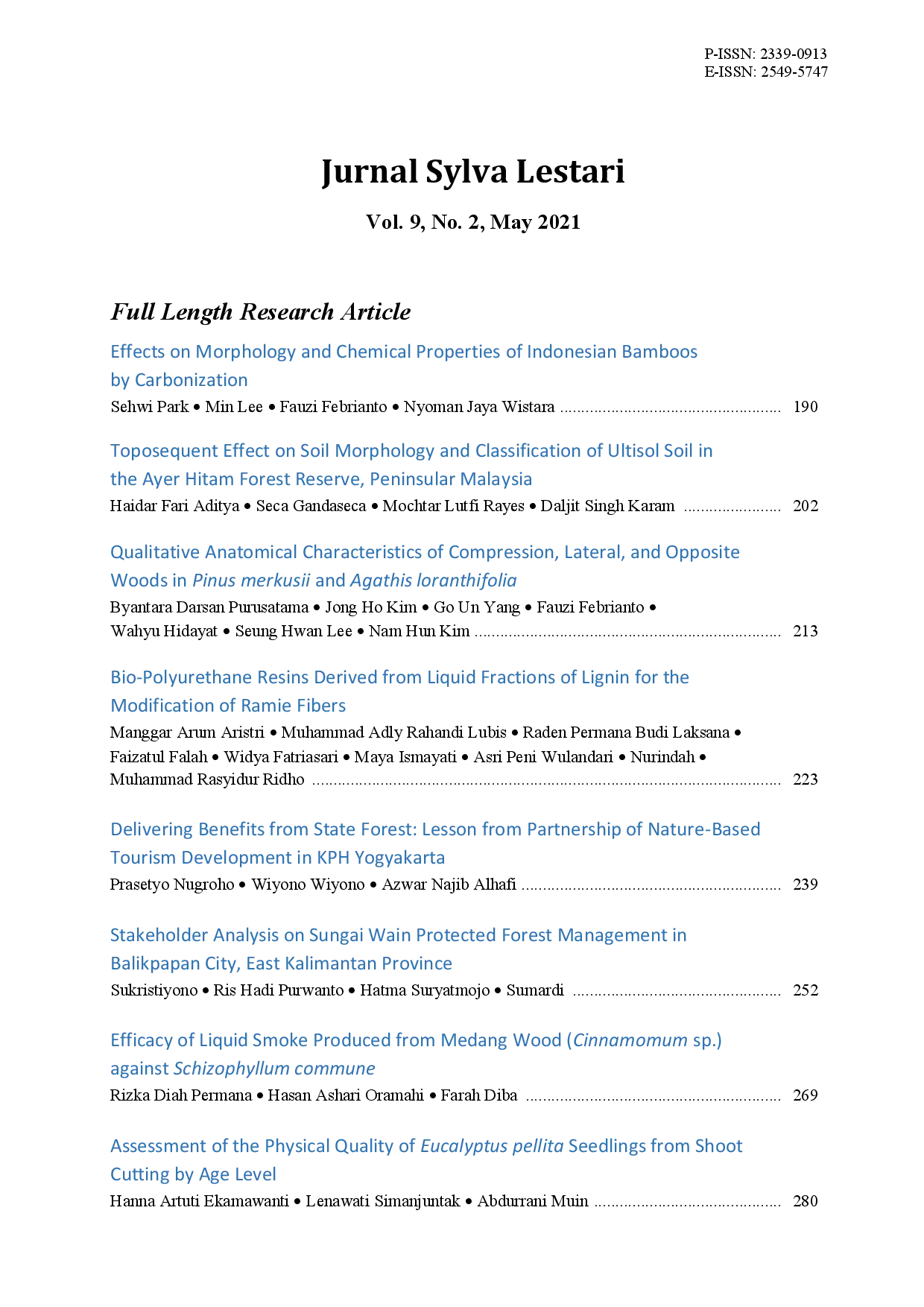
UNILAUNILA Jurnal ini memuat artikel penelitian orisinal terkait manajemen hutan dan sumber daya alam, konservasi dan pengelolaan keanekaragaman hayati, ilmu kayuJurnal ini memuat artikel penelitian orisinal terkait manajemen hutan dan sumber daya alam, konservasi dan pengelolaan keanekaragaman hayati, ilmu kayu
UNILAUNILA Metode yang digunakan adalah quasi eksperimen dengan desain pretest-posttest control group design. Sampel penelitian terdiri dari 60 siswa kelas XI diMetode yang digunakan adalah quasi eksperimen dengan desain pretest-posttest control group design. Sampel penelitian terdiri dari 60 siswa kelas XI di
UNILAUNILA Data dikumpulkan melalui wawancara berbasis kuesioner dan wawancara mendalam. Pengolahan data dilakukan dengan menghitung persentase dan dianalisis secaraData dikumpulkan melalui wawancara berbasis kuesioner dan wawancara mendalam. Pengolahan data dilakukan dengan menghitung persentase dan dianalisis secara
UNILAUNILA Penelitian ini dilakukan di areal garapan petani Kelompok Pengelola dan Pelestari Hutan (KPPH) Talang Mulya Tahura Wan Abdul Rachman. Penelitian ini dilakukanPenelitian ini dilakukan di areal garapan petani Kelompok Pengelola dan Pelestari Hutan (KPPH) Talang Mulya Tahura Wan Abdul Rachman. Penelitian ini dilakukan

UNILAUNILA 881) dan indeks kesamarataan (J) sebesar 0. 923 menunjukkan komunitas stabil serta distribusi individu yang merata. Namun, indeks kesamaan spesies (IS)881) dan indeks kesamarataan (J) sebesar 0. 923 menunjukkan komunitas stabil serta distribusi individu yang merata. Namun, indeks kesamaan spesies (IS)
Useful /
UNILAUNILA Asap cair kayu medang secara efektif menghambat pertumbuhan jamur S. commune hingga sekitar 98,57 % pada konsentrasi 2,5 % dengan suhu pirolisis 430 °C.Asap cair kayu medang secara efektif menghambat pertumbuhan jamur S. commune hingga sekitar 98,57 % pada konsentrasi 2,5 % dengan suhu pirolisis 430 °C.

UNILAUNILA Proses karbonisasi dilakukan menggunakan oven listrik laboratorium pada suhu 200, 400, 600, 800, dan 1. 000 °C. Properti morfologi dan kimia bambu sebelumProses karbonisasi dilakukan menggunakan oven listrik laboratorium pada suhu 200, 400, 600, 800, dan 1. 000 °C. Properti morfologi dan kimia bambu sebelum

UNILAUNILA Retensi, absorpsi, dan penetrasi cuka kayu berkontribusi pada penurunan kehilangan berat kayu hingga di bawah 1%. Keberadaan senyawa asam asetat, acetol,Retensi, absorpsi, dan penetrasi cuka kayu berkontribusi pada penurunan kehilangan berat kayu hingga di bawah 1%. Keberadaan senyawa asam asetat, acetol,
UNILAUNILA Waktu degradasi bioplastik di tanah mencapai 70% dalam 60 hari. Bioplastik ini memenuhi standar biodegradable plastic SNI 7188. 4-2017. Bioplastik kompositWaktu degradasi bioplastik di tanah mencapai 70% dalam 60 hari. Bioplastik ini memenuhi standar biodegradable plastic SNI 7188. 4-2017. Bioplastik komposit