KURASINSTITUTEKURASINSTITUTE
Berkala Ilmiah PendidikanBerkala Ilmiah PendidikanThe Problem-Based Learning (PBL) model plays a crucial role in developing critical thinking and problem-solving skills, which are essential for 21st-century education. This study aims to analyze the content of field research focusing on the application of the PBL model in physical education (PE) in Indonesia. Although numerous articles have been published on PBL, few have conducted content analyses on this topic. Therefore, this study explores the implementation of PBL in Indonesian physical education using a content analysis approach. The research employed a content analysis design, with the primary data source consisting of articles from SINTA (a nationally accredited journal databases in Indonesia) -indexed PE journals. A total of 13 articles published between 2006 and 2023 met the criteria for analysis. The findings highlight significant opportunities for further PBL research in Indonesian PE, particularly using qualitative methods. Notably, there is a lack of studies involving grade 9 or 12 students. Most existing research focuses on learning outcomes, uses a variety of intervention types, and frequently relies on questionnaires and test sheets. Additionally, some quasi-experimental studies were found to use inappropriate data analysis techniques. This review provides critical baseline evidence to guide future research and pedagogical innovation in PE by identifying current gaps and methodological limitations in how PBL is applied and studied in Indonesia.
This study reviewed 13 field research articles on PBL in PE published in SINTA-indexed journals in Indonesia between 2006 and 2023.The findings show that PBL research in PE is still limited, predominantly quantitative, and mostly employs quasi-experimental designs.There is a need to diversify research methods, improve statistical rigor, and expand research coverage across student populations and learning outcomes.It is recommended that PE teachers adopt PBL to support 21st-century learning, and researchers expand PBL exploration using qualitative approaches, improve instrument validation, and apply suitable statistical techniques.
Future research should prioritize qualitative studies to understand the lived experiences of students and teachers engaging with PBL in Indonesian PE contexts, providing richer insights beyond quantitative outcome measures. Given the limited research involving grade 9 and 12 students, investigations should be conducted to explore the suitability and effectiveness of PBL at these critical educational stages, potentially addressing unique challenges or opportunities related to curriculum demands and student developmental needs. Furthermore, studies should focus on evaluating the impact of PBL on higher-order thinking skills such as creativity, collaboration, and critical thinking, rather than solely focusing on traditional learning outcomes, to better align with the demands of 21st-century competencies and prepare students for success in a rapidly changing world. These investigations should also address the methodological limitations identified in existing research, such as the inappropriate use of statistical analysis techniques in quasi-experimental designs, by employing more rigorous and appropriate analytical methods to ensure the validity and reliability of findings, ultimately contributing to a more robust and evidence-based understanding of PBLs potential in Indonesian physical education.
- Problem-based learning approach to improve service skills of badminton in physical education learning... pubs2.ascee.org/index.php/ijele/article/view/74Problem based learning approach to improve service skills of badminton in physical education learning pubs2 ascee index php ijele article view 74
- Problem-based learning opportunities within Ontario (Canada) elementary health and physical education.... j-psp.com/article/problem-based-learning-opportunities-within-ontario-canada-elementary-health-and-physical-education-11018Problem based learning opportunities within Ontario Canada elementary health and physical education j psp article problem based learning opportunities within ontario canada elementary health and physical education 11018
- Pengaruh Model Pembelajaran Project Based Learning dan Problem Based Learning dengan Self Confidence... journal.ipm2kpe.or.id/index.php/JPJO/article/view/7292Pengaruh Model Pembelajaran Project Based Learning dan Problem Based Learning dengan Self Confidence journal ipm2kpe index php JPJO article view 7292
- Penerapan Model Movement Problem Based Learning Soccer Like Games | Fauzi | TEGAR: Journal of Teaching... doi.org/10.17509/tegar.v1i1.8678Penerapan Model Movement Problem Based Learning Soccer Like Games Fauzi TEGAR Journal of Teaching doi 10 17509 tegar v1i1 8678
- Quasi-experimental design: Biostatistics & Epidemiology: Vol 4 , No 1 - Get Access. quasi experimental... Doi.Org/10.1080/24709360.2018.1477468Quasi experimental design Biostatistics Epidemiology Vol 4 No 1 Get Access quasi experimental Doi Org 10 1080 24709360 2018 1477468
| File size | 172.56 KB |
| Pages | 10 |
| DMCA | Report |
Related /

JOURNAL STIAYAPPIMAKASSARJOURNAL STIAYAPPIMAKASSAR Di samping itu, penelitian ini mengidentifikasi peluang dan kendala dalam mewujudkan keadilan bagi anak-anak yang menjadi korban konflik bersenjata, sertaDi samping itu, penelitian ini mengidentifikasi peluang dan kendala dalam mewujudkan keadilan bagi anak-anak yang menjadi korban konflik bersenjata, serta
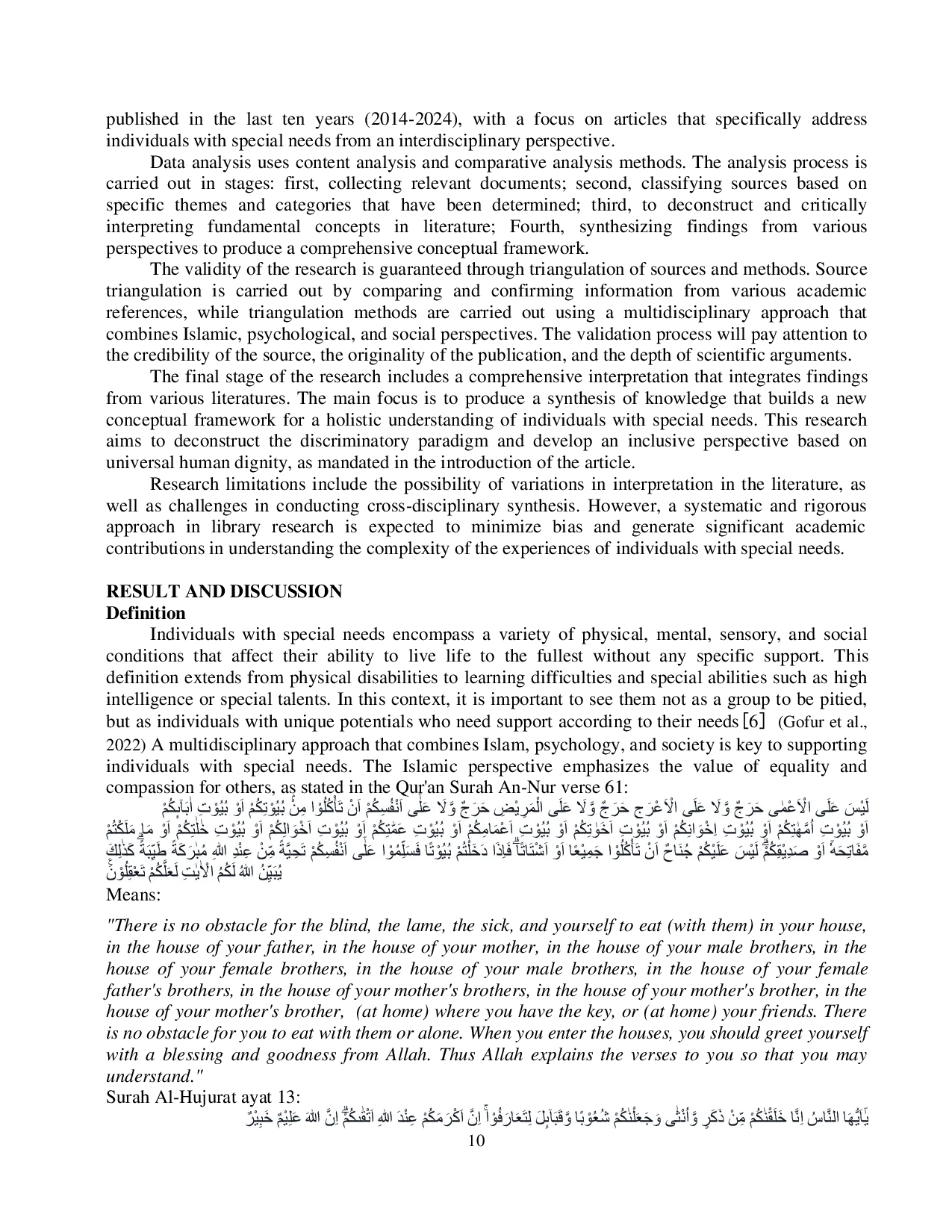
JOURNALSTKIPPGRISITUBONDOJOURNALSTKIPPGRISITUBONDO This study found that inclusive education that integrates Islamic values and psychological approaches has great potential to create a more just and inclusiveThis study found that inclusive education that integrates Islamic values and psychological approaches has great potential to create a more just and inclusive

ASSALAMASSALAM Karakter religius dibentuk melalui pembiasaan moral dalam aktivitas harian seperti shalat berjamaah, tadarus Al-Quran, kepedulian terhadap lingkungan,Karakter religius dibentuk melalui pembiasaan moral dalam aktivitas harian seperti shalat berjamaah, tadarus Al-Quran, kepedulian terhadap lingkungan,

MGEDUKASIAMGEDUKASIA This quantitative research employed an experimental design with a quasi-experimental study involving one experimental class and one control class. DataThis quantitative research employed an experimental design with a quasi-experimental study involving one experimental class and one control class. Data
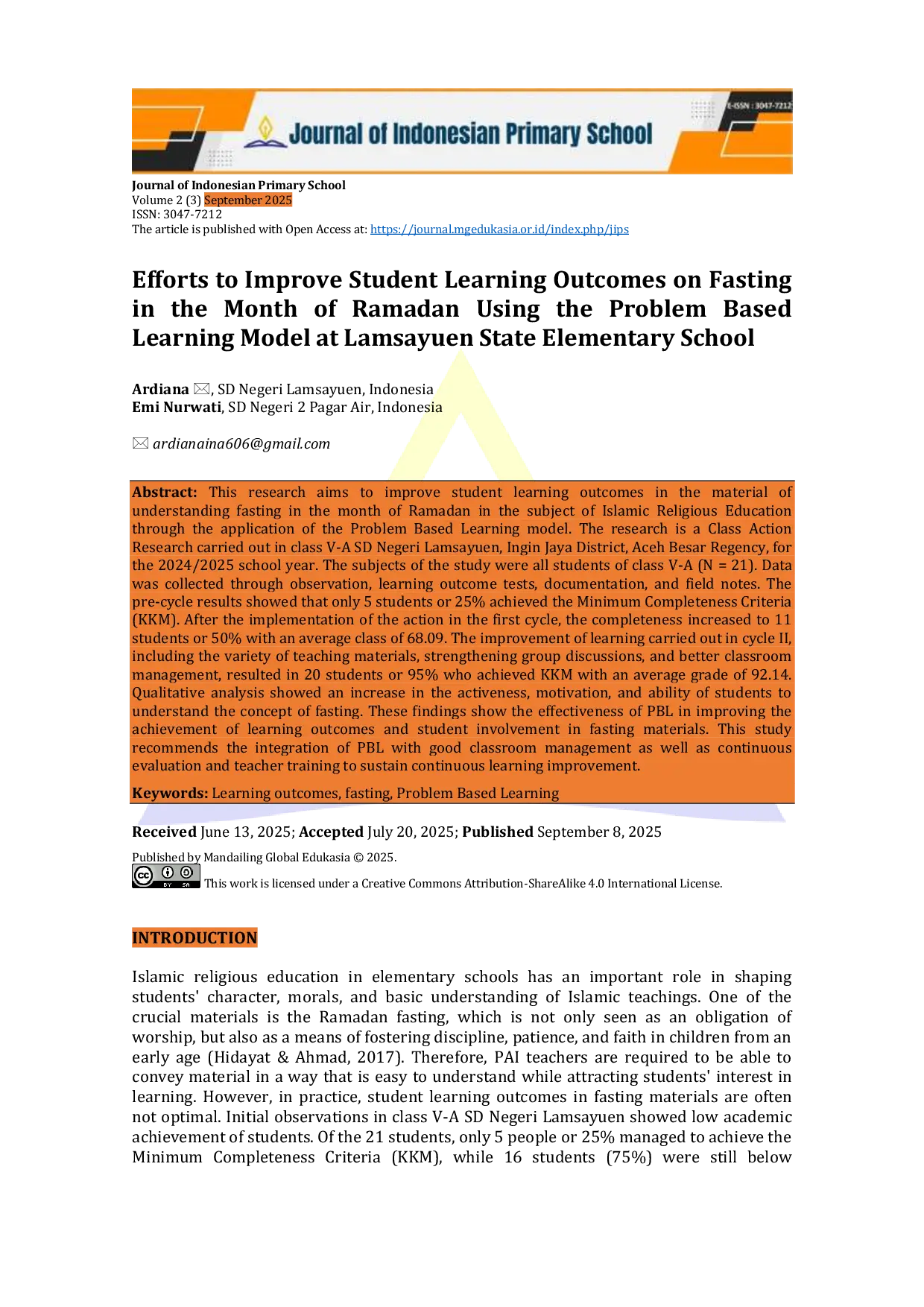
MGEDUKASIAMGEDUKASIA Initially, only 25% of students met the Minimum Completeness Criteria, which increased to 50% after the first cycle and remarkably reached 95% in the secondInitially, only 25% of students met the Minimum Completeness Criteria, which increased to 50% after the first cycle and remarkably reached 95% in the second
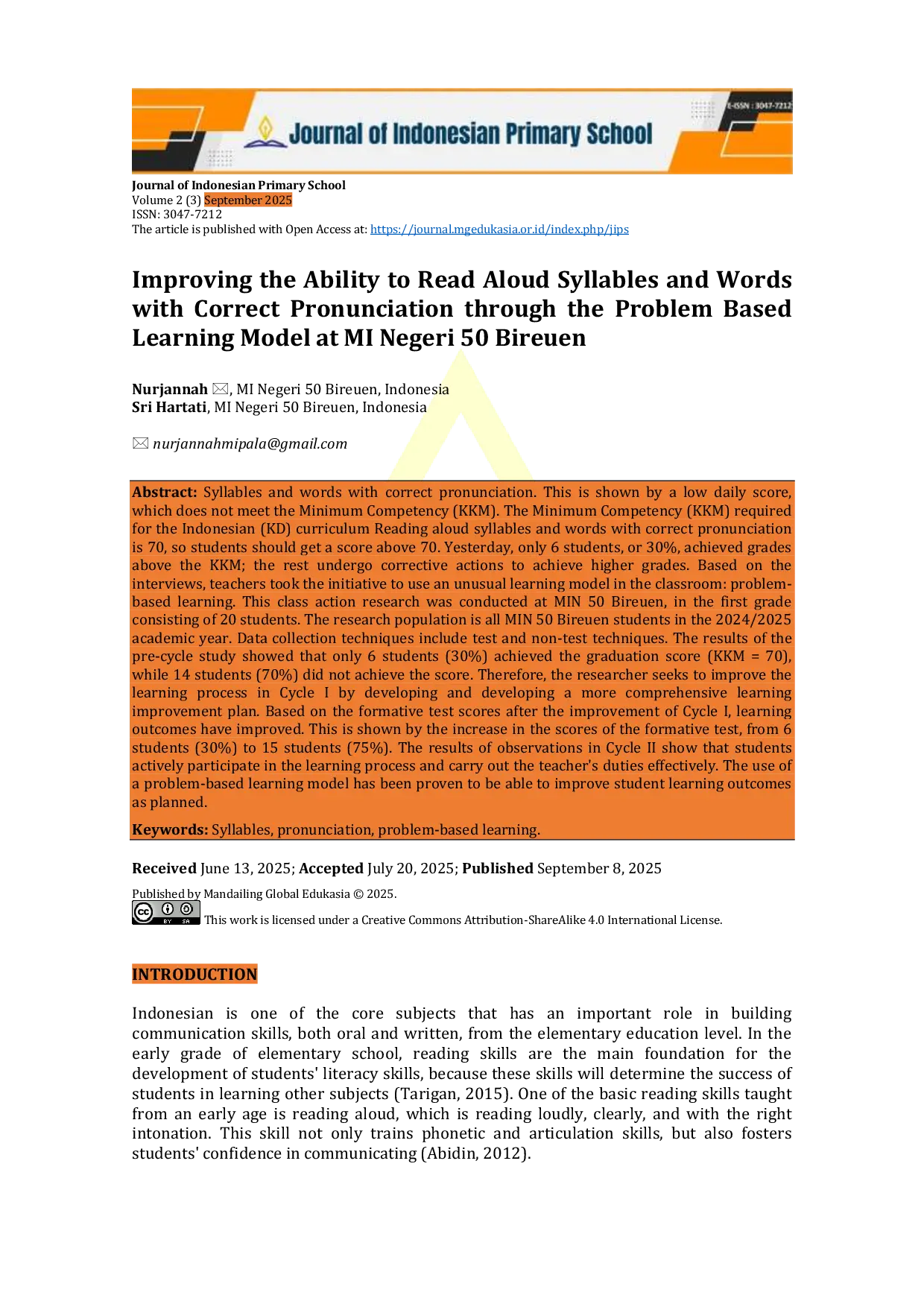
MGEDUKASIAMGEDUKASIA Teachers initiated the use of problem-based learning (PBL) as an alternative approach. This classroom action research was conducted at MIN 50 Bireuen,Teachers initiated the use of problem-based learning (PBL) as an alternative approach. This classroom action research was conducted at MIN 50 Bireuen,

IAIANNAWAWIIAIANNAWAWI Teknik pengumpulan datanya dilakukan melalui wawancara, observasi dan dokumentasi. Analaisi datanya dilakukan melalui display data, reduksi data dan penarikanTeknik pengumpulan datanya dilakukan melalui wawancara, observasi dan dokumentasi. Analaisi datanya dilakukan melalui display data, reduksi data dan penarikan

BALELITERASIBALELITERASI Consequently, educators and policymakers should consider integrating PjBL strategies into language arts curricula to promote effective writing and activeConsequently, educators and policymakers should consider integrating PjBL strategies into language arts curricula to promote effective writing and active
Useful /
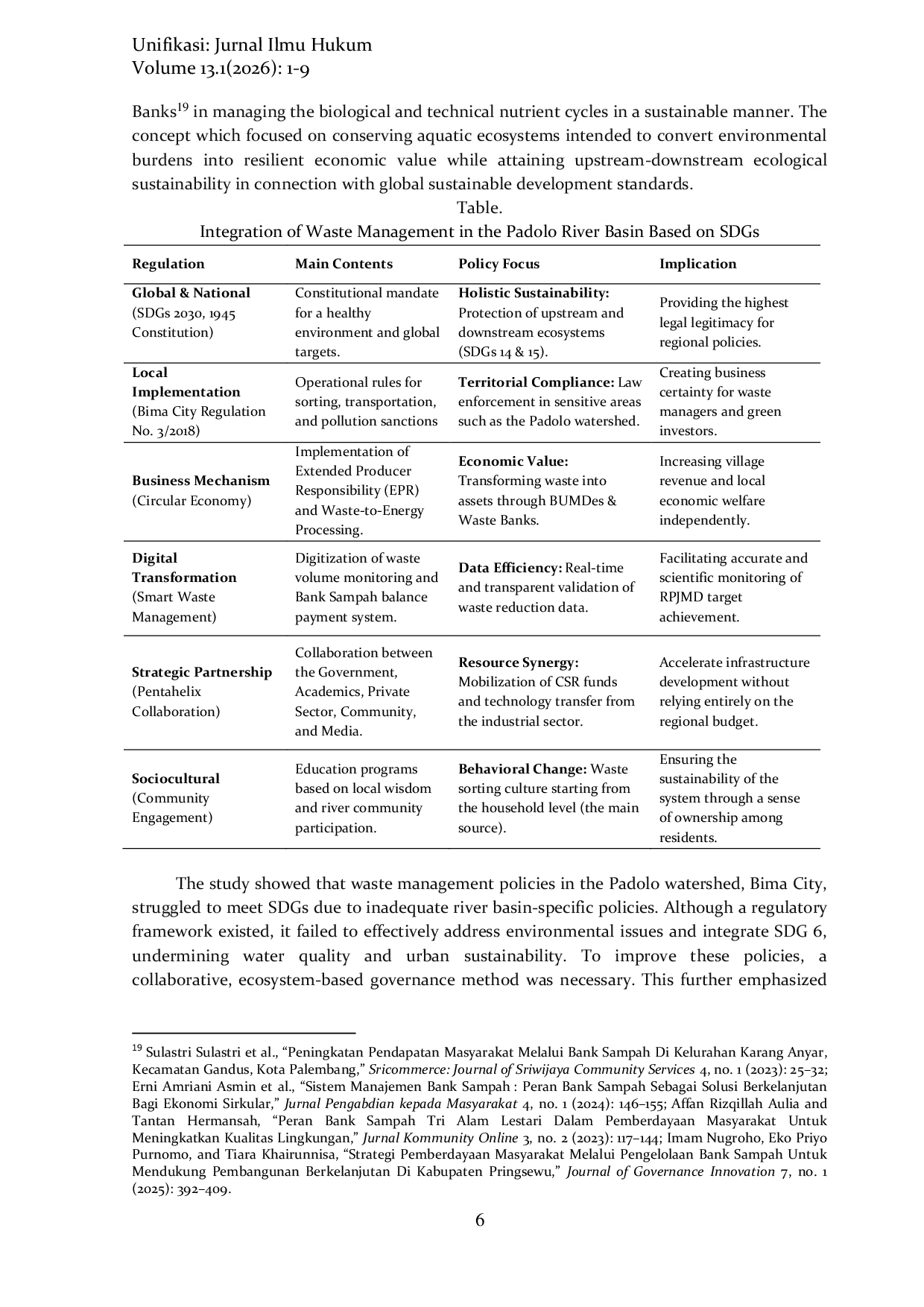
UNIKUUNIKU Namun, penelitian menemukan bahwa pasal tersebut kurang memiliki mekanisme khusus untuk mengendalikan sampah di daerah sungai, sehingga penerapannya bersifatNamun, penelitian menemukan bahwa pasal tersebut kurang memiliki mekanisme khusus untuk mengendalikan sampah di daerah sungai, sehingga penerapannya bersifat

UNIKUUNIKU Namun, implementasi hukum dari keputusan ini telah terbukti mengabaikan regulasi yang ada. Penegakan hukum korupsi di sektor energi terbarukan harus memprioritaskanNamun, implementasi hukum dari keputusan ini telah terbukti mengabaikan regulasi yang ada. Penegakan hukum korupsi di sektor energi terbarukan harus memprioritaskan

UNIKUUNIKU Kontribusi penelitian ini adalah dalam integrasi kerangka keadilan prosedural dalam evaluasi persetujuan lingkungan dengan menggunakan triangulasi perspektif.Kontribusi penelitian ini adalah dalam integrasi kerangka keadilan prosedural dalam evaluasi persetujuan lingkungan dengan menggunakan triangulasi perspektif.
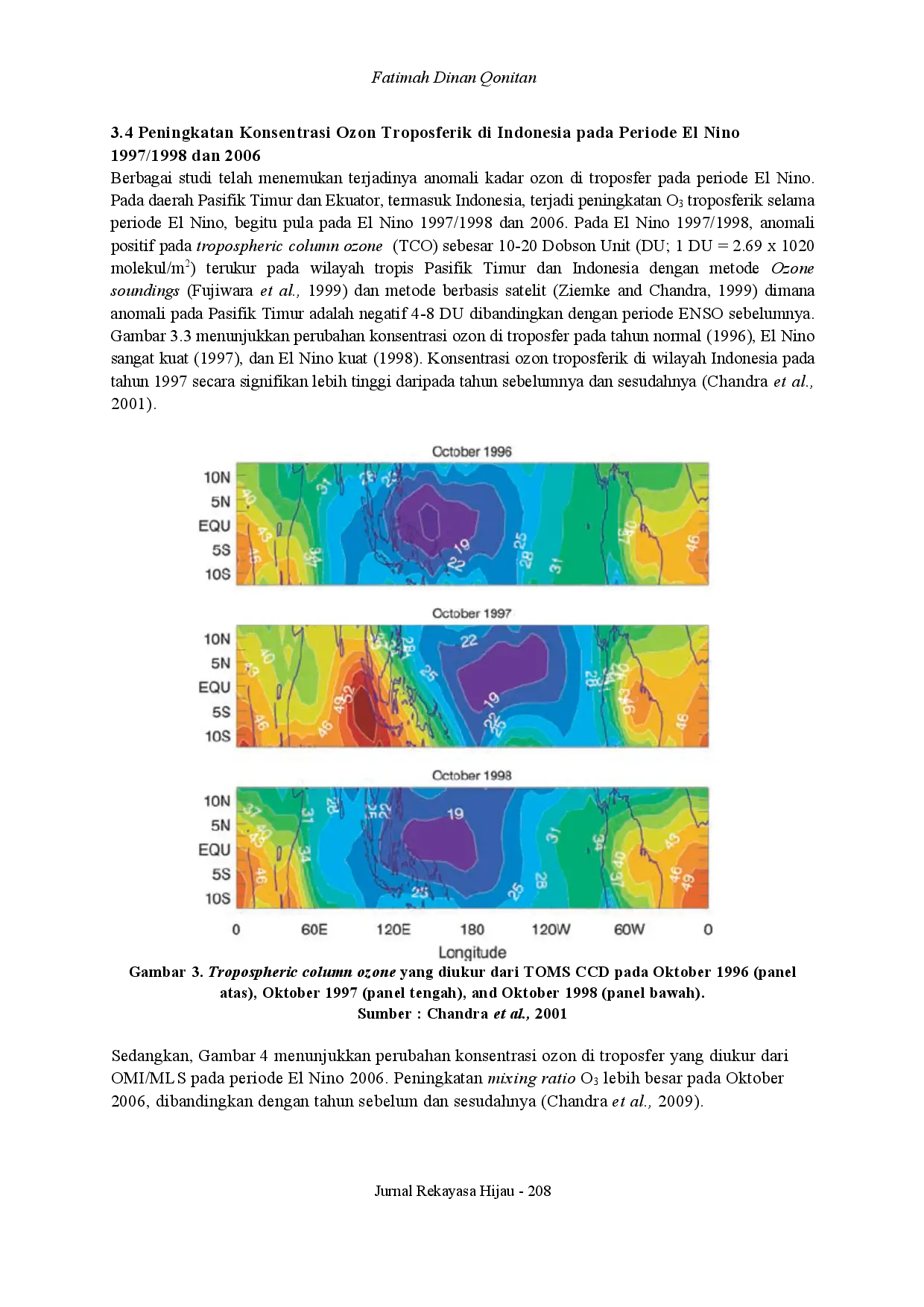
ITENASITENAS Beberapa penelitian menemukan terjadinya peningkatan konsentrasi ozon di troposfer selama periode El Nino pada tahun 1997/1998 dan 2006 di Indonesia. StudiBeberapa penelitian menemukan terjadinya peningkatan konsentrasi ozon di troposfer selama periode El Nino pada tahun 1997/1998 dan 2006 di Indonesia. Studi