JOURNALMPCIJOURNALMPCI
Journal of Health and Nutrition ResearchJournal of Health and Nutrition ResearchWound healing in patients with type 2 diabetes mellitus (T2DM) presents a major clinical challenge, particularly due to alterations in body composition such as reduced muscle mass and increased fat mass. This systematic review aimed to synthesize current evidence regarding the impact of body composition on wound healing effectiveness in T2DM patients. Literature was retrieved from PubMed, ProQuest, Wiley Online Library, and Google Scholar, targeting observational and experimental studies published between 2015 and 2025. Articles were selected based on predefined inclusion and exclusion criteria. Methodological quality was assessed using the Critical Appraisal Skills Programme (CASP) checklist. A total of seven eligible studies were included and analyzed narratively. The findings from the 4 articles analyzed showed that low muscle mass (sarcopenia) and high fat mass (obesity) were associated with delayed wound healing in T2DM patients. Some studies indicate that patients with better body composition balance, such as higher muscle mass index, experience faster wound healing. Heterogeneity in measurement methods and study populations limits the strength of these conclusions. This review supports the hypothesis that body composition significantly influences wound healing outcomes in T2DM. Muscle mass reduction may impair tissue repair by limiting perfusion and immune responses, while fat mass may contribute to chronic inflammation that hinders tissue regeneration. Further longitudinal research with standardized assessments is needed. Interventions that promote muscle mass gain and fat mass control may be essential components in wound management strategies for diabetic patients.
This study suggests a potential relationship between body composition, specifically the proportion of muscle mass and body fat, and the effectiveness of wound healing in patients with type 2 diabetes mellitus.Patients with higher muscle mass and lower body fat levels tended to show faster healing times and better quality of tissue repair.These findings imply that body composition assessment should be part of clinical care for diabetic wound management, and interventions aimed at improving muscle mass and reducing body fat may be beneficial.
Penelitian lebih lanjut diperlukan untuk memahami secara mendalam hubungan antara komposisi tubuh dan penyembuhan luka pada pasien diabetes tipe 2. Pertama, studi longitudinal berskala besar dengan desain penelitian yang lebih kuat, seperti uji klinis acak, perlu dilakukan untuk mengkonfirmasi hubungan sebab-akibat yang teramati dalam tinjauan ini. Kedua, penelitian harus fokus pada pengembangan dan evaluasi intervensi yang ditargetkan untuk meningkatkan massa otot dan mengendalikan massa lemak pada pasien diabetes dengan luka yang sulit sembuh, termasuk program latihan fisik yang disesuaikan dan strategi nutrisi yang optimal. Ketiga, eksplorasi lebih lanjut mengenai mekanisme molekuler yang mendasari pengaruh komposisi tubuh terhadap penyembuhan luka, seperti peran sitokin inflamasi dan faktor pertumbuhan, dapat membuka jalan bagi pengembangan terapi baru yang lebih efektif. Penelitian ini harus mempertimbangkan variasi individu dalam respons terhadap intervensi, termasuk faktor genetik dan gaya hidup, untuk memastikan pendekatan pengobatan yang lebih personal dan tepat sasaran. Dengan demikian, pemahaman yang lebih komprehensif tentang interaksi kompleks antara komposisi tubuh, metabolisme, dan proses penyembuhan luka akan memungkinkan pengembangan strategi manajemen luka yang lebih efektif dan meningkatkan kualitas hidup pasien diabetes.
- Lipids - Wiley Online Library. lipids wiley library skip article content information journals journal... aocs.onlinelibrary.wiley.com/doi/abs/10.1002/lipd.12189Lipids Wiley Online Library lipids wiley library skip article content information journals journal aocs onlinelibrary wiley doi abs 10 1002 lipd 12189
- The Impact of Body Composition on Wound Healing in Type 2 Diabetes Patients: A Systematic Review | Journal... doi.org/10.56303/jhnresearch.v4i2.434The Impact of Body Composition on Wound Healing in Type 2 Diabetes Patients A Systematic Review Journal doi 10 56303 jhnresearch v4i2 434
| File size | 581.82 KB |
| Pages | 15 |
| DMCA | Report |
Related /

POLITEKNIKYAKPERMASPOLITEKNIKYAKPERMAS Hasil evaluasi sifat fisik dari sediaan gel ekstrak daun wungu (Graptopphyllumpictum L. ) pada uji oganoleptik, uji homogenitas, uji daya sebar, daya lekatHasil evaluasi sifat fisik dari sediaan gel ekstrak daun wungu (Graptopphyllumpictum L. ) pada uji oganoleptik, uji homogenitas, uji daya sebar, daya lekat
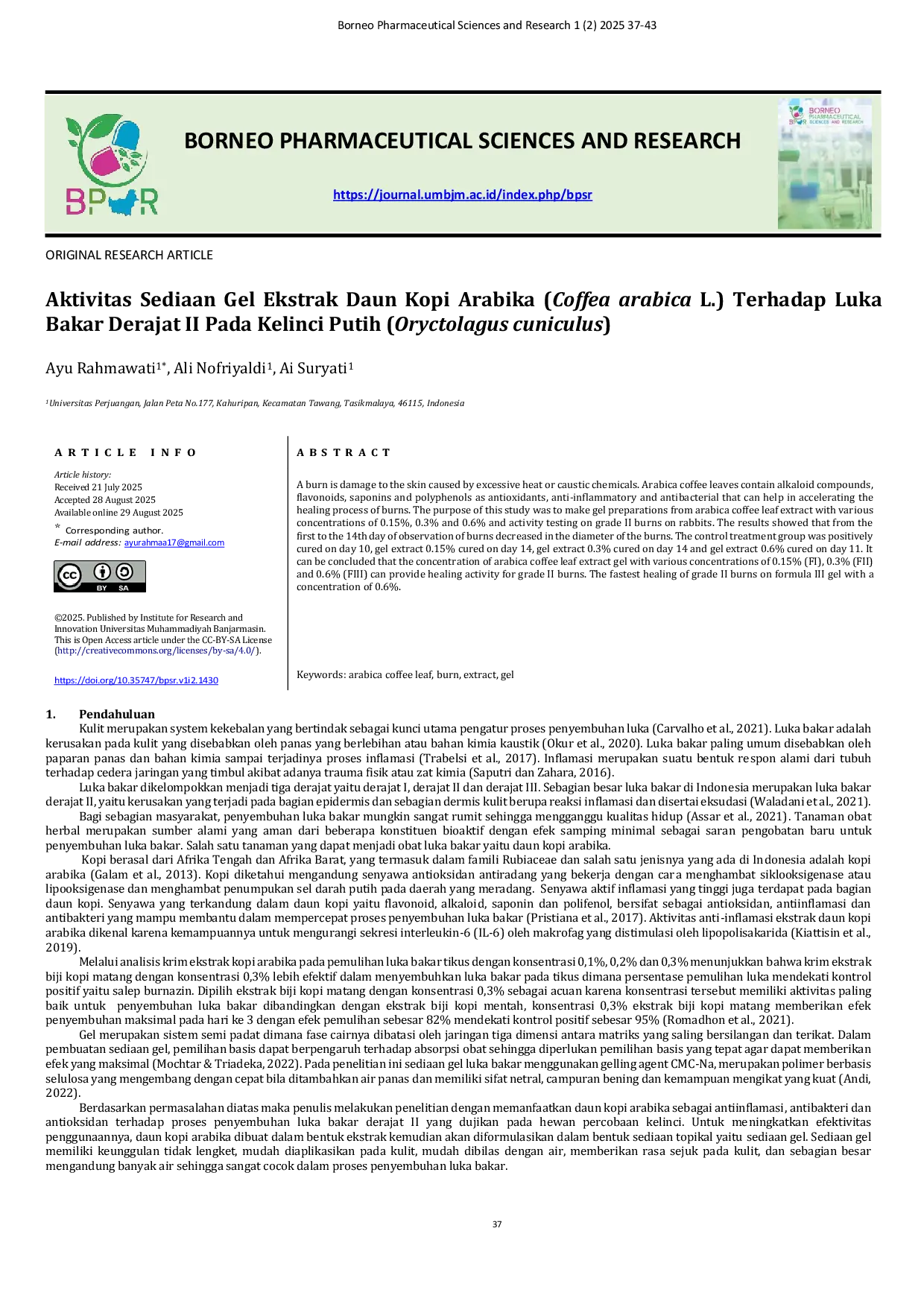
UMBJMUMBJM Berdasarkan hasil penelitian dapat disimpulkan bahwa gel ekstrak daun kopi arabika dengan variasi konsentrasi 0,15%, 0,3% dan 0,6% memenuhi uji parameterBerdasarkan hasil penelitian dapat disimpulkan bahwa gel ekstrak daun kopi arabika dengan variasi konsentrasi 0,15%, 0,3% dan 0,6% memenuhi uji parameter
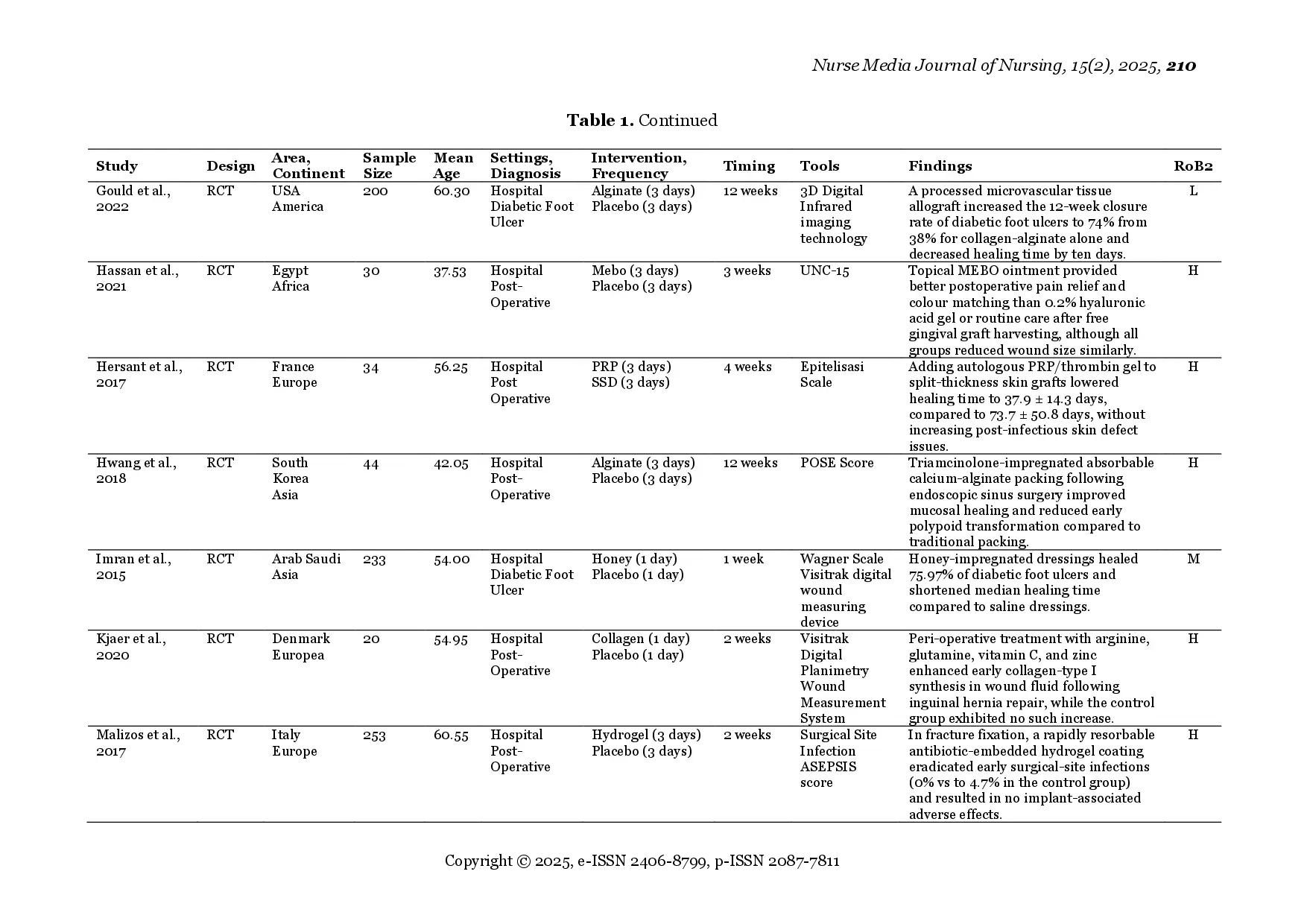
UNDIPUNDIP 049 pasien. Kelompok placebo terbesar terdiri dari 1. 628 peserta, sedangkan kelompok terkecil adalah mebo dengan 10 peserta. Analisis heterogenitas dan049 pasien. Kelompok placebo terbesar terdiri dari 1. 628 peserta, sedangkan kelompok terkecil adalah mebo dengan 10 peserta. Analisis heterogenitas dan
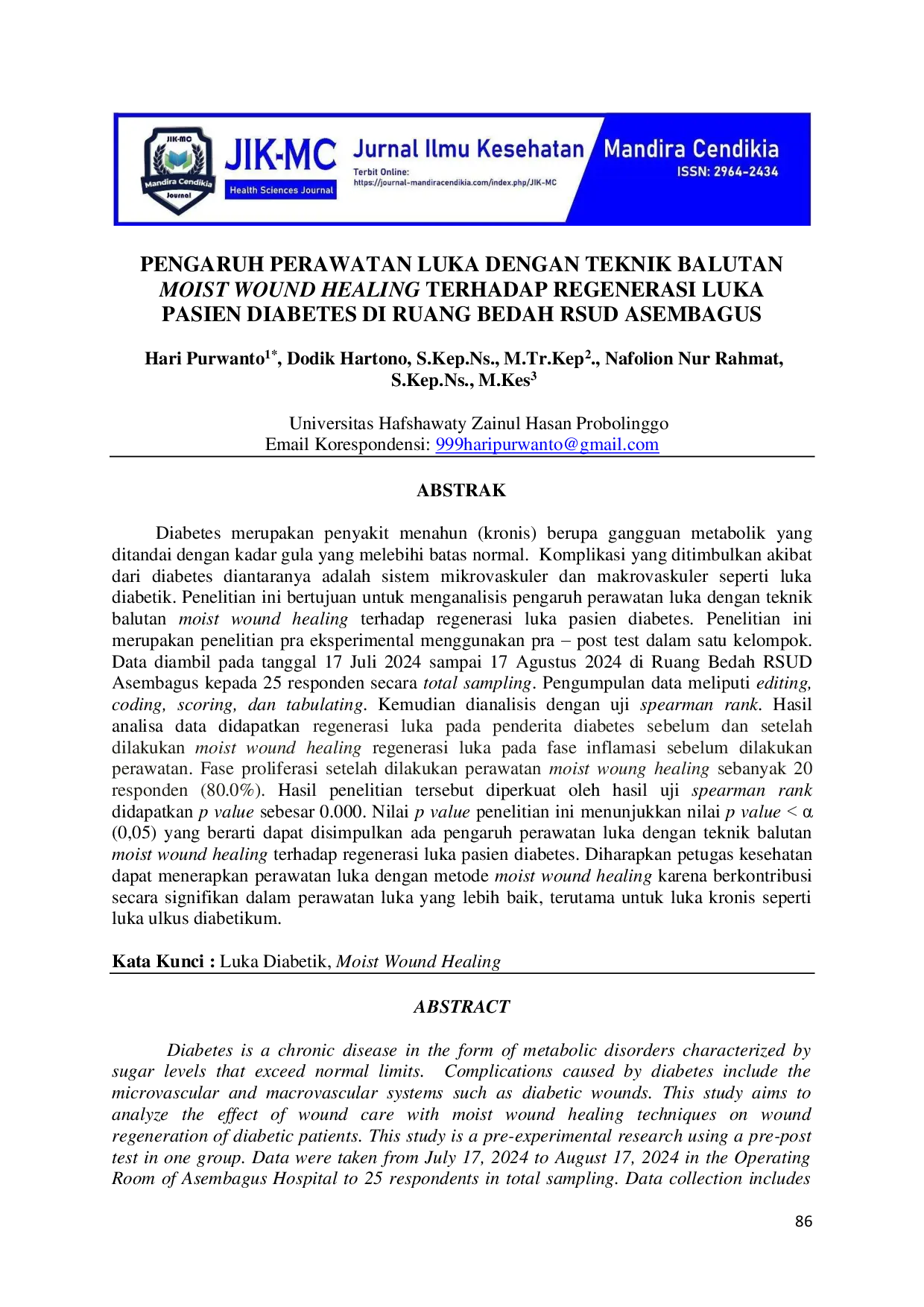
MANDIRACENDIKIAMANDIRACENDIKIA Kemudian dianalisis dengan uji spearman rank. Hasil analisa data didapatkan regenerasi luka pada penderita diabetes sebelum dan setelah dilakukan moistKemudian dianalisis dengan uji spearman rank. Hasil analisa data didapatkan regenerasi luka pada penderita diabetes sebelum dan setelah dilakukan moist

AISYAHUNIVERSITYAISYAHUNIVERSITY Hasil didapatkan bahwa pengkajian luka ulkus diabetikum sebelum perawatan luka modern dressing total skor bernilai 45. Proses penyembuhan luka respondenHasil didapatkan bahwa pengkajian luka ulkus diabetikum sebelum perawatan luka modern dressing total skor bernilai 45. Proses penyembuhan luka responden
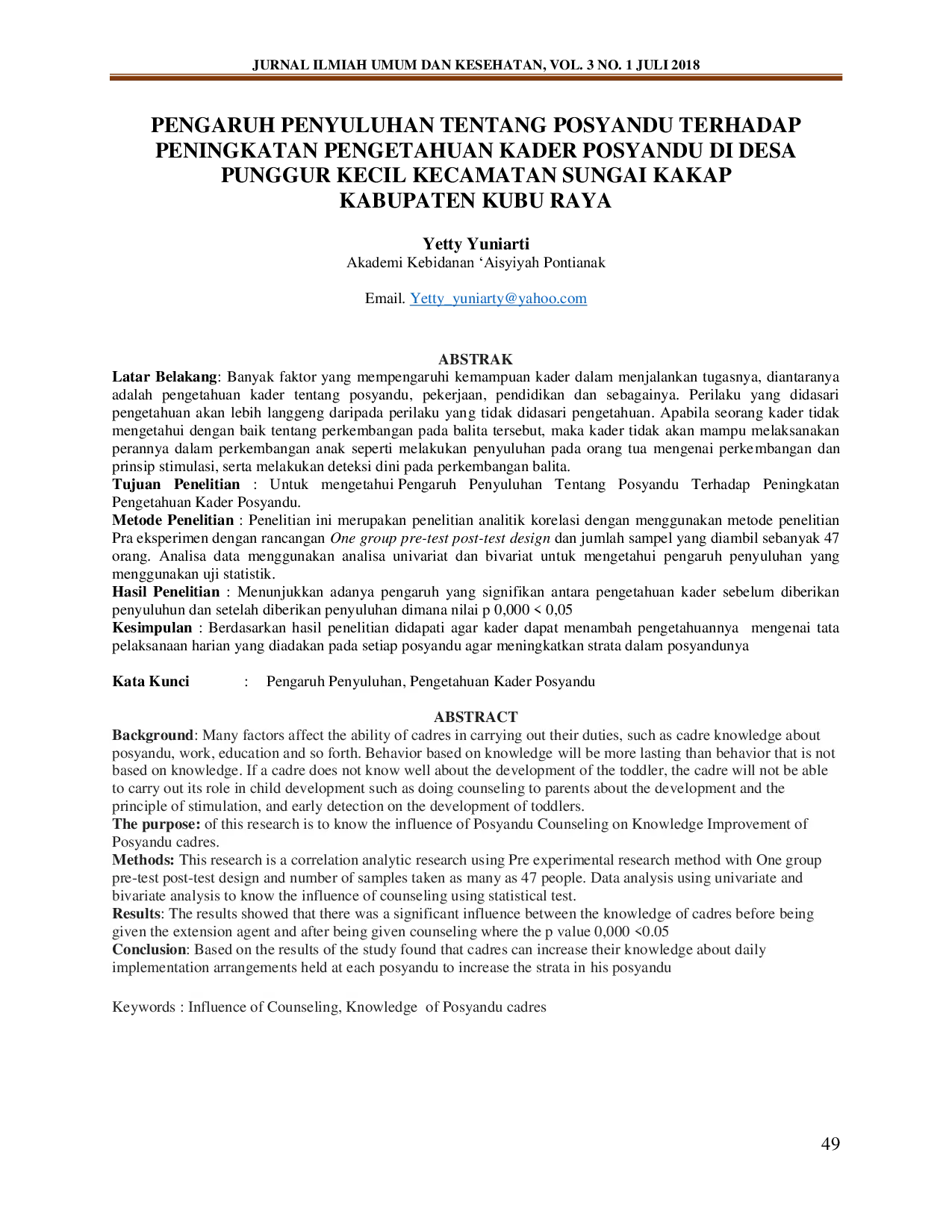
POLITAPOLITA Analisa data menggunakan analisa univariat dan bivariat untuk mengetahui pengaruh penyuluhan yang menggunakan uji statistik. Hasil Penelitian: MenunjukkanAnalisa data menggunakan analisa univariat dan bivariat untuk mengetahui pengaruh penyuluhan yang menggunakan uji statistik. Hasil Penelitian: Menunjukkan
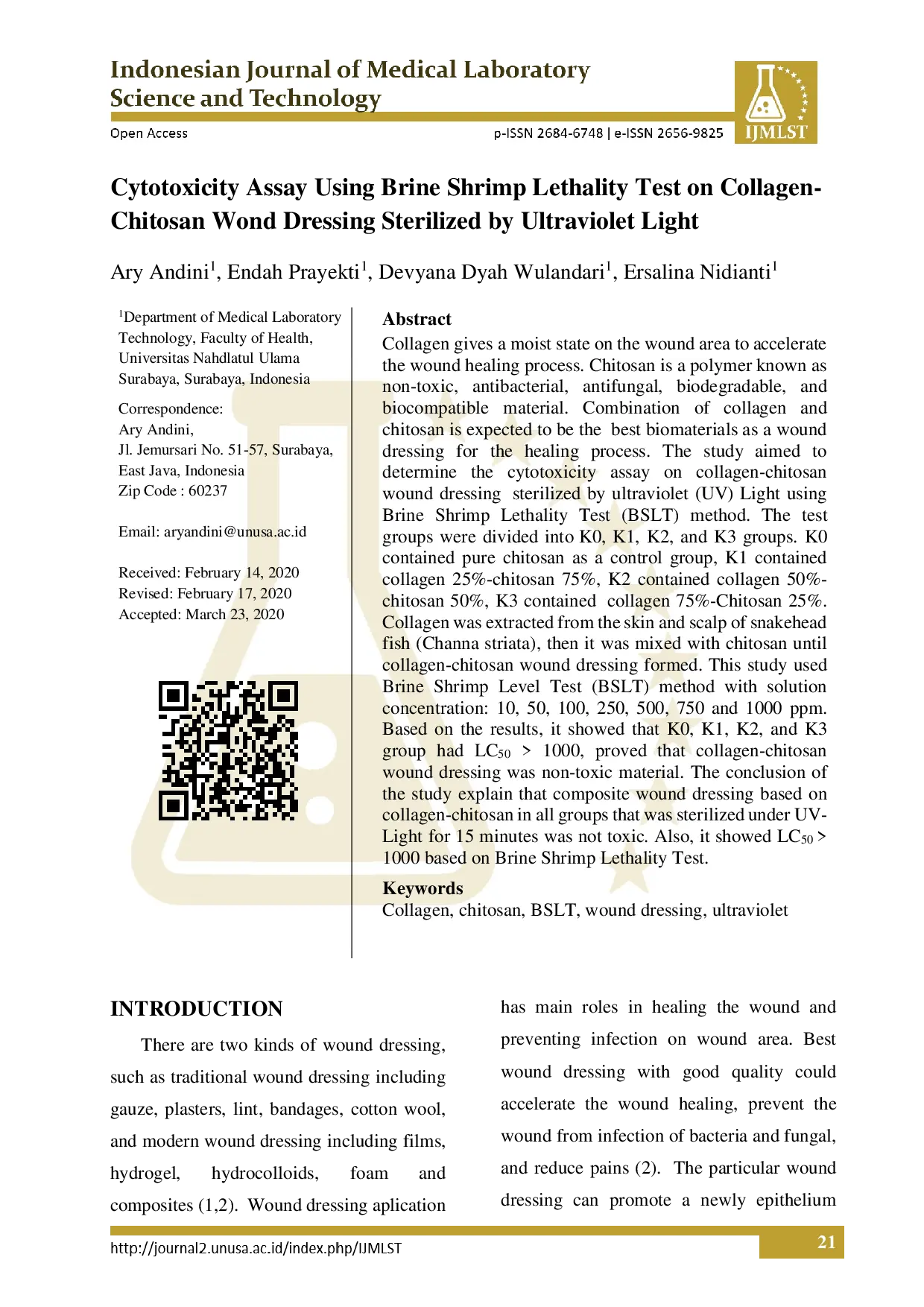
UNUSAUNUSA Kombinasi kolagen dan kitosan diharapkan menjadi biomaterial unggul sebagai pembalut luka dalam proses penyembuhan. Penelitian ini bertujuan menentukanKombinasi kolagen dan kitosan diharapkan menjadi biomaterial unggul sebagai pembalut luka dalam proses penyembuhan. Penelitian ini bertujuan menentukan
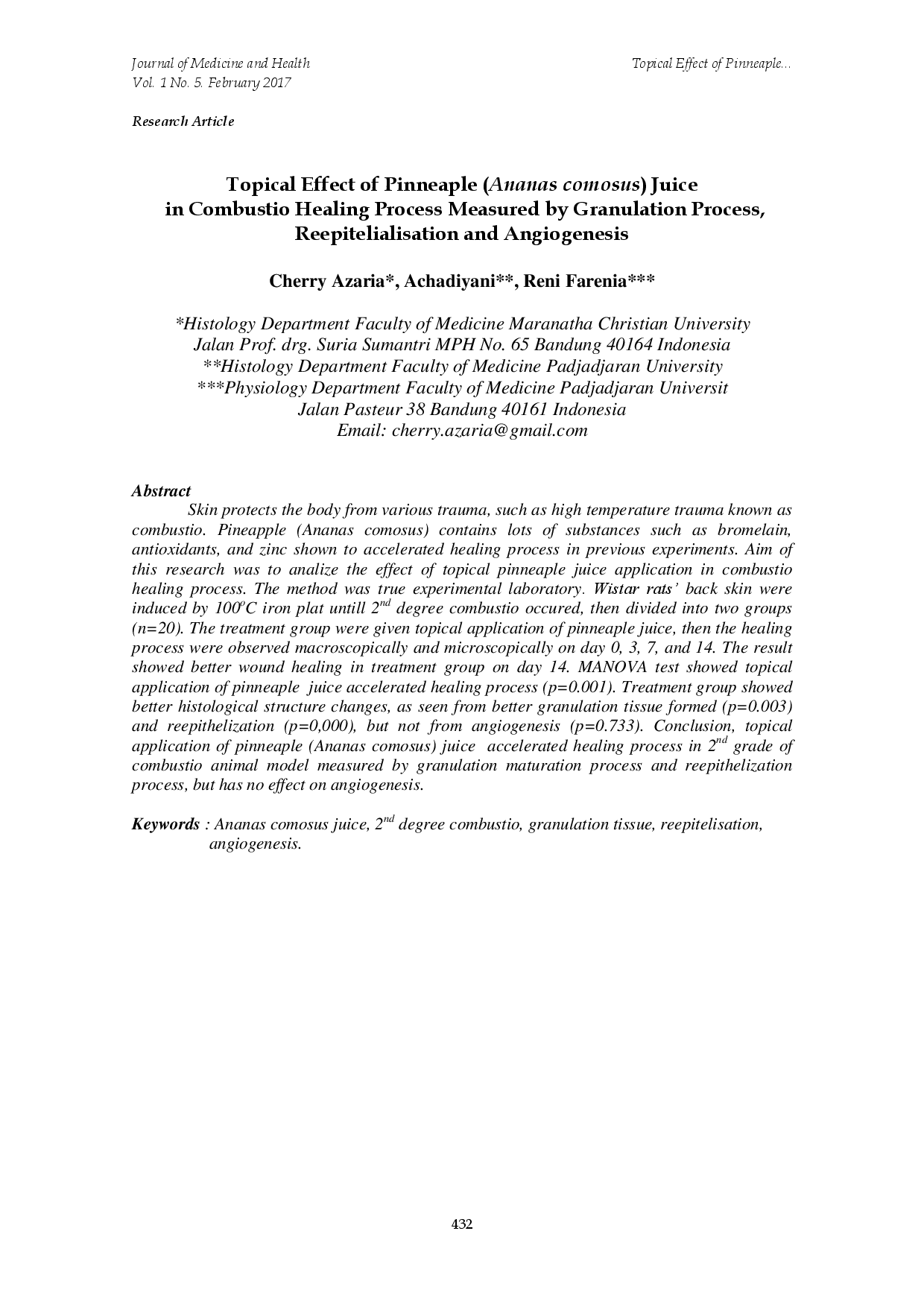
MARANATHAMARANATHA 733). Penggunaan sari buah nanas(Ananas comosus) topikal mempercepat proses pembentukan jaringan granulasi dan proses reepitelisasi pada penyembuhan hewan733). Penggunaan sari buah nanas(Ananas comosus) topikal mempercepat proses pembentukan jaringan granulasi dan proses reepitelisasi pada penyembuhan hewan
Useful /

LPPPIPUBLISHINGLPPPIPUBLISHING Variasi metodologi yang digunakan dalam artikel (kuantitatif, kualitatif, studi kasus, dan literature review) menguatkan temuan bahwa integrasi AI danVariasi metodologi yang digunakan dalam artikel (kuantitatif, kualitatif, studi kasus, dan literature review) menguatkan temuan bahwa integrasi AI dan

LPPPIPUBLISHINGLPPPIPUBLISHING Presentasi ini bertujuan untuk menjelaskan bagaimana menganalisis manajemen strategis pada perusahaan teknologi di tengah disrupsi teknologi. PresentasiPresentasi ini bertujuan untuk menjelaskan bagaimana menganalisis manajemen strategis pada perusahaan teknologi di tengah disrupsi teknologi. Presentasi

UNUSAUNUSA Pekerja yang tidak menggunakan masker memiliki risiko 4,8 kali lebih tinggi mengalami gejala infeksi saluran pernapasan akut dibandingkan yang menggunakanPekerja yang tidak menggunakan masker memiliki risiko 4,8 kali lebih tinggi mengalami gejala infeksi saluran pernapasan akut dibandingkan yang menggunakan
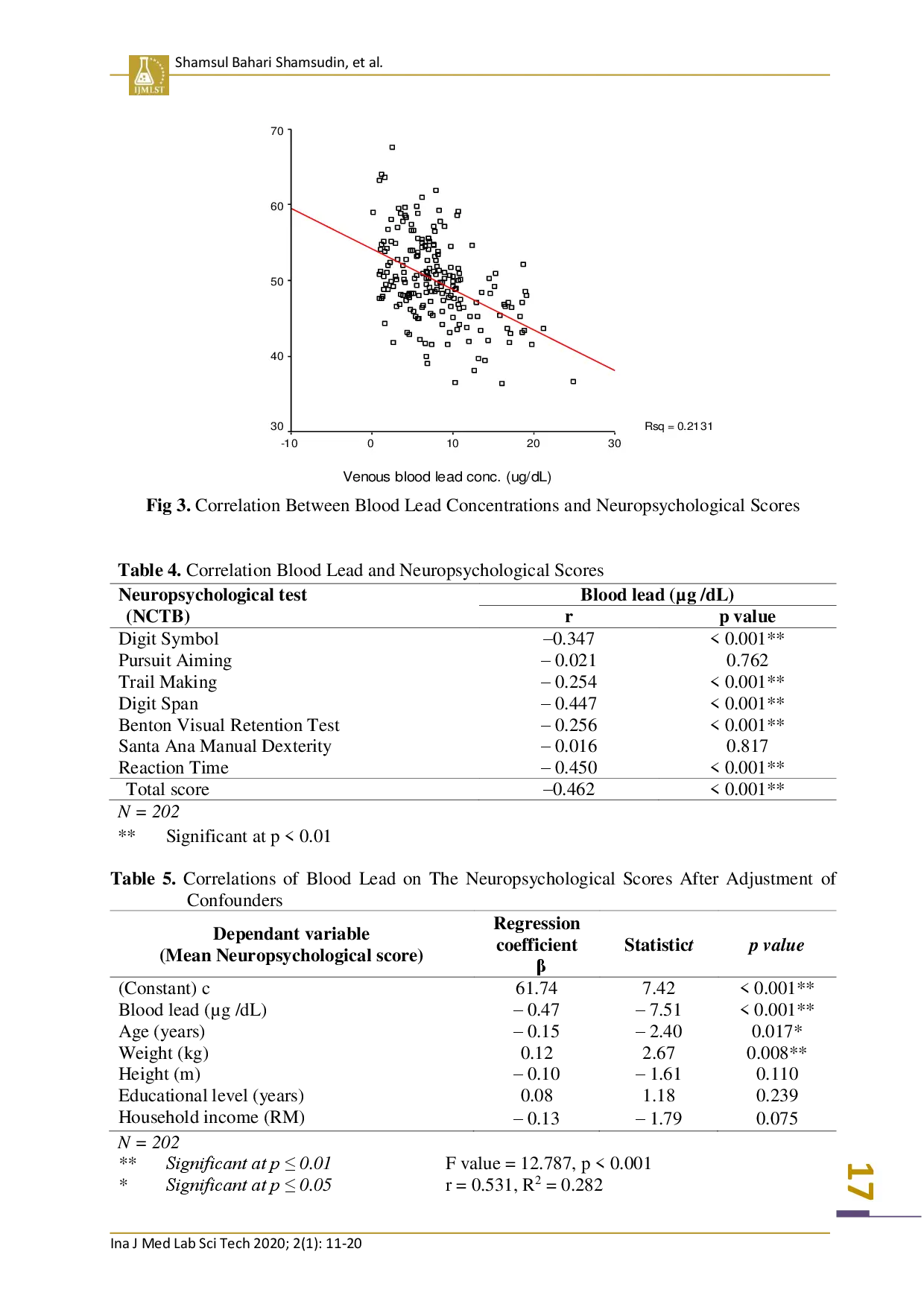
UNUSAUNUSA Perempuan hamil dengan konsentrasi timbal darah tinggi memiliki risiko tinggi terhadap janin karena transfer plasenta dapat terjadi ke janin. PenelitianPerempuan hamil dengan konsentrasi timbal darah tinggi memiliki risiko tinggi terhadap janin karena transfer plasenta dapat terjadi ke janin. Penelitian